



A Mock Court Hearing From Roll Call to Readback With Speechmatics
Run a complete fictional footbridge hearing with Martel stenomasks, two witnesses, exhibits, a recess, a disputed readback, and four separate scores.
Compare your Martel mask in normal position and two inches away. Hear “did sign” and “didn’t sign,” then verify the words in a Speechmatics practice rough.
“I did sign the receipt.” “I didn’t sign the receipt.” Two short answers, spoken by the same person, can lead a reader to opposite conclusions. That little difference makes a better test of speech clarity than asking whether a recording sounds generally good. Pick up your personal Martel stenomask, use a short fictional passage and listen for the words you will need to verify in a transcript. You are looking for an arrangement and speaking pace that preserve the whole answer in a recording you can understand.
Begin with the sound reaching the microphone. Then give the same pair of meanings a place in a fresh Speechmatics practice job. If your own dictation is intelligible and the rough still changes a word, the next question involves recognition or transcript review. If the distinction is hard to hear in the recording itself, experiment with position and delivery before drawing a conclusion about the software. A clear answer about one difficult word is more useful than a large unverified accuracy claim about a mask or an engine.
Martel’s published mask-position exercise compares two short recordings with the same personal mask. First record in your usual working position. For a brief second test, hold the mouthpiece about two inches away from your face and speak toward the same microphone. Keep the device, connection, application, settings and ordinary speaking effort consistent. Listen to both saved takes through the same playback arrangement. The two-inch position is a diagnostic comparison. Return to the normal working position for an ordinary reporting rehearsal and use the instructions for your model. Martel’s two-position mask listening test.
A position comparison gives you a direction to investigate. If your listener consistently hears both receipt sentences more clearly in one take, investigate the details of position, fit and delivery that changed between the samples. If the input is silent in both, trace the microphone connection first. A single comparison cannot tell you that an individual component needs replacement or that one physical position is ideal for every writer. The most valuable item at the end of this guide is a pair of marked files plus a precise sentence about what you heard.
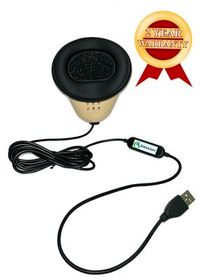
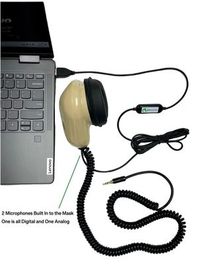
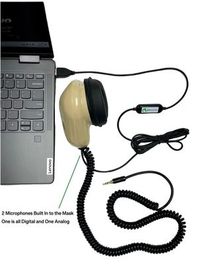
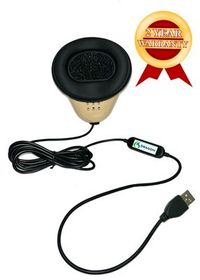
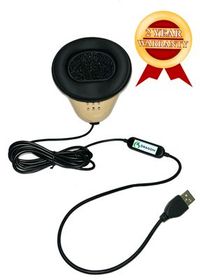
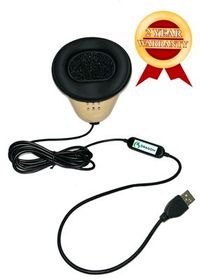
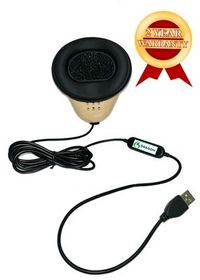
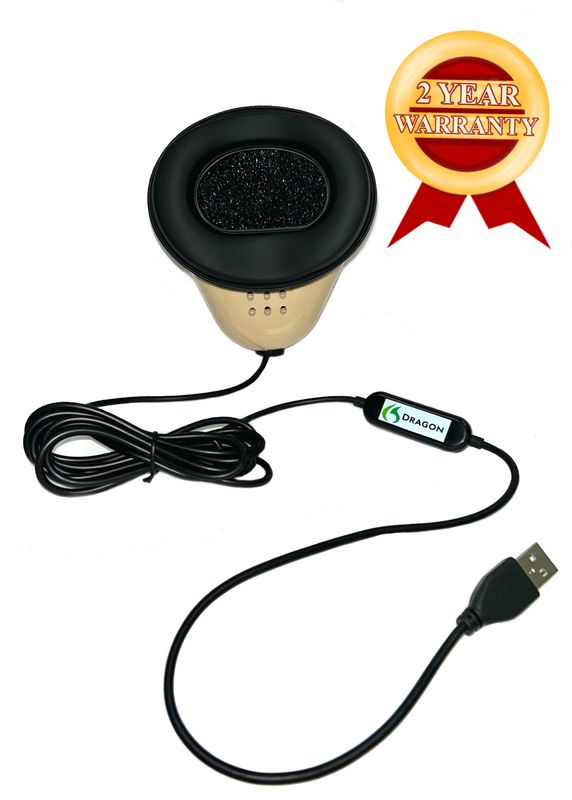
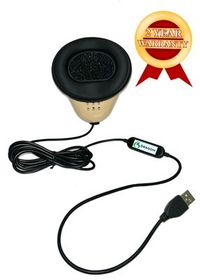
Martel’s Dragon USB Stenomask provides a direct computer input through its built-in USB sound card. The Double Dragon 2 combines a digital computer connection with a separate 3.5 mm analog microphone path for a compatible receiving device. Both paths in the Double Dragon capture the reporter speaking into the same personal mask. For the first clarity comparison pick one path and keep it fixed across the two positions. If you have an independent recorder, you can perform a separate comparison on that saved audio later. Changing the microphone path between positions would mix two different questions. Martel Dragon USB specifications · Martel Double Dragon 2 specifications.
Martel also lists the MM-ST1 with two independent analog 3.5 mm connections. If you use that mask with a compatible computer audio adapter, document the adapter, its selected input and the lead you are testing. Windows might display the adapter’s name. Establish the intended capture by making a short marked sample before you compare positions. Put the laptop where you can start and stop a practice take without tugging the cable, and keep listening equipment and background conditions as similar as practicable across the two readings. Martel MM-ST1 analog connections.
Microsoft’s Windows 11 microphone instructions explain how to select and test the desired input under Settings, System and Sound. Choose the correct microphone in Input and use the properties test to record and hear your voice. Once you know the intended mask path is active, use a recording arrangement that lets you retain separate marked takes. Microsoft’s Sound Recorder instructions describe starting a recording, stopping to save it and identifying recordings in its list. Keep your practice files private except for any fictional samples you choose to share with an authorized trainer or support person. Microsoft’s microphone test · Microsoft Sound Recorder help.
Use a harmless opening line such as “Receipt rehearsal, normal position, take one.” Follow with “I did sign the receipt. I didn’t sign the receipt.” Then add “I signed on Thursday. I didn’t sign on Tuesday.” End with a closing marker. For the second take change the opening identification to indicate the brief two-inch comparison, but repeat the four test sentences in the same order. Keep your comfortable working voice. Trying to make the second take sound especially crisp by slowing down or shouting would make the two positions harder to compare fairly.
Stop each recording before moving equipment for playback. Use the laptop speakers at a comfortable level in a private practice space, or another consistent listening arrangement suited to that space. Listen to both files without readjusting the volume between them if possible. Say aloud which sentence was affirmative and which was negative in each take. If hearing the distinction requires reading the script and filling in the expected answer, write that down. A listener who knows what should have been said can recognize a word that remains difficult for someone hearing it for the first time.
Ask a practice partner to use a small sheet with four empty lines. The partner can listen to the saved samples without wearing your personal mask. On the first line write whether the speaker signed the receipt in the first sentence. On the second, note what the second sentence says happened. On the third and fourth, identify which day the speaker affirmed and which day the speaker denied. Compare the notes with the reference after playback. A listener can find the voice pleasant or loud enough and still reverse a critical answer.
Add one question about effort. Could the partner recover the distinction on the first listen, on a second listen or only after seeing the script? Use those descriptions instead of a floating numerical grade for sound quality. “I heard Thursday clearly the first time but needed a replay to decide whether Tuesday was denied” is an actionable finding. It points you to a particular part of an actual file. “Six out of ten” mostly tells you which numbers the listener likes using on an undefined scale.
If you are practicing alone, leave a little time between recording and scoring. Put the reference away, play each file and write the words you can hear before looking back. For a stronger self-check, use a short stack of fictional sentence cards and place them in a different order for each new pair of takes. Keep the ordering within a paired position comparison the same. Record which card order was used, then set the cards aside. Your future self is less likely to fill in an uncertain word just because it always came second.
When you return to the normal position, try the same setup a third time. This return take helps establish whether the difference appeared consistently or only in one recording. Keep one adjustment at a time for later experiments. A change in mouthpiece position together with a new input gain, a faster pace and a different listening device may yield an interesting new file, but it will be difficult to explain what helped. Test the small change you can reproduce during ordinary work and ask what the next take actually sounds like.
If you want to discuss fit, use your own mask and follow Martel’s directions for your specific model. Describe where the mouthpiece was held and whether you changed how you sat or held the cable. Avoid forcing the seal or modifying the equipment in a practice exercise. If something about normal use is uncomfortable, stop the test and seek model-specific fitting or technique help. The intention is an easy, repeatable working position that lets you deliver the words you mean to speak at a normal effort.
The first sentence pair is deliberately predictable. Now give the same contrast different positions. Try “The receipt I didn’t sign was the one in blue ink.” Then try “The receipt in blue ink was the one I did sign.” Both have a receipt, blue ink and a signature. The difference travels with the verb phrase, so a listener cannot choose the correct meaning by hearing the color alone. Keep each statement as you actually spoke it. If you accidentally reverse the two, mark a delivery difference and make a fresh take.
An additional pair can put the distinction near a pause. Say “I read the long receipt. I didn’t sign it.” Then say “I read the long receipt. I did sign it.” Leave a natural pause between the sentences without changing your position. Listen carefully to the first words after that pause as well as to the word sign. A rough that begins the second sentence with signed may require you to check whether the first words were spoken clearly, whether recording had begun and what the software represented. The audio gives you something specific to review.
A third pair can place a changed fact at the end. Say “On the short copy I wrote the date, but I didn’t sign.” Then say “On the long copy I checked the amount, and I did sign.” The listening task is to identify each document, the earlier action and the statement about signing. In ordinary reporting, clarity depends on preserving those relationships. Pronouncing the word sign clearly does not help enough if the listener misses which copy the witness was discussing or whether the act was affirmed.
Introduce a new set of small words after the receipt pair. “I left before the count” means something different from “I left after the count.” “The mark was inside the square” differs from “The mark was beside the square.” “She sent a copy” differs from “She kept a copy.” These are original practice phrases. Choose two for one short session and label the files by the contrast you are testing. That avoids spending an hour making recordings without knowing what you intended to learn from any of them.
Separate intelligibility from loudness while scoring. A louder reading can still be difficult to understand if you run the important words together. A comparatively quiet recording can preserve every qualification when heard at an ordinary comfortable playback level. Use a known recording to identify a reasonable listening level, then return to the test samples. If a file would require an inconvenient listening level to judge, note that separately and check the input path and level in their own test. Treating volume, source and clarity as separate observations makes the notes useful to a second listener.
Advantage Software identifies Dragon Professional and Speechmatics Enhanced as EclipseVox recognition choices. Write the choice for your receipt exercise beside the names of your two mask-position recordings. If you selected local Speechmatics in EclipseVox, match your installation to the equipment and release listed by Advantage. If you used the Speechmatics integration Stenograph describes for CATalyst VP, label the trial accordingly. That entry will tell a second listener which program produced the rough when they compare its wording with the recording made in your normal working position. Advantage Software’s EclipseVox options · Advantage local hardware requirements · Stenograph’s CATalyst VP integration.
Open a new practice job in the supported setup. Use the normal working position you have just checked, with the same personal mask connected through its verified input. Dictate a short set of new receipt statements rather than replaying a Windows recording into an input. Include one affirmative answer, one negative answer and a follow-up in which a witness explains why a signature appears on one copy. Save the first rough before you edit. If the workflow also preserves mask audio, identify the matching file or job recording that belongs to that particular take.
A hearing exercise might produce an editor’s question such as “Does this say the witness approved the delivery?” Before turning a signature into a conclusion, listen to the exact spoken words. A person can sign a delivery receipt to acknowledge arrival while reserving a different decision. In this fictional practice, preserve the witness’s wording and keep the document names straight. This is not a lesson in the legal effect of a signature. It is a way to practice the reviewing habit of distinguishing what a speaker said from what a reader might infer.
In the saved rough, circle each form of did, did not and didn’t. If the spoken contraction is rendered as two words, consider the transcript conventions applicable to the practice and check whether the meaning survived. If the negative is missing altogether, the issue is more consequential. Mark wording, meaning, punctuation and speaker attribution separately. A semantically reversed sentence can deserve your immediate attention even when only one token differs. Keeping the raw rough available lets you track those findings before formatting or editorial corrections hide the starting point.
If the independent recording and the CAT rough differ, make sure you are comparing material from the same session. A clear two-inch Windows sample is useful for a position comparison. It cannot prove what you spoke five minutes later when the CAT job was running in normal position. Use distinct job identifiers and matching audio where available. If the CAT session did not retain dictation audio, state the limits of the comparison and repeat a brief, identifiable exercise using a supported recording arrangement when you need stronger evidence.
This practice hearing concerns a small archive of concert programs. All names, objects and events are invented. A receiving clerk describes paperwork accompanying two boxes of programs. Let a partner read the questions and answers while you voice-write, or make a source recording to use later. Before beginning, choose two details to check besides the signature itself. Good choices include the color of the paper, which copy went into the archive and what day each action occurred. Leave the script out of sight during the actual dictation run.
Question. When the two boxes arrived, what paperwork came with them? Answer. A short white receipt was tied to the handle of the first box. A longer blue sheet was folded into a pocket on the second box. Both papers had spaces for signatures. The driver put the short receipt on the counter and gave me a black pen. I did sign the short receipt. I entered the date next to my signature and handed the pen back to him.
Question. Did you also sign the longer blue sheet? Answer. I didn’t sign the blue sheet. I wrote the name of the concert series in the space at the top because the programs were going into two separate collections. The signature line was near the bottom, below a row of figures. I had not checked those figures when the driver left. I put the sheet on our reading stand so that the archive assistant could compare the numbers with the programs inside.
Question. When you say you signed a receipt, do you mean that you counted the programs? Answer. I mean that I acknowledged receiving two boxes on Thursday. I counted programs on Friday morning. I did not count them on Thursday. The first box held twelve programs with cream covers. The second box held ten with yellow covers and two loose pages. I wrote twelve on the white receiving slip because that was the number in the first box. I wrote ten programs and two loose pages on the blue sheet.
Question. Do you remember who signed the blue sheet? Answer. I saw Celia Hart write her initials beside the two loose pages. I did not see her sign the line at the bottom. When she returned the blue sheet to me, the bottom line had a name written on it in green ink. I can identify the initials because I watched her write them. I cannot identify the person who wrote the full name. The initials and the name were in separate places on the paper.
Question. What happened to the short receipt that you signed? Answer. The driver took the original short receipt. I kept a copy made at the counter. The copy has my signature and the Thursday date in black. On Friday morning I wrote the number twelve on our copy. The original had already left the building. When I referred to writing twelve on the receiving slip, I meant the copy that stayed with us. I could not have written the Friday count on the driver’s original.
Question. Were the two loose pages concert programs? Answer. They were printed on the same kind of paper as the yellow programs. Neither had a cover. One showed the list of musicians. The other showed a map of the hall with the narrow side entrance marked. I did not describe either page as a complete program. I put them between two sheets of clean paper until Celia could tell whether they belonged together. I wrote loose pages in pencil on the wrapper.
Question. Do you still have both sheets of paperwork in the archive? Answer. We have the copy of the short white receipt and a photograph of the longer blue sheet. The blue sheet itself went back to the library on Friday afternoon. I did not send it with the driver on Thursday. I scanned it after lunch and then returned it in an archive envelope. If you look at the scan, you can see the green name at the bottom and Celia’s initials farther up the page.
Question. Which mark on the scan is yours? Answer. The title of the concert series at the top is in my handwriting. The date beside the program count is mine as well. The full name at the bottom is not mine. My writing on the blue sheet does not make the name at the bottom my signature. I signed the white receipt only. That is the distinction I was trying to make when I said I did sign a receipt and I didn’t sign the count sheet.
Listen first to the short answers that carry the signatures. Find the affirmative statement in the first exchange and the negative in the second. Can you tell them apart without seeing which document is mentioned? Now add the document names back into your notes. The short white receipt was signed, the longer blue sheet was not signed by the witness, and the witness wrote other information on the blue sheet. A rough can include the word signature many times and still blur these three distinct facts. Mark which ones survived your delivery and the saved text.
Find the pair of sentences about counting on Thursday and Friday. The witness acknowledged receiving boxes on Thursday and counted the contents on Friday. It would be easy to hear the number twelve later and assume it was already on the original receipt when the driver left. Listen to your repetition of the complete correction about the copy that stayed. If you hear the distinction in your mask file, check how it reads in the rough. If you accidentally omitted the word copy, make a new short statement about two different documents and practice carrying the distinction through.
The two loose pages offer a third listening challenge that does not depend on a contraction. The second box contained ten yellow programs and two loose pages. A listener might remember a total of twelve pieces and describe them as twelve programs. That shorter wording loses the witness’s qualification. On your review sheet write “ten of what?” and “two of what?” before looking at the reference. Give the answers using words from the actual recording. This exercise rewards intelligible nouns and careful phrasing instead of rewarding a listener merely for recognizing numbers.
Speechmatics explains word error rate as a comparison between a reference transcript and a recognition result. It totals insertions, deletions and substitutions and relates that total to the number of reference words. Decide on consistent treatment of case, punctuation, numerals and contractions before calculating a practice score. Your goals influence what else you will check. If a required style calls for specific punctuation or a certain speaker format, record those items alongside word differences. An important missing negative can be just one change in a long passage. Speechmatics accuracy benchmarking.
Here is a small invented example with a reference you can count yourself. Use “I did sign the white receipt on the day of delivery.” Counting words separated by spaces gives eleven words. If the rough reads “I did sign the blue receipt on the day of delivery,” the changed color is one substitution. With this particular scoring rule that is one divided by eleven, or about nine percent word error. The example measures this one constructed sentence. It does not describe a test of any real engine, mask or reporter. It shows how a small number of edits can still change an important identifying fact.
A matching example can highlight a negative. Use “I did not sign the blue sheet after the count.” This reference contains ten words under the same spaces-based rule. If the rough reads “I did sign the blue sheet after the count,” one reference word has been lost. One deletion in ten reference words gives ten percent. On your meaning review, that single loss reverses the answer. If the rough instead spells the contraction as didn’t, decide in advance whether your comparison will expand contractions or score literal word forms. Give both your written rule and the example when discussing a practice score.
Time your review as well as your reading if speed is your interest. In a hypothetical session the reporter dictates 120 words in a minute and takes ninety additional seconds to check the signature, dates and document colors. The elapsed time for that exercise is two and a half minutes. A later practice run with comparable new material might take seventy seconds to dictate and forty seconds to check. These invented times illustrate a choice worth measuring on your own setup. The speed that matters to a reporter may include how long it takes to reach a checked version with the critical words intact.
Consider a listening comparison with no numerical score at all. A partner can hear the negative immediately on the normal-position take, needs two replays on the two-inch take and hears it promptly again on the return take. That is a useful result. Preserve the three files, note the reading order and repeat with different qualifying words on another day. Do not infer a universal fit rule from those three readings. You have learned something about one combination of personal mask, position, effort, listener, word choice and room.
A quiet file from both positions sends you back to the input and playback paths. Play a known file through the same speakers, then make another verified-input test. A take that is consistently clearer away from the face suggests examining normal mask placement and technique with Martel or your instructor. A recording in which the words sound distinct, while the corresponding rough repeatedly changes one name, gives you a reason to examine the recognition and vocabulary tools supported by your publisher. Each choice grows out of a particular observation. Martel’s stenomask audio troubleshooting guide.
Try one deliberate change within the normal position once you have finished the paired diagnostic comparison. You might leave a small natural space between “blue sheet” and the next clause, especially if you tend to rush across the change of thought. Keep the same input and recording level. Use new material with the same challenge, such as two handwritten corrections on different dates. A new example tells you more than repeating a memorized syllable until the listener guesses it from habit. Preserve a before and after take with clear identifying endings.
If you want help preparing a laptop around your personal mask, Martel’s VOX Elite 32 GB and 64 GB package pages describe stenomask setup and help transferring CAT files. Bring a short pair of fictional recordings and one matching practice rough. The person helping can hear which words you are studying and verify the input on the actual laptop. Include the software publisher’s instructions for your recognition arrangement, particularly if additional local processing hardware is required. The laptop discussion can then focus on a repeatable reporting task and the particular words you need to preserve. VOX Elite 32 GB package · VOX Elite 64 GB package.
The advantage of using a personal Dragon USB or Double Dragon 2 for a clarity study is that you can set up a known mask input and return to it for each reading. The Double Dragon also gives you the option of an independent capture of your dictation on a compatible recorder. For either model, evaluate speed and accuracy from your own normal-position practice jobs. The product provides a microphone route. Comfortable, intelligible delivery, the configured recognition software and human review contribute their own parts to the result you eventually read.
We handcraft our Dragon USB and Double Dragon 2 stenomasks in limited quantities. If a batch sells out, there may be a waiting list.
Begin with “did sign” and “didn’t sign” in two otherwise simple statements about the receipt. Ask the listener to say whether the speaker affirmed or denied signing after each line. The task focuses attention on a short sound that changes meaning. Once that difference is clear in isolated sentences, put it back into a full answer about a particular document and date. A listener should be able to recover the document as well as the polarity of the answer.
Martel describes holding the mouthpiece approximately two inches away during the comparison while continuing to speak toward the same microphone. Use the distance as a practical reference for the short test. Normal reporting returns to the position appropriate for your personal mask. Record the distance and direction in plain language. If you tilted the mask or moved it much farther away in one attempt, mark that change and make a fresh comparable pair.
Use the same ordinary speaking effort you used for the normal-position sample. A deliberately louder second reading introduces another change and makes it hard to decide whether its words were clearer because of voice level or position. If you want to explore a different comfortable speaking level, leave that for a separate pair of recordings and label it accordingly. Compare the results through the same playback device at a consistent listening volume.
Keep the same personal mask assembled and connected. The change under study is the position of the mouthpiece relative to your face while you speak toward its microphone. Follow Martel’s model-specific directions for normal use. A disassembled microphone, changed cable or different microphone input would answer a different question. Write down the unchanged connection so that a trainer can understand that both saved takes came from the same equipment route.
Give the partner the role of listener or reader of the fictional source. The reporter uses their own personal mask throughout. Ask the partner to write what they hear before showing the reference. For the receipt exercise, they can identify which document was signed and who was seen writing initials. Their observations reveal whether the distinctions were intelligible to another person, while keeping the personal mask with its owner.
Different listening equipment and playback levels can change your impression of a recording. Choose an appropriate private listening arrangement and use it for both initial takes. If you later want a second opinion through headphones, listen to both files again through the same headphones. Keep those observations together in your notes. This lets you distinguish a repeatable change in the recorded speech from a change introduced while listening.
Preserve the pair as a successful reference. Add a new sentence with the same contrast in a less predictable place, such as a denial at the end of a longer answer. Then compare a normal-position CAT take with the corresponding first rough. A useful test can end with a clear result and a reference sample for future practice. There is no need to invent a fit or technique problem simply because both initial files were intelligible.
Record that finding for this particular session. It may be useful to repeat the pair in reverse order with new material and the same normal speaking effort. Try to preserve the same physical relationship to the microphone in each named position. The goal is to understand which conditions produced understandable dictation for you. An individual outcome does not establish how every reporter will sound or justify a universal instruction about position.
If the same route and settings were used, that difference gives you a specific reason to review normal mask placement, fit and delivery. Make a return take in the normal position so you can see whether the distinction repeats. Bring the two saved examples to a trainer or Martel if you want model-specific guidance. State the exact words that sounded clearer. A comparison supplies observations to investigate without proving a particular component has failed.
You need an identifiable input and audible playback before position can be evaluated. Verify the physical connection, the selected Windows or application microphone, whether recording was started and whether an unrelated known file plays through your chosen speakers. Then make a new short take with a fresh spoken marker. Once you can hear speech from the intended mask, return to the paired clarity test. A silent file cannot show how you pronounced a negative.
Name the part of the phrase you could and could not understand. For example, say that both document colors were clear while the negative in the sentence about Tuesday required repeated listening. Add the position, recording name and how it compared at the same listening volume with the second take. A word such as dull can supplement that description, but the exact loss in intelligibility is usually the information another listener needs.
Use the normal, comfortable position recommended for your particular mask. A clarity exercise does not call for forcing the mouthpiece against your face. If position or fit seems related to a repeatable difference, describe how you held it and ask for model-specific guidance. Make a fresh comparison after changing one relevant detail. The result you want is clear dictation during ordinary use, not a special position that you would find difficult to repeat for work.
A return to the original normal position gives you a second observation under familiar conditions. If both normal-position readings sound alike and the middle two-inch reading differs, you have a pattern worth examining. If every take sounds different, your effort, distance, environment or listening judgment may also have changed. Use a fresh pair on another day and label the order. The return take makes the conclusion more careful without requiring special measurement equipment.
Mark it as a difference in delivery and retain the first take. The recording can faithfully preserve what you said even when the scripted witness meant something else. Try a fresh line that has the same challenge and pay attention to the complete thought before repeating it. When you review the CAT rough, compare it first with what you actually dictated, then separately with the fictional reference. Those comparisons answer different training questions.
Decide before scoring whether you will count literal word forms or expand contractions in both texts. For a meaning check, both forms retain the negative. For a transcript style exercise, the required treatment may matter separately. Use the same scoring convention across all compared takes and state it when reporting numbers. Otherwise a change in how you count words could be mistaken for a difference in microphone clarity or recognition performance.
Mark the missing negative and flag the change in meaning. In a literal word comparison the omitted word counts as a deletion. In the hearing exercise it changes whether the witness signed a particular document, which deserves its own critical-detail mark. Saving both the error count and the consequence helps explain why a rough with few word differences can still need careful review of one important answer.
Use the appropriate review sources and professional procedures for the assignment. In the mock exercise, return to the original testimony, the mask recording and the actual rough. Context may suggest that an answer was negative, but the goal is to determine what the speaker said and what the reporter repeated. If the evidence in a practice file remains uncertain, mark the uncertainty and ask the practice speaker to clarify in a separately identified take.
The fictional witness signed the white receipt on Thursday and counted particular programs on Friday. Treating a signature as proof of a completed count would change the testimony. Checking the distinction encourages you to listen for short qualifications inside a longer explanation. A recording that sounds smooth can still lose a small linking word or day name. Verify those details against the correct document and the order of events before assessing the practice rough.
Prepare several short fictional cards that pair different days with an affirmative or negative statement. Let a partner vary their order for the session, retaining the same order for both paired recordings. Set the cards aside when listening and write which event happened on which day. A correct answer then depends less on the expectation that Thursday always comes first. Fresh combinations also help you see whether a technique change carries into unfamiliar material.
Identify the exact word, the supporting recording and the CAT release and recognition route used. Confirm that the reference spelling is correct in the practice material. Follow the publisher’s documented vocabulary or recognition workflow for your configuration if an adjustment is appropriate. Keep the first rough and compare it with a fresh job afterward. A single surname difference in otherwise clear speech gives you a much narrower question than general mask clarity.
Yes, when its analog path feeds a compatible recorder that actually saved a take. Identify the recorder input and record both positions through that same route. If you also have a computer capture, label those files separately and compare like with like. Do not compare a normal-position USB file against an away-position analog file and assign every difference to fit. The independent recorder is useful precisely because you can identify its source.
Keep the same analog lead and adapter connected for the paired readings. Write the selected Windows input as it appears and document which mask lead feeds it. Verify it with a marked sample before you begin. If you want to evaluate the second analog path, do so as its own comparison afterward. This keeps the original pair about mouthpiece position and prevents a changed receiving input from altering your interpretation.
Play two fictional samples and give the student a concrete question, such as which sheet the witness denied signing. One recording may sound louder yet leave the answer less distinct. The other may be quieter while preserving the words at a comfortable playback level. After listening, discuss whether the issue was audibility, word boundaries, delivery or source selection. A practical question about what the student understood conveys the distinction better than comparing volume numbers alone.
A calculation can help when the reference, scoring rules and passage are well defined. A direct note that the listener correctly distinguished six of six affirmative and negative statements may be more useful for this particular lesson. Define how those statements were chosen and check the actual meaning of each. If you calculate a broader word score, keep the critical-detail results alongside it. Choose a measure that answers the question you actually set out to study.
An answer can begin with a denial, move through an explanation and end by giving the name of a particular document. The listener may remember the middle while missing the first short negative or the last identifier. Mark the first qualification and final identifying words in your practice reference, then listen for them without looking. You will learn whether your delivery preserves the beginning and end while you concentrate on the main body of the answer.
Choose a short, unfamiliar passage with clear reference details. Time the dictation, then time finding and checking the relevant negative, date, quantity and document identity. Record any corrections required before the checked copy is ready. Repeat the method with material of similar difficulty. This gives you a picture of usable turnaround time. A faster spoken passage may or may not reduce the time required to verify its important words in the rough.
Bring your personal mask, the two identifiable Windows recordings and a fictional CAT practice job made through the recognition arrangement your publisher supports. Ask to reproduce the recording route on the prepared VOX laptop and play the samples through a known listening device. Martel describes mask setup and transfer help in its packages. Reproducing a single short contrast gives the session a concrete goal without asking anyone to infer accuracy from the laptop’s memory size.
Keep a normal-position file in which you can hear an agreed distinction, along with the comparable diagnostic take and the particular settings or route you used. Include a short note about which words were checked and whether a second listener identified them on first playback. If another file later sounds different, the reference gives you something recognizable to play through the same equipment. It is a learning sample, not a promise of identical future results.
Describe your own mask model, the connection, how you recorded, the two positions and the specific words at issue. For example, explain that both document colors are clear but the shortened negative is difficult in the normal-position take and clearer in the two-inch comparison. Include whether the pattern repeated with a fresh sentence. A concise fictional example lets the listener focus on fit and delivery without needing real case details.
When you can identify the route, reproduce the paired comparison and hear the intended distinction in a normal-position practice take, test a new unfamiliar exchange. Use a different document, number or qualification and compare the resulting rough with the proper recording. The point of the receipt hearing was to build a listening habit you can carry forward. The most meaningful sign of progress is preserving an important distinction you did not already know by heart.