



A Mock Court Hearing From Roll Call to Readback With Speechmatics
Run a complete fictional footbridge hearing with Martel stenomasks, two witnesses, exhibits, a recess, a disputed readback, and four separate scores.
A witness finishes an answer. Your CAT screen already shows the beginning, and a moment later you can read the whole thought. How much time passed? It depends on what you call the finish. You can measure when the first recognizable words appear, when the detail that matters becomes readable, or when you have a complete answer under the correct speaker. Those observations have different uses for a court reporter. This guide gives you a way to measure each on your own Speechmatics practice setup and describe the result without guessing what happens inside the software.
Use a sentence like “We opened the lower panel on the east side.” The beginning, “we opened,” is a suitable target for the first visible words. “East side” is a suitable target if the direction matters. The whole sentence under the witness’s speaker label is a suitable target for a readback exercise. If your observer simply presses a watch whenever “something happens,” you will not know which event was measured. Write down the exact wording, the specific display and the chosen endpoint before you switch on the clock.
The worked examples below concern an entirely fictional inspection of a small pedestrian bridge. They are practice material, not accounts of a real job. The times are invented and illustrate arithmetic and observation methods only. You can read the passages into your own personal mask, have a classmate act as the witness, or record authorized practice footage that contains both the reporter’s spoken words and the local screen. Pick a method that fits the question. A simple paired observation can be more informative than a video file that captures the wrong microphone or display.
Advantage Software describes Speechmatics Enhanced options for EclipseVox and identifies cloud and local deployment. For local use it specifies its Boost Box or qualifying computer from Advantage Software. Its getting-started workshop addresses the relationship between spoken input, audio capture, recognition and the Eclipse output a reporter uses. If you run EclipseVox, identify the installed version and supported recognition option in your notes. Your observation can then refer to text displayed in that actual practice job, on the equipment associated with that option. Advantage Software’s EclipseVox options · Advantage Software’s Speechmatics workflow workshop.
Stenograph describes on-device Speechmatics integrated into CATalyst VP. When you use that configuration, name CATalyst VP, its installed release and the fact that the practice job is using the supported Speechmatics route you have confirmed with the publisher. If a conference call or a remote viewing arrangement is part of your real job, identify that as another component of the session. It is possible to have on-device recognition and a networked activity elsewhere in the workflow. An interval watched on a remote display can encompass more than the local appearance of the words. Stenograph’s CATalyst VP Speechmatics announcement.
Speechmatics’ public Realtime developer documentation distinguishes between revisable partial output and final results from its API. That vocabulary describes the developer interface covered by those instructions. In a CAT job, the directly available evidence is the wording you can see, how it changes and what survives in the saved text. Call an observation “first phrase I could read” or “last change observed during my viewing window” unless your CAT publisher identifies the displayed state more specifically. A word that looks settled on your screen is a useful reporting observation in its own right. Speechmatics on Realtime API output.
Mark which surface the observer sees. Is it the local CAT editing window, a projected image of that same window, a viewer on another device or a shared window in a remote meeting? If your question is how quickly you can use your own local text, start with your local window. If an attorney or instructor receives a separate view, that may justify a second measurement with its own endpoints. Recording the display identity up front prevents two honest people from comparing results produced at visibly different points in the workflow.
With a partner and a stopwatch, have one person dictate while the other listens and watches. Each timed trial should ask for a single target. The observer starts at the agreed spoken event and stops at the agreed visual event. If the word is already legible before the observer hears the end of the phrase, write that order down. A conventional stopwatch started at the spoken ending cannot measure an earlier event after the fact. Your note still gives useful information. Trying to force every event order into an ordinary positive interval can turn a good observation into a misleading number.
For a closer review, use a permitted practice recording that captures the relevant speech and display together. Check a short trial with invented content. Can a listener identify the actual reporter’s phrase boundary clearly? Can a viewer read the target text at normal viewing size? Are you looking at the intended local screen? If the camera sees the right display but the audio picks up only the classmate reading the witness line, your interval may include the time between the classmate speaking and the reporter repeating it. That is a legitimate listener-to-display interval if it is the one you want.
A single recording provides a common reference for the events it actually captures. With two independently started files, the fact that both players show 00:05 does not mean that those positions correspond to the same instant. If separate sources must be matched, include a deliberate shared event that is visible or audible in the relevant recordings and explain how you used it. With practice footage, a visible hand tap on an agreed surface may help an observer find a matching sound and picture if both truly capture it. A marker absent from one source cannot align that source.
Capture itself can influence how a session runs. If you use screen recording on the same laptop performing the reporting work, document it as part of that measured condition. A separate observer can make an additional practice pass with no screen recording, using the same sentences and reporting setup. Label that pass as manual. Differences between the two could reflect the observer method, the changed capture arrangement, the fresh performance or several factors together. Describing the method lets a reviewer decide what the measurement can support without overpromising precision.
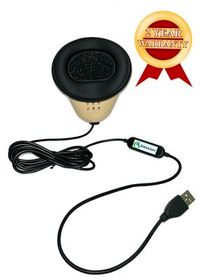
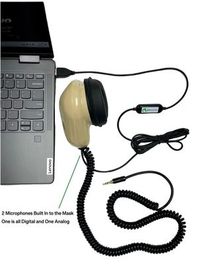
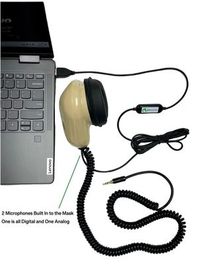
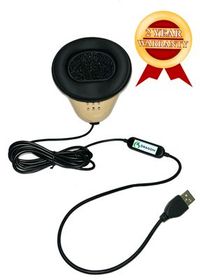
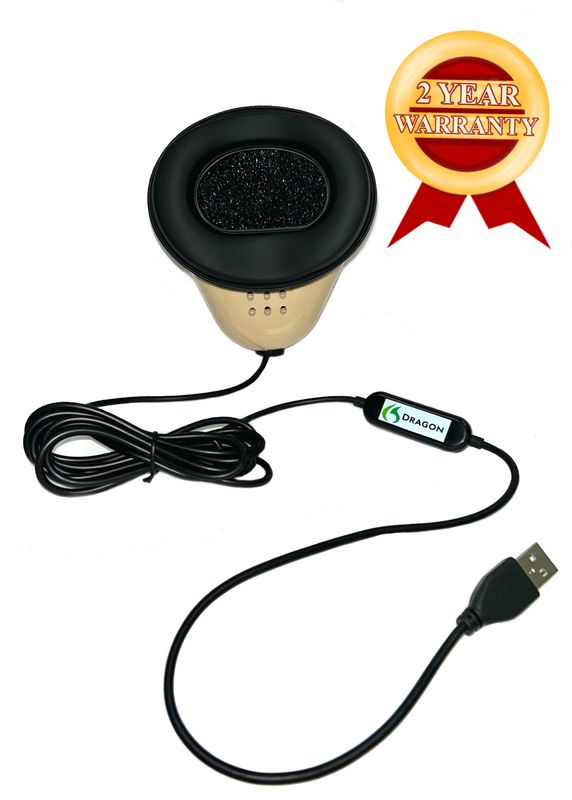
Martel’s Dragon USB Stenomask gives the reporter a USB microphone connection to the computer. The Double Dragon 2 can also feed a compatible recorder through its separate 3.5 mm microphone output. That independent dictation recording can help you establish which ending you actually spoke and whether you paused. USB and recorder audio come from separate mask microphones on the Double Dragon 2. Treat the saved recorder file as evidence about that path, and use an actual common time reference if you compare its sounds with a separate screen capture. Martel stenomask microphone connection comparison.
The first interval begins at the audible start of the reporter’s target phrase and ends at the first moment an agreed opening becomes legible. For “We opened the lower panel on the east side,” perhaps the observer must read “we opened.” Ask the observer to ignore a stray letter or an earlier line containing those same words. The target must belong to the current answer. The useful question is how quickly the observer can identify that this particular answer has begun appearing. That interval naturally includes the time required for you to speak enough of the target.
The second interval begins at the audible end of the target phrase and ends when its decisive detail can be read. For the bridge sentence, that detail is the direction “east side.” The direction may appear while you are finishing the utterance, after you finish, or as part of a later wording change. Record actual order if you can observe it. If a camera timeline places the spoken ending at 18.5 seconds and the complete legible words “east side” at 19.0 seconds, the observed finish-to-detail difference is half a second on that invented timeline.
The third interval concerns when a line appears ready for a designated purpose. Define what you will watch and for how long. You might watch for five seconds after a short answer finishes, marking each visible change that affects the requested phrase. The last change observed in those five seconds is an event on your worksheet. Also record what the line says at the end of the watch and what appears when the job reopens. A five-second watch with no additional change establishes what happened during those five seconds. Finality under every future operation is a separate claim.
If full readback readiness matters, add one more condition to the third observation. Require the correct witness assignment, the complete phrase and enough surrounding text to understand the answer. The line “on the east side” under the wrong speaker may be legible but unsuitable for the particular readback exercise. Ask the observer to record when the detail appeared and when the entire answer was usable for the assigned purpose. That distinction often makes the timing numbers much more meaningful than a raw ranking of displays that happen to show text at different points.
The fictional bridge crosses a garden pond. It has a lower panel on each side and a small inspection lamp. No engineering decision is part of this exercise. The object is simply to produce realistic testimony with details that change meaning. Prepare a reference card with four lines. “We opened the lower panel on the east side.” “The lamp was beside the spare handle.” “I wrote the time on the yellow ticket.” “At noon the keeper returned the short key.” Give each line its own identifying number on the paper, without speaking that number as part of the measured phrase.
For the first line, measure appearance of the opening “we opened” and the direction “east side” on separate performances or by reviewing common-timeline footage afterward. A partner working manually may miss one event while trying to mark the other. Use the same target definition across the readings. The words “east side” should be complete enough for the observer to distinguish them from “west side.” Mark whether the observer can read both words and whether their position on the current speaker’s line makes sense.
For the second line, give the observer a reasonable distractor. During the fictional questioning, the witness previously mentioned a red lamp at the office. Now the target is “beside the spare handle.” Someone watching for the first mention of lamp may mark the wrong event. Ask the observer to locate the current answer and write the first complete phrase they see there. If the recording does not show enough surrounding text to distinguish an old occurrence from a new one, change the framing before collecting more samples.
For the third line, use color as the decisive detail. Have a partner read it once with yellow and another time with blue on a separate card, in an order unknown to the reporter. Preserve the actual spoken choice for each run. The observer may know that a color is coming, but should score only the color that was actually dictated. A fast appearance of “yellow” on a trial where the reporter said “blue” is an early visible word and an incorrect detail. Recording both facts protects the timing exercise from rewarding a plausible guess.
For the fourth line, make short key the endpoint and at noon the opening. Ask the observer what they will do if the screen first says “a tune” and then reads “at noon.” An exercise that measures the first correct identifiable opening has a reason to wait for “at noon.” An exercise measuring the first visible attempt can mark “a tune” earlier. Agree on the rule, write it down and continue. Both are useful observations. Problems arise only if two people believe they have measured the same thing when one has timed an attempt and the other a correct phrase.
Consider this invented run from a single practice recording. The reporter begins the first bridge sentence at 7.0 seconds. “We opened” is first legible at 7.9 seconds. The reporter finishes the sentence at 10.0 seconds. “East side” can first be read at 10.4 seconds. A final full stop is visible at 10.8 seconds, and the observer sees no other change during the rest of the stated watch. The opening interval is 0.9 seconds. The spoken ending to correct directional detail is 0.4 seconds. The spoken ending to the last observed change is 0.8 seconds.
The three numbers describe different portions of the same made-up run. A person adding them together would count parts of the process more than once and produce a total that has no defined pair of endpoints. If someone asks how long it took from the start of speech to the observed full stop, subtract 7.0 from 10.8 to get 3.8 seconds. That includes the time spent speaking. If somebody asks how much time passed after the reporter stopped speaking before the direction was readable, use 10.4 minus 10.0. Naming the question first prevents an arithmetic answer to the wrong question.
Now take an invented second run. A reporter says “I wrote the time on the yellow ticket,” starting at 20.0 seconds and finishing at 23.0. The word “yellow” appears at 22.5, “ticket” appears at 22.9 and the sentence sits, legibly complete for this exercise, at 23.1. If the decisive target was color alone, its appearance relative to phrase end was minus half a second. If the decisive detail was “yellow ticket,” the ending-to-detail interval was minus one tenth. If the target was the designated complete sentence, the relevant observation was one tenth after the spoken ending.
Resolve the apparent contradiction by listening to the whole utterance. People speak a phrase over time. Some words are spoken well before the final sound in the sentence. Seeing a word or pair of words before the phrase finishes can be entirely consistent with seeing a final period or a speaker change somewhat later. Your subtraction is a description of relative timing on this one recording. It is not an indication that text appeared before the reporter spoke the word itself. That would require comparing with the audible timing of that particular word, a different reference event.
A third invented run illustrates missing data. The spoken phrase ends at 34.0 seconds. The recording clearly contains “short key.” The observer sees “short” by 34.3, then the screen scrolls and the remainder of the line leaves the capture. The saved rough later reads “short key.” Record the visible “short” observation and mark the correct full detail as unobservable during the live capture. Its presence in the saved rough establishes the saved wording. You cannot treat the file-save time as the time the live word “key” first appeared unless you actually observed the event.
A handheld watch shows digits, but the observer still has to hear the endpoint, recognize the target and move a finger. If the observer reports two readings as “about a second,” retain that practical precision. Printing 0.97 and 1.02 from a hand-operated test may imply an ability to distinguish fifty milliseconds that your method has not established. A useful note says who watched, what they used and how closely they believe they could separate two events. For small differences, an agreement about event order can be more dependable than a finely rounded value.
In a practice video with a known constant rate of thirty frames each second, adjacent frames are about one thirtieth of a second apart. Seeing a complete word for the first time on frame 151 tells you it was visible by that captured frame. If it was absent from frame 150, the visual transition occurred somewhere between the two sampled pictures as recorded. Audio and display capture may introduce further uncertainty. Report frame-based observations at a precision your capture supports and avoid assuming any camera or screen recorder always runs at a particular frame rate.
You can demonstrate the importance of the observer definition without technical equipment. Ask two partners to watch the same fictional answer. One marks the first readable syllable, and one marks the first complete correct word. Have them explain what they saw before comparing their numbers. If both followed their instructions, different results may reflect distinct targets. Now give both the same phrase and agree on whether punctuation, capitalization or a speaker label matters. A second scoring of the same evidence can show whether the exercise itself is repeatable.
If a key detail never appears during the allotted watch, keep that row. Write the watch length and what was actually visible when it ended. You might say “The spoken phrase ended. During the following five seconds the displayed answer contained ‘short,’ with no observed ‘key.’ The saved job later contained both words.” That is a much better report than choosing five seconds as an invented completion time. Where a word never appears even in the saved copy, follow up with an accuracy or audio review in addition to any timing question.
Choose one change that is meaningful to your reporting work. You might first time the local CAT display during a plain fictional practice job, then repeat a matched set while your usual, approved exhibit viewer is open. Name the change before you run the test. Keep the mask connection, dictation pace, observer, display location and CAT configuration recognizable across both conditions. Where a change also alters another part of the job, record that explicitly. Opening an exhibit on a second display may also move the observer’s point of attention, which can change the manual measurement.
Alternate the two conditions across short sets if practical. For example, do a pair in the order ordinary job then exhibit viewer, pause for a break, and do another pair in the reverse order. You now have an opportunity to see whether a pattern followed the condition or simply the later position. Use a different sentence set as well as a repeated reference line. Familiar wording helps you compare like with like, while new wording helps show whether a memorized target was unusually easy for the operator and observer.
Keep the components of a change honest. Suppose you move from one laptop to another, change the mask port, install a different CAT release and use another observer. A visible difference would describe the two complete arrangements you actually tried. It could still matter for a buying or setup decision, but the test could not assign a specific number of seconds to any one component. Document all four changes. If you need to investigate only the mask port later, design a small exercise on one computer in which that is the only deliberate difference.
Compare results using the visible rows before calculating a summary. Imagine four observed finish-to-detail intervals of one half, one half, one and two seconds under the first condition. The middle pair are half a second and one second, so the median is three quarters of a second. Under a second condition imagine four rows of half a second, one second, one second and one second. The median is one second. In this made-up example the lower median in the first set exists alongside a longer single observation. Reporting the range and individual trials preserves both pieces of information.
Ask a colleague to request the answer about where the inspection lamp was placed. The first words of the answer may have appeared promptly, but the requested location is near its end. Have the colleague note when they could first read the location on screen. Then ask the reporter to read the complete exchange. Record whether the speaker assignment, the object “lamp” and the location “beside the spare handle” could all be recovered from the passage selected. This tests how useful the timing is for a real task a reporter anticipates.
Now place the readback request later in the fictional hearing, after a follow-up about the short key. There may be no waiting for recognition because the earlier answer is already in the document. Instead, the task is to locate the correct question and answer. If you time the interval from the request to the start of readback, call it a retrieval measurement. It can tell you as much about wording, job organization and screen navigation as about any speech-processing route. Keep that result beside, and separately named from, the local text timing observations.
A final exercise asks the reporter to choose between two apparently complete answers on screen. The earlier line says the lamp was seen at the office. The later line identifies the lamp beside the spare handle. A partner who times the first readable word “lamp” may mark the earlier line, long before the requested information is available. Have the observer identify the first and last three words of the particular answer they timed. That brief annotation can prevent a numerically impressive result from being attached to a different moment in the fictional hearing.
Bring a copy of the timing exercise to Martel when discussing a VOX Elite 32 GB or 64 GB laptop. Both packages list assistance with stenomask setup and CAT file transfer. Use the first part of the appointment to open a familiar practice job and find one timed answer. Then use the mask you expect to take to work to dictate a new answer, with an observer watching the display you actually read. Write down the words the observer looked for and which supported recognition configuration produced them. This gives you two concrete checks on the preparation you requested. Martel VOX Elite 32 GB configuration · Martel VOX Elite 64 GB configuration.
A readable demonstration can fit on a single card. On its front, write the sentence, the target phrase, the observed display and the intended recognition setup. On its reverse, record the actual ending heard through the mask, the first legible detail and the saved wording. Use a fictional scenario with a different color or direction on the new computer to distinguish it from the transferred sample. When the appointment is over, you can identify both what transferred successfully and what the newly connected mask supplied to the current job.
We handcraft our Dragon USB and Double Dragon 2 stenomasks in limited quantities. If a batch sells out, there may be a waiting list.
Start your report with a plain description of who spoke and what you measured. “I dictated four bridge-inspection sentences into my own USB mask. My partner watched the local CAT display. We measured from the end of my spoken phrase to the first readable correct direction or object.” Follow that with your CAT release, recognition route and laptop configuration. Put observations next to their individual phrases. If one row was excluded because the camera did not show the final word, explain that alongside the missing value rather than burying the issue under a summary.
Then identify one practical action that follows from the evidence. You might decide to use a fuller phrase as the endpoint in future readback practice because the initial word appeared well before its meaning was clear. You might improve the observer’s view and repeat a trial with the smaller screen font. You might ask your CAT publisher how to interpret a specific display feature that you have documented in the version you run. A constructive report ends with a question you can answer next. It need not guess at the internal cause of an interval that the test was never designed to isolate.
For a class, exchange completed reports without showing video initially. Ask a partner to reconstruct which endpoints were used and which decision the reporter made from them. If someone cannot tell whether a number begins at the first sound or final sound, revise the label and show the original evidence. If someone assumes that a remote viewer and local reporter saw the same display, add the workstation location. That editing pass strengthens the evidence trail before you compare anyone’s results. The class learns to interpret a timing claim as carefully as it interprets a disputed word.
Sometimes your evidence shows a range for an event quite clearly even when you cannot give a single timestamp. Imagine an invented capture that places the reporter’s phrase ending somewhere from 10.2 to 10.4 seconds. The intended phrase first becomes legible somewhere from 10.7 to 11.0 seconds. The shortest possible difference consistent with these observations is 10.7 minus 10.4, or 0.3 seconds. The longest is 11.0 minus 10.2, or 0.8 seconds. Keeping the range tells your partner what the original evidence supports.
This is arithmetic on the observation windows you chose, rather than a statistical estimate or a performance guarantee. If those windows omit an uncertainty you could not see, the bounds will omit that uncertainty as well. Write how you established each window. You might hear the end clearly between two marked playback positions and see that the target was still incomplete in one image but complete in the next. Another reviewer can then check the actual samples and decide whether the same bounds are reasonable.
An overlapping example deserves different wording. Imagine that the speech endpoint falls somewhere from 4.0 to 4.4 seconds and the complete word is visible somewhere from 4.2 to 4.5. The possible signed difference runs from minus 0.2 seconds to plus 0.5 seconds. On those observations you cannot determine whether the word became legible before or after the spoken ending. Write “order uncertain within the capture” and keep the interval. That is a stronger, more precise description than declaring a win for either event from two guessed midpoints.
Use bounds sparingly and in service of a practical question. If the entire answer was easy to read before a partner requested readback, a discussion about hundredths of a second may add little to that exercise. If two observers disagree about event order for one crucial word, bracketing the speech and visual landmarks can clarify exactly what they see. In both cases the quality of the underlying evidence matters more than the number of digits you write on the page.
For another exercise, give a partner only the two event windows and the target definitions. Ask them to compute the range and explain the result in ordinary language. Then show the short fictional recording and let them decide whether the stated windows actually capture the events. A partner who can both reproduce the arithmetic and challenge the evidence is doing the same careful review that makes a transcript dependable.
Start with the question you actually have during work. If you wait for the last meaningful word before readback, measure from the end of your own spoken phrase to the first legible occurrence of that exact detail on the intended display. If you want to know when your first words start appearing, use the beginning of speech and an agreed first readable opening instead.
Use the public documentation for the service or CAT product you run to identify the mode and its supported features. Your end-to-end display timing depends on what you count as the start, what surface you watch and what event you call complete. A date-stamped observation on your own supported configuration gives you a figure you can describe with those conditions attached.
Use precise language about what you can verify. The Speechmatics developer guide explains the meaning of partial and final output for its Realtime API. A displayed CAT line may undergo recognition, translation, formatting or editing behavior specific to the installed application. Unless the CAT publisher identifies a particular display state, say what words you saw and what remained in the saved rough.
That identifies the end of the input event you want to relate to the visible detail. A witness may finish speaking earlier, and a reporting partner may repeat the word slightly later than expected. Measuring from the witness’s original phrase can be useful for a different question about the whole reporting workflow. Give the two intervals different names.
If you have a shared timeline, subtract the spoken phrase-end time from the time the word became legible and preserve the signed result. A negative difference means the observed detail preceded that particular phrase ending. With a manual watch and unclear order, write that the detail was already visible when you heard the ending. That observation is useful without artificial precision.
They can have different starting instants even when both show seconds equally well. For a difference between two events, observe both on one reference or establish and document an alignment marker available in each recording. Otherwise you can use each file for the facts it supports, such as the actual words spoken or the text visible, without treating unrelated time counters as aligned.
Define it in terms a second observer can apply. The phrase might need to show both “short” and “key” in the current answer, with enough clarity to distinguish short from spare. Include whether the speaker must be correct and whether punctuation matters. A person who can guess the line from an isolated “s” has not yet read the complete phrase you designated.
It can count in a measurement expressly defined as the first visible attempt. Preserve the exact wrong word so the observation remains interpretable. For a measurement defined as the first correct identifiable detail, wait for the intended word within the selected observation window. If that detail never appears, report its absence and keep the attempted word alongside it.
Mark the visible states you can identify, together with the observation window and clock used. In the bridge exercise you might see a color, a different color and then the complete noun phrase. The first visible text, first correct color and last observed change may be three separate events. After saving, compare the wording in the reopened job with the final state you observed.
Mark the time the correct words were legible and the later time of the punctuation change separately if both matter. The reporter ready to identify the direction may care mainly about the first event. A person reviewing the fully punctuated sentence may care about the second. State which condition you used when giving a single timing result for that trial.
A meter can indicate activity, but it does not identify the particular words you are timing. The observer needs to recognize the audible endpoint, such as the end of “east side,” and associate it with the current displayed answer. Use recorded or directly observed speech that distinguishes the target from background sounds and from the partner reading the source aloud.
Yes, when it contains the actual reading from the intended session and the independent recorder input was working. It is especially useful for establishing exactly what you dictated. If its timeline is separate from the screen recording, provide a verified common marker or use a different common-clock observation to calculate a precise sound-to-screen interval.
Use a brief, authorized fictional practice capture that lets you check the relevant audio and readable screen afterward, or begin with a simpler saved-word check. Label what your method can establish. If you operate a stopwatch while voice writing and watching for subtle changes, those competing tasks can affect the results. An additional run with a partner may answer the timing question more clearly.
For a rough comparison using displayed elapsed seconds, document the playback method and use an appropriate precision. If you convert frame counts into time, confirm the rate and whether the recording supports the constant-frame assumption you use. Two frames in an assumed thirty-frame recording are not reliable evidence of a precise interval when the actual capture cadence is unknown.
It lets you distinguish speaking time from the interval after speaking. A reporter who takes four seconds to deliver a phrase and sees its final wording one second later has a different total from a reporter who takes two seconds and sees the same finish-to-word interval. Record whichever quantity answers your question and preserve the speaking duration when it helps interpret the result.
Place the target card close enough to the display for the observer to see both, or rehearse one target per short trial. If the observer looks away and returns to a finished word, the time they report is the moment they noticed it. Record that limit and repeat with a more practical arrangement when first visibility is the actual target.
A familiar sentence is valuable for repeating the same task, but it can invite the observer to anticipate a word before it is fully legible. A new sentence with an unpredictable choice, such as east or west, checks whether the viewer can actually distinguish the detail. Compare those observations while keeping the working configuration and scoring instructions consistent.
Include the scroll in the description and say whether the word remained observable. If the screen recording misses the end of the line, the time for the complete target is unavailable from that capture. You can still use the saved rough to check the final wording. For the next trial, adjust the recording frame or test a shorter answer that remains visible.
Describe the connection when it is relevant to the tested workflow, such as a publisher-supported cloud recognition route, a conference call or a remote viewer. Identify each function separately. For locally processed recognition, a meeting or other networked activity may still be present. A connection indicator or general speed reading alone cannot identify which component caused a particular display interval.
Confirm each publisher supports the configuration you intend to use. Identify both releases, the recognition route, hardware, input and displayed surface. Use a matched fictional phrase and the same operational definition of a readable correct target. Describe differences as observations about those complete configurations. A whole-application comparison rarely isolates the processing time of the recognition service alone.
Yes, if the purpose is to measure time from the original speaker to legible text in your reporting workflow. Label that interval as starting at the room speaker’s words. The result can include the reporter’s listening, decision and repetition time. If you want a reporter-input measurement, use the reporter’s own accurately identified spoken event in a separate trial.
When the practical question is how soon you can repeat the correct answer to someone asking for it. The visible words should identify the speaker and include the decisive fact. The word “panel” may appear well before the phrase “on the east side.” A useful readback includes the direction when that is what the questioner asked the witness to identify.
Preserve both findings and specify the threshold or comparison you used when describing “late.” You may have a live visibility concern with an accurate saved result. Give your publisher or instructor the exact phrase, observed interval, display location and configuration. That packet is more informative than a broad statement about poor recognition or an inaccurate final transcript.
It describes one observed trial under the particular conditions recorded. To understand a normal working range, preserve several individual observations, including long and incomplete ones. Compare similar tasks and make the reporting method visible. Picking the fastest trial on one setup and a typical trial on another would make the display comparison difficult to interpret.
Choose a precision justified by how you observed the events. A human observer working to roughly half a second can report that level and the uncertainty honestly. A shared capture with known timing may justify finer review. Extra printed digits cannot overcome an unclear audio endpoint, a partly hidden word or a viewer who looked away during the relevant interval.
Choose conditions that match the question. A simple session can make a repeatable starting point. A second practice condition can include the other approved applications you normally use. Write down what changed and keep a copy of both sets of results. The goal is to understand the tested reporting arrangement, including the work the laptop is actually expected to do.
Provide the CAT product, release, recognition option, mask connection, display viewed and an entirely fictional phrase. Identify the start and end events, your actual observed results and what remained in the saved rough. If you share evidence, use the publisher’s appropriate support channel and authorized samples. State whether the result repeated under the same conditions.
Describe the CAT product, publisher-supported processing route, expected recording destinations, number of displays and other programs you run in a working session. Compare the Martel VOX packages and ask about the setup services relevant to those tasks. Bring a short, approved practice job, so you can verify actual input and displayed text on the selected configuration.
Yes. Give the remote observation its own label and agree on the exact phrase and display. Consider how a shared timing reference will be established across locations if you need a numerical difference. If that relationship is unavailable, preserve the local timing and ask the remote participant to report the actual wording and their own directly observed events separately.
The result refers to a named reporter, phrase, installation, recognition route, display, observer and pair of endpoints. A second person should be able to identify what was visible, at what point in the speech and in which saved job. Once those facts are clear, you can choose the next question, such as improving a readback exercise or repeating a setup comparison.
Measure first readable words, decisive details and readback readiness in a Speechmatics CAT job with a mock bridge inspection and one shared clock.