



A Mock Court Hearing From Roll Call to Readback With Speechmatics
Run a complete fictional footbridge hearing with Martel stenomasks, two witnesses, exhibits, a recess, a disputed readback, and four separate scores.
A voice writer finishes a short Speechmatics practice job and can read the last line promptly. That answers a first question. A second question is what happens while the reporter works through a long stretch of testimony, reviews an exhibit, returns from a break and saves the completed job. One quick reading cannot show what happens at forty or eighty minutes. A longer practice session lets you observe those stages on the same equipment. Give it a defined duration, a small repeated passage and a reason for each observation you record.
Start by putting a working question at the top of the page. An example is “Can I still find and read a complete answer on my local CAT screen near the end of ninety minutes, using my normal mask and approved session setup?” Another is “Does the time from finishing the last word to seeing the correct ending change across this particular exercise?” The first combines visibility, speaker assignment and retrieval. The second focuses on elapsed time to a visible detail. You can investigate both, but give each its own place on the sheet.
The suggested session below lasts ninety minutes, including ordinary practice activities and a break. The length is a teaching choice. Adjust it for the lesson or work pattern you need to study. None of the sample times or workloads is a product specification or a recommended uninterrupted speaking period. The content follows a fictional town playhouse reconciling two seating maps after a renovation. You can perform the passages with your own stenomask, a reader and an observer, or adapt them to a solo practice job with a supportable method of observation.
Advantage Software’s EclipseVox workshop describes practicing the connection between spoken input, recognition, vocabulary and the output used during a voice-writing job. Its product information describes local and cloud Speechmatics Enhanced options and identifies the required Advantage Software equipment for local use. On a long practice worksheet name the EclipseVox release and the particular option you are actually using. If its operation depends on a connection, note the connection in use at each checkpoint. If the route uses dedicated local hardware, identify that hardware as part of the configuration being measured. Advantage Software’s Speechmatics workflow workshop · EclipseVox processing options · Advantage Software requirements by release.
Stenograph describes Speechmatics operating on the device within CATalyst VP. If you use that supported integration, write down your installed release and its recognition choice. You may also run a remote meeting, use a separate document viewer or have a remote observer reading a shared display. List those activities as part of the scenario. A long practice job can involve local recognition and other work that uses a network. Being specific about their roles makes a later question about visible text much easier to direct to the right provider. Stenograph’s on-device integration announcement.
Zoom publishes microphone and speaker settings for its Workplace application. For the part of a fictional practice involving a remote speaker, identify the actual meeting microphone and speaker choices you intend to use. Keep the distinction between the voice you repeat into the stenomask, the voices coming from the meeting and any separately recorded room feed. Before including a call in the timed condition, verify an ordinary short exchange with your practice partner. Have the partner confirm what they heard, and listen to the file you intend to use for later review. Zoom Workplace audio settings.
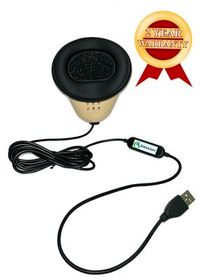
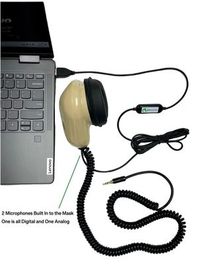
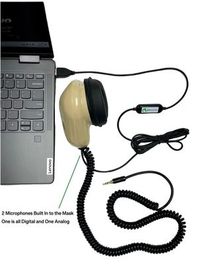
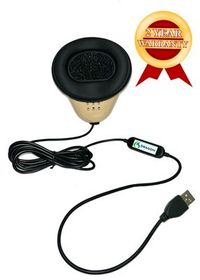
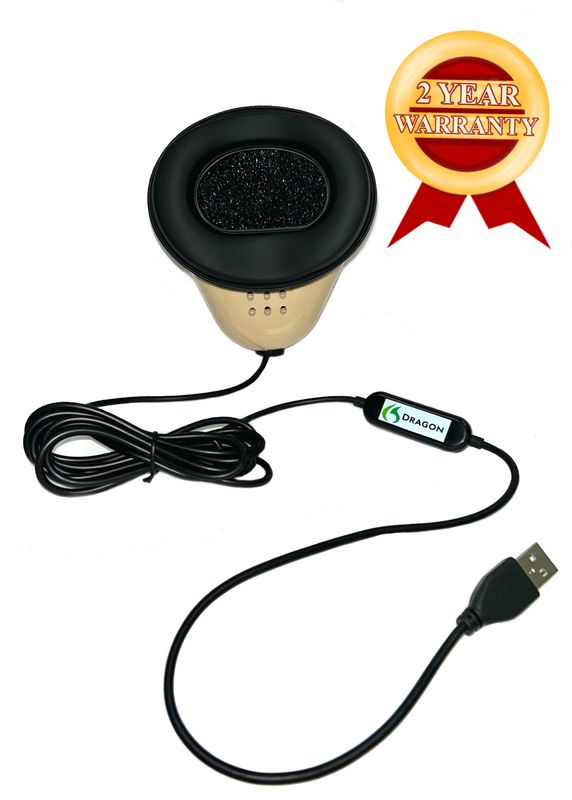
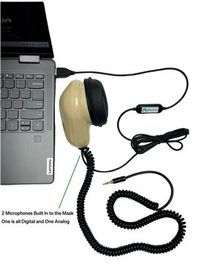
Martel’s Dragon USB Stenomask provides a direct USB microphone path. A Double Dragon 2 also has a separate 3.5 mm microphone output for a compatible recorder. The extra path is useful when you want an independent recording of the reporter’s own dictation across the longer session. Start the recorder before the first exercise and check a saved sample beforehand. Record how you will identify the first, middle and last portions afterward. When you consult the separate audio, describe it as a second mask path and verify which portion of which session it contains. Martel stenomask microphone and recorder connections.
For the laptop, record the model, power source and ordinary applications in use, with the CAT job and recording destinations listed separately. Give expected changes approximate times, such as “planned break near the halfway mark” or “open exhibit viewer during the seating-map examination.” The point is to build a traceable description of purposeful work. A list of every background process or every number in a system monitor may be difficult to collect and seldom identifies what the reporter was actually doing when a change was noticed.
Here is the original reference paragraph for all three scheduled checkpoints. “The eastern stair ends beside the balcony rail. The usher placed the revised seating map on the blue table. Our copy shows two empty seats to the left of the aisle. When the curtain lifted, the folded map was still on the table.” Keep the wording visible to the reader and print the final phrase on the observer’s card. If your chosen endpoint is the last complete phrase, define it as the legible words “still on the table” in that current occurrence.
Why repeat a reference paragraph inside a longer, otherwise varied job? The repeated passage makes the three checkpoints more comparable. A new technical term or a speaker talking over someone else may make a later exchange harder for reasons having nothing to do with elapsed time. Repeat all four sentences in the same order, using your comfortable working pace. Keep the nearby job context distinct with a spoken practice marker outside the measured paragraph or a separate worksheet cue. That way the observer can later tell which instance of “still on the table” they selected.
Add one fresh line after each reference reading so you have a companion observation with less rehearsal. For the opening checkpoint, use “The chalk mark was beside seat eight.” At the middle, use “The brass number sat under the wooden arm.” At the end, use “The rail cast a shadow across the top step.” The three fresh lines have different wording and should be interpreted accordingly. They are useful for checking whether you can handle new material at each stage. Your repeated reference is the better choice for a direct comparison of timing across the session.
Define the reference in terms of what you actually spoke. If you omit “folded” on the middle reading, note the missing word and keep the actual performance. You may still be able to time the unchanged final phrase, but a word-for-word comparison with the printed paragraph would otherwise blame recognition for something you did not dictate. If you restart a sentence after stumbling, mark the restart. You can perform another labeled reading as a follow-up without quietly replacing the original checkpoint with a cleaner version.
For a ninety-minute practice, spend the first few minutes identifying the job, verifying the mask path and adding a short spoken session marker. At about minute six, read the reference paragraph and the first fresh line. Record the elapsed time, actual clock method, current power state and windows in use. If the session must start late because the class is preparing an exhibit, write the real times down. A record with three honest checkpoint positions is more useful than an apparently perfect schedule reconstructed from memory later.
Use much of the first half for content that resembles reporting rather than repeated speed tests. The reader can ask who drew the seating map, which seats were temporarily removed and how the ushers knew which aisle to use. Introduce one name, a document identifier and a short correction. The observer can note the time of an unexpected event without interrupting every answer. If the reporter stops to adjust a chair or a practice partner needs to repeat a line, record the interruption in a simple event log and resume the fictional exercise.
At roughly the midpoint, about minute forty-five on the suggested schedule, repeat the exact reference passage and read the second fresh line. Decide in advance whether this checkpoint falls just before or just after the planned break. If it comes directly after a break on one day and before the break on another, mark that change. It might influence how readily the reporter resumes, what windows are open or where the observer is looking. You can intentionally compare those positions on another day, but the first worksheet needs a clear account of what happened.
Return to varied practice in the second half. Let the witness compare two versions of the map, identify a row removed from one drawing and correct an earlier description of the blue table. Include a readback request from the first half of the job. These activities exercise continuous capture, retrieval and speaker assignment while the session advances. At about minute eighty-four, perform the reference and final fresh line. Use the remaining minutes to save work, reopen the intended files and document the actual outcomes. If the real duration differs, report it next to the planned duration.
A shorter session can follow the same shape. For thirty minutes, you might use a reference near the beginning, another near minute fifteen and a last one several minutes before closing. Keep the closing minutes for a saved-file check rather than stopping the moment the last word appears. For an extended class with substantial breaks, record wall-clock duration and active practice duration separately where you can. “Ninety minutes in the classroom” and “ninety minutes of accumulated dictation” describe different exposures. Define which question your long run is intended to answer.
Start the fictional examination with the mapmaker. Question. What changed between the two drawings? Answer. On the first drawing the blue table is in the west entrance. On the second drawing it is under the balcony stairs. Question. Are the stairs at the west entrance? Answer. The lower steps are close to that entrance. The upper landing leads to the east aisle. Question. Which drawing was on the blue table? Answer. The revised drawing, with the east aisle shaded. Use this exchange to check wording, location and speaker boundaries during ordinary practice.
For the next segment, use a seating dispute. Question. Did the revised drawing eliminate two seats or move them? Answer. It moved the two seats to the other side of the aisle. The places where they had been were shown as empty. Question. Were tickets sold for the empty places? Answer. I cannot tell you that from the drawing. The ticket ledger shows numbers, but it does not show where the chairs were standing. This gives the reporter two nearby references to empty seats with different purposes, a useful later readback challenge.
Move to an exhibit comparison. Question. Please identify drawing six. Answer. That is the initial drawing. Drawing six B has the shaded aisle and the revised table position. Question. Is the small mark a B or an eight? Answer. The handwriting looks like an eight in the photocopy, but the loose original says B. Question. Did you write the letter yourself? Answer. I initialed the blue border. The stage manager wrote the letter on the drawing. Ask the observer to note when the exhibit identification and the role of the handwriting are both clear.
Introduce an interruption supplied by the reader, not an equipment fault. Counsel. Before the witness describes the upper landing, may I move the larger drawing closer? Chair. Yes, and please keep its number visible. Witness. The window light catches the plastic sleeve. If you turn it toward the aisle, I can see the upper line. Counsel. Thank you. Where was the rail? Witness. It was beside the top step. This rehearses several speaker changes and a short natural delay while the document is moved. Label it as part of the mock testimony, distinct from a scheduled timed reference.
After the break, resume with an explicit anchor. Question. Before the break you described the rail. Which end of the rail appears on the revised drawing? Answer. The east end. The west end is behind a curtain in that view. Question. Did you measure it? Answer. I estimated its position. The stage manager supplied the measurements on the following page. Ask the reporter to locate the earlier exchange and read back only what the witness said about the upper landing. Record retrieval time separately from display timing if you choose to time that task.
Use a final clarification about the marker at the blue table. Question. Was the revised paper still folded when the first audience members entered? Answer. It was folded when the curtain lifted during the rehearsal. I unfolded it before we opened the side door to the audience. Question. So the curtain event was a rehearsal? Answer. Yes. The rehearsal and the public performance were different events that evening. This last piece tests whether a meaningful qualification survives near the end of a session. A perfectly timed repeated paragraph is more informative when accompanied by useful checks on fresh testimony.
Draw a narrow column for elapsed time and a wider one for observable events. An entry can say “Minute twenty-eight, opened approved drawing in the viewer,” “minute forty-six, resumed after four-minute practice break” or “minute sixty-one, observer moved seat.” Add where the local CAT window was displayed and whether a remote call was active. A log should read like a short history that another reporter can understand. Avoid explanations disguised as observations. “The text appeared later on the last two target lines” is an observation. A claim that an unnamed background process caused it needs further evidence.
Power is worth recording because it can change during a long working period. Note whether the laptop was connected to its normal power source or running on battery at each checkpoint. If an unplugging was deliberate for a separate exercise, identify the time. If you simply discovered that the cable was unplugged at the last checkpoint, state when you noticed and leave the earlier moment unknown unless you have evidence. An observation made at the end cannot retroactively establish that the computer was on battery at precisely minute fifty.
Record changes in the room as well. A new reader may use a faster delivery. A different observer may need stronger glasses to read the screen. The class may move a display closer to the table after the break. The reporter might adopt a more comfortable and clearer dictation position once the session is underway. These details can affect what is spoken or what can be observed. Including them does not weaken your test. It helps explain what could reasonably be compared and which portion deserves another controlled exercise.
Use a simple rule for activities that were planned but never happened. Write “not used this session” beside the exhibit viewer, remote call or separate recorder if it stayed off. Some workstations are routinely prepared for a remote meeting even on a day when the practice partner sits across the table. A list showing that the application is installed or commonly used is not evidence that the meeting was active during an observation. Label ordinary practice, planned change and actual observed state in words a later reader can distinguish.
Imagine three invented finish-to-detail times on a common classroom scale. The first reference takes about one second after the spoken ending for the complete target to be legible. The middle reference takes about one second. The last takes about two seconds. All three saved copies contain the intended final phrase. This gives you one later observation on this session and a reason to inspect the corresponding event log. It does not establish that a particular engine becomes slower after eighty minutes. You have one sequence with potentially changing speaking, observation and workstation conditions.
Suppose the log shows that the observer was looking at the remote shared display on the final reference, while the first two were watched locally. The three data points no longer measure the same surface. Keep the final row labeled “remote view,” and run another local reference with the same actual session state if practicable. Do not erase the remote finding. It might be relevant to a session where a participant receives text remotely. It simply cannot answer the local-screen question in quite the same way as the first two observations.
A different imagined pattern shows the same one-second time at all three checkpoints, but the last reference omits “folded” and the witness’s final correction sits on the wrong speaker line. The timing measure is stable for the chosen ending while two other practical outcomes deserve attention. Listen to the mask recording for “folded” and review the speaker transition for the correction. If the mask recording itself omits the adjective, direct the follow-up toward actual delivery. If the speaker label changed late, design a focused speaker-boundary drill. Preserve the stable timing as a separate successful observation.
Another result might be a long middle interval followed by a return to the opening range. Look at whether the middle sample was the first sentence after a break, whether the reporter opened a document or whether a noisy arrival affected the observer’s ability to hear the final word. Repeat a reference after an ordinary break under comparable conditions on another day. If a second, similar pattern appears, the evidence now describes two observed occasions with a specific common circumstance. You still need more direct information before claiming a cause, but your next question is more precise.
At the end, save the original rough in the normal supported way and locate any associated or separately generated practice recordings. Give yourself enough time to reopen the intended copy. Search for a unique nearby phrase from the first group of testimony, the middle group and the closing correction. The repeated reference alone is a poor file locator because its wording occurs three times by design. A phrase like “the loose original says B” establishes which part of the fictional examination you are actually reviewing. Document whether the repeated reference nearest that landmark is also present.
Listen to an identifiable spoken phrase near each of the three locations in each recording you intended to make. A file that begins correctly and has a plausible length can still be the wrong file, the wrong microphone source or an earlier session with the same practice material. Ask whose voice you hear and whether adjacent content identifies the correct run. When the second mask recording is independent of the computer, check it at its source as well as any copy you placed on the laptop. Give the two recording destinations their own entries in the closeout notes.
Keep the readback request separate from the audio file check. Ask a partner to request “the witness’s explanation of the rehearsal,” then find the corresponding passage in the saved job. Play the authorized audio where available and demonstrate the difference between the rehearsal and the evening public performance as actually testified. The aim is a retrievable, meaningfully attributed statement at the far end of the long exercise. This catches a different class of issue from simply checking that the final phrase of your repeated reference was recognized.
Now check the middle while your observer still remembers the break. Ask which was the last phrase before the break and the first phrase on returning. If a recording was intentionally stopped and restarted under your practice procedure, identify both files and describe which begins where. If the intent was continuous recording, listen across the relevant transition and preserve what you actually hear. The existence of one long file does not identify the speaker or prove that desired content was present at every point. These are several distinct checks that belong together in a working review.
Imagine a reporter choosing how to set up a desk for a ninety-minute mock hearing next week. The first run showed readable local endings at all checkpoints and a clearly slower remote observation near the end. A helpful decision is to repeat the remote portion with an independently identified remote display and an actual shared timing reference if exact intervals matter. Buying different equipment solely because the final manually timed entry was larger would skip several easier questions. The original result supports the next experiment, which in turn can inform a future purchase decision.
If you are teaching a class, compare each reporter first against their own baseline. A student may have used the same memory configuration as a colleague but a different microphone input, speaking rate, CAT release, display or observer. Aggregating their elapsed times can hide the condition you wanted to study. Share the cases as short stories with precise observations. One student discovered that a late sample was watched remotely, while another learned that a missing final word was absent from their own dictation. Both lessons transfer even though their numbers cannot be combined into a product rating.
If you want a personal readiness rule, choose it in terms of a task you can demonstrate. For example, before using a new arrangement in class you might require that you can retrieve the complete, correctly attributed answer at the beginning, middle and end of your fictional job and play the corresponding authorized audio. If a particular school or office has its own requirements, use those. The editorial example is a way to express a personal practice objective. It is not a manufacturer’s threshold or an assurance about how an untested assignment will unfold.
For a second day, decide on one question in advance. If the first session used an exhibit viewer only after the break, try a second session with the viewer open from the beginning, keeping the actual workflow and permissions appropriate. Alternatively, schedule a comparable break before a repeated reference at a different time. Describe anything you cannot hold constant. Repeating one structured comparison gives you a clearer picture than changing the laptop, adding a new recorder, reorganizing the desk and updating the software all between day one and day two.
Martel’s VOX Elite 32 GB and 64 GB laptop packages include court reporter setup assistance described in their listings, including help with the stenomask and CAT file transfers. Bring a copy of the fictional long job, its associated authorized audio and your first, middle and last landmarks to a setup conversation. Ask to demonstrate reopening a known job and then making a new independent sample. Provide the name and release of the CAT software and the recognition route your publisher supports. That makes the proposed laptop package part of a concrete plan for your own work. Martel VOX Elite 32 GB package · Martel VOX Elite 64 GB package.
You can use the map exercise as a compact buying worksheet. Write the number of screens, the meeting activities normally active, whether you capture separate dictation and room audio, the connectors each piece uses and what the person at a remote location is supposed to receive. Then write how you will verify each function. “Can retrieve the last corrected exhibit and hear my dictation” is something you can demonstrate. “Should be fast” gives a salesperson much less information about the actual work. Choose the VOX model and supported processing equipment around those defined tasks.
We handcraft our Dragon USB and Double Dragon 2 stenomasks in limited quantities. If a batch sells out, there may be a waiting list.
A useful cover note might say that the exercise ran for eighty-seven actual minutes with a four-minute break, using a local CAT display and the reporter’s personal USB mask. It would identify the supported recognition configuration and summarize the three correctly named checkpoints, including any incomplete measurement. Under that, give three locating phrases for the saved job and separate audio. In the final lines state the practical finding, such as “All three references were retrievable. The final measurement used a different display and needs its own repeat.” Use your actual observations in place of this invented example.
Keep raw records close to the summary. A teacher reading only the cover note might ask why a late reading was set aside. The individual trial line should explain that the target scrolled out of the observer’s view, the wrong surface was watched or the reference was inadvertently reread. When a difference survives these checks, you can give the publisher or equipment provider a short, fictional, repeatable example with time, context and saved evidence. A well-recorded long practice often makes the resulting support question much shorter.
You can also make the handoff easier for your future self. A month after the exercise, try opening the saved job from its documented location without first looking at the expected answer. Ask for the exhibit with the possible B or eight and find the witness’s brief explanation. If you can trace that passage to the correct audio and identify which laptop, mask and recognition setup created it, the session record has preserved more than a set of stopwatch readings. It has preserved a small body of reporting work you can actually retrieve and use.
Imagine a different fictional ninety-minute run. At minute six you see the entire target ending, at around minute forty-five the job is still open but the reader is away, and at minute eighty-four the ending is again legible. You have two observed checkpoints. Before writing that the session was steady throughout, ask what evidence covers the middle. The answer may include ordinary testimony successfully saved at that time, but its words and endpoint differ from the repeated reference. Mark the midpoint reference as unavailable and keep the ordinary testimony as a separate observation.
Suppose a reader returns at minute fifty-two. A useful recovery is to run the same reference then, record its actual position and identify the break or interruption on the log. You now have three timed observations at minutes six, fifty-two and eighty-four, plus a clear note that the middle schedule moved. There is no need to discard the whole practice job or pretend that the second measurement occurred earlier. The revised timeline lets a second reporter understand exactly what the exercise accomplished and decide whether the shifted midpoint matters for their question.
For an example of a successful close, imagine that the last answer is legible, the correct speaker is identified, the final job opens and the high-priority correction about the rehearsal can be played. The independent recorder, however, was stopped just before that correction because the fictional operator thought practice was finished. Record all four successful checks and the missing independent segment. This is more informative than marking the entire session “passed” or “failed.” The practical follow-up is to repeat the closeout sequence with the independent recorder active until the intended final landmark.
Before the next run, put the last landmark on both the reporter’s card and the recorder operator’s card. Agree that the final spoken words in the exercise will explicitly identify the end of the fictional session after the last required answer. Locate those words in each new saved file under the corrected procedure. This small improvement deals directly with the observed omission and provides evidence you can show a partner. It also keeps the next practice focused on an actual gap in the first rehearsal.
Choose a duration that covers the stage you are trying to study. A thirty-minute class task may need a different rehearsal from a lengthy mock hearing with a break and remote participation. Record planned and actual durations, plus how much was active dictation if relevant. The ninety-minute example in this article is a teaching schedule, not a universal readiness standard.
It gives you a repeatable task at different points in the session. If every checkpoint contains different names, different sentence lengths and different speaker changes, you cannot tell which variation accompanied an observed difference. Match the repeated sample for comparison and add fresh material to see how the setup and reporter handle unfamiliar content at each point.
Treat familiarity as part of the design. The repeated sample helps hold wording constant, but it can also become easier to dictate and anticipate. Keep a separate fresh line after each checkpoint and tell the observer which is which. A later session can use another reference paragraph of similar complexity to see whether the same general pattern appears.
Only if it fulfills the definition you set beforehand. It is often useful to rehearse the observer’s action on a different sentence, then begin the official first reference in the actual practice job. If the rehearsal was the first dictation after starting the workstation, note that fact. It affects whether you can describe the first checkpoint as the first dictation of the day.
The one that answers your work question. For a reporter interested in reading a finished answer, use the time between ending the spoken phrase and seeing a complete, correctly identified detail on the intended display. Record whether the speaker and surrounding words are usable too. Looking only for any on-screen activity may tell you less about actual readback readiness.
Keep the originally planned time in your notes and write the real elapsed time at which you performed the reference. Describe the interruption briefly and say whether the job or recording stayed active. If necessary, run a second reference after returning to ordinary work. Label it as an additional observation instead of quietly substituting it for the interrupted one.
For wall-clock session length, yes. For a measurement of active dictation time, calculate that separately and say how you measured it. Both can be useful. A reporter may spend ninety minutes at a workstation with seventy minutes of active rehearsal. A later reader needs to know which of those experiences the duration refers to.
It can be, especially if your practical concern is how reporting resumes after a pause. Label the condition clearly. If you want a comparison across ordinary ongoing dictation, put the reference after a short return to regular work, and keep the very first post-break line as a separate observation. Use the same rule when repeating the session on another day.
Mark it as missed and include the reason if known. A fresh reference at a later time can still be useful, but give it its actual elapsed position. The first and last observations do not tell you what happened at the missing midpoint. If the middle is important to your readiness decision, repeat that stage in another planned session.
An open application and an active conference are different states. Record whether you actually joined a meeting, had incoming participant audio, shared a screen or used a remote viewer. Verify the audio input and output selections relevant to the call. These operating details help a reviewer understand what the workstation was doing at the checkpoint.
Document them for functions that actually use the connection, such as a confirmed cloud recognition route, a remote meeting or a networked viewing path. Identify which function you mean. If you notice a connection change, write the observed event and time rather than assigning every simultaneous timing difference to it. A more focused comparison can then address that possibility.
Stenograph describes the Speechmatics recognition integration as on-device. A reporter may have other networked activities in their workflow, including a remote meeting set up according to its own requirements. Record the recognition route and the other activities separately. A local recognition observation and an observation about what a remote participant says they received are different pieces of evidence.
Name the release and confirmed speech recognition option, whether your supported setup uses cloud or local processing, and the relevant hardware specified by Advantage Software. Add the local display, mask input and recording paths. If the exercise includes a separately connected viewer or call, identify that destination too. The actual configuration is more informative than the word “Speechmatics” alone.
First listen to the corresponding saved audio if it is available and identify what actually changed. A misassigned speaker, late display observation or word the reporter did not repeat may call for a different follow-up. If you deliberately alter an input setting, log the change and start a newly labeled comparison. Preserve the original long-run evidence before modifying the working setup.
Keep the earlier verified portions and mark where the independent source ends. The computer job and its own associated audio may still provide evidence about the final passage. Verify each destination independently. A second recorder file from a different take cannot establish what you said during the missing end of the original run, even if you read identical words.
For a sampled exercise, check clearly identified phrases at the beginning, middle, end and around important transitions. State that these were sampled checks. They support claims about the selected positions. An assignment requiring a complete review calls for the appropriate full procedure. A reliable report identifies exactly how much of the file was checked and where.
Measure or note the change rather than treating it as constant. The later passage may take longer to dictate while its final-word display interval stays similar. Record passage duration, pace if measured and the specific target endpoint. A change in total time to complete a paragraph may come partly from delivery and should be interpreted in that context.
It is a reason to look more closely at that point. Identify changes in open work, input, power, viewer position, dictation and observation method. If relevant raw system observations were actually recorded at that time, preserve them. A single larger interval is not a direct measurement of memory, processor use or any particular component inside the recognition workflow.
Use concrete observations such as whether the full detail was readable by a clearly defined cue, whether the complete answer was on the correct speaker line and whether the saved file contained the reference. State the method. Those are meaningful categorical results. Add numerical timing on a later pass with an observer or a verified common-clock recording.
Mark the actual time, nearby words, display watched and relevant configuration. Preserve the associated fictional audio and text. A scheduled reference can remain useful even if it looks normal before and after the event. The unusual ordinary line might involve a new name, speaker switch or display activity that deserves its own short follow-up exercise.
For text delay, use the spoken target and when it becomes readable. For retrieval, start when the partner requests an earlier passage, then mark when you identify the correct span for readback. Long jobs naturally offer more places to look. A longer search for an earlier answer does not by itself tell you that recognition was slower on that answer.
Record that the saved text is retrievable and that you were unable to locate the expected audio. Check the capture and storage arrangement for the specific job, including any separate recorder files. Preserve identifiable sources from the other checkpoints. A readable transcript and a verified associated recording are separate outcomes of the long-session exercise.
You can design a dedicated comparison if it reflects an actual need. Changing power at the midpoint makes power source coincide with time in the session. If you later see a difference, consider a second exercise with a different order or a matched shorter comparison. In a normal long-session baseline, simply record the real power state and any changes.
Give the observer scheduled duties and a small number of clearly defined targets. During ordinary passages, let them note only unusual events. Before each checkpoint, place the exact target within easy view and confirm which display they will watch. If the observer changes, record who measured each trial. People can differ in when they decide a phrase is readable.
Compare how well students defined endpoints, identified recordings, retrieved corrected answers and interpreted uncertainty. For timing figures, start with each student’s own repeated conditions. Different readers, laptops, working paces, masks and observers can all be present across a classroom. Keeping the individual context with results makes shared examples more useful and avoids unearned product-level conclusions.
Label the practice packet fictional and include a version or date so an instructor knows which script you used. Identify the manufacturer pages supporting technical descriptions separately from your own measured results. A publisher can document what its software supports. The person running the exercise supplies the evidence for what happened at minute forty-five in that particular practice session.
Choose it when you want USB dictation to the computer and a separate microphone feed of the reporter’s own voice on a compatible recorder. Verify level, recording state, storage and playback on the recorder under its own instructions. During review use distinct landmarks near the start, middle and end so the independent file can be associated with the right job.
Bring the actual CAT release and supported recognition option, a list of the programs and displays used during a typical long assignment and your mask and recording connections. Include a fictional job with a known opening and closing passage. Discuss how setup assistance and file transfer apply to those tasks, and confirm any separate publisher-specified hardware for local recognition.
Repeat the exercise on another day with the same defined targets, a documented setup and a comparable observation method. Show the individual trial rows for each day, including interruptions. If a similar pattern appears, state the circumstances in which you observed it. A separate controlled test may be needed to distinguish elapsed time from the particular change that happened late in both runs.
You can describe the actual time you practiced, the confirmed recognition setup, the selected inputs and displays, the target observations and what your saved files contained at the inspected points. You can also identify what remains uncertain and a concrete follow-up. That is a useful working record of one long rehearsal, and a strong basis for the next setup conversation.
Run a long Speechmatics practice hearing with early, middle and late checkpoints, a fictional playhouse exhibit, and checks on audio and saved CAT text.