The difference between “only” and an empty space
“Only the west gate was open.” Read the sentence again without its first word. The second reading still sounds like a complete answer, but the witness has stopped ruling out other open gates. That is why an opening-word check deserves more than a glance at whether text eventually appeared. In voice writing, you can compare the words the witness actually used, the first word you repeated into your stenomask, what a partner saw on the CAT display and what remained when you reopened the saved rough. A different result at each point can lead to a different next step.
The exercise in this guide follows a fictional groundskeeper giving testimony about access to a garden. It uses pauses of about one, three and eight seconds, plus a second round in a different order. These are lengths chosen for a classroom exercise. They are not manufacturer thresholds, recognition deadlines or recommended pauses for court proceedings. Continue to use the timing and procedures appropriate to your actual assignment. A practice room gives you the chance to stop, compare evidence and repeat a single phrase under conditions you can describe.
Suppose you remember hearing “only,” yet the rough begins “the west gate.” Did you actually repeat “only” into the mask? Did the first sound reach the recording you are listening to? Did the word appear late on the display and survive in the saved text? Was it assigned to the end of the previous speaker’s paragraph? Each question suggests a check. Treat “first word missing” as the start of the investigation. By the end you want a sentence such as “The source and mask files both contain ‘only,’ and the saved answer begins ‘the west gate’ after the three-second pause in trial six.”
Decide which silence you are testing
There can be two pauses in the same exchange. A witness may look at a diagram before answering. After hearing that answer, the reporter may also wait before beginning to repeat it into the mask. For the primary exercise here, measure the gap in the reporter’s mask dictation. Use the last audible word you dictate before the pause as the starting landmark and the beginning of your next content word as the ending landmark. Ask a partner to cue the planned gap silently. Continue to let the fictional witness’s timing follow the script you prepared for that exercise.
For example, the partner reads “Which gate was open?” You repeat the question into your mask using your familiar procedure. The partner gives you “Only the west gate was open.” You begin your answer after the agreed interval from the end of your previous mask dictation. If the reader needs longer than the nominal interval to supply the answer, use a written answer card in the controlled part of the exercise, or have the reader give you the answer before the silent cue. Later, use a more natural exchange and write down the gap you actually observed. Keep the two designs distinct.
Decide what to do with speaker commands before starting the clock. In natural reporting you may say a command or speaker designation between the previous question and the first word of the answer. The command itself is speech into the mask. If you time a gap that contains it, you are timing something other than silence at the microphone. For the controlled round, keep a short plain-text practice area or use a supported procedure that lets you define the last spoken cue unambiguously. For the working-style round, include your normal commands and identify exactly which pause you measured.
A break in dictation can also mean the writer stopped recording, muted an input, changed windows or resumed a job. Those are legitimate topics for their own tests. In the basic pause exercise, keep the microphone available and the intended practice recording running throughout the gap, according to your supported setup. Write “continuous recording” only after you verify that this describes your file. If you deliberately test a stopped and restarted recording later, label that run “restart” and note the control you used. A known restart and a quiet interval are different events even if the first spoken sentence is identical.
Name the audio, the display and the saved page
Microsoft describes how to select and test an input device in Windows 11 and how to make recordings in Sound Recorder. You can make a separate fictional mask sample to check whether the computer receives your opening words at all. Give that recording a spoken identifier and listen back. A separate Windows test is evidence about the input on that particular reading. If you want to compare one exact utterance with a CAT rough, verify that the audio you plan to use actually contains that same utterance from that same practice run. Microsoft’s Windows microphone test · Microsoft’s Sound Recorder guide.
Martel’s stenomask troubleshooting guide starts with listening to a saved microphone sample. Use your own mask at a comfortable working position and say an uncommon pair of harmless words for identification, such as “garden pebble.” Replay the test and listen for your close voice rather than relying only on a level meter. If another microphone is selected, the room may still be audible while the sound you meant to evaluate is farther away. A good label on the paper worksheet includes the displayed input name as well as the product name printed on the mask. Martel’s Windows stenomask troubleshooting guide.
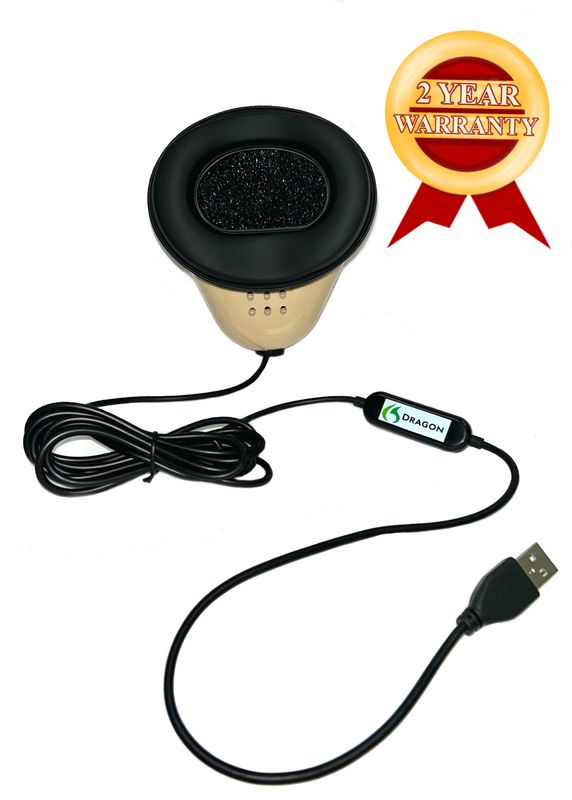
Martel describes the Dragon USB Stenomask as a direct USB mask microphone for the computer. Its Double Dragon 2 offers a USB path and a separate 3.5 mm microphone output that can feed a compatible recorder. One reason to choose the Double Dragon for this drill is to keep a second recording of your own dictation while you work on the computer. Confirm that the recorder is receiving the intended microphone input, start the recording before the lead-in, and play the saved sample. A clear separate recording is valuable corroboration of what you said. Each microphone and recording path still has its own evidence. Martel Dragon and Double Dragon microphone paths.

Speechmatics describes accuracy evaluation in terms of comparing recognized output with a reference transcript. For this focused exercise, build a reference with the exact opening words you actually dictated. Then score the opening words separately from the rest of the answer. An entire paragraph may agree except for a single word. If that word limits the meaning of the testimony, a separate first-word observation makes its significance visible. The exercise here measures your chosen cases on your setup. It gives you observations that you or your instructor can reproduce. How Speechmatics checks recognition against a reference.
If you use CATalyst VP with Speechmatics, Stenograph’s announcement identifies the integration as on-device. If you use EclipseVox, Advantage Software describes Speechmatics Enhanced cloud and local options and publisher-specified hardware for local operation. Put your actual publisher-supported configuration on your worksheet. Let the display tell you what that setup did during the trial. If a word was present only after another word appeared, write that observation in plain language. Identifying an internal engine event or a product setting requires evidence beyond a look at the CAT screen. Stenograph on-device Speechmatics announcement · Advantage Software’s EclipseVox recognition options.
Build an answer key for the fictional garden hearing
Write three critical opening words on the answer key. The first is “only,” the second is “before” and the third is “neither.” Give each an ordinary sentence that stays understandable even if the critical word disappears. For “only,” use “Only the west gate was open.” For “before,” use “Before sunrise, the lamps were already off.” For “neither,” use “Neither key turned in that lock.” These choices have different sounds and carry different kinds of meaning. The reader can now check preservation of a limitation, a time relationship and a negative answer.
For the first short round, pairing each word with a different gap makes the exercise simple to run. Pair only with the one-second gap, before with the three-second gap and neither with the eight-second gap. Treat that first round as orientation. It cannot tell you whether different outcomes were associated with a particular word or a particular pause because both changed together. On a second round, use only after three seconds, before after eight and neither after one. On a third round, use only after eight, before after one and neither after three. Now every word has been tried at every planned gap.
The observer needs a key with more than the one-word targets. Write the whole opening phrase, such as “before sunrise,” on a separate line. Add the expected first content word if the target is absent. On the gate answer that would be “the.” On the lock answer it would be “key.” This makes the check quite concrete when the rough begins with an unexpected word. You can distinguish a missing opener from a substitution such as “either,” which changes the meaning in its own way. Note which word actually appeared before looking at the answer key.
Set a rule for deliberate natural variations. A reporter may repeat “Before the sun came up” even though the fictional source said “Before sunrise.” The first word is still present, but the rest of the phrase differs. On the source-to-mask sheet that is a change in what the reporter repeated. On the mask-to-text sheet the reference is what was actually spoken into the mask. If the rough says “Before the sun came up,” it may fully agree with the dictated input. Keeping both comparisons lets you improve faithful repetition and investigate recognition with the correct reference.
Three practice exchanges and what to listen for
For the short pause, let the fictional reader ask, “Of the four garden entrances, which one could you use that morning?” The answer card says, “Only the west gate was open. I saw the chain on the north gate and the wooden bar across the south gate. I did not try the opening behind the shed.” Identify the first sound of “only,” then listen far enough to hear “west gate.” The other words identify the right passage. If your file begins with “the west gate,” preserve the first few seconds and also check whether the chosen playback position skipped over the actual start of the answer.
The gate exchange invites a useful second question. “Are you saying that you personally tried every gate?” The answer is, “No. I went through the west gate. I described the other entrances from what I could see.” This time “no” is the opening-word target. It is short and carries the whole immediate response. If a rough preserves the explanation on the next line and drops “no,” a reader may infer the denial but cannot see the word that was spoken. Score the actual opening and the later explanation as separate observations.
For the medium pause, let the reader ask, “When did you first notice the lamps in the west walk?” The answer is, “Before sunrise, the lamps were already off. I had enough light to see the white stripe across the top step. I cannot tell you when the last lamp went out.” The key contains a timing relationship and a limit on what the witness observed. A rough beginning “Sunrise, the lamps were already off” may leave the reader uncertain about sequence even though nearly every other word is present. Mark before as the target and sunrise as the following control word.
Follow the lamp answer with a new opening of a different kind. “After breakfast I saw the electrician near the switch.” This time the target is “after.” If a learner expects every time-related line to begin “before,” anticipation itself can lead to the wrong answer. Ask the partner to keep the new line out of the reporter’s sight if the goal is faithful listening. For the controlled dictation timing portion, a visible card remains useful. Keep track of the role of the card. It can supply a reference for one purpose while making the listening task easier for another.
For the long pause, the reader asks, “Did either of the keys you carried turn in the lock?” The answer is, “Neither key turned in that lock. One had a round head and one had a square head. I used the latch on the inside after the supervisor opened the gate.” A rough showing “either key turned” is an available response with the wrong wording. A rough showing “key turned” has an apparent omission. A rough showing “neither” at the end of the question and “key turned” under the answer preserves the word in the text while placing the boundary somewhere else.
Finish the original set with a correction. “Actually, the round key was in my left pocket. I handed the square one to the supervisor.” The opening word signals the speaker is revising or elaborating. Ask the partner to request the correction later without telling you which key was involved. Find the full answer in the saved job and check that the correction is identifiable. This part of the practice connects a first-word observation to a reporter’s ordinary need to retrieve testimony accurately rather than treating each word as an isolated sound.
Use continuity to tell a quiet interval from a missing file
Include a short phrase before each planned silence and a distinct phrase after the measured answer. In the fictional garden exercise you might say “gate sample begins,” pause, dictate the answer and then, after finishing the working passage, say “gate sample ends.” These are practice identifiers. Outside an exercise you follow the requirements of the actual assignment. The two identifiers provide landmarks for locating the right passage on a long recording and checking whether you played the entire answer or started a few seconds too far into it.
Play a short interval beginning well before the expected opening. If you hear the end of the previous phrase, the quiet interval and the beginning of the answer, you have evidence of continuity on that recording. If playback starts abruptly on “west gate” when you believed you were listening from the front, check the file name, selected position and any playback behavior that changes how quiet portions are presented. Listen to the same file from an earlier point. A link from a piece of text to audio may take you into the vicinity of the answer rather than the exact onset you are investigating.
If the first playback seems to shorten silence, keep two purposes separate. You may still be able to identify an opening word perfectly well, yet the duration of the audible gap might be distorted by how you are listening. Use a playback method with known timing when the interval itself is the question. In your notes distinguish planned pause, observed pause on the continuous recording and subjective impression during playback. A planned eight seconds and a measured seven seconds are different but compatible descriptions of the same imperfectly timed live test.
The first quiet interval after starting a new file deserves separate treatment. A recording that begins too late cannot show what happened immediately before its first sample. Arrange the next fictional run so the recorder is already capturing a spoken lead-in before the pause starts. If a word is present after a continuous quiet interval and absent only when you start the recorder at the last moment, you have narrowed the circumstances. Compare those exact circumstances again using a new passage before assuming the same explanation applies after every silence.
Read the evidence without assigning a cause too soon
Consider an invented practice result. In the first round the witness says “only,” the mask recording plainly contains “only,” the observer initially sees “the west gate,” and the saved rough begins “Only the west gate.” The opening survived in the saved text. The observer’s first glance recorded something different during the writing process. If the concern is the quality of the saved rough, that row is a success for the first word. If the concern is readiness for immediate readback, add a second test in which the observer marks when the complete opening becomes legible.
In a second invented result, the source contains “before sunrise,” the reporter’s mask recording begins “sunrise,” and the rough displays “Sunrise.” Recheck that the mask file contains the same performance and that you began playback early enough. If those checks hold, the first difference available on this evidence is between what the witness said and what is audible on the mask recording. Try an identical word at the beginning and in the middle of two new sentences. Listen to the actual start on the recording before changing any recognition setting or drawing conclusions about an engine.
In a third example, both source and mask clearly contain “neither key,” but the saved text has “neither” attached to the preceding question. Search a few lines on either side of the answer before marking a complete word deletion. The next useful exercise is to repeat a short question and answer using the supported speaker-change method for your installation and watch where the line break falls. This is an example of how a first-word complaint can become a more precise question about the placement of a word that the document already contains.
A fourth result is simply uncertain. A nearby chair scraped in the source audio, the partner wrote “before,” the mask sample is muddy at the opening and the rough says “four.” Write the words each person believes they heard, along with the overlap or noise. Let neither listener study the written reference before a first independent listen if practical. When the available evidence cannot resolve the opening, mark it unresolved and make a fresh fictional recording with a clean reference. There is more value in an honest uncertain row than in a confidently labeled cause that the evidence cannot establish.
Run a blind listening exercise with two short clips
Make two invented recordings of the same sentence. On one read “Only the west gate was open.” On the other begin with “The west gate was open.” Keep both recordings intelligible and do not intentionally degrade the second one. Ask a partner to give the files neutral names and choose their order. Listen once without the answer key and write the first three words you actually hear. This is a listening calibration exercise. It tests how readily you recognize the contribution of the opening word when your expectation no longer tells you which recording you are hearing.
Repeat with “Neither key turned” and “Either key turned.” Here the number of words is the same and the distinction sits inside the first word. Give the listener a choice to mark “uncertain.” If the listener identifies the right answer only after seeing the sentence written out, note that difference. In a real review, the displayed rough can influence what a person expects to hear. Listening once with the transcript out of view and then checking the text can expose that influence. Use entirely fictional content for this practice and label the clips accordingly.
Finally, give the partner a file in which “only” appears several times and ask them to identify the affected occurrence. “I only checked it once. Only the west gate was open. The supervisor only had one key.” The target is the first word of the middle sentence. A search for “only” could land on either neighbor and create false confidence that the opening was preserved. Have the listener write the three words that follow the target and the speaker associated with it. That small amount of surrounding information turns a word search into a check of the actual answer.
Keep a scorecard for a single skill
For each trial, leave space for the planned gap, the actual gap if known, the expected first word, the word heard from the source, the word heard on the mask, the first displayed form observed and the saved form. Add an attribution column when a speaker change is involved. If you cannot directly observe one of those fields, leave a clear note such as “separate take only” or “observer missed opening.” Keep this scorecard relatively small. Its usefulness comes from a clear relationship between each row of evidence and one particular spoken answer.
Use separate totals for three skills. The first asks how many actual dictated first words agree with the source. The second asks how many saved first words agree with the actual dictation in the samples where you can establish it. The third asks how often a complete answer begins on the intended speaker line. Suppose the first total is eight agreements out of nine trials, and two mask samples cannot be interpreted well enough for the second comparison. The second denominator could be seven. Printing nine as the denominator simply because there were nine trials would blur a meaningful limitation.
For an invented nine-trial worksheet, imagine that six saved openings clearly match six clearly audible mask words, one clearly differs and two mask recordings are too uncertain to classify. Report six agreements among seven assessable comparisons, two unresolved, with nine trials in total. That wording keeps every trial in view. If the one differing word was “neither,” add the meaning of the change. A summary of the number preserved alone cannot tell a teacher why that particular answer deserves another look. Also show how the results were distributed across the three pause lengths and different words before interpreting a pattern.
A useful rule for the second session is to revisit the weakest item in a fresh setting. If “only” was clear at one and three seconds and uncertain after eight, give the partner a new eight-second example with another opening, along with a new non-eight-second sentence beginning “only.” The performance of those two new readings will not prove causation, but it can help decide whether to spend the next lesson on longer gaps, the particular opening sound or the evidence capture method. Preserve the original reading so the follow-up answers the question that actually arose.
Prepare an example for a school or publisher
Build a short packet a support person can open without knowing your class routine. Identify the fictional phrase, the name of the practice job, the installed CAT software and recognition choice, your mask model and actual recording paths. Give the approximate location of the opening in the sample, the intended speaker and the exact text in the saved rough. Describe how often you reproduced that observation. Include only material you can appropriately share. The garden exercise is intentionally independent of real cases, real witness names and confidential proceedings.
Now write the question you want answered. It might be “I can hear ‘neither’ in my mask recording. In the saved practice job I find that word under the preceding speaker. Where should I check the speaker transition for my installed release?” Another might be “The recording starts after the lead-in when I start my separate recorder at the cue. Which recorder function confirms an active recording before I dictate?” Choose the recipient according to the evidence. The same general symptom can generate very different questions for a CAT publisher, equipment provider or instructor.
Martel’s VOX Elite 32 GB and 64 GB listings describe stenomask setup and help moving CAT files. If you are setting up a VOX laptop, bring one short fictional file with an opening you already verified, plus a plan for a new live reading. Open the known sample first to demonstrate playback. Then make a new recording using your selected mask path and verify the first word on that new sample. A successful transfer and a successful fresh capture are two useful, separately demonstrable results. Match any recognition-specific computer or processing requirements to the publisher’s instructions. Martel VOX Elite 32 GB laptop setup · Martel VOX Elite 64 GB laptop setup.


We handcraft our Dragon USB and Double Dragon 2 stenomasks in limited quantities. If a batch sells out, there may be a waiting list.
Distinguish returning to a sentence from returning to the microphone
For a final practice round, make one sentence continuous in meaning even though your delivery includes silence. Read “I saw the gardener move the” and pause before “ladder.” The first word after the quiet interval is now the last content word in a sentence. Next, end a complete sentence, pause for the same duration, and start a new one with “Ladder marks ran along the path.” The same word occupies different positions in the language even though both readings contain a quiet interval. Mark the wording, capital letter and sentence location separately.
Give a partner both saved outputs and ask for the intended passage without showing the source. If both copies contain “ladder,” the partner may be able to retrieve the word in seconds. If only one has a sensible sentence boundary, the partner may need additional context for the other. The practical question becomes clearer at once. It is possible to hear and preserve the first word of the resumed speech while still needing to review the sentence boundary. If that is the result, report that specific combination instead of calling the opening missing.
Try one more variation that includes an actual change of speaker. One reader asks, “What left marks along the path?” Another answers, “Ladder feet, I believe.” The reporter uses their ordinary supported speaker procedure. The target is still “ladder,” but the request now includes attribution to the answer. A worker following the saved rough should be able to tell which speaker described the marks. On the worksheet keep separate notes for retaining the word after silence within one sentence, starting a new sentence with that word and placing it in a new speaker’s answer.
To make the difference visible, ask your partner to highlight the actual letters on the copy being reviewed and draw a box around the whole speaker turn. The highlight establishes where the word exists in the document. The box establishes which speaker owns it in that document. If the highlight sits above the box that should contain it, you have demonstrated placement with an example a second person can inspect. This gives the learner a specific question about boundaries while keeping the successful recognition of the word visible.
Once you have these three examples, record one short conclusion for each. “The resumed word inside the sentence is audible and saved.” “The new sentence begins with the word in the rough, and its capital letter needed an edit under our practice style.” “The first word of the new speaker’s answer is on the preceding speaker’s line.” These invented outcomes are deliberately different. Use only those statements your actual observations support. Save the complete lines with your notes, since the surrounding words are often what let another reviewer reproduce your conclusion.
A useful class follow-up is to introduce a new word with a different opening sound and keep the same three contexts. For example, use “gravel” as the resumed noun, as the start of a new sentence and as the first word in a new answer. If the second set behaves differently, your notes can now show whether the difference followed the vocabulary, the sentence boundary or the speaker change in the actual trials you ran. That is a practical foundation for deciding what to test again.
Thirty questions about the first word after a pause
What is the smallest useful practice sentence?
Choose a full thought whose opening matters, such as “Only the west gate was open.” It has a short, identifiable target, enough following words to locate the passage and a clear change of meaning if the first word disappears. Pair it with a distinct lead-in so the listener can start playback before the opening and confirm they have reached the intended occurrence.
Do I measure from the witness’s pause or mine?
For a mask-input exercise, define the gap from your last audible mask dictation to your next audible word. If you are studying how you react to a witness, separately measure when the witness finishes or resumes and when you respond. A single label saying “three-second pause” is ambiguous when the witness and reporter each have their own timing.
Why do the one-, three- and eight-second intervals matter?
They give the practice exercise short, middle and longer examples that are easy to distinguish on a worksheet. They carry no promised technical significance for a particular product. Use other intervals if your actual task calls for them. The valuable comparison is that you know which interval you attempted and which opening you tested on each run.
Does it matter if the planned three seconds become four?
Yes, as an observation about that run. Write the nominal target and the interval you actually observed if you can measure it. Avoid placing an accurately measured four-second trial in a column described as exactly three seconds. For an informal classroom exercise, approximate bands may be sufficient as long as everyone knows how the values were recorded.
How can a partner cue me without making a sound?
Hand the partner a clock and agree on a silent visual cue, such as lifting a blank card into view. Make sure you can see it without moving your mask from its comfortable position. Establish whether the cue marks the intended start of your next word or a prompt to get ready. A brief rehearsal makes those two interpretations easy to distinguish.
Can an ordinary word like “the” work as a target?
It can, especially if the question is whether a short, lightly spoken opener survived. Include enough distinctive following words to identify the correct occurrence. Add another meaningful opener such as “only” in a separate trial. You will then have evidence about two kinds of opening and can describe the particular words used instead of assigning the result to every short word.
How do I tell a missing word from a delayed one?
Note what was first visible, what appeared during a defined viewing window and what was present when the saved practice job reopened. If the opening arrived later and survived in the rough, the saved result contains it. If a partner looked away during the interval, record that limitation. The final document alone cannot reconstruct every version the partner may have seen.
What if a word is visible but under the wrong speaker?
Read the end of the preceding exchange and the beginning of the intended answer. Mark both the presence of the word and its placement. The corrective exercise can then use a fresh question and answer with the publisher-supported speaker-change procedure for your version. A general microphone replacement would not establish why that already-recognized word landed on one side of a boundary.
Why preserve the following word in the answer key?
The second word gives the reviewer an anchor if the opener is absent. If the expected phrase was “before sunrise” and the rough begins “sunrise,” you can locate a likely omission precisely. If the first visible word is something unrelated, you might be looking at a different line entirely. The neighboring word helps distinguish a reading issue from a truly different starting phrase.
What if I say “well” before the target?
Record the actual spoken opening. If you say “Well, only the west gate was open,” then “only” is no longer the first word after the quiet interval. That trial can serve as a control showing the target within a phrase, but it should not be scored as a first-position trial for “only.” Try another unrehearsed sentence with a fresh identifier.
How do I compare a repeated opening?
If the source says “I, I took the west path,” write the repetition as part of the exercise reference when your goal is to capture the spoken words. Identify whether you repeated both occurrences into the mask. An output with one “I” raises a different question from an answer that starts without any first-person pronoun. Keep the actual speech and scoring convention with the entry.
Can I use the same file to represent the witness and my mask?
Only when the purpose and recording source truly support what you label. A single room recording may capture audible participants and some of the reporter’s voice, but a dedicated mask recording answers a more specific input question. Identify the source of each file and what is intelligible on it. A file that cannot distinguish the voices should be described accordingly.
What if my separate recorder picks up the word clearly?
That gives you useful evidence that the opening reached the microphone feeding the recorder. With a Double Dragon 2, the USB microphone feeds the computer through a separate path. Compare the actual computer input or corresponding CAT recording if available before asserting that both paths carried an identical opening. Give each file its own label even when the words match perfectly.
Should I run a Windows recording simultaneously with CAT?
Use the capture arrangement your software and equipment support and that you have verified in practice. A separate Windows recording session can establish a baseline using a fresh fictional passage. If you require evidence from the very same utterance, choose a verified same-session recording path and check a short trial first. State explicitly whether each comparison is simultaneous or a separate reading.
How do I decide whether the input was the laptop microphone?
Select the intended device by name and make an identifiable practice recording using your normal mask position. Compare with a deliberately labeled sample from the laptop microphone if useful, then restore and verify your working input. Listen for the relative sound of the reporter and the room. A lively input meter only tells you that some sound reached the selected test.
Must I pause my working recording to create eight seconds of silence?
Keep the work recording active for the continuous-silence exercise. The reporter remains quiet for the intended interval while the recording includes material before and after it. Stopping recording removes the opportunity to examine that quiet portion on the file. A deliberate stop-and-resume test can be worthwhile, but give it a separate name, method and expected evidence.
Can I score a clipped syllable as a missing word?
Describe what is audible before assigning a category. A listener may hear the second half of the expected word and still infer what the speaker meant. On the worksheet write “partial opening audible” and the listener’s transcription. Keep that separate from a clearly spoken full word and an entirely absent first word. This preserves useful evidence for an instructor or support person.
What if the word is uncertain only when I read the rough?
Try a first listen with the text out of view and write the opening you independently hear. Then examine the actual saved rough and listen again. If your interpretation changes, note both judgments. A second listener can offer an independent observation using the same fictional sample. When neither interpretation can be established, uncertainty is a valid outcome.
Should I time the delay to the first word in this exercise?
Add that measurement if you can define the audible event and visible event and observe both on a common clock. Keep a separate field for whether the correct opening eventually survived in the saved job. A reporter can have a perfectly preserved opening with a noticeable interval before it becomes legible, or a quick display that omits the intended word.
Why reverse the trial order on another day?
Doing the longer pauses last every time makes pause length coincide with accumulated practice and position in the session. A second day with a different opening order gives you additional evidence. For example, begin with “neither” after a short gap on that day. Preserve dates and conditions so a later reader can see which parts changed deliberately.
Does holding my breath make a better silence test?
Use your ordinary comfortable reporting technique and let the partner mark the intended gap. The purpose is to observe the words produced during a realistic practice session. If you deliberately change how you prepare to speak, record that as a separate condition. Comfort, breathing and mask position during routine practice are matters to discuss with your instructor where appropriate.
How can I check an opening that is a person’s name?
Use a fictional name whose spelling the practice packet supplies. Read it first at the beginning of a complete answer and later within another sentence. Compare the first spoken sound, the presence of the name and its written spelling separately. A full name that appears with a different spelling is a different finding from an answer in which the name is absent altogether.
What makes a sensible class demonstration?
Have several students use their own masks and the same fictional lines, with each person keeping a separate worksheet. Agree on the same meaning of “audible” and “saved” before starting. Share examples where the evidence clarified what to practice. Each student’s results apply to their actual delivery and setup, so avoid combining unlike samples into a hardware performance claim.
Which equipment details are worth recording?
Include the actual mask model, how it connects to the computer, the Windows input name, the source recorded by your CAT setup and any separate recorder input. Include whether you moved or reconnected a cable between runs. A plain-language note such as “USB mask on laptop, separate recorder took my second mask microphone” is more useful than an unlabeled list of devices.
What if the first word is a command rather than testimony?
Identify the first spoken command and the first content word as separate events. A speaker command can occupy what you thought was silence before an answer. Record what you said, what role appeared and which word appeared under that role. Follow the current publisher instructions for your configuration when rehearsing a command. Keep the plain-text first-word exercise as a distinct comparison.
How do I create a control word halfway through a sentence?
Use essentially the same vocabulary while placing the chosen word after several other words. For example, compare “Only the west gate was open” with “That morning only the west gate was open.” Listen to the target in both positions, noting the different surrounding speech. The control helps specify where the observed difference occurred without proving a component-level cause.
Can the rough itself show me what the witness said?
It shows the text preserved in the reporting job. To establish what the fictional witness said, consult the actual authorized source recording or the verified spoken reference. To establish what you repeated, consult the mask sample from the correct run. The value of the three-way check is that it keeps the witness’s words, your input and the text independently identifiable.
What should I tell Martel when I ask about a mask recording?
Give the mask model, connection and actual destination, followed by a short observable result such as “The lead-in is audible, but the first syllable of my answer is faint on the computer sample.” Include whether a separate recorder sample exists and what it contains. Use a fictional phrase and follow Martel’s support instructions for sharing any material.
When does a publisher-specific question make sense?
If you can hear the full opening in the same-session input sample yet consistently find it placed or displayed differently in the saved CAT job, describe that exact relationship. Include your software release, recognition choice, fictional phrase and what happened in repeated practice. The publisher can then address the configuration or feature involved using the information appropriate to your installation.
What counts as a useful end point for today’s practice?
You can reproduce a particular opening, identify the length of the intended gap, hear what your mask captured and find the corresponding saved answer under the right speaker. If something remains unresolved, you have a short fictional example with clearly labeled evidence. That is enough to choose a specific next exercise or ask a question that another person can actually answer.
Manufacturer sources
Capturing the First Word Clearly After a Pause
Trace a first word after a pause from your stenomask recording to the Speechmatics display and saved CAT rough using three fictional garden exchanges.