



A Mock Court Hearing From Roll Call to Readback With Speechmatics
Run a complete fictional footbridge hearing with Martel stenomasks, two witnesses, exhibits, a recess, a disputed readback, and four separate scores.
Two people can say exactly the same words and supply different testimony. Counsel asks, “Before sunrise?” and a witness replies, “Before sunrise.” The wording is almost identical. In the first line a participant asks for confirmation. In the second a different participant gives it. A useful review of speaker labels asks three questions. Who spoke? What type of turn was it? Which words belong with that turn? Checking the label alone leaves the last two questions open. This guide gives a voice writer a practical way to answer all three in a CATalyst VP practice transcript.
Stenograph describes speaker lists in CATalyst VP and discusses formatting bylines, colloquy and speakers in context. Its voice-writing product page also describes AudioSync for aligning dictation, room audio and text. Stenograph’s published Dragon getting-started guide explains the role of Personal VoiceCommands in formatting questions, answers and colloquy in that workflow. For a Speechmatics session, confirm the supported setup and speaker-entry methods for your CATalyst VP edition and build with Stenograph. The exercise below can be scored from the resulting paragraphs regardless of how you personally give a supported cue. Stenograph’s CATalyst VP speaker-list and AudioSync features · Stenograph’s Dragon voice-writing guide · Stenograph’s on-device Speechmatics announcement.
Everything in the practice hearing is invented, from the names of the parties to the imaginary railway platform they describe. The aim is to put a meaningful change of identity close to a meaningful change of fact. A partner can read the roles aloud while you repeat the proceedings into your own stenomask. A group can divide the roles between readers. If you work alone, prepare an original source recording in advance, label it, then put the written reference away before dictating. You can then check your work against what was actually said.
For the hearing, use Judge Lorne, examining counsel Amina Rill, second counsel Rafael Penn and witness Nola Orr. Make a short speaker sheet. Give each entry a role, the name you expect to display under your practice conventions and the point where the person enters. Write “presiding,” “asking about the observation,” “speaking to the judge” and “answering from the platform” as ordinary English descriptions. A role is easier to recognize when the conversation becomes fast if you have pictured what the person is doing. A surname by itself is a weak rehearsal guide.
Give your practice partner a different sheet. On that sheet, mark every occasion on which the conversational floor changes hands, including an interruption by the judge and a remark by the witness outside a direct answer. Then mark every occasion on which a single speaker changes function within a stretch of speech. Counsel may address the judge about a photograph and then ask the witness to identify it. The voice at the microphone may sound identical throughout. The transcript still has to make the change of purpose intelligible to a reader who was never in the room.
Stenograph’s page-layout guidance identifies paragraph settings for styles that include Question, Answer, Colloquy and By Line. Use your established layout or the one required for the exercise. Record it by name with the practice job. A layout can help a reader identify the expected type of paragraph, while the speaker’s actual identity comes from the proceeding. Decide what you expect to see before you inspect the rough. If the preferred style changes between a class and an office, write which destination you are preparing. The same fictional testimony can support separate style exercises without changing who said the words. How Stenograph describes paragraph styles.
Prepare one card for each transition you want to test. A card might say “Judge asks witness directly,” “Opposing counsel comments to the judge” or “Original examiner resumes the question after the interruption.” Describe the expected display under your own style convention. For a direct question from the judge, for example, ask the instructor or editor how the practice transcript should present it. A helpful exercise teaches you to apply the convention that governs the particular job. It leaves room to recognize a different convention when the intended destination changes.
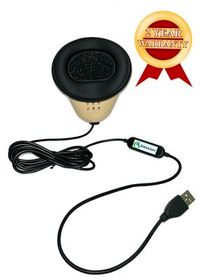
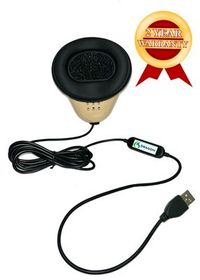
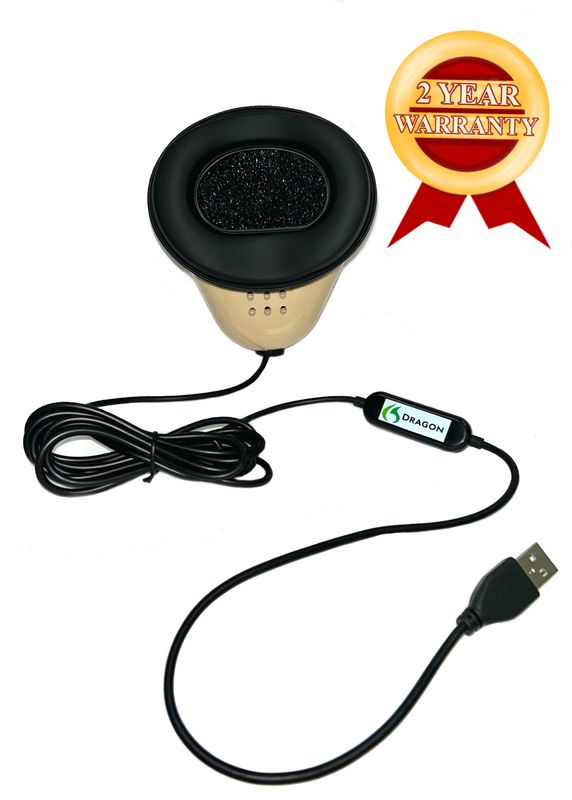
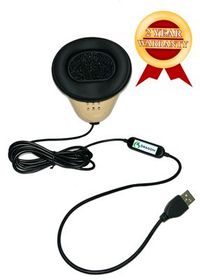
The reporter’s microphone can tell you what the reporter repeated. Martel describes the Dragon USB Stenomask as a direct USB path into a compatible computer. Connect your own mask and make a brief sample in your ordinary position. Speak the words “practice speaker change” followed by a short question and answer. If you plan to listen for spoken cues later, make sure they can be heard in the dictation sample you intend to review. Select a name for that sample which identifies it as the reporter's own voice. Martel Dragon USB Stenomask.
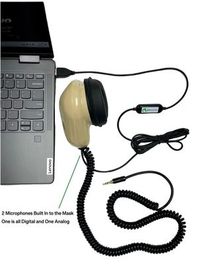
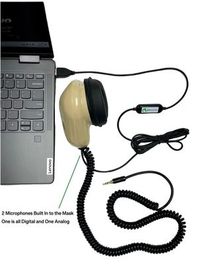
The Martel Double Dragon 2 provides a separate microphone path over a 3.5 mm connection in addition to its computer USB input path. A compatible recorder can therefore receive a second copy of what you dictate. Start and save an actual file at the recorder if you will depend on it for this exercise. The two microphones share the purpose of capturing the reporter’s dictation. Give the original voices in the practice hearing their own source, such as the training recording played aloud or an appropriately arranged room recording. Only the original source can settle what a reader actually said when a line changes during performance. Double Dragon 2 microphone outputs.
Martel offers VOX Elite voice-writing laptop packages in 32 GB and 64 GB configurations and describes help with file transfers and stenomask setup. For a new laptop, bring a named practice job that contains an easily recognized speaker turn. Ask to open that existing job and locate that turn, then make a new short exchange on the prepared computer. These are separate demonstrations of retrieving old work and producing new material. Use Stenograph’s confirmed requirements for the exact recognition option you intend to run when comparing the laptop packages. VOX Elite 32 GB package · VOX Elite 64 GB package.
A meaningful speed goal for a speaker exercise involves how long it takes you to recover the correct person as well as the words. Time one short exchange and then time a readback request such as “What did second counsel say about the station clock?” If you can find “station clock” in a few seconds but read the witness's answer instead of second counsel's comment, write down what happened. A direct microphone path and a familiar personal mask give you a consistent way to rehearse. Accurate attribution is something you can demonstrate at your own working pace.
We handcraft our Dragon USB and Double Dragon 2 stenomasks in limited quantities. If a batch sells out, there may be a waiting list.
The imaginary hearing deals with a station clock, a blue shelter and two paths leading to a platform. Judge Lorne is presiding. Amina Rill begins the examination, Rafael Penn represents another participant and Nola Orr is the witness. Create a rough from the supplied spoken dialogue. The speaker names in each paragraph identify the performers. Use your ordinary supported method to represent them in the working CAT arrangement. Pauses described outside the dialogue are exercise directions. The reader should tell the reviewer afterward if they improvised or skipped a line.
Rill. Where were you standing first thing that morning? Orr. On the stone path that ends at the blue shelter. I was looking down at the mud on my shoes. Rill. Could you see the station clock from the place where you were standing? Orr. I could see part of its face above the shelter. I could see both hands only after I walked onto the wooden path. Rill. Before sunrise? Orr. Before sunrise. The lights above the ticket windows were still on, and the windows behind them were dark.
Rill. Did you photograph the clock before you went over to the wooden path? Orr. I photographed the shelter first. The first picture of the clock came later. Rill. I am showing you a picture marked P Seven. Is that the first picture you took? Orr. It is the first one I printed. I still had the earlier image of the blue shelter on my phone. Rill. Then the photo you printed first and the photo you took first showed different things? Orr. Yes. I printed the clock before I printed the shelter.
Penn. Judge, may I ask that the image remain on the screen while the witness explains that sequence? Judge Lorne. Certainly. Ms. Rill, please finish your question. Rill. Thank you. Ms. Orr, is the date on the edge of the print the time of the photograph? Orr. That is a date. There is also a time on the opposite edge, but it is the time we printed the picture. The photograph itself came from the visit I described. Rill. What time did you read on the station clock? Orr. I read six twenty after I reached the wooden path.
Judge Lorne. Ms. Orr, did you look at another clock at that moment? Orr. I looked at my watch just after the station bell. It read six twenty two. Judge Lorne. Thank you. Ms. Rill, you may continue. Rill. When you looked at your watch, were you still on the wooden path? Orr. I had stepped back onto the stone path so that a bicycle could pass. I was close to the shelter again. Rill. Was the cyclist on the wooden path or on the platform? Orr. On the wooden path, carrying a small bag over one shoulder.
Penn. Before we move on, I have a question about the label. I see a number that might be a seven or a one. Rill. The reference on my copy is P Seven. The figure at the edge of the photograph belongs to the station sign in the background. Judge Lorne. We will keep those two references distinct. Ms. Orr, does the print in front of you have an exhibit label attached to the paper? Orr. Yes. The exhibit label is a white rectangle at the bottom. I can lift the corner of the label.
Rill. Which direction did the bicycle travel? Orr. Toward the ticket windows. Penn. Did you say the ticket windows were open? Orr. I said the lights were on. I did not see anybody open a window. Judge Lorne. One person at a time, please. Ms. Rill has the examination. Rill. Which lights did you see? Orr. The small lights above the window frames. The clock face had a different light. Rill. Did you see the cyclist go to a ticket window? Orr. I saw the bicycle travel in that direction. I could not see where it stopped.
Judge Lorne. We will take a short recess and return to the question of the print. Penn. May I leave my copy displayed on the screen? Judge Lorne. Yes. The witness may keep the paper copy. Orr. I will put it beside my glasses so the label stays flat. Rill. Thank you. I have another copy with the clock face enlarged. Judge Lorne. We can consider that copy after the break.
Practice direction for the reader. Pause here, use the ordinary practice routine for a recess and then resume with the next speaker.
Rill. Ms. Orr, when we stopped, we had been talking about two copies of a photograph. Which one do you have now? Orr. I still have the first print with its white label. The enlargement is on the screen. Penn. Judge, for clarity, my paper copy is also the original size. Judge Lorne. Thank you. Ms. Rill, please ask about the enlargement. Rill. Can you read the minute hand in the enlargement? Orr. The hand points to the fourth mark that represents five minutes. That is how I read twenty minutes after the hour.
Penn. I would now like to ask about the telephone picture of the shelter. Judge Lorne. You may. Penn. Ms. Orr, does that image show either hand of the clock? Orr. It shows the rim of the clock, the roof and most of the blue front panel. I cannot see a hand on that image. Penn. Does the stone path appear in that same frame? Orr. Yes. There is a strip of it beneath the shelter. Penn. Was the bicycle there when you made that image? Orr. There is no bicycle visible in the part of the path in that picture.
Judge Lorne. Before we finish, who supplied the enlarged print? Rill. My office prepared the enlargement from the photograph the witness provided. Penn. I supplied the original-size print in front of me. Orr. The paper copy beside my glasses came from Ms. Rill when I arrived. Judge Lorne. Thank you. Those answers identify the sources of the copies. Penn. I have no further questions about the photograph. Rill. I have one item to clear up about the watch. Judge Lorne. Go ahead. Rill. Whose watch did you read? Orr. My own. I had borrowed the strap from my sister.
First, isolate the two instances of “Before sunrise.” Find the examiner's question and the witness’s answer as separate acts of speech. Check both the displayed speaker treatment and the punctuation appropriate to your working style. Search for the words themselves if convenient, but read the line before and the line after each result. A repeated phrase is an excellent stress test for attribution because the words alone give almost no clue to identity. If another person can tell which instance asked for information and which supplied it from your rough, you have a usable sample to retain.
Second, locate the point at which Penn addresses the judge before the question about the printed date. Penn requests that the image stay visible. The judge grants the request and returns the floor to Rill. Rill thanks the judge and then asks the witness a question. In your working style, identify the boundary between a remark addressed to the bench and the resumption of examination. Someone listening only for a change of voice might miss that Rill changes function within one speaking turn. Ask your partner to find the first actual question she asks after the judge's direction.
Third, look at the judge's question about another clock. Orr identifies her watch. The judge thanks her and expressly returns the examination to Rill. Whichever conventions apply to the job, preserve the sequence of actual people and their purposes. An unattributed exchange of Q and A can make a judge’s question look like part of counsel’s examination. Give your reviewer a subject-based request. “Find the judge’s question that elicited the watch reading” will reveal whether the working copy lets them recover the interaction and identify the questioner clearly enough.
Fourth, find Penn’s short unscheduled question about whether the ticket windows were open. The witness distinguishes lights from open windows, then Judge Lorne directs the pace and identifies who holds the examination. During a fast exchange, a reporter may remember the topic correctly but carry the previous examiner's identification forward. Listen to the original source for the actual voice and to your mask recording for the cue you supplied. Mark the point at which the two accounts begin to differ. A form of address or a reference to a previous question can provide supporting context, while the actual exchange decides the identity.
Fifth, compare the remarks immediately before and after recess. The witness says where she will put a paper copy. Rill mentions the enlargement. The judge puts its discussion after the break. On resuming, Rill asks which copy is in front of the witness, Penn then describes his own paper copy, and the judge returns to the enlargement. Read the first six words after the break in the rough. Ask what evidence in your source identifies the speaker. Opening a new segment of a job is a good moment to confirm speaker context instead of carrying it over automatically from the preceding page.
Sixth, read the three short statements about who supplied the copies. Rill says her office prepared the enlargement. Penn says he supplied his own original-size print. Orr says Rill gave her a paper copy when she arrived. These statements can all be true within the fictional scene. A shifted label can also turn them into an apparent inconsistency. Write the three people’s names across the page and put each statement below its speaker. If they line up, preserve the example. If they differ, compare the performed dialogue and your own repeated identities before making a correction.
Save the unedited rough before changing a designation or paragraph boundary. Use a distinctly named copy for the review. For each event you check, write the preceding phrase, actual speaker, conversational purpose, expected paragraph treatment under the practice style, observed result and the evidence you heard. Limit a first pass to the six changes described above. You can always return to the rest of the hearing later. Reviewing a small set thoroughly gives you evidence about where accuracy is strong and where a particular transition needs more practice.
Try reading the job in three ways. Read only the designations first. Do the people appear in a sensible sequence? Read only the ordinary words second. Can you follow what happened to the photograph, the watch and the bicycle? Finally, read each label together with the first short phrase of its paragraph. Does the identity fit the words at the actual moment in the recording? The third check catches an error that the first two can miss. A sequence of correct names and a sequence of correct sentences can still be joined one paragraph out of position.
For a handoff to an instructor, provide two specific readback requests from different parts of the exercise. “Find the thing Penn wanted the judge to leave on screen” targets Penn's request. “Find the thing that Orr said she borrowed from her sister” targets the final answer, which is the watch strap. Give the instructor a place to say what they found and whose question or statement immediately preceded it. The report becomes more useful if it names an identifiable passage and says whether the source, the dictation and the saved text agree on who supplied it.
Cut four small slips of paper and write a different observation on each. On the first write “Rill prepared the enlargement.” On the second write “Penn supplied the original-size print he was holding.” On the third write “Orr received the copy beside her glasses from Rill.” On the fourth write “Lorne asked who supplied the enlargement.” Ask your partner to turn each observation into a request for readback. The first slip is deliberately imprecise. The fictional line says Rill’s office prepared the enlargement. It does not establish which person in her office did the physical work. A careful reporter can find the correct source and preserve the wording without adopting the shortcut on the practice card.
The second and third slips make the difference between ownership, source and present physical possession visible. Penn says he supplied his own print. Orr explains how she received the paper copy near her glasses. If a line shifts from Orr to Penn, both statements about copies can still sound entirely plausible. Test a practice copy by covering the speaker labels on those two lines. Try to reconstruct the labels from the words alone, then check against the original recording. You may get the right answer because the story is familiar. Write down the evidence you actually used. Memory can suggest a passage to examine, but the reference gives you the account that was performed.
The fourth slip asks for the person who posed the question. Many readback exercises ask only for the right answer. Here the examiner matters at least as much as the response. Return to the start of that interchange and listen through all three responses. Ask your partner to stop you after the judge asks, before any of the answers begin. Then ask for the full exchange. If the first task is hard and the second is easy, look at how you mark the beginning of a speaker turn in your notes. A very clear answer can draw attention away from the person who elicited it.
Now introduce an intentional error into a disposable paper copy of five lines. Move a correct speaker label down by one line while leaving every spoken word in its original place. Give the other person the affected passage and the source recording. Ask them to diagnose the first incorrect boundary, including the last words still assigned correctly. After they restore that boundary, ask them to check the next two turns. A single misplaced designation can make several sentences appear wrongly attributed until the next explicit speaker change. The words in isolation will all sound familiar, which makes this a fair test of careful review.
Repeat the experiment with a different disturbance. This time keep all the labels correct and switch the words “watch” and “clock” in one line on the disposable practice sheet. If the reviewer changes the speaker label to make the sentence sound sensible, the underlying word problem remains. Have them identify the actual physical object in the original sentence and compare the speaker and wording separately. A second pair of eyes becomes more effective when a correction has to name which part of the evidence it fixes. Ask the reviewer to return a single sentence describing the change and what in the source supports it.
Finally, set all the slips aside and ask a new question. “Who explained that no bicycle was visible in the shelter picture?” The correct speaker is Orr, responding to Penn. Her statement concerns the part of the path visible in one image. It does not establish that no bicycle existed anywhere nearby that morning. A complete response from the practice reporter can identify the examiner, speaker, subject and accurate limitation without expanding the evidence. This exercise gives a realistic meaning to the phrase ‘the label is right.’ The right person is attached to the precise observation that person actually supplied.
The words can help you recognize the turn, but the identity comes from the actual exchange. Listen to who took the floor after the question. In the sunrise example, counsel and the witness use almost identical words. Identify first the source voice, then what you repeated into the mask, then where the words appear in the saved rough. If your supplied reference differs from what the reader actually performed, mark the variation on the reference. A faithful transcript of the performance may differ from a script that the reader changed.
Stenograph describes speaker lists and their role in inserting and formatting speaker names. Use the list under the guidance for your installed version and your own style requirements. It gives you a consistent way to represent a person once you have identified the speaker. It cannot by itself establish which of two people just made a particular remark in your fictional hearing. Prepare an accurate cast list first and then test it with meaningful changes of conversational role. That lets the exercise assess identification along with the result of formatting. Stenograph’s CATalyst VP speaker-list and AudioSync features · Stenograph’s Dragon voice-writing guide · Stenograph’s on-device Speechmatics announcement.
A reader needs to know what appearance you intended for a given role. Your school, firm or assignment may have a convention for a judge questioning a witness, a byline introducing an examination, or a witness speaking during discussion. Name the applicable style on your practice record and ask the responsible person about any open convention. Then a reviewer can distinguish a disagreement over presentation from a genuine mistake about who spoke. The identity and the words can be checked even while a style question awaits an answer.
Stenograph’s public getting-started article discusses using Dragon Professional with CATalyst VP. It describes the Personal VoiceCommands dictionary in that context and provides direction for voice translation. Use it to identify functions that belong to an existing Dragon setup. If your rehearsal uses Speechmatics, describe that as a separate recognition route and get the instructions applicable to your edition and build. The reference hearing can serve both setups. Attach the relevant procedure to each, so a successful result in one is recorded for the setup on which it happened.
You can compare the dictated cues and words with the text and labels that appeared. To settle who spoke in the original hearing, use the separate source available for the exercise, such as the reader's training recording or an appropriately made room recording. If the only source left is a written script, mark any differences the readers remember making. A note that identifies exactly which source you reviewed is far more useful than saying that you “checked the audio” when two distinct voices or recordings could be meant.
It gives you a direct computer microphone path you can identify and test. Keep your normal mask position, speak a marker before starting and record the short exchange at your ordinary working pace. Count the actual corrections you needed for words and speakers separately afterward. You can then repeat the test with an unfamiliar exchange and compare time spent dictating and time spent reviewing. A quicker way to recover the right speaker in your own job is a meaningful personal result you can measure.
Place it under reporter dictation, with the actual destination named. The second microphone connection can feed a compatible recorder through the 3.5 mm path, while the USB connection supplies the computer. Start a practice recording on the recorder, stop it, save it and listen for your unique session marker. When a speaker label looks questionable, this recording can help establish which identity you repeated or which cue you spoke. The actors reading the hearing belong to the original source line on your notes.
A label can be correctly spelled and selected at the wrong boundary. One speaker can also ask a question immediately after another has finished a remark on the same subject. Follow the full transition in the source. Then check the last few words of the preceding paragraph, the first words under the disputed label and the first words of the next turn. Record where the source and the saved copy first differ. These details give you a concrete next exercise rather than a general concern about all speaker designations.
Listen for both the addressee and purpose of the words. In the practice dialogue, Rill thanks Judge Lorne and then asks Orr about the date on the print. It is possible for one person to hold the floor across that change. Mark the boundary with a pencil on the performed reference, then look at how your chosen transcript style conveys it. Ask a reviewer to read only the first returned question. If the reviewer instead reads the acknowledgment to the judge, the boundary needs a closer look.
Identify precisely that Judge Lorne asks about another clock and that Orr supplies the watch reading. Consult the convention that applies to the copy you are preparing for how to display that exchange. A useful practice card might have two separate entries, “Identity confirmed from the original recording” and “Presentation checked against course style.” This is particularly helpful in mixed training groups. Members can agree on who asked what, even if two work environments require different visual treatment for the exchange.
Practice speaker labels, Q&A and colloquy in CATalyst VP with a four-person fictional hearing, a Martel stenomask and a six-part readback review.
Find the pending topic, the entrance of the interrupting speaker, the response that follows and the return to the examiner. In the window exchange, Penn asks whether the windows were open. Orr corrects that inference by talking about the lights. The judge speaks next, then Rill resumes. Tracking the subject alone can merge several of those turns because they all concern the same scene. Read the identities and the actual first words together so the correction remains attached to the person who made it.
Treat the punctuation as a clue and establish who actually spoke from the source. A witness might ask the judge for permission, a judge might ask a witness directly, or counsel might ask another participant about a document. In the practice hearing, Penn asks the judge about leaving an image on the screen. The presence of a question does not automatically make that line part of Rill’s formal examination. Check the addressee and your intended style before deciding how the resulting paragraph should appear.
Capture who actually made the comment, its wording and the point at which it occurred in your authorized exercise. In the fictional hearing, Orr says she will put the paper copy beside her glasses while arrangements for the recess are being discussed. The next question after the break concerns which copy is in front of her. Keep those two events in their sequence. For actual work, follow the rules and directions that govern when reporting stops and resumes. This training script identifies its own practice boundary.
A participant can say another person’s name without handing that person the floor. Judge Lorne says “Ms. Rill” while directing counsel to finish. Rill speaks afterward. If you search the rough by surname alone, you may land in the judge's paragraph and mistake an address for a speaker label. Read the grammatical context, identify who uttered the name and locate the following actual response. A useful drill asks the reviewer to mark each spoken address differently from a designation displayed by the CAT software.
Use a two-turn exchange with exactly the same phrase spoken by different people, such as “On the platform?” and “On the platform.” Begin with a known preceding question and finish with a different follow-up so both boundaries are observable. Check that the displayed treatment lets another reader identify the question and the answer. Then repeat with a fresh pair after an interruption. The second exercise tests how you reestablish context when an alternating rhythm has briefly been broken.
Preserve the performance as the reference for dictation practice. If a reader accidentally takes a line intended for another role, mark who actually read it and whether the exercise leader wants the run repeated. Do not assume that your recognition setup changed identities merely because the resulting speaker sheet differs from the original lesson. For a controlled comparison, use a fresh take following the intended arrangement. Keep the two references clearly marked. Both can be informative when their differences are documented accurately.
Separate what you can hear confidently from what remains uncertain. Use an authorized original source for the practice, listen to enough surrounding speech to identify the voices and consult the partner who performed the exercise when appropriate. Mark the exact fragment that still needs attention. If your purpose is to test formatted attribution rather than difficult listening, repeat the exercise with the speakers taking distinct turns first. A second intentionally overlapped version can then isolate the harder listening skill while preserving a clear reference for comparison.
That can tell you something about your own spoken identification or repetition. Compare the exact transition in the original recording with the cue and ordinary words you supplied. If you can establish the source identity but cannot clearly hear your cue, label the observation that way. Try a new passage in which the same pair of speakers changes places. Record it from your own mask at your working position and see whether the intended cue and first ordinary word are audible together.
Search for a distinctive ordinary phrase and read a full turn on either side of the match. “Strip of it beneath the shelter” is more specific to this exercise than a surname that appears dozens of times. If you search for a name, distinguish a displayed speaker designation from the name appearing inside someone else's remarks. Ground any correction in the original exchange and the expected presentation for your working style. Search helps you reach a candidate passage quickly. Listening and reading in context determine what it means.
Keep separate observations for the identity, the literal words, paragraph placement and preferred punctuation or style. A name spelled incorrectly can still point to the right speaker. An accurate sentence can sit under the wrong label. A correct name and words can need a paragraph break to show a change from a comment to a question. Count what you actually see, then record whether the difference affects meaning or use. Separate entries make it easier to decide which part of the workflow needs practice.
It contains several times, several points of view and several physical locations. The judge elicits the watch reading. Rill asks about the station clock. Penn discusses the display or labeling of the print. Asking for the judge’s question about the watch lets the reviewer demonstrate that the correct participant and object stayed together. Asking someone only to find “six twenty” could land them on more than one relevant phrase. Good readback prompts identify the relationship you need to recover, not simply a likely search word.
Identify the handoff in the original exchange. Penn states that he would like to ask about the telephone picture, the judge permits it and Penn begins questions directed to Orr. Write the examiner’s name and first subject on your private reference. Verify that the resulting transcript gives the reader a way to follow the new examination under the style you use. Then locate the later return to Rill’s question about the watch. A change of examiner matters at both ends of a sequence.
Check the context that makes one line an assertion and the other a request for confirmation. Listen to the voice, who has the floor and the surrounding question. In a new practice exchange, let the witness say “a folded strip of paper,” then let counsel ask “A folded strip of paper?” Have the reviewer locate both. Keeping both lines helps show who supplied the detail first and who asked about it afterward. The repetition itself is material to the exercise and can be scored for accurate attribution.
Name one turn, the evidence used and the change the student should investigate. For example, tell the student to listen from Penn’s request about the picture through Rill’s first question after the judge gives direction. Ask which speaker supplies the words between those points. A student can replay a defined interval and compare it with the saved text. General advice to pay more attention gives no similar way to confirm improvement. On the next pass use an unseen passage with the same type of change.
Identify the intended working copy, include the permitted reference and identify exactly which recording contains the original actors. List the points where you would like a speaker check, with a short surrounding phrase at each. If another file contains your own dictated cues, identify its purpose as well. Tell the scopist what to return, such as the apparent speaker, the evidence available and any unresolved question. The result should let you distinguish an informed suggestion from an attractive formatting change that has yet to be checked.
Anchor the issue to distinctive words, the speaker before the disputed turn and the subject being discussed. A time reference can be helpful if you identify which file and time scale it belongs to. Include page and line information when your work requires it, but add a reference that survives reasonable reflow during editing. For the photograph exercise, “Orr's answer about lifting the corner of the label” remains recognizable even if the corrected dialogue has moved down the page. Check that someone else can find it from your note.
Bring a file containing the fictional cast list and an existing authorized practice job with a speaker sequence you recognize. Open the existing example during transfer verification, then make a small new exchange with your personal stenomask. Check that you can locate the speaker you intended and play the appropriate reference when the job includes audio. Stenograph supplies software-specific guidance. Martel’s equipment and setup discussion can focus on the actual laptop, mask, files and connections you need for that verified workflow.
Select a short portion of the hearing in advance and state exactly what must be recovered. Give yourself a measured interval to locate the judge's direction between Penn’s interruption and Rill’s resumption. Record your search time and then check the complete passage without the time pressure. Repeat with a different subject. This practice tells you whether your labels support useful retrieval as well as whether they look right. A quick selection that begins with the wrong speaker should be scored for that specific discrepancy.
Keep the original fictional performance, the desired speaker sequence, the style and the working microphone route identified. Record the supported procedure used in each software environment and save a separately named job for each run. Compare what you heard, what you dictated and how the final rough conveys the identity and purpose of every turn. If a cue or setup procedure differs, document it under the appropriate configuration. This allows you to compare a shared reporting outcome while being precise about what the publisher supports for each installation.
Choose an end condition somebody else can check. The reviewer should be able to locate each of the six designated changes, tell who spoke, explain whether the turn was testimony or discussion and read back the surrounding words. Reopen the saved job for at least one of those requests. Any still-uncertain identification should have a short note describing the evidence needed. Keep one successful passage and one focused new exercise for next time. You will have a useful record of what your established setup and personal technique can do.