



A Mock Court Hearing From Roll Call to Readback With Speechmatics
Run a complete fictional footbridge hearing with Martel stenomasks, two witnesses, exhibits, a recess, a disputed readback, and four separate scores.
Practice identifying overlapping speakers using Martel stenomask dictation, independent room audio, and a saved CAT rough with a fictional wardrobe hearing.
“On the inside.” Three ordinary words can change the meaning of a transcript depending on who spoke them. If the witness said them, they might answer a question about a mark on a costume. If counsel said them, they might be a suggestion the witness never adopted. A recognition engine can render all three words correctly and still leave the reporter with a question about attribution. The place to start is the moment before the voices crossed. Listen for the question, the beginning of each reply and what the next speaker actually acknowledged.
In voice writing, the words spoken into the stenomask come from the reporter. The people who originated those words may include a judge, two attorneys and several witnesses. A recording of the reporter repeating four voices can contain one person’s voice from beginning to end. This matters especially when a speaker starts talking halfway through another person’s sentence. What the reporter heard, what the reporter repeated, where the CAT job placed the text and what an independent room recording captured are four different observations. Give each its own place in your review notes.
Start a practice page with three empty lines. On the first, write what can be heard in the original exchange. On the second, write what can be heard in your mask dictation. On the third, write the words and speaker designations in the saved rough. If the materials support a conclusion, name the observation that supports it. If they leave a question open, record the exact few words and the two possible speakers. This practice develops the precision to ask a small, answerable question, even when the conversation that gave rise to it was complicated.
The exercises in this guide are fictional. They follow people discussing a theater wardrobe, an alteration and a costume photograph. They let a class or a working reporter deliberately stage an overlap and repeat it with small changes. The instructions for recording refer to these rehearsals. For an actual assignment, work within the recording, access, clarification, and transcript procedures that apply to that assignment. A rehearsal makes it possible to practice listening and documenting uncertainty without relying on private proceedings or assigning an imagined rule to a real court.
Put the room participants on the left of a sheet of paper. Put yourself in the middle, with your personal mask and its audio connections below your name. Put each destination on the right. Draw a line from the people in the room to your ears and another from them to any independent room microphone arranged for the exercise. Then draw a line from your mask to the computer. Follow each line with your finger. Which one carries the witness’s own sound? Which one carries your rendering of the witness’s sentence? Label the destinations using those descriptions.
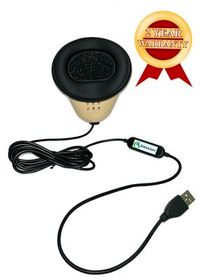
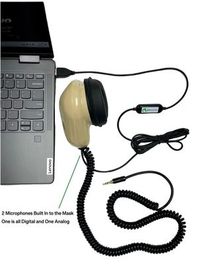
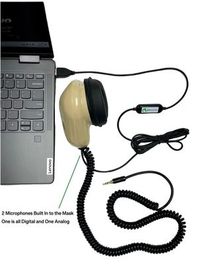
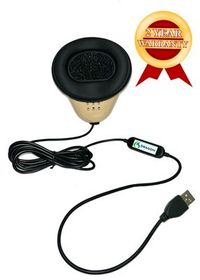
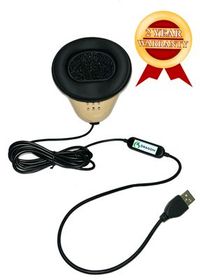
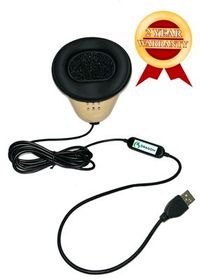
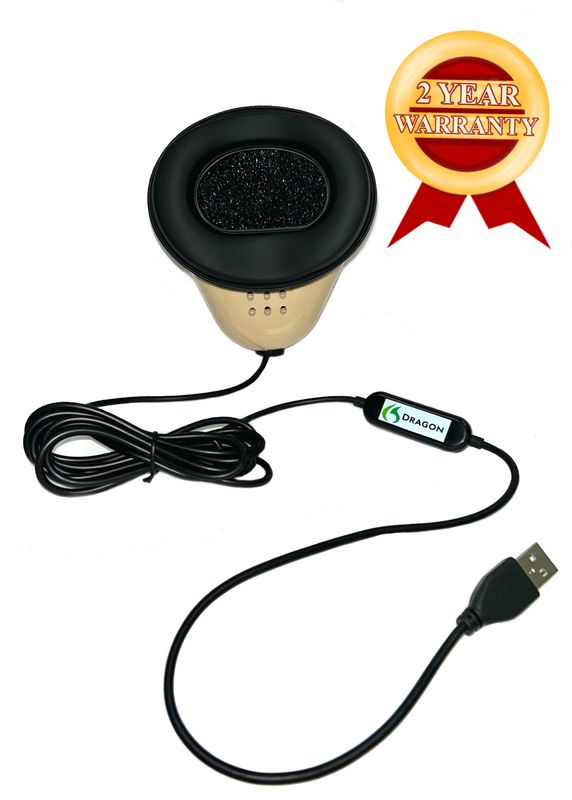
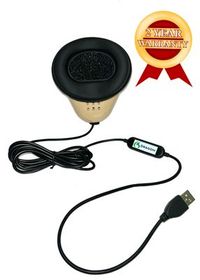
Martel describes its Dragon USB Stenomask as a wired microphone with its own USB sound card. The Double Dragon 2 has a USB microphone path to a computer and a separate microphone with a 3.5 mm connection for a compatible second device. Both Double Dragon microphones are in the reporter’s mask. When reviewing an interruption, that second recording can help establish what the reporter dictated. If you need to review the other people’s original voices, set up a source for those voices and check the saved room recording separately. Martel Dragon USB microphone connection · Martel Double Dragon 2 outputs.
Choose a short sentence that belongs only to the room and another that belongs only to your dictation. A partner might say, “The costume has a yellow lining,” while you say into your mask, “Mask sample, two blue cuffs.” Make a short recording at each intended destination. Listen for which phrase can be made out most clearly on which file. Some room sound may be audible in more than one place. The point of the exercise is to establish the primary source on each recording. Hearing a little background speech is different from having a usable account of an entire exchange.
Stenograph describes speaker lists and AudioSync in its CATalyst VP product information. Its playback guide explains how to begin playback from a position in a job that has associated audio. In a Direct Audio setup, the guide also describes choosing which recorded channels to play. A speaker entry, a recording channel and an individual person serve different purposes. One room microphone might contain two people talking over each other. Selecting that channel plays the sound it captured. To attribute a particular phrase, examine the exchange and the available identifying evidence. Stenograph’s CATalyst VP features · Stenograph’s audio playback instructions.
For a class that has recently started using Speechmatics, keep a simple before-and-after example of speaker attribution. On the page, write “Witness” and “Counsel” beside two turns of a practice exchange. Save the rough as first produced by the configured recognition and CAT workflow. Compare its line boundaries with the ones you wrote on the reference. The exercise asks whether the selected lines reflect what happened. It does not require any assumptions about the name of a menu, how many microphones a publisher supports, or which features a particular installed version makes available.
Use four roles for the wardrobe exercise. Inez Calder, the wardrobe supervisor, describes a rehearsal coat. Morgan Vale asks the questions. Ren Ito is the second attorney. A presiding speaker controls the flow of this imaginary hearing. Give each reader their role independently and ask them to keep a natural voice. If they manufacture exaggerated accents for easy identification, the test becomes about recognizing four characters. You want to practice identifying a turn even when two people have similar voices or only one short word is audible.
Begin with a quiet identification round. Vale asks Calder to identify the coat in a photo. Calder answers that it is the gray rehearsal coat used on the touring production. Ito says they have the same photo. The presiding speaker asks the participants to call it Costume Photo B during this exercise. Save this portion with the overlap examples. It supplies several full phrases spoken separately by each participant, along with a shared name for the object. Later, compare the start of a disputed phrase with the speaker’s uninterrupted voice rather than with your memory of it.
In the first overlap, Vale asks, “Where did you put the tailor’s chalk?” Calder answers, “On the inside of the left cuff.” Ask Ito to come in just as Calder reaches “inside” and say, “The left cuff?” Calder finishes, and Vale says, “Let the witness finish describing the mark.” Give the reporter one normal pass through the exchange. The reference contains a complete statement by the witness and a question by Ito. Timing alone cannot tell you whether the question repeated the whole answer or merely anticipated its end. Listen for the words and the source of each voice.
For the second overlap, change a single fact of the staging. This time Calder answers, “On the inside,” then pauses. Ito asks, “The left cuff?” After Ito finishes, Calder answers, “Yes, the left cuff.” In a neatly edited summary both exchanges could yield an identical fact about chalk. In the transcript, the route to that fact differs. During the first exchange Calder volunteered the cuff detail. During the second Ito supplied it in a question and Calder then agreed. Save the two takes in separate named files, and keep the same participant roles in both.
A third version can challenge someone who knows the earlier takes by heart. Calder starts to say, “I marked the lining.” Vale begins another question, notices the overlap and stops after “Was it.” Calder completes, “I marked the lining under the collar.” Vale then asks, “Was it visible when the collar was down?” This version contains an abandoned start and a complete later question. Decide where you can hear each. A mark in the reference can identify the overlap for training purposes. Apply your own authorized transcript conventions when representing an interruption in finished work.
Keep the room capture, the mask dictation and the initial rough together for each take. If the mask captures the words “the left cuff” only once in the second take, locate which occurrence survived. An isolated phrase does not tell you whether it came from Ito’s question or Calder’s confirmation. The intonation in your repeat may help you retrace the sequence, and the recorded room voices may provide a more direct check. Establish what each source contributes before changing a speaker designation on the working copy.
On the first listening pass, give yourself permission to identify the places where turns change without attempting to recover every syllable. Write a vertical mark for the beginning of Vale’s question, another for Calder’s answer and another for Ito’s entry. Add the next clearly heard speaker after the interruption. You are constructing a sequence of turns that can hold the words later. If you attempt to settle the chalk color, the coat part and the speaker name in a single pass, a plausible bit of meaning can distract you from hearing who actually completed the thought.
On the second pass, play the room portion that begins one complete clause before the disputed phrase. Listen once through one complete clause after it. In the first version, a person already explaining the chalk continues into the location, while another person asks a short rising question. Listen to what happens when that first voice resumes after the interruption. Does the end of its sentence fit the part you heard at the start? That continuity is evidence you can describe. The witness’s job title and presumed knowledge of costumes do not tell you who said a particular word.
On the third pass, compare your dictated version with the screen. If both room voices can be heard and you repeated them accurately, a speaker label might still cover two different contributions. In the training copy, split or label the relevant portions according to the methods appropriate to your workflow. Preserve the first rough for comparison. A second reviewer should be able to see exactly which line changed, what the new speaker designation is and why you changed it. “Heard Ito repeat cuff while Calder continued” is more informative than “fixed the paragraph.”
Consider a variation that leaves the answer genuinely open. Two voices say “inside” together, and the independent room recording contains a third sound over the start of each word. Neither person identifies the word in the next exchange. Your mask captured you saying “inside” once. The initial rough gives the word to Calder. You can confirm the word and still have incomplete evidence about its speaker. Write that finding precisely. In a rehearsal, ask the readers to repeat the lines separately after recording your initial finding. The repeat provides an answer key for the class, not retroactive proof of what could be heard on the original file.
A first example concerns speaker identity. “Costume Photo B, first exchange. I hear Calder start the cuff description, and another voice enters before Calder completes it. Compare Ito’s separate reading during introductions with the short question. Preserve the witness’s last three words while checking where Ito’s question starts.” A reviewer can open the right take, find the right passage and understand the issue. The note deliberately identifies a visible or audible event rather than offering a broad judgment about an entire session’s quality.
A second example concerns wording. “Near the second chalk question, the rough attributes the entire answer to Calder. I can hear the question ‘The left cuff?’ from the room and a separate ‘Yes’ from Calder. Check where the first ‘left cuff’ belongs.” This note points to two occurrences that share the same words. If the editor simply searches for the first matching text and changes the speaker, the correction could land in the earlier exercise. Include the take identifier and a nearby phrase such as “where did you put” to keep the request narrow.
A third example concerns a missing source. “I can hear my repetition of ‘under the collar’ on the saved mask file. There is no room recording among the files currently in this training folder. My note identifies Calder as the person speaking. Please return the attribution question to me so I can compare the source materials from class.” This describes which evidence is present and which part of the conclusion comes from a contemporaneous note. It keeps a reviewer from treating two microphone paths inside a Double Dragon 2 as independent observations of the original speakers.
A fourth example concerns a requested repeat. “Following the overlap, Vale asked Calder to say the location once more. In the later answer I hear ‘under the collar’ clearly. The first answer starts ‘I marked’ and ends under another voice. Keep the later answer in its own place. Flag the ending of the first answer for my review.” The repeat is valuable. It tells the reader what the witness actually said when given the floor again. Moving those words silently back into the earlier turn would change the sequence a reader needs to understand.
We handcraft our Dragon USB and Double Dragon 2 stenomasks in limited quantities. If a batch sells out, there may be a waiting list.
Martel’s VOX Elite 32 GB and 64 GB court reporter laptop listings describe setup help for a stenomask and assistance transferring CAT files. A useful shopping appointment for this workflow includes a practice job, its authorized audio and one actual task. Ask to locate an interruption, play the relevant source and find a nearby uncontested speaker turn. With a Martel Dragon USB mask, check the computer path you plan to rely on. With a Double Dragon 2, also check the compatible recorder if you plan to keep a separate mask file. Specify the publisher-supported recognition arrangement for your installed CAT release. Martel VOX Elite 32 GB setup package · Martel VOX Elite 64 GB setup package.
Time retrieval separately from speaking speed. Start when a partner asks, “Who supplied the cuff location?” Stop when you find the useful passage, then listen without the pressure of a running timer. Record how long it took to find the passage and which source helped you decide. A reporter who locates the right ten seconds immediately has more time to understand them. An equipment choice can make it convenient to keep the right material within reach, but the words, labels and findings in the saved exercise show how well the particular setup served its purpose.
Try two desk arrangements with the same material. In one, every file sits in a single practice folder with its original device-created name. In the other, a short inventory says that the second room take contains the delayed cuff question and that the recorder file contains the reporter’s mask dictation. Ask a partner unfamiliar with the folder to locate the right sources. Note where the partner hesitates. If the second arrangement helps, keep the principle rather than the example names. Choose names that will make sense to the next person who actually receives your work.
Invite a partner to read this new exchange without telling you which person will interrupt. Vale asks, “Did you see the alteration before the Thursday rehearsal?” Calder begins, “I saw the stitching.” Ito enters with “On Thursday?” and Calder continues, “On Wednesday evening, when the coat was on the pressing table.” Vale then asks, “So the observation you just described concerns Wednesday?” Calder answers, “Yes.” Keep the interrupted phrase and the clarification in separate portions of the training job. This exchange contains two different days. Each occurrence has an owner and a purpose.
Consider this fictional first rough. Under Vale’s label appears the original question. Under Calder’s label appears “I saw the stitching on Thursday on Wednesday evening when the coat was on the pressing table.” Under Vale appears the Wednesday follow-up. At first glance the witness appears to have mixed up the days. Before editing, write down what you would need to hear to justify that conclusion. You would need evidence that Calder actually said both days in that answer. The mere appearance of the words together under a speaker heading cannot supply that evidence.
Open the independent room source and find the phrase “pressing table.” Work backwards to the two day names. Suppose you hear Calder begin the answer, Ito ask “On Thursday?” and Calder continue with the Wednesday explanation. You now have grounds in the exercise to separate a question from a continuing answer. If you hear your mask file combine the words without an audible indication of Ito’s turn, document that as a second finding. You can practice signaling a short interjection more clearly during dictation even when the independent room recording is adequate for editing the rehearsal.
Make a copy of the exercise with a different answer key. This time Ito stays quiet. Calder says, “I saw the stitching on Thursday,” pauses and corrects herself, “On Wednesday evening, when the coat was on the pressing table.” Ask a partner to read both takes in an order you do not know. The two roughs may contain exactly the same day names and much the same punctuation. The right attribution differs. Listen all the way through the correction before deciding. The exercise tests whether you consult the audible sequence each time instead of applying yesterday’s answer to a familiar-looking sentence.
Now introduce a fourth participant who has been silent up to this point. The presiding speaker asks, “Wednesday evening?” and Calder answers, “That is when I saw the stitching.” The later voice belongs to someone who never handled the coat. If you assign short questions to the person who appears most interested in the topic, you might place it with either attorney. Save ten seconds of the presiding speaker identifying the exhibit or opening class at the start. Compare the separate voices at a comfortable listening level, while treating similarity by itself as one clue among several.
In a classroom debrief, put two observations on the board. One can state that the word “Thursday” is intelligible. The second can state that the first take has an interrupting question and the second has a self-correction. Have students explain what each observation requires. Recognizing a day name is a wording task. Recognizing a question from another person involves timing, intelligible voices and context. A good exercise allows a student to earn credit for the first observation even if their material leaves the second uncertain.
Create a ten-turn excerpt that includes two deliberate overlaps, one abandoned start and one ordinary pause. Make the reference from the readers’ delivered lines after the recording, checking any deviations from the printed script. Mark ten speaker starts, then identify the two or three that fall inside overlaps. Score a speaker start only if the delivery and speaker identity are independently clear enough for the planned exercise. If two readers depart from the script and nobody can tell which voice produced a particular phrase on the saved room track, keep that phrase for discussion and remove it from the scored set.
Here is a fictional calculation. Eight scored turns are simple exchanges and two occur during an overlap. A reporter correctly labels all eight simple turns and one overlapping turn. The score for the complete set is nine of ten. The score for the two overlap turns is one of two. Both are accurate descriptions of that small session. Only the second one tells you where to put your practice time if overlapping speakers are the skill you meant to study. Add the number of scored observations so a later reader knows how much material stands behind each fraction.
Keep a word check apart from the turn count. Suppose every word of Ito’s question and Calder’s answer appears in the rough, yet both are under Calder’s label. Mark the words as present and record the misplaced turn. In another take, label Ito correctly but omit “left.” Mark the attribution as correct and note the missing direction. The exercises lead to different next steps. One calls for a more reliable way of signaling a speaker change in your own workflow. The other calls for closer attention to a location word when two speakers are audible at once.
Keep a separate retrieval check. Have your partner ask for the first mention of the weekday, the line that independently establishes the day of observation and the last time the presiding speaker was heard. A person can accurately reconstruct all three yet spend an unnecessarily long time finding the first one. Add an exhibit name or another legitimate location cue to the practice notes, repeat with a fresh passage, and compare the times. If finding the useful materials was the slow part, changing the microphone would answer a different question from the one the test revealed.
End with one exercise you can explain without a score at all. Play a short overlapping exchange and ask the reporter to complete this sentence in their own words. “I can establish that this participant said these words because I observed the following.” A good response may describe an independently captured introduction, a continuing sentence, a visible turn at the time and the confirming question immediately afterward. Another good response may identify exactly why those clues do not settle one syllable. Distinguishing those two outcomes is a professional listening skill worth practicing in its own right.
Set up three short review stations using the Wednesday stitching exchange. At the first station, place only the saved rough and the notation “first take.” Let a classmate write what the page appears to say. At the second station, add the reporter’s mask file. Ask the classmate to indicate whether the recorded dictation contains the same order of words and to underline the first point at which the page differs from that dictation. At the third, add the room recording and individual introductions. Ask for a proposed speaker assignment and an explanation based on a specific fragment of sound. The exercise reveals what each additional source allows a reviewer to establish.
Imagine one completed sheet from the stations. At the first, the classmate reads a correction from Thursday to Wednesday by Calder. At the second, the classmate notices that the reporter actually said Ito’s name between the two day names. At the third, the classmate hears Ito ask the short Thursday question. There are two corrections to consider in the working practice copy. One concerns separating the question. The other concerns the placement of Wednesday in the witness’s continuing answer. A classmate who simply circled the two days as an inconsistency would miss both the value of the mask file and the source of the words.
For the return trip, change the materials in one deliberate way. Give a second classmate the same rough and mask file, together with a room recording from the other take where Calder corrected herself. Ask them to confirm that the filenames, spoken opening and surrounding exchange belong to the same performance before proposing any edit. An observant reviewer will return the mismatched source for identification. That result earns full credit on this version of the exercise. The most appropriate outcome is sometimes a precise request for the matching recording, even when every individual file plays clearly.
Read the word once under each plausible speaker’s name. “Wednesday” from the witness can be testimony about when a coat was seen. The same word from an attorney may ask the witness to confirm a day. In the rehearsal you can check the original voice, the order of the turns and the response that followed. Give those details enough attention to preserve the exchange a reader is trying to understand. A sensible date sitting on the wrong line can tell a very different story.
Start with enough of the preceding question to identify whose turn was already under way. In the chalk exercise, begin before the request for the location and play through the end of Calder’s answer. An isolated “left cuff” can belong to more than one turn. Playing the lead-in lets you hear whether one person is carrying on a sentence while another repeats a phrase as a question. Once you understand the sequence, replay the short stretch to examine its wording.
It can establish what the reporter repeated and how they identified a speaker during dictation. If you dictated a speaker name followed by the cuff question, that is valuable evidence of your contemporaneous interpretation. To check the originating person’s own voice, consult an authorized independently captured source or your appropriate reporting notes. In practice, make one deliberate speaker-label error while accurately repeating the words. The comparison shows plainly what your mask file can demonstrate and what question remains about the room.
Both microphones pick up speech at your mask. The USB output can feed the laptop, and the separate analog output can feed a compatible receiving device. A file made from that second connection can be especially helpful in checking how you repeated a rapid exchange. To hear the attorney speaking from across the room as a primary source, plan the room microphone or authorized source for that purpose, then verify it with a practice line spoken from the attorney’s position.
Make short individual introductions before anything overlaps. Have each person say their role and speak a full sentence about the topic at an ordinary pace. Keep the introductions in the same recording as the exercise. When the voices cross, compare their starts, endings and responses with those reference turns. If the evidence still leaves two plausible speakers, keep both possibilities in the review note. A strong exercise rewards the person who can identify what remains uncertain.
Pass on the observation in a way the reviewer can weigh. You might write that you saw Ito start speaking while Calder was describing the cuff and that the short question follows at that point on the room recording. Identify this as your observation from the rehearsal. The reviewer can listen for the corresponding event and let you know if another detail needs your attention. A speaker label with no explanation conceals the source of information that only you had.
Use the next full question as part of the context. Then listen for separate evidence about the short turn itself. In the coat exercise, the presiding person can make a brief inquiry and Vale can immediately ask a longer question. The next full question tells you who had the floor afterward. It alone establishes little about the voice that entered briefly beforehand. Try changing the person who asks the next question while leaving the interjection untouched.
The later statement can explain the witness’s intended meaning. The earlier exchange still records the route by which the clarification came about. If the presiding speaker asks for a repeat and the witness supplies one, keep track of both utterances during review. That preserves the location of the later answer for a readback request. It also prevents a reviewer from treating an audible later explanation as if it were perfectly intelligible during the original overlap.
Identify a specific point where the speaker changes or may have changed. A useful note might say that Ito asks about the left cuff while Calder continues describing the mark, with both sets of words currently under Calder’s designation. Include the take and a phrase that appears nearby. The person reviewing it can then check one boundary against the audio without searching the full job for an unspecified problem with speaker labels.
Begin with what can be independently established. A continuing voice that starts a sentence before another person enters and finishes after that person stops gives you a concrete observation. Grammar can help identify where to listen, especially when a speaker resumes an incomplete thought. People also abandon starts, correct themselves and borrow another person’s wording. Let the actual exchange settle the question where possible. Keep the transcript faithful even when the resulting sentence sounds less polished than a reconstructed version.
Prepare two recordings on different days using the same fictional wording with different turn boundaries. Give the files neutral names and keep a separate answer sheet. Later, dictate or review them without opening that sheet, then compare the result. A solo exercise can train attention to pauses, abandoned starts and wording. Invite two separate readers when you want to practice acoustic distinctions between different people’s voices. Describe the kind of test you ran when you look at the outcome.
Read a short exchange one turn at a time and demonstrate where each speaker label belongs in the saved rough. Next, have the second reader begin just after the first stops. Then move that entry slightly earlier so the end of the first sentence overlaps the second. Save those takes separately. Changing the position gradually helps the student hear which part of the turn they are losing, without having an unfamiliar vocabulary item and a new pace obscure the result.
Keep the wording but exchange which person asks the short question in a later take. Change whether the witness finishes the sentence before or after the interjection. Your partner should keep the answer key. Afterward, identify one observable clue for each assigned speaker. If your answer follows the person who asked the question in the earlier take, return to the lead-in. The new example should be solvable by listening to the current recording, even by a reviewer who never attended the rehearsal.
Write down each audible occurrence and its owner before deciding how you would format it. Calder can say “gray lining,” Ito can ask “Gray lining?” and Calder can respond “Yes.” Two occurrences may sound almost identical and still perform different functions. Search for the confirming “Yes” and work backward through the turn. If only one occurrence survives in the rough, identify which one is present, then use the verified sources to account for the other.
The plan can document where people sat during the rehearsal and what you observed at the time. A single combined recording may give little reliable indication of the seat from which one short word came. Write down what the plan establishes, what the recording establishes and what depends on recollection. If a participant changed places after a break, update that note. Keeping the pieces distinct makes it easier to revisit an attribution without silently turning an educated guess into an observation.
Choose a combination of details. “Photo” occurs repeatedly in the wardrobe exercise, while “alteration before the Thursday rehearsal” points to a particular question. Start there and play through the response about the pressing table. A helpful location note names the exhibit, one nearby question and the disputed words. This gives someone using a different review method a fair chance of finding the same passage even if text searches render the exhibit label in an unexpected form.
Listen for how the different sources present the same event. During the sound check, say a phrase into the mask while a partner says a different phrase from the witness’s seat. On playback, identify the principal voice on each file and any audible spill from another source. When reviewing actual overlap in the exercise, check whether a faint repeated word is the reporter’s own rendition. You can include that possibility in your notes rather than counting it automatically as another participant’s turn.
Find a distinctive practice event present in both, such as the opening announcement of Costume Photo B that you also repeated. Note the elapsed time on each file for that event. Repeat near the disputed turn to confirm you are comparing the right segment. The offsets you observe belong to those files. If the practice recorder stops and restarts at the break, make a new comparison after it resumes. Retain the source filename whenever you give a reviewer a time.
Frame the question as a choice the recording might settle. “Can you hear whether another speaker begins before Calder finishes ‘under the collar’?” is easier to answer than “Does this sound right?” Leave room for the listener to report that the material is inconclusive. Ask them to record their observation before showing them your interpretation. Two independently described observations give you a better discussion than two people agreeing with a name already written prominently across the page.
Find the disputed phrase at all available stages. First listen to the room. Next listen to your recorded dictation. Finally read the saved first rough. If the room carries a second speaker and your mask dictation gives only the witness’s words, practice capturing that change during repetition. If you spoke both turns and your rough grouped them, examine the speaker designation and formatting steps in your supported CAT workflow. Describe the point where the materials diverge before making any equipment decision.
Try wording such as “Room recording, second chalk take. Ito can be heard asking the question while Calder pauses. Calder then confirms it. Mask repetition includes the confirmation. The saved rough groups the two.” It takes only a few lines and separates the recording, the reporter’s delivery and the page. Include a nearby phrase or elapsed time if needed. A reviewer can reproduce the finding and see the limits of the observation without knowing your shorthand.
Arrange a fictional exchange in which the witness finishes a sentence while an attorney begins an objection. Have the attorney and witness each read their line clearly on a separate later pass for the answer key. Score the original take on what is intelligible and attributable in that take. Keep the separately read words available to assess the exercise design. If the original microphone placement makes the last word inaudible, that exercise may teach documentation of uncertainty better than exact word recovery.
You can compare observable tasks on the two setups. Use the same authorized practice material and record which files, players, publisher-supported configurations and equipment you used. Time locating and playing the target passage, then score the words and speaker turns you identified. A change in retrieval time may reflect organization, familiarity or a different playback arrangement. Document those conditions before treating the observation as a general statement about a laptop or a recognition engine.
Bring your personal mask, the connection details for your own recorder if you use one, and a short fictional exchange. Ask to make a new dictation recording and reopen it during the appointment. Then open the independently prepared room reference and identify which person originally asked the short question. That gives the appointment a concrete outcome. You leave knowing which material came through the mask, whether your own recording is intelligible, and where you can find it on that setup.
Include the surrounding turns necessary to evaluate the actual issue you have assigned. For the cuff question, an introduction can help identify the two voices and the full question supplies context. A long unrelated discussion may add little to that narrow exercise. Where a real assignment is concerned, use only the recordings and sharing arrangements authorized for it. The fictional rehearsal lets you practice assembling just enough context without treating an entire session as the default attachment.
Preserve the order of the words that were actually spoken in the practice rough. Vale may begin “Was it,” stop as Calder continues and later return with a complete question. Calder’s intervening words can still be a continuation of the prior answer. Use the room sequence to determine who finished what. A plausible reconstructed question in the editor’s mind can produce a very smooth exchange that nobody in the room delivered.
Group the examples by the actual challenge. A repeated word, a correction, a short objection and an interruption by the presiding speaker are different tasks. For each group, note how many turns could be scored, how many you attributed correctly and what evidence you used. If the same word repeated by two people repeatedly requires review, prepare a new drill around that pattern. This gives your next practice session a reason beyond accumulating more minutes at the microphone.
Keep the first rough and a working copy for this exercise. On the working copy, make the change supported by your review. In your notes, identify both the original reading and the reason for the revised attribution. A partner can then see whether the problem was the identity of a speaker, the location of a boundary or a missing word. Keep the practice change linked to its source so it can serve as an example during a later session.
Provide the named room and mask materials, a short role list, the first rough and a particular review request. Withhold the answer sheet and any marginal note that assigns the disputed phrase in advance. Ask the reviewer to submit both a proposed reading and one observation that supports it. When you compare accounts, distinguish a disagreement about the words from a disagreement about the speaker. That separation often reveals which additional piece of evidence could settle the question.
Try an unfamiliar exchange with at least one ordinary turn, one short interjection and one later clarification. Demonstrate where each appears in the rough and which source supports the words and speaker. Locate the passage in response to someone else’s readback prompt. Finally, identify one point you would leave open if a source were unavailable. When you can explain all four decisions in plain language, you have a repeatable skill to bring to a longer practice hearing.