



A Mock Court Hearing From Roll Call to Readback With Speechmatics
Run a complete fictional footbridge hearing with Martel stenomasks, two witnesses, exhibits, a recess, a disputed readback, and four separate scores.
A reader asks for the first answer after the recess. You find the question in your rough and hear your own voice repeating it in the mask recording. The room recording opens several seconds earlier, while the participants are settling down. Which file should you move forward? Start with the words you can identify in each source. A room microphone captures the original speech within its pickup. Your stenomask captures what you repeat. The CAT job contains text produced and managed by your reporting workflow. The same passage can appear at different positions in all three and still be recognizable.
A useful post-recess check is to find one distinctive line before the break and one after it. Add a third line farther into the resumed session if you want to investigate a timing change. Note the specific file and elapsed time for each recording and the exact phrase or text location in the rough. A single matching word proves little when a witness says “yes” repeatedly. An unusual phrase plus the speaker, the preceding question and the event it describes gives you a much firmer match.
Stenograph describes AudioSync in CATalyst VP as a way to work with the reporter’s audio, room audio and text together. Its public audio-playback instructions explain how to start playback from a location in a CATalyst job. Use those facilities as the publisher documents them for your version and the recordings present in your job. A separate file on a portable recorder can still be valuable, but its relationship to the job has to be established from the material you actually have. Do not assume that an independent recording already carries the application’s text-to-audio links. Stenograph CATalyst VP audio features · Stenograph’s instructions for playing job audio.
This exercise uses a fictional training hearing about a library chime. It gives you actual dialogue, elapsed-time examples, indexing methods and a sample note for a scopist. The invented results illustrate how to reason from files. Each result describes the invented measurements used here. For a real assignment, use the recording and recess procedures authorized for that setting, including the boundaries of what may be captured and shared. The markers recommended here are training markers for invented material. In work, use identifiable speech already present in the authorized record and the procedures that apply to you.
Stenograph has announced on-device Speechmatics integration for CATalyst VP. When you are practicing with a publisher-supported recognition setup, your saved rough is one record of what the workflow produced. Keep the recognition setting, the job’s audio arrangement and your independent recorder file identified separately. The exercise can reveal whether a detail was present in the original speech, repeated into your personal mask and retained in the words on the page. You can make that determination without assuming that a recognition engine created a recording of every source in the room. Stenograph’s CATalyst VP Speechmatics announcement.
Give each source a name that describes whose voice it contains. “Room before recess” and “my revoicing before recess” communicate more than “track one” and “track two.” An embedded track in a CAT job may be linked to text. A separately copied room file may be available only through an ordinary audio player. A mask recording from a second device may run continuously or may be split. Inspect the files and document those facts individually. Never infer the contents from the connector, a green recording indicator or the name someone assigned to a folder.
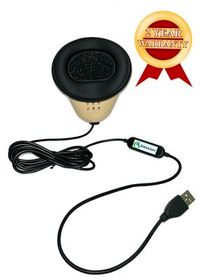
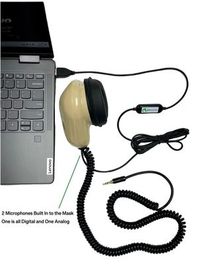
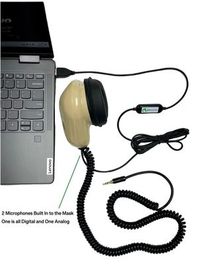
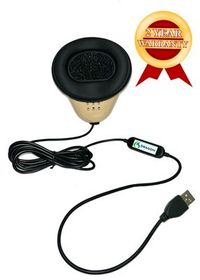
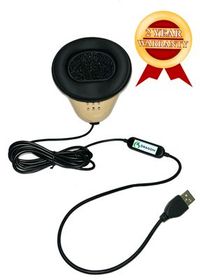
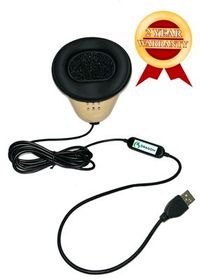
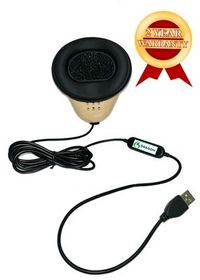
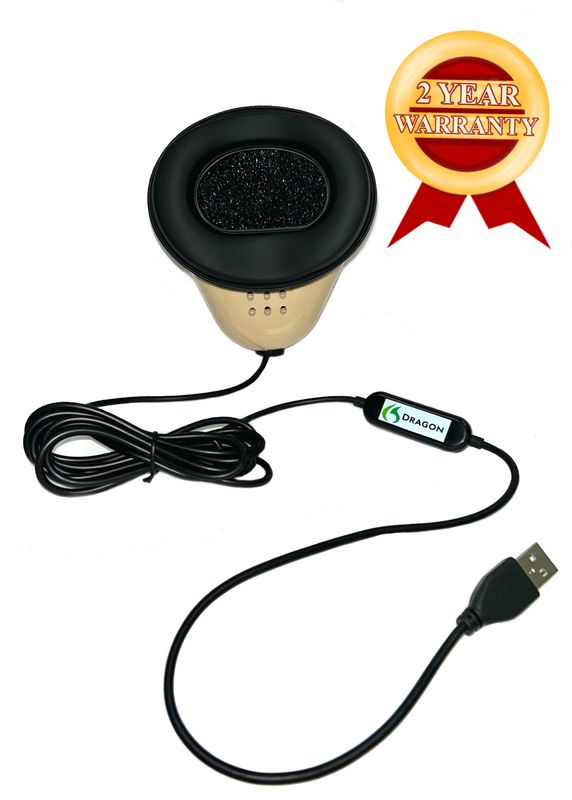
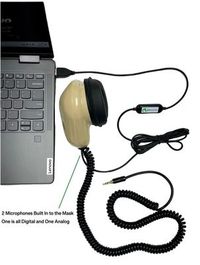
Martel’s Dragon USB Stenomask supplies a direct USB microphone input to the computer. Its built-in sound card is part of that connection. The Martel Double Dragon 2 has an independent 3.5 mm microphone path alongside the USB microphone path, allowing a compatible recorder to capture another recording of the reporter’s dictation when configured and started. Both microphones are in the mask. A room microphone for the participants is a different source. If you hand a colleague the Double Dragon recorder file, identify it as the reporter’s revoicing so they will know whose statement they are hearing. Martel Dragon USB microphone connection · Martel Double Dragon 2 microphone connections.
Listen to the first minute of each practice file and note the first identifiable content. On the room recording, you might hear your partner introduce the mock session in their usual voice. On the mask file, you might hear your own quiet identification followed by the first revoiced question. Respond to what you hear, even if the filenames suggested the reverse. Write down each file’s full name and elapsed duration in a private practice index. Give edited listening copies different names from untouched original files. This protects the reference you will need if someone later asks how the files were matched.
For an existing CAT trial, identify whether you have the original rough, an edited copy or both. A roughly transcribed phrase may be easier to find in association with the nearby question than through an exact text search. An edited copy may contain a correction that appears nowhere in the untouched first text. For a training handoff, preserve both and label them. A practical reference can say that the resume marker appears under the first question about the replacement gear on page or paragraph as displayed in the named working copy. That description can survive a later change in pagination.
For a practice marker, choose a complete expression with unusual content that is easy to revoice at a normal pace. “The narrow fork sounded twice” and “the brass tooth faced inward” make better anchors than “we are back.” Choose a third phrase to check later in the same session. Put the markers inside natural testimony so the exercise still resembles reporting. If you are testing two independent recordings of a single common training sound, identify that sound separately from the revoiced words. The original witness and the reporter are two different speakers, with naturally different timing.
Define exactly what you mean by a marker’s time. You might use the beginning of the word “narrow” inside the first phrase and the beginning of “brass” inside the second. Both reviewers must use the same point for each matched source. Someone using the beginning of the question and someone using the final word of a long answer can produce substantially different times without either reading a clock incorrectly. Write the chosen word down. Use the corresponding position inside the actual phrase the reporter dictated if the revoicing differs slightly from the source.
Include enough speech around a marker to identify who spoke it. Suppose a witness says that the brass tooth faced inward and counsel immediately repeats the phrase in the next question. Searching the rough finds both. A short skip in playback might land on either. Note the one you intend to use as “witness’s answer, after the question about the replacement” or “counsel repeats it in the next question.” The speaker role and order now give you two independent clues. A match is much stronger than recognizing the words alone.
If you timed a phrase while watching a word appear on the screen, label that timing as an observation of displayed text. A linked playback position, a manual stopwatch reading and a page reference are three different measurements. Include a page reference or a nearby unique quote whenever the rough has no usable time information. You can still match the content and hand it over effectively. Avoid assigning an invented second count to a text location just to fill every column on a worksheet.
Two readers can take the roles of counsel and the witness. A third person may handle a room recorder if that arrangement is part of your authorized exercise. The voice writer uses their own personal mask and chosen supported CAT workflow. Before the readers start, assign a filename to the practice job and identify which recordings you expect. If the second mask output feeds a portable recorder, make and play a separate short test file on that device. Begin a new file for the actual exercise so the markers identify the intended session.
Question. Please describe the chime you examined at North Quay Library. Answer. It hangs above the reading room entrance. There are two small forks mounted behind a faceplate. The narrow fork sounds the high note, and the wider fork sounds the lower note. I removed the faceplate only after the librarian had shown me how the chime was normally operated. Beside the door there is a separate brass bell used by the delivery staff. I did not examine that bell, and it appears only at the edge of one of my photographs.
Question. What did you hear when the librarian pressed the switch? Answer. The narrow fork sounded twice. The wider fork gave one low note. The two high notes were close together and could easily sound like one long note to someone farther down the corridor. I stood about a step from the open faceplate after the first demonstration. The second time the librarian pressed the switch, I watched the narrow fork move each time I heard the high sound. I recorded that observation in the top half of my work note.
Question. Who stood beside the librarian? Answer. Orla Fen stood to the librarian’s right with a paper copy of the maintenance request. Orla had filed it the previous afternoon after someone mentioned a double sound. She did not claim to have heard that sound herself when she made the request. On the day I came, she was in the room for the second demonstration. The time printed on her first note records when she completed that note, not when I inspected the chime.
Question. Did you identify the part causing the repeated sound? Answer. I identified a worn tooth on the small gear that engages the narrow fork. The wide fork uses another contact. There is a close photograph of each contact on the board in front of you. On the photograph of the narrow fork you can see a dark line beside the tooth. My pencil sketch uses a similar line, but the pencil line is part of my drawing. I did not put a pencil on either gear while the gear was in place.
Pause the fictional hearing here according to the exercise you agreed on. Follow the approved practice plan for any source that should be stopped. Make a note of which devices were paused, stopped and saved, started in a new file, or kept running in this fictional exercise. If you are simulating a real work environment with recording boundaries, reproduce the approved boundaries. You can test long elapsed times using an invented silent interval or two clearly separated sessions. Recording private conversation during an actual recess is unnecessary for learning how to align records.
Question. When we left the chime before the break, you had identified a worn tooth. What did you see when you examined the replacement assembly? Answer. The brass tooth faced inward. On the old gear, the corresponding tooth faced inward as well, although its outer edge was worn. I placed the new assembly on the bench with its label toward me. Orla photographed it in that position. When I installed it, the label faced the wall. The photograph and the installed part therefore show the same tooth from different directions.
Question. Which item number belongs to the replacement? Answer. The sealed replacement packet is Item Nine C. The empty packet is the one in Orla’s photograph, after she handed me the part. The drawing supplied with the packet is Item Nine D. Both labels begin with Nine, and both were written in blue ink by the librarian. The final letter separates them. The faceplate I had removed earlier was never placed in that packet and does not carry either of those labels.
Question. How did you test the assembly after installation? Answer. Orla pressed the switch once while the librarian stood in the doorway. This time there was one high note followed by one low note. We then waited a little while and tried it a second time. The librarian operated the switch on that second trial. From my position I could see his hand on the switch. I could hear both tones on each trial. I cannot say exactly how far apart the tones were because I did not time them.
Question. What did you write on the service card under the heading for parts returned? Answer. I wrote “one small gear in a white carton.” The carton was on the workbench when I signed the card. It stayed there when I left for lunch. I saw the carton again the following morning on the librarian’s desk. He told me he planned to send it with his report. I saw where the carton was, and I heard what he planned. I did not see him mail it.
Question. Please identify the last line on the card. Answer. The last line reads “wide fork retained.” I meant that the wider fork stayed in the chime. I did not mean that the librarian retained a loose spare fork. I had taken out the small gear and replaced it. Both forks were still in the assembly when I fitted the faceplate. The separate bell in the photograph remained beside the delivery door throughout the inspection.
Use “narrow fork sounded twice,” “brass tooth faced inward” and “wide fork retained” as the three anchor phrases for the following arithmetic. Write down the first occurrence of each in the witness’s answer, not any repetition during an editorial discussion. Replay the full answer once before noting the times, so you know which event the witness is describing. Save the source file and the first rough without alterations. Use copies for any practice edits, cropping or alignment work that your usual tools and procedures permit.
For this exercise define an offset as the elapsed time of the marker in the mask file minus its elapsed time in the room file. Use seconds for arithmetic and retain the original minutes and seconds beside each entry for reference. If the room marker is at two minutes and five seconds, convert that to 125 seconds. If its corresponding revoiced marker is at two minutes and thirteen seconds in the mask file, that is 133 seconds. The observed difference is positive eight seconds. At that marker the mask file’s displayed time is eight seconds larger.
The sign matters when you look for a starting point in another file. If nearby observations support a roughly positive eight-second offset and the room player displays 4:00, a sensible place to begin listening in the mask recording is around 4:08. Then find the actual words. For the opposite direction, a mask time of 4:08 points you back toward a room time near 4:00. The arithmetic gives a search neighborhood. The content establishes the match. Keep the direction of the calculation at the top of the worksheet so a second person can reproduce it.
Use negative values as readily as positive ones. Suppose the room recorder was started well in advance and the mask recorder began shortly before the witness. A given room phrase might occur at 3:20, or 200 seconds, while the mask revoicing occurs at 0:35, or 35 seconds, in its own file. Subtracting produces minus 165 seconds. The mask file has a smaller elapsed reading at that event, even though the reporter spoke after hearing the witness. File starting points and human revoicing time both contribute to what the two players display.
Consider this three-point fictional worksheet. The numbers come from a deliberately simplified example. The room and mask files use their own zero points, and the reporter repeats each marker after hearing the witness. Read each result as an observed difference for that paired phrase. The practical question is whether the differences are similar across the break or show a change worth investigating. Use your own saved samples before applying any relationship to a new working file.
| Witness’s marker | Room file | Mask file | Mask minus room |
|---|---|---|---|
| Narrow fork sounded twice | 1:20 | 1:28 | +8 seconds |
| Brass tooth faced inward | 4:10 | 4:18 | +8 seconds |
| Wide fork retained | 6:40 | 6:49 | +9 seconds |
In the first row, the room player shows 1:20 and the mask player 1:28, producing eight seconds. In the second, 4:10 and 4:18 again differ by eight seconds. In the third, 6:40 and 6:49 differ by nine seconds. These numbers support using roughly eight or nine seconds as an initial search aid in this fictional pair of files. They do not prove that the clocks are synchronized or that the reporter’s delay stays constant across all questions. Verify the next answer by listening to its specific words, including the start and end of the statement.
A roughly stable difference can arise when files started at different times and the reporter’s revoicing delay was similar at the markers. For a working note, record where the difference held and how close together the observations were. Two markers several minutes apart offer more evidence than two repetitions in the same short answer. Include one marker beyond the recess. If a file was stopped and then reopened as a new segment, the earlier offset applies only to its original segment until you establish a new relationship.
A step change is different. Imagine the mask and room markers differ by eight seconds before the recess and the first two resumed markers differ by approximately three minutes and eight seconds. That suggests a discrete change between the last point before the break and the first point afterward. One device may have continued while another paused, one player may be showing a newly joined copy, or you may have opened the wrong part. Record the observed shift first. Check filenames, durations, recording actions and the words at the boundary before identifying a cause.
A steadily changing difference deserves more samples. Suppose corresponding markers show offsets of two, four and six seconds as the hearing progresses. A pattern of increasing offsets is worth investigating, but three revoiced phrases do not prove clock drift. You may listen longer before repeating technical answers, or one reviewer may consistently select a different point in each sentence. Check additional markers distributed across the recording. When evaluating the clocks of two recording devices specifically, use a common sound captured by both in a controlled, authorized practice setup and account separately for human revoicing.
A genuine gap in one source needs a description of what is missing there. If the portable mask file ends after the worn tooth and the next file begins during the question about the white carton, identify the intervening lines you can locate elsewhere. They may appear in the room recording, in an application-linked recording or in the rough. State the bounds using the last and first verified words in that source. Do not fill a missing interval with an estimate and then label it as recorded audio. The other sources can provide useful evidence without changing what the original file actually contains.
A useful check is to hand someone two deliberately similar anchor descriptions from the same mock hearing. One reads “two high notes described in the first demonstration.” Another reads “one high and one low after the replacement.” Both contain the word “high,” yet their locations and meanings differ. Ask the reviewer to find both from your index, then explain which person operated the switch at each point. If they pick the right files but the wrong occurrences, improve the descriptions of the anchors before changing the timing arithmetic. If they find the right words in the wrong voice, improve the source labels instead. This simple exercise distinguishes a weak written index from a real alignment issue. The remedy follows the result you observed.
Write a short note in ordinary language and place it with the fictional practice set. “The room file contains the readers. The USB mask recording and the portable mask file contain my revoicing. The before-break anchor is the narrow fork sounding twice. After the break, find the witness saying the brass tooth faced inward. The final anchor is the service-card entry about the wide fork. The worksheet gives elapsed times in named files. The rough I have marked is an editorial copy. The first rough is included separately.” Substitute your actual files and observations for this example.
Add the retrieval instructions the recipient really needs. If your CAT version supports linked playback for the included job audio, tell them which job to open and which sentence to find. Stenograph’s public CATalyst playback page describes starting playback at the cursor location and provides information about playback controls. Use the current instructions that match your setup. If an independent recording is supplied separately, give its filename and an elapsed time near the anchor. A person reviewing an outside file should not have to guess which action in the CAT application is supposed to find it. Play audio from a CATalyst job location.
Ask the scopist or a practice partner to recover one answer without seeing your original paper notes. A suitable request is “Find the witness’s distinction between what the librarian planned and what the witness actually saw.” The relevant answer is about the white carton. Check whether the recipient can identify the source file, locate the passage and hear enough context to preserve the uncertainty about mailing. If they can, your handoff explains more than where the files live. It tells the recipient how to perform a real editorial task across the recess.
Martel offers VOX Elite court reporter laptops with 32 GB or 64 GB of memory, stenomask setup assistance and help transferring CAT files. In a laptop discussion, bring a small authorized job with a known before-and-after pair. Ask to open the transferred job, locate the identified passage and hear the intended related audio, then start a fresh practice recording on the prepared computer. Choose your personal Martel mask by the destinations you need. A setup that lets you locate both sides of a recess promptly can save review time in ways you can measure on your own work. Martel VOX Elite 32 GB · Martel VOX Elite 64 GB.
We handcraft our Dragon USB and Double Dragon 2 stenomasks in limited quantities. If a batch sells out, there may be a waiting list.
Supply the relevant authorized job or working copy, identify the recordings actually present and choose a distinctive line on each side of the recess. For every file, note whose voice it contains and the elapsed time near the line you verified. A sample note can be only a few sentences if the files are simple. The recipient should be able to open the named file, hear the expected words and determine which direction to move for the requested answer.
Yes. Use a distinctive phrase, speaker and nearby question to identify a location in the text. Record a paragraph or page reference tied to the named version of that job. Then record elapsed time only for the sources that actually display it. For example, identify the first post-recess witness answer about the brass tooth in the working rough and give the corresponding positions in the two audio files. This preserves a testable content match without inventing a time for the rough.
A short phrase such as “I did” may occur dozens of times, especially after different questions. It also may be lost while a partner is searching or have a similar-sounding neighbor. Look for several distinctive words and an identifiable role. The witness’s phrase “wide fork retained” is useful because it refers to a particular line on a named service card. Add the subject of the preceding question so that a later repetition of the phrase during argument will not be confused with the testimony.
A long sentence can take several seconds to say and longer to revoice. If one person marks the beginning of counsel’s question and another marks the end of the witness’s answer, subtracting the times will look like a large unexplained offset. Specify the beginning of a particular distinctive word or another clearly repeatable point. Use that same point throughout the pair of recordings. Preserve the whole phrase in your notes so someone else can verify the selected occurrence.
The convention here subtracts the room file’s elapsed time from the mask file’s elapsed time. A positive value means the mask player displays a larger number for the matched event. Eight seconds means the chosen point is found at a displayed time eight seconds later in the mask file. It does not necessarily mean the reporter waited eight seconds to speak. Different file starting points also affect the difference. Keep the subtraction convention at the top of any worksheet you share.
A negative number means the mask file has a smaller elapsed reading for that marker than the room file under the stated convention. This can happen even though the reporter naturally speaks after the witness. A room recording may have started several minutes earlier than the mask file. Use the sign to choose a sensible place to begin searching, then listen. A negative result does not by itself identify a recording error or require anyone to alter the source material.
A single post-recess phrase establishes a match at that one point. A second resumed phrase lets you compare whether the new relationship holds farther into the session. If both later markers differ from the earlier one by about the same amount, look for a discrete change across the boundary. If their differences vary, investigate the recording segments, the reporter’s revoicing, or the way each marker was timed. More markers can help distinguish a pattern from an isolated ambiguous match.
Even a carefully coordinated start can give slightly different file zero points. The original witness and the reporter also produce distinct sounds at different times. Use the actual saved materials to determine where the phrases occur. For a controlled comparison of two device clocks, a common sound recorded by both is a different measurement from timing a witness’s words against someone’s later repetition. Record which method you used so the result is interpreted appropriately.
Determine what each device actually recorded. One may have paused, another may have created a second file, and the reviewed copy of a job may combine segments in its own way. A five-minute recess on the wall clock does not automatically add five minutes to every file difference. Identify the last verified words before the pause and the first verified words afterward. Compare the elapsed positions of those anchors and use the result to guide further listening.
Treat every file as having its own beginning. List one line for the morning mask file and one for the resumed mask file. Record the before-recess marker in the first and the after-recess marker in the second. If a room file contains both passages, give its own elapsed position for each. Avoid carrying a morning offset into an afternoon file that restarted at zero. A recipient needs a filename and a time together whenever there is more than one segment.
Find speech immediately before and after the authorized break boundary and record the elapsed time separating those points in that file. Listen to enough surrounding context to confirm that the phrases belong to the same intended session. If the recording plan required stopping, follow your organization’s procedures for handling the material and recording boundaries. For fictional training, the quiet interval may have been inserted or simulated deliberately. The file’s duration and spoken anchors are useful evidence about that exercise.
Creation times can help identify candidates, but they may refer to copying, exporting or a particular device’s clock. Elapsed playback positions and matched spoken content identify the relationship in the files being reviewed. Keep original timestamps available when they matter to your authorized workflow. For a practical training handoff, write both the actual file name and the words around the requested passage. A recipient can still find it even if copying the practice materials changes a displayed file date.
The two microphones in a Double Dragon 2 capture the person speaking into the mask. Its separate analog microphone path can feed a compatible recorder and provide another copy of the reporter’s dictation. A room source is intended to capture the original participants. In a fictional hearing the same witness answer may be present in both through different voices. Name those voices and the specific recording destination so a reviewer understands which statement they are hearing.
Listen to the original room or reference recording, then to your mask recording of the same turn. If the source says the librarian “planned to send it” and your own recording says that the librarian “sent it,” the revoiced version changes what the witness actually knew. Some recognition output may accurately reproduce that revoicing. Mark the difference in your practice notes and use the authorized review procedure to address the text. The comparison identifies a listening or revoicing task for a later drill.
Mark the word as uncertain in that source and check the others you are authorized to use. A separately saved mask recording may clarify what the reporter said. Room audio may clarify what the original witness said. A written exhibit or spelled confirmation within the record may help identify a proper name in your normal review process. Avoid reporting that a file proves a word if you cannot hear it there. Identify the source that actually supplied the information.
Keep the untouched initial rough and an identified edited copy. Point to a distinctive phrase near the change and indicate the source recording and elapsed position that support checking it. If the editor corrected a misspelled name, preserve enough of the witness’s spelling exchange for verification. If an edit moves a line to the correct speaker, note that attribution was the purpose. The recipient can then distinguish the original output, your editorial action and the evidence supporting the action.
The same phrase can appear in a question, an answer and a requested readback. “The brass tooth faced inward” may first be a factual statement from the witness and later a fragment repeated by counsel. If you give only the words and an approximate time, a reader may choose the wrong occurrence. Including the role, the preceding subject and whether the phrase was a question or answer helps anchor the intended event and its relationship to the rough.
A one-second difference between two manually timed revoiced phrases can have several explanations. The reporter may have waited a little longer, the timing points may be slightly different, or the seconds on the player may be rounded. Write down the observed values and look at additional markers. For a clock-specific test, use an appropriate common sound recorded by both devices under controlled conditions. A practical search hint based on nearby observed differences is still useful before a technical cause is established.
Identify the original session segment that contributed to the compilation. A compilation may have a new beginning, extra material or shortened breaks. Locate at least two distinctive phrases in both and use their actual positions in the files you have opened. Record the name of the compilation separately. If the editor changes the compilation again, update the times for the new version. Retain the untouched source so the references can be rebuilt without depending on an outdated working copy.
Recognition supplies text within the supported CAT workflow you configured. Your saved first rough shows what reached the page in that practice job. The independent recording tells you what entered that recording’s microphone, and the room recording can supply the original speakers. Locate each source by its own evidence. The appearance of a sentence in the rough does not identify which external audio file belongs beside it, and the fact that a recorder ran does not show which words appeared in the CAT job.
Yes for the general content-matching exercise. Find identifiable speech in the authorized recordings, find its corresponding text and document where each was located. For job-linked audio functions or shortcuts, use Advantage Software’s instructions for the installed EclipseVox release. The CATalyst-specific playback command described in Stenograph’s documentation belongs to CATalyst. The method of listening for a distinctive phrase and recording actual times can be used with the tools and file types your particular publisher supports.
Time how long it takes to retrieve an actual answer after a partner asks by subject. Start when you receive the request and stop when you have located the appropriate question and can begin a meaningful readback. Keep that number separate from the duration of the answer itself. Check the wording and attribution before recording a successful result. A fast jump to the wrong occurrence of a repeated phrase is easy to mistake for efficient review unless a partner verifies the answer.
For an ordinary training handoff, it is often enough to document the offset and provide the original files. If your permitted workflow calls for a derived listening copy, create it from preserved sources, label it as a derived version and verify the landmarks again. Trimming can change every elapsed reference in the new copy. A second person should be able to reconstruct which file the numbers refer to and find the original reference if the derived version later changes.
Include the filename, voice source, recording destination, segment before or after recess, approximate duration and a distinctive phrase. Add whether the job provides linked playback or the file should be opened separately. For a fictional drill, a one-sentence description may be enough for each file. For a complex handoff, group segments by session and source so a recipient can quickly identify the after-recess room recording without opening all the mask files first.
Find its last clearly recorded words and note the elapsed position. Check whether another segment was created and whether the expected closing marker appears there. Compare the other authorized sources before concluding which material is unavailable. State the scope of the observation precisely, such as “the portable mask file ends before the service-card question.” That tells a reviewer what they can expect to hear without making an unsupported claim about the CAT recording or the room audio.
Page numbers are convenient in a particular version of a document. A font, line count or later edit can move the passage. Add the speaker and a short quotation from the question or answer, and identify the version whose page number you used. The reviewer can then find the passage even if the page layout changes. When a synchronized CAT job is available, provide that job in the authorized way and state whether the related external recording is separate.
A successful opening marker confirms the start was captured. It does not establish that a recorder kept recording through a recess or was restarted afterward. The late “wide fork retained” marker proves more about the resumed portion if you can hear it in the saved file. Listen to the intervening boundary too. A playable beginning and end can belong to a joined or interrupted recording. The key practical question is where the particular answer you need can be found.
Use the invented chime examination or make a short new one with a class partner. Invent the people, exhibit names, times and events. Give the training files clearly fictional session names and use a permitted channel for the handoff. This supplies realistic questions, corrections and a rehearsal of recess boundaries without moving actual client material into a demonstration. You can practice the technical task and the discipline of a clear editorial handoff using only the files created for that purpose.
Bring a small authorized job with a known anchor on each side of a practice break. Ask to open the transferred copy and locate those points in the recordings you intended to transfer. Then create a fresh practice job and record a new marker through your personal mask. These actions test retrieval of older material and present-day input independently. Keep the original copy until the transferred work and new capture have been checked according to your normal procedure.
Finish when another person can identify each source, find the last verified material before recess and locate a complete, correctly attributed answer afterward. Ask that person to name any known gap and the source that supplied the missing context. Check the arithmetic against the actual words rather than accepting an offset simply because the numbers look tidy. Retain the original rough, your reviewed copy and the handoff note. Together they document a specific exercise you can repeat after changing equipment or workflow.
The best last test is a question that depends on sequence. Ask the reviewer to find what changed between the first demonstration and the test of the replacement. The narrow fork sounded twice before the recess. After the repair, each test produced one high tone and one low tone. The witness saw the librarian operate the switch on the second post-repair trial. Those statements belong to different parts of the examination. A reader who can locate them, identify their sources and explain the sequence has used the files successfully.
Keep a short note on what you would change for the next training session. A stronger marker, a separate filename for the resumed job or a clearer note about whose voice is in the portable recording may cut minutes from a future search. If the hardware itself needs attention, return to the connection that serves the missing source. A Martel Dragon USB supplies the direct input to the computer, while a Double Dragon 2 provides the extra dictation microphone path when a compatible independent recorder is part of the plan. Your own recovered answer shows which arrangement serves the work you do.
Match stenomask audio, room recordings and CAT text after a recess. Practice finding spoken markers, measuring offsets and preparing a scopist handoff.