How to Use a Foot Pedal at a Dictation Recorder Dock
Identify the recorder, cradle and foot control, test playback with a marked practice file, and distinguish recorder operation from a PC transcription pedal.
For a transcription headset, the model printed on the headset or identified on its original order is the best place to begin a replacement cushion order. Martel sells two different ten-pair packs discussed here. E99EC is SKU 166. EC50 is SKU 160. The names differ by only a few characters. The foam parts are also both black in the product photographs. A desk inventory that says “black headset foam, ten” is missing the two details the buyer most needs, the fit and the unit being counted.
You can usually settle a straightforward order in a minute. Read the model, match it in the table, count how many pairs you need, and follow the product link for that row. The rest of this guide addresses the harder situations: a label has worn away, several desks share a cabinet, a kit has acquired a different headset, or an office has enough individual cushions in total but not enough of the model it actually uses. The examples use invented inventory figures so you can substitute your own counts.
| Headset or kit identified | Replacement cushion | Contents of one Martel pack |
|---|---|---|
| E99 or E102 headset | E99EC replacement ear cushions, SKU 166 | Ten pairs, or twenty individual cushions |
| Original compatible headset supplied with the Martel Zoom Court Reporter kit | SKU 166, E99EC, as identified on the same Martel listing | Ten pairs; check the headset if the kit has been modified |
| DH50, DP50 or SH55 transcription headset | EC50 replacement ear cushions, SKU 160 | Ten pairs, or twenty individual cushions |
If the label shows only a brand name, send Martel a photograph of the earpiece and the headset label before ordering. Some businesses keep equipment through several changes of transcription software, recorder or computer. A brand printed on an old transcriber does not identify the headset currently plugged into it. The row for the Zoom kit likewise refers to its compatible headset. If a typist later plugged in a different headset, the kit’s original parts list describes the original purchase.
A pack is the orderable unit in these two listings. A pair supplies two cushions. An individual cushion is one piece. Write out the unit beside every number, particularly if a buyer enters quantities into a purchase order prepared by someone else. Two packs and two pairs are quite different requests. Both can be described casually as “two sets,” which is why that phrase belongs in conversation only after everyone agrees what is being counted.
Start with the headset the person actually wears. Follow its cord from the earpieces to the equipment it is plugged into, especially if several cords disappear under a desk. Look for readable identification on the headset body, cord tag, original packaging or original order. Copy the characters exactly. A D in DP50 is useful information. A note that says “the 50 model” loses the letters a buyer needs to distinguish between a headset model and its replacement accessory.
Look at the headset and its packaging as two separate pieces of evidence. A correctly marked box can contain a different headset after an office move. If the label on the hardware is readable and the box disagrees, write down both observations. Do not silently change one to make them match. Ask who last moved or replaced the device, and look for a purchase or service record connected to that physical headset. A box that has become a cable drawer is a poor source for a current parts order.
For a desk with an original kit, check one more thing. Has anyone swapped just the headset? A transcription workstation often outlasts its small accessories. The computer, foot pedal and recorder can all be original while the headset came from another room last month. The person who uses that desk may remember this immediately if you ask about the earpieces, even when they answer “yes, it’s all one kit” to a broad question about the equipment.
If a label is missing, collect two photographs in good light. One should show the complete headset so Martel can see its general construction. The second should show one earpiece and the place where its cover sits. Include a readable model or part label in a separate view if it turns up. A cropped close-up of black foam is rarely as informative as the exposed mounting area and the identification together. You need no case files, recorded speech or personal information in the pictures.
Give an uncertain headset a temporary name, such as “back desk, identification pending.” Use that same name in your notes until it is resolved. This lets a buyer continue with the headsets already identified. It also keeps a guess from spreading. When an office spreadsheet calls an unidentified headset E99 for three months, later staff may mistake the repeated entry for independent confirmation. Record the source of the model next to the model number, even if that source is simply “read from headset today.”
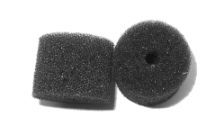
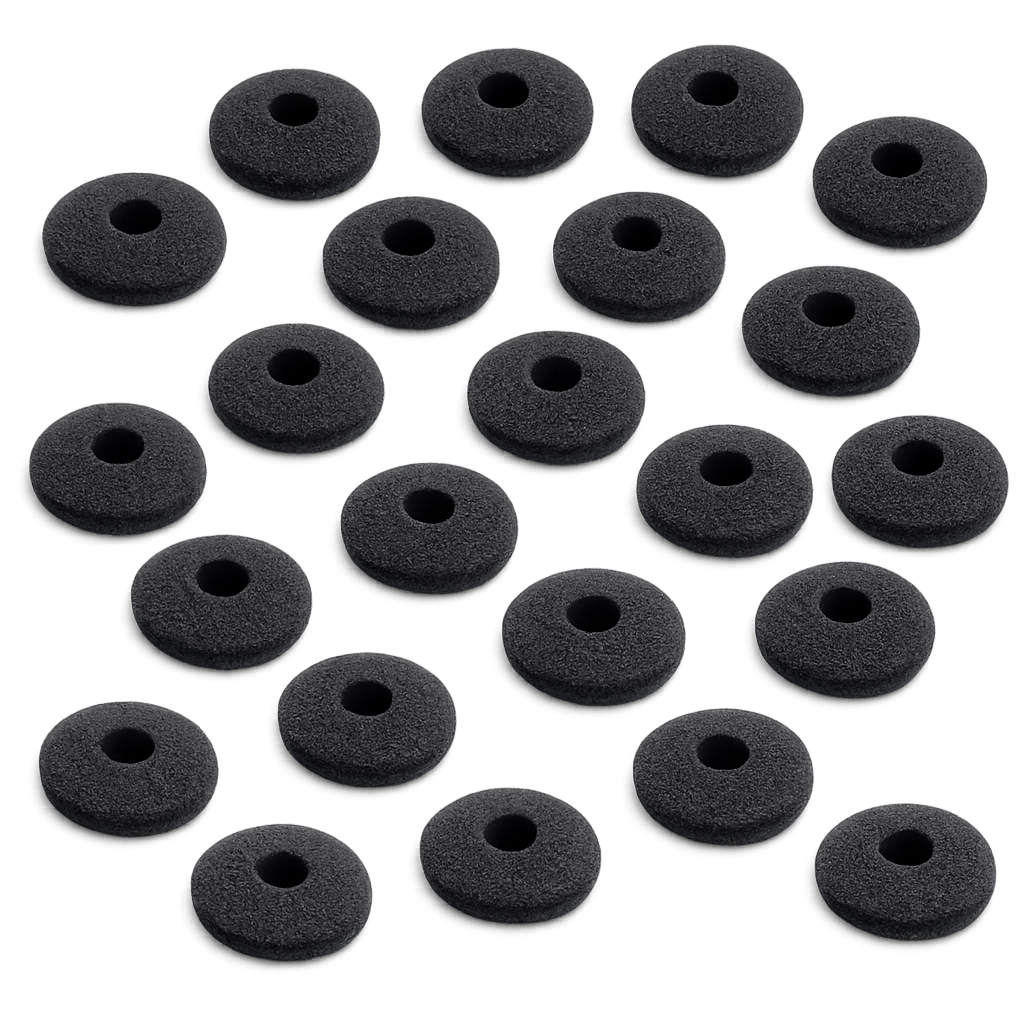
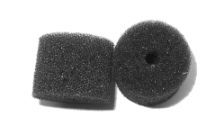
The Martel E99EC image shows round, low-profile black foam cushions with a visible center opening. The EC50 product image shows two black cushions from different orientations. Viewed from the side, the profile is more apparent. Those pictures help distinguish a loose foam accessory from a replacement headset, cord, driver or electronic adapter. They also let a buyer confirm that the item in the shopping cart is the cushion family they intended to select.
Product photography is a poor measuring instrument. The two Martel photographs are framed differently, and a browser can scale either to fill the same space on a screen. A part that appears wider on a phone need not be wider on the desk. A used cushion can also compress, stretch, tear or lose its original profile. If an unidentified part truly requires a dimensional check, ask which dimension is needed, measure the actual object and state what you measured. Avoid deriving a manufacturer specification from a screen image.
Compare the gallery image with the headset identification and the receiving surface. Look at how the existing cover sits on the earpiece. Note whether it is intact on the other side of the same headset. That intact side can help you recognize a twisted or uneven installation. It cannot establish which other headset models accept the same part. If matching the picture would require stretching a candidate far beyond its resting shape, pause and resolve the model before using up another piece.
A catalog photo may show several cushions or just two pieces. The description supplies the pack contents. A receiving clerk should compare the delivered quantity with the written ten-pair listing and the number of packs ordered. Counting shapes in a photograph can introduce an error even when the right model is chosen. A graphic can illustrate shape or assortment without serving as a packing slip.
For a headset with two earpieces, replacing both covers uses one pair. For six such headsets, one complete two-sided change uses six pairs. If the office wants two unopened replacement pairs for later, the immediate requirement is eight pairs. A ten-pair pack supplies that requirement and leaves two more pairs beyond the planned reserve. To make the calculation easy to audit, record four numbers in order: working headsets, pairs to issue now, desired spare pairs, and usable pairs already on hand.
Count separately for each SKU. Suppose six headsets need E99EC covers and four need EC50. In total those headsets need ten pairs. A ten-pair pack of a single model cannot supply that mixed request. Grouping by accessory SKU before adding is the difference between a sensible two-line order and a full cabinet containing the wrong parts for four people. A supply manager may reasonably keep different spare levels for the two groups. Let the count reflect those decisions explicitly.
When counting open stock, decide what qualifies as usable. A sealed, correctly labeled pair is straightforward. A loose piece from an unidentified drawer is a question, not automatically half a usable pair. An old cover removed from a working headset is not the same as a new spare even when it looks serviceable. Keep counts of uncertain, previously issued and new parts separate, so the person approving an order knows which pieces could actually be issued under the office’s own practices.
An odd number of individual cushions calls for a particular kind of arithmetic. Seven positively identified new pieces can make three complete pairs and leave one individual piece. If your office issues complete pairs, record three pairs and one single. Rounding up to four pairs promises a complete set the fourth person cannot receive. Rounding down to three and discarding the extra entry hides a useful single that might satisfy a later single-side request under your procedure.
Use the smallest nonnegative number of packs that covers the shortage. If the requirement is ten pairs and the office has two correct usable pairs, the shortage is eight pairs, supplied by one pack. If the requirement is eleven and there is no usable stock, the shortage is eleven, supplied by two packs. The second purchase can leave a meaningful surplus, so check the headsets and reserve assumptions before submitting it. A one-pair difference at the boundary can change the order by a full pack.
Consider two fictional rooms, Cedar and Harbor. Cedar has eight E102 headsets. Harbor has six DP50 headsets. Each room wants one full change now. Cedar also wants three spare pairs in its cabinet and Harbor wants two. The supply shelf holds two verified new E99EC pairs and one verified new EC50 pair. A bag of unidentified black foam is set aside for identification and contributes nothing to this calculation.
| Room and confirmed headset | Pairs to issue now | Desired spare pairs | Correct new pairs on shelf | Shortage | Packs to order |
|---|---|---|---|---|---|
| Cedar, eight E102 headsets, SKU 166 | 8 | 3 | 2 | 9 pairs | 1 pack |
| Harbor, six DP50 headsets, SKU 160 | 6 | 2 | 1 | 7 pairs | 1 pack |
Work the order backward as a receiving check. Cedar starts with two and receives ten, giving twelve pairs before issue. After eight headsets are fitted, four pairs remain, one above its reserve of three. Harbor starts with one and receives ten, giving eleven before issue. Fitting six headsets leaves five pairs, three above its reserve of two. A supervisor seeing four and five on the shelf afterward can reconcile the result without supposing that parts went missing or the staff fitted the wrong quantity.
Change just one fact. A ninth E102 headset returns from a temporary assignment after the order was placed. Cedar now needs nine pairs to fit headsets and three for its reserve. It still receives ten and already had two. Twelve available pairs meet the updated twelve-pair requirement exactly. A memo saying “another headset came back, buy another pack” would add ten pairs unnecessarily. Recording the reserve separately makes the effect of a changed headcount visible.
Change a different fact instead. Suppose the two Cedar pairs were counted from an unlabeled drawer and cannot be verified. Cedar’s original requirement of eleven pairs now has no confirmed stock behind it. One pack would fit the eight headsets and leave two pairs, one short of the requested reserve. The owner of the reserve decision can authorize a second pack or temporarily accept a reserve of two. A buyer should not quietly count the unidentified parts to make the numbers work.
Finally, suppose Harbor receives a shipment marked E99EC although its purchasing line says EC50. Both cartons may contain the expected number of pairs. A count-only receiving check would pass the wrong item. During receipt, match the printed part name and Martel SKU against the order line before opening a pack for distribution. Record the discrepancy and leave the identifiable package together while the order is checked. The labeling and count tell separate parts of the story.
Before removing a cover, observe the earpiece that still has a correctly seated cushion. Pay attention to the opening and the way the foam sits around the edge. If you are handling several headsets, finish one identified unit before starting the next. Put its old covers in a separate place from new stock. A tidy work surface makes it much less likely that a worn part becomes the reference for another model or goes back into a pouch labeled as new.
Handle the headset by the earpiece housing, keeping strain off the wire and its entry point. Remove the old cover gently. If it resists, first examine how the cover is retained and consult instructions for that headset where needed. Do not pull harder on the cable to make up for a poor grip. Before fitting the new cushion, look for a break, a loose housing, or material left behind from a torn old cover. Those conditions call for attention of their own.
Use the correct new cushion and seat it evenly according to the headset’s construction. The wearer should be able to put the headset on without the cover rolling off or bunching to one side. If the earpiece looks distorted or the foam does not stay in place, remove it and recheck the part selection. A temporary workaround such as gluing an uncertain cover to an earpiece can make subsequent replacement and identification harder. Confirm the intended fit before altering anything.
Use a familiar nonconfidential practice recording for the first listening check. Start with the ordinary comfortable playback setting. Listen for the beginning and end of a sentence, and check both sides if both should carry sound on that setup. Compare with the condition noted before changing the covers. If one side was silent before and remains silent afterward, the cushion replacement and the audio fault are separate entries on the work record. Buying more foam cannot establish that a cable, connector or driver is functioning.
For a shared workstation, use your employer’s handling and cleaning procedure and the headset maker’s care instructions. This guide identifies replacement parts. The Martel pack descriptions do not specify disinfection performance, a chemical cleaning method or a service life in days. Keep unopened stock protected while it is distributed and use the correct local procedure for removed pieces. Ask for a model-specific care instruction when an office procedure depends on a particular material or cleaning agent.
Use a separate bin or sealed compartment for each verified part family. Put the part number first, the known compatible headset models second, and the counting unit third. A label that says “E99EC, SKU 166, ten pairs per new pack” is more useful than a label that says “standard ear foam.” A separate label can identify EC50, SKU 160 and its headset family. Small black parts tend to look interchangeable after the original packaging is gone.
Record the starting count when opening a pack. A simple entry might read “one new pack opened, ten pairs available, two pairs issued to Harbor, eight pairs remaining.” If your office breaks pairs to replace individual sides, count individual pieces in that bin or explicitly record both units. One clerk using pairs and another using pieces can create a ten-unit discrepancy without anyone losing a single cushion. Choose an issue unit for that location and put it in the column heading.
Consider a reserve that travels. A relief typist carries one labeled pair to an off-site room and returns with the bag unopened. During the day the pair belongs to travel stock. On return, transfer it to the cabinet count once. If two separate logs both list it as present, the next buyer will believe there are two physical pairs. Use a simple location field even for inexpensive parts if the same supplies circulate between rooms or departments.
A cabinet label can outlast the devices it was meant to support. When a room changes headsets, record how many older models actually remain in service before buying another bulk pack. Set aside part of the remaining compatible stock for those known units if appropriate. Identify excess stock accurately rather than relabeling it for the new headsets because they happen to fit in the same drawer. A purchase based on last year’s desk count may be perfectly calculated and still wrong for today’s equipment.
Listen to the description from the person wearing the headset. “The material flakes off” points to the cover. “My left side cuts out whenever I turn my head” gives a reason to check the audio path and the condition of the headset. “I need the little part that plugs into the computer” may concern an adapter or connector. Translate the complaint into a part only after you can point to the item on the actual headset. The two cushion packs are replacement foam accessories.
If a workstation has several possible listening devices, first identify the output used for the test. If the practice sentence is audible through desktop speakers while the headset is silent, check the selected output and the headset connection. If another known working headset plays on that connection, the observations point back toward the original headset or its fit with the connector. Keep the volume comfortable throughout. An ordering conversation about worn foam should never require raising the playback level until one side can barely be heard.
An administrator can save time by grouping requests by the decision they need. One group consists of identified headsets with straightforward worn covers. A second group needs identification before issuing a replacement. A third group has an audio or mechanical fault beyond the cover. Place the first correct order while the other questions are being checked. Nobody needs to wait for a mystery headset to be identified before an accurately documented E102 or DP50 can receive its confirmed parts.
For a parts inquiry, send a concise description in this order: the model you found, where you read it, the current accessory condition, how many headsets need covers, and whether you need complete pairs or individual replacements from your own stock. Add clear photographs for uncertain models. The Martel Headsets category gives the buyer an internal route back to the parts catalog if the workstation also needs a headset or a different headset accessory.
Here is a second example for the person who inherits an existing supply drawer. At the end of Friday, the EC50 log shows one unopened pack, three complete loose pairs in a labeled envelope and two verified individual pieces in a labeled pouch. If individual pieces can be paired under the office’s issue procedure, this amounts to fourteen usable pairs. If staff only issue complete pairs kept together from opening, the issue count is thirteen pairs and two separately recorded singles. Both counts can describe the same physical contents. State the convention beside the total.
On Monday, a supervisor needs cover changes for eleven DP50 headsets and wants three pairs left afterward. Under the first convention fourteen pairs satisfy the request, assuming all the counted pieces are usable. Under the second, thirteen issue-ready pairs are one short even though the two singles are still present. The supervisor could decide whether pairing those two verified new pieces is acceptable under the existing procedure. A spreadsheet should not decide that by rounding two loosely described items up or down.
Now imagine two empty wrappers in the wastebasket and an unsigned line on yesterday’s log. The wrappers show that something was opened. They cannot establish who received the parts or which desk was fitted. Count the remaining identified stock, check the rooms involved, and write the new observed balance with a note about the unresolved issue entry. Adjusting the log to make the wrappers tell a complete story would leave the next buyer with a tidy total and unreliable history.
A useful order line in this situation identifies the part, the purchase unit and the reason. For example, “SKU 160 EC50, one ten-pair pack for confirmed DP50 headsets, charge to Harbor supplies.” A separate inventory note might say that ten pairs were received, eight issued and two placed in reserve. Keep the purchase line and issue event in their proper places. Recording a one-pack delivery as ten purchased packs is an expensive error even when staff distribute the correct physical quantity.
Martel lists the E102 with the E99EC replacement cushions, SKU 166. One pack contains ten pairs. If the E102 label is on the headset you intend to service, that gives the buyer a model-specific match. If you only found E102 on an old packing slip, take a moment to check the current headset or confirm that it has not been replaced. One workstation can have several generations of accessories in its purchase history.
Yes. Martel’s description for the EC50 replacement cushion pack names SH55 along with DH50 and DP50. Use the EC50 part number and SKU 160 on the order. Keeping the headset model and cushion model in separate fields helps the receiving clerk understand why “SH55” does not appear as the cushion SKU. If you later replace the headset itself, recheck the accessory choice for the replacement model before the next order.
Both Martel listings discussed here specify ten pairs, so a new pack contains twenty individual pieces. That is enough for both earpieces on ten compatible two-sided headsets if every piece is used for that purpose. If a supplier’s internal purchase form only shows “quantity,” label the order line clearly as a pack of ten pairs. A quantity of one on the buying form can then be received correctly as ten pairs in the cabinet.
These headsets belong to different listed cushion families. Five E99 headsets need five E99EC pairs for a complete change, and five DP50 headsets need five EC50 pairs. Check how much correct stock is already available for each group. If the cupboard is empty and you order one pack of each, there will be five pairs of each family left after fitting. Keeping the leftovers separated protects the value of that first order.
An outside measurement may help explain what you see, but wear can change that measurement and the opening can be as important as the overall diameter. Start with the model identification and the documented fit. If Martel requests a dimension for a mystery headset, distinguish the bare earpiece measurement from the removed cushion measurement. Provide the units, and describe whether the foam was relaxed or stretched. An unlabeled number can create as much confusion as an unlabeled photo.
The E99EC listing identifies the compatible headset supplied with that Martel kit. Check whether the headset inside the bag is still the supplied version. Someone may have returned a different headset after borrowing the bag. Look for its model marking or compare the hardware with the original order information. If there is a mismatch, base the parts inquiry on the actual headset. Include the kit information as additional history so Martel can identify a change.
It can help you see the general shape of an undamaged cover, especially if the headsets have matching confirmed model labels. A similar loose cushion from an unknown device provides a much weaker comparison. A brief physical fit also tells you little about whether a cover will stay seated during ordinary use. Whenever possible, identify the two headsets first, then compare the part number and the way each original cover sits on the earpiece.
Identify the correct model, then follow your office’s preference for replacing a single side or the pair together. A single-side replacement uses one individual piece from stock. A paired change uses two. Record the actual issue so that leftover pieces can be counted accurately. If the opposite cushion is close to failing, tell the person making the issue decision. Its condition may be more relevant than the fact that it has not yet torn completely.
The two listed products replace the physical earpiece covers. If a cover is crumbling or sitting unevenly, replacing it addresses that condition. It does not change the recording format, add an audio channel, repair a connector or give playback software a new feature. If the concern is that speech is missing in the same place in every replay, try a known practice file and isolate the listening equipment before ordering a cushion as an audio repair.
Check the part number against the headset and inspect whether the foam is seated evenly. Look for a piece of old foam still caught at the edge or a damaged receiver housing. Compare with the other earpiece if it is correctly fitted. If a correctly identified new cover repeatedly fails to stay in place, keep its packaging and send Martel a picture showing how it sits. Using more force can obscure the original fit problem.
Yes. Give each pack its own order line with the Martel SKU, replacement part number, number of packs and expected pairs per pack. Add the destination desk or supply bin if the parts go to different rooms. The receiving team can then match each incoming label before splitting either pack. A single combined line such as “headset foam, quantity two” gives the buyer no dependable way to distinguish two identical packs from one of each family.
Count the school’s confirmed compatible loaners separately from student-owned equipment. An enrollment total tells you how many people are in the room, not which replacement parts will fit them. Decide whether school supplies are meant for the loaners only or may also be issued for a confirmed compatible student headset. Apply that decision to the counts for each model family. Keep unverified personal equipment out of a model-specific order until someone identifies it.
Twenty-seven pieces make thirteen complete pairs with one piece remaining, provided the pieces belong to the same SKU and are all eligible for use. If some pieces are E99EC and some are EC50, sort by confirmed part family before dividing. An odd E99EC piece and an odd EC50 piece do not make one usable matched pair. Record any unmatched single by its own part number so it can be accounted for later.
Match E99EC and EC50 foam to the headset model, calculate how many ten-pair packs to order, and resolve a mixed parts drawer before issuing replacements.
Last month’s issue count is a starting point if it records the correct SKU and units. Then account for changes you already know about. A one-time class setup, retired headsets, a new room or a transfer of supplies to another office can make last month unusual. Use current verified on-hand stock and the reserve requested for the next period. If you need a purchasing estimate, keep it distinct from the number of packs actually authorized for order.
Keep one physical-stock count for each SKU and record the destination when someone takes a pair. Two department records can track their own usage while the cabinet retains a single authoritative balance. When a department borrows an unopened pack, note its new location. Do not continue counting it as immediately available to both departments. A short location note is often all that is needed to avoid a second buyer ordering unnecessarily.
Use remaining order records, labeled stock and confirmed headset models to narrow the possibilities. Keep the questionable loose parts separate during the inquiry. If the shape looks right but the model cannot be confirmed, send Martel a picture alongside the actual headset information. A photograph of a loose black cushion by itself may not settle it. Do not label an entire mixed drawer with the most recent part number merely because that was the last pack ordered.
SKU 166 and SKU 160 are replacement cushion packs. A buyer setting up a new transcription desk from scratch should identify the actual headset, its connection to the listening equipment, and any other required workstation hardware separately. If you already own a working headset with worn foam, these two listings address the smaller accessory purchase for their respective compatible models. Reading the package contents before ordering prevents a ten-pair supply purchase from being mistaken for ten complete listening stations.
Give it an identification-pending status, a count and a location. That records what you physically possess while avoiding a promise that it can be issued for a particular headset. If the identity is later verified, transfer it into the correct usable balance once. If its condition or handling history prevents issue under office policy, record that decision separately. An inventory entry can acknowledge that an object exists without assigning it to a working station.
Ask for care information specific to the headset and check your organization’s own requirements. The product descriptions here identify replacement foam, compatible models and pack quantities. They do not establish which chemicals a headset or cushion tolerates, a disinfection outcome, or how long a cleaned cushion may be reused. Keep those questions separate from fit and stock arithmetic. A correct fit supplies the intended accessory, while the office defines its handling procedure using the appropriate instructions.
Group the headsets by identical readable model markings and photograph one representative of each group. For unidentified units, provide a whole-headset photo, a close view of the earpiece and whatever original order information follows that particular unit. State the confirmed number in each group and how many are still unidentified. That lets Martel answer the straightforward fit questions immediately and focus its follow-up on the genuinely uncertain parts of the order.