In this guide
- Begin with the question the next shift needs answered
- Draw the movement of one training unit
- A worked six-camera assignment and return exercise
- Identify the physical camera, the person and the slot separately
- Rehearse independent handoffs during shift overlap
- Check what the approved receiving station actually confirms
- Turn observed timing into a purchasing question
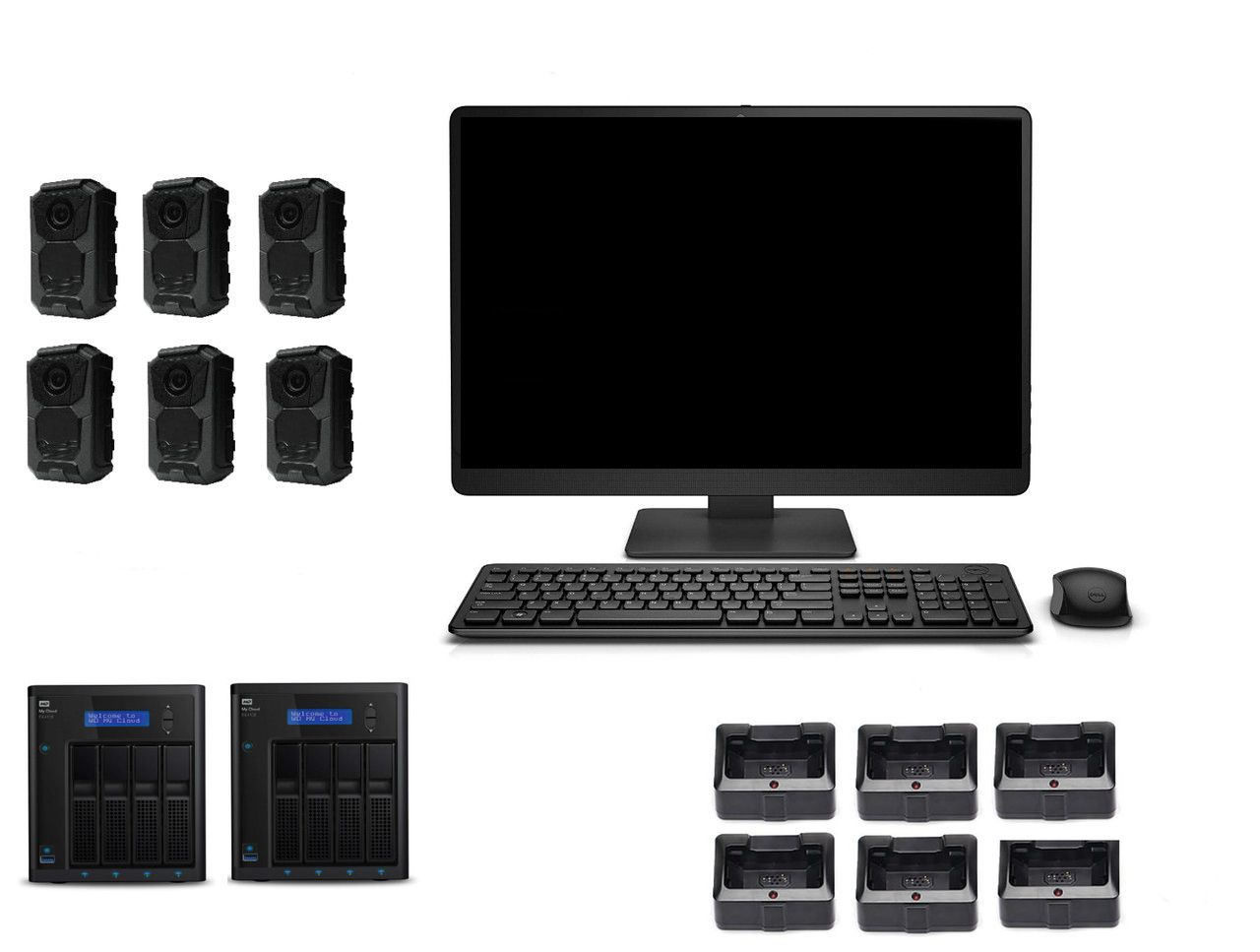
- Compare the six- and twelve-officer Martel packages on the same assumptions
- Hand the process to someone who did not design it
- Run a paper replay before the equipment demonstration
- Practical questions and answers
Counting cameras and counting employees are separate tasks when units pass between shifts. A supervisor needs to know which device is available, who accepted it, whether the prior training recording reached its intended destination and whether the unit can be released for the next assignment under agency policy. A written handoff makes these states visible without relying on the last person at the dock.
Begin with the question the next shift needs answered
A shared body camera can be physically present at the station and still be unavailable to issue. The person returning it may have placed it in the correct dock, while the person responsible for receiving an authorized training file has not finished the agreed check. Another unit may look ready on a shelf but carry an unresolved service note. A checkout process must give the next employee a dependable answer to a simple question: which identified device is authorized and ready to take next? Build the equipment plan around that question before comparing package sizes.
Start with a harmless practice scenario agreed by the agency's equipment coordinator. Use invented labels for cameras, shifts and staff roles. Give the training material an identifiable fictional marker and follow the agency's own approved rules for practice recordings, storage and access. The examples here use unit letters instead of serial numbers and role names instead of personnel information. They show what an equipment handoff can establish. They do not set agency recording policy, prescribe retention periods, or certify the handling of a case file.
Ask who is responsible for the camera at each step and who can authorize its next issue. An employee may accept a returned unit, a different employee may confirm that the practice material reached the designated system, and a designated coordinator may release the unit to the ready pool. In a small office one person might perform all three functions. Keeping the actions distinct makes the record understandable even when the same person does the work. It also helps the agency explain what happened when a return lands during a shift overlap or while the usual coordinator is unavailable.
Count the number of units and staff actually present during handoff. A roster showing six people on the outgoing shift and six on the incoming shift does little by itself to describe how many ready cameras are needed at a particular moment. Consider overlap, units held for service, the receiving workflow and any local requirements for individual assignment or spares. The equipment list should follow the approved staffing and issue practice. A nominal six-officer package describes a product configuration. It cannot determine how a particular agency should arrange its shifts.
Draw the movement of one training unit
Follow one marked training unit from the ready shelf through issue, return, authorized download checks, and release. On a private worksheet, give every point an owner and a visible action. For issue, the action might be the designated employee confirming the local device label against the record. For return, it might be the receiver acknowledging which unit arrived and identifying a reported exception. For the next state, it might be properly placing the camera in the assigned docking position. Write down how a second staff member can tell that each action took place.
Use terms that match the actual equipment and local practice. A physical docking position, an application display, a transfer status and an authorization to reissue answer different questions. A slot labeled B can hold the wrong unit if people return devices to whichever slot is convenient. The local record needs a way to identify which unit occupies the slot. Conversely, a station may have clearly labeled positions yet use a common authorized receiving workflow for all of them. Ask Martel to explain which identifiers and status indicators the purchased configuration actually provides.
Prepare a short state list with the people operating the equipment. The exercise below uses ready, issued, returned, docked, training transfer verified, and service. An agency may need different language or a separate charging-readiness check. Choose words employees can observe and distinguish. If two people use the word “done” to mean different stages, the receiving shift can reasonably issue a unit that another department still considers held. A state such as “training transfer verified, release pending” tells both people why the unit still belongs in its current place.
Keep the state history alongside the current state in the approved record. The next shift needs the current answer. The coordinator investigating a repeated bottleneck needs the sequence that produced it. For instance, a unit that waits at returned for ten minutes may indicate a congested receiving area. A unit that waits at training transfer verified may be awaiting a person with release authority. The remedy for one situation can be entirely different from the remedy for the other, even if the total return-to-ready time looks similar.
| Equipment stage | What an observer could establish in an approved practice | Question still to answer |
|---|---|---|
| Ready | Identified unit is available under the agency's release rule | Who is authorized to take it next? |
| Issued | The approved record associates the unit with the current authorized assignment | When and how will the unit be returned? |
| Returned | A receiving person has accepted that identified unit | Has the required receiving workflow been completed? |
| Docked | The unit is physically seated at the assigned equipment | What does the approved system report about charging or file receipt? |
| Training transfer verified | The authorized reviewer completed the defined check on harmless material | Has the responsible person released the unit for issue? |
| Service | An identified exception takes the unit out of the available pool | Who owns the next supported service step? |
A worked six-camera assignment and return exercise
We calculated the availability of six fictional units across twelve issue and return events on one training day. The model uses local times and units A through F. A, B and C go to the first practice shift at seven o'clock. D and E remain ready. F starts in service and stays there throughout the exercise. Every event names one unit, its expected previous state and its new state. A transition applies only when the previous state matches. This is an administrative paper exercise checked against a small event ledger, with no measured hardware transfer or charging time.
At 11:48 the receiving employee accepts unit B. At 11:52 the unit is docked. At 12:03 the fictional reviewer records training transfer verified. At 12:08 the designated person releases B as ready. The local rule used in this example deliberately treats those as separate events. It lets a reader see the difference between finding a returned device and having permission to issue it again. The seven-minute difference between 12:03 and 12:10 is an interval in the example, not a benchmark for the hardware or a recommended time to wait.
| Time in the exercise | Ready units | Count ready | Relevant observation |
|---|---|---|---|
| 07:01 | D and E | 2 | A, B and C have been issued; F is in service |
| 11:45 | D and E | 2 | Returning B has not yet been received |
| 11:50 | D and E | 2 | B was returned two minutes earlier |
| 12:00 | D and E | 2 | B is in the dock and awaits the remaining checks |
| 12:05 | D and E | 2 | B's training transfer has been verified, and release is pending |
| 12:10 | B, D and E | 3 | B entered the ready pool at 12:08 |
| 12:14 | None | 0 | B, D and E were issued at 12:12 |
| 12:21 | None | 0 | A and C have returned and are still awaiting their next stages |
Now give three incoming employees an assignment at noon. The calculation shows only D and E ready. Counting B because it is docked would overstate availability by one under the stated training rule. Shift that same exercise to 12:10 and three units are ready. Those two scenarios have the same number of devices, receiving stations and people. Timing and the release rule change the answer. This comparison is useful for a purchasing conversation because it identifies the actual shortage under an agreement that everybody can read.
At 12:21 a person looking around the station might see units A, C and F. The calculation still has zero ready. A and C are recorded as returned while F remains assigned to service. That does not mean three devices have disappeared, nor does it imply three more cameras must be purchased immediately. It means the observations of physical presence and authorized availability answer different questions. Determine how often the actual agency encounters this condition, how long it lasts and which process is responsible before sizing another package.
The ledger also demonstrates why corrections should identify their source. Suppose someone enters a proposed issue of unit B at 11:53. The recorded condition at that moment is docked. Under the example's rules the proposed issue cannot start from ready and is flagged for review. A mistaken time entry, authorization given through a separate approved channel, or a real handoff discrepancy would call for a different response. Have the designated coordinator reconcile the history in the agency's approved system. Avoid silently changing the previous event simply to make a spreadsheet appear complete.
Identify the physical camera, the person and the slot separately
A durable unit label helps staff know which item they are handling. An authorized assignment identifier connects that item to its current operator. A docking-slot label identifies a location in the room. A training-file marker identifies a particular harmless recording. These four identifiers can have different lifetimes. The camera can move to another slot, a slot can hold another camera tomorrow, and the same employee can receive a different approved training device on a later day. A system that substitutes one identifier for all four can look orderly and still answer the wrong question.