A dictation machine records spoken notes, correspondence or document drafts for later transcription. The best fit depends on how you dictate, how you correct work and how the recording reaches the person or software that produces the document.
Who needs a dictation machine?
Lawyers may dictate correspondence, document drafts and file notes for an assistant to type. Other professionals may use recorded speech for reports, observations or working notes. A dedicated recorder is most useful when its controls and file-handling process solve a repeated task.
If you only make occasional personal notes, an existing phone app may be enough. If you want words to appear directly in a supported application, a microphone and compatible speech-recognition software may fit better. Decide whether the output should be audio, live text or a draft for later correction before choosing equipment.
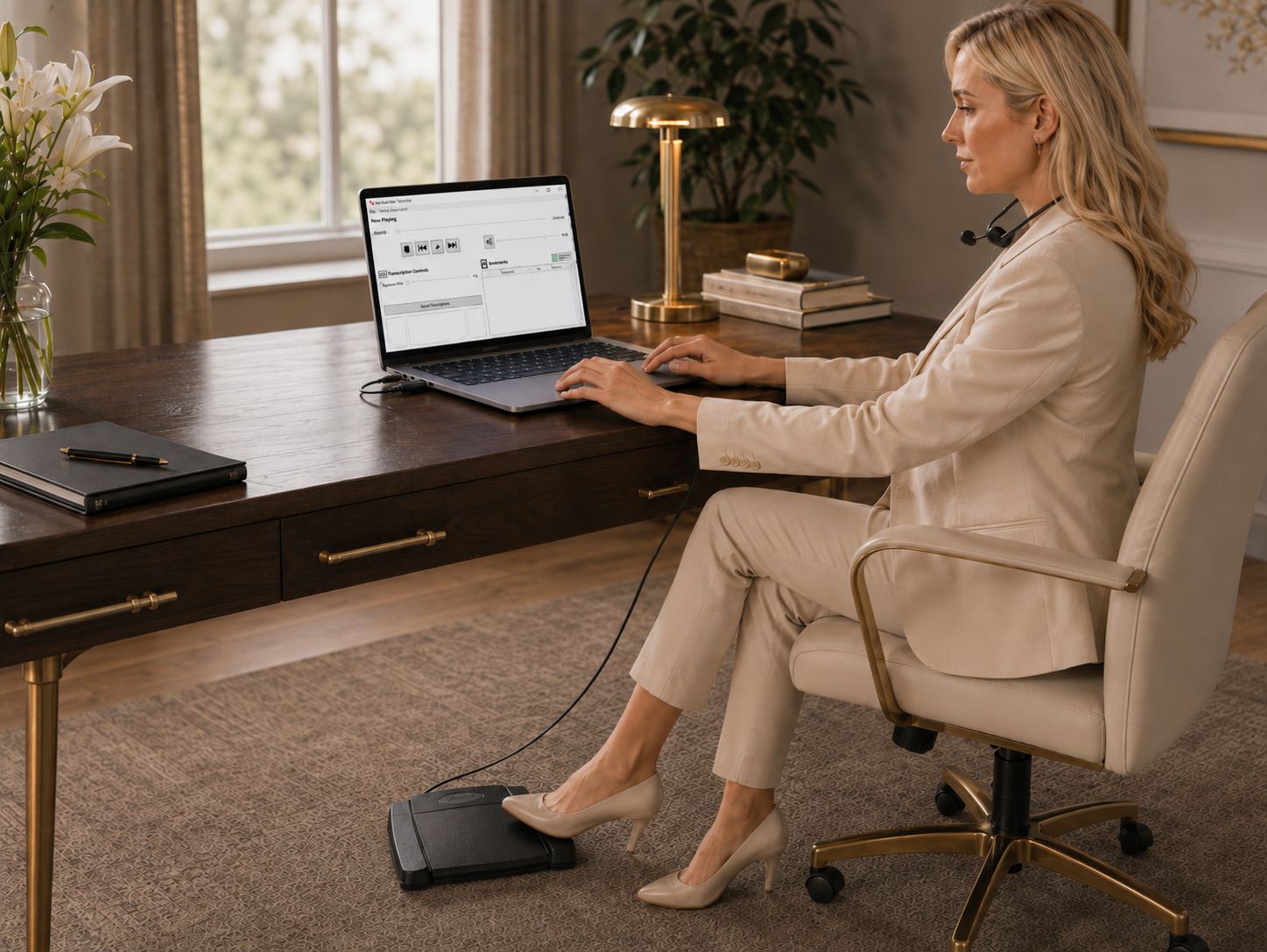
Dictation equipment for lawyers: choose the right arrangement
- Record now, transcribe later: use a recorder or approved app, a reliable transfer route and compatible playback software.
- Dictate directly into text: confirm microphone and speech-recognition support for your application and software edition.
- Computer-free playback: choose an explicitly compatible recorder, foot pedal and playback arrangement; pedals do not connect directly to every recorder.
- Meetings or interviews: assess room coverage, placement and the recording system separately from a single person’s close-range dictation.
Use your firm’s approved file-handling process and review the completed document. No equipment choice by itself guarantees confidentiality, compliance or error-free transcription.
Compare everyday recording controls
Try the actual control layout. Slide switches and push buttons can both suit professional work. For repeated corrections, ask how the exact model handles review, insert, overwrite and append. Available functions may change with the recording format.
Our slide-switch versus push-button guide explains what to test. If you are comparing hardware with an app, read smartphone versus dictation recorder for lawyers.
Confirm files, transfer and transcription tools
Send a sample in the format your office intends to use. Confirm the recipient can open and play it, including an encrypted sample if that feature is part of your workflow. DSS, DS2, WAV and MP3 support varies by application; check current compatibility rather than buying on a file extension alone.
A supported docking or cable setup may simplify transfers, but routing, automatic downloads and deletion depend on the software and configuration. Confirm successful receipt before removing the source recording.
A digital transcription kit may combine compatible playback software, a headset and a foot pedal. Check the included licenses and supported operating systems. A pedal controls playback; it does not perform speech recognition.
Practical dictation terms
- Insert: adds audio at a chosen position on supported equipment.
- Overwrite: replaces existing audio; understand the effect before using it.
- Append: adds audio to the end of a recording.
- Cue/review: helps locate a passage for checking or correction.
- Index marks: identify positions for later navigation when supported.
- Author, work type and priority: organize recordings in compatible office workflows.
- DSS and DSS Pro/DS2: professional speech formats requiring compatible playback. DSS Pro can support encryption, but confirm that it is actually enabled.
- Voice activation: starts or pauses recording according to sound and settings; test carefully so quiet speech is not missed.
- Hands-free operation: requires compatible controls and configuration; do not assume it is included.
Manufacturer references: OM SYSTEM recorder operations and DSS/DSS Pro formats. Features vary by model, format and software.
A five-step purchase check
- Describe who records and who finishes the document.
- Try recording, review and a correction on the proposed setup.
- Transfer a sample and have the recipient test playback.
- Confirm licenses, accessories, setup help, warranty and return terms.
- Agree how files are named, protected, backed up and deleted.
Shop Martel dictation and transcription equipment
Lawyer dictation equipmentPhilips slide-control recorderDigital transcription kitFor a different playback arrangement, review our NO PC law-office recorder and transcriber set. Current product pages describe configurations, services and availability.
See how the steps connect in our digital dictation and transcription workflow guide, or contact Martel with the software and equipment your office already uses.