Start with a word that could change the answer
A witness in an invented workshop hearing says a wheel was fitted with a collar. A reviewer sees “color” in a computer-aided transcription (CAT) software rough. Both words sound plausible at speed. The repair, the part and the witness’s description may turn on that small difference. Before changing anything, identify the source that contains the witness, the moment where the disputed sound occurs and what the surrounding exchange lets you hear. Keep a note another reader could use to return to the same place. The wheel hearing in this guide lets you practice making that note.
Try the method with a job for which a recording is available and you have permission to use it. If your CAT setup relates a point in the text to audio, use a known phrase to test that connection. If the recording opens separately, note its filename and the time of the same phrase. Neither arrangement tells the listener automatically whether the file contains the original participant or the reporter’s repetition into a mask. Establish the contents of the source by listening, then decide which question it can help you answer.
When you change recognition arrangements, the rough and the recording can have different histories. Ask which source was recorded, which one supplied dictation to the computer, and what the person editing the file can open. For example, a colleague may receive your text and a separate recorder file containing your repetition of testimony. That can help establish the wording you repeated. Checking what the original witness said requires a source that actually contains the witness. Carry that distinction into every note about the disputed repair term.
Find out which voice you are about to hear
Sketch a small picture of your practice setup on paper. Put the original fictional witness on the left, the reporter at the mask in the middle and the transcript on the right. Draw the paths you actually record. The original witness audio can show what was said in the exercise. The mask audio can show what the reporter repeated, including a personal cue or a spoken spelling. The saved rough displays what ended up in the job. If one of those sources is missing, identify it as unavailable. A review decision should reflect which evidence was available, even when a plausible answer seems obvious from the story.
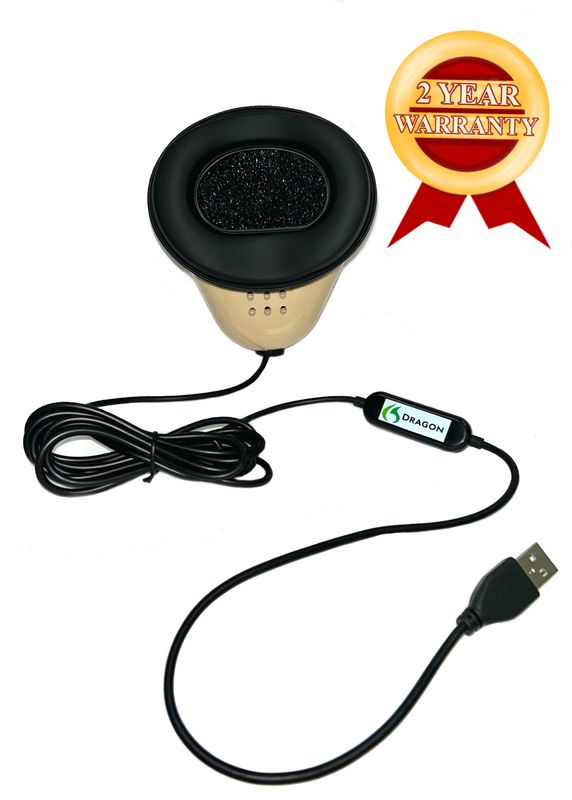
Martel’s Dragon USB Stenomask feeds the reporter’s dictation through its built-in USB audio connection to the computer. When preparing a listening exercise with your own mask, say one test phrase that could only have been spoken by the reporter, such as “reporter sample, copper hinge.” Let a partner on the separate room input say a different phrase, such as “room sample, narrow wheel.” Save and identify the recordings. Hearing the correct phrase in each place is a more useful check than looking at two similar filenames. Keep the phrase short and entirely fictional. Dragon USB Stenomask microphone details.
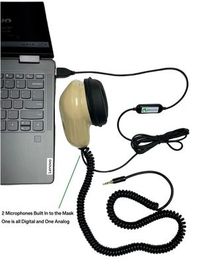
The Martel Double Dragon 2 adds a second microphone for an independent recording. Its 3.5 mm plug goes to a compatible destination while the USB microphone feeds the computer. If a separate recorder is running from that output, it can provide another copy of your own dictation. Identify the recorder file by name, start point and a distinctive spoken phrase. The external file has its own elapsed time and need not start at the exact moment the CAT job begins. If you refer another reviewer to it, give that reviewer a reference within that specific file. A time copied from a different source can lead to the wrong sentence. Double Dragon 2 microphone outputs.

Martel’s VOX Elite court reporter laptop packages include its 32 GB and 64 GB configurations, with stenomask setup assistance and help moving files. An especially practical check at a setup appointment is to open a transferred fictional job, locate a distinctive passage and play the intended audio. Next, create a short new job with your own mask. Compare what can be heard at the two selected passages. Bring the documented requirements for the recognition setup you intend to use. The appointment can then cover both the computer’s role in capturing new work and your ability to review earlier work. VOX Elite 32 GB setup package · VOX Elite 64 GB setup package.


Your choice of mask matters to this exercise because you need to hear what you actually repeated when speaking at your customary pace. A direct USB path on the Dragon USB or a second dictation recording on the Double Dragon 2 gives you a concrete source to test. Time how long you need to locate a disputed word and reach a justified decision. Compare that with how long you spend when notes point to the wrong speaker or an unnamed file. Reviewing a few seconds from the right source can contribute more to working speed and accuracy than repeatedly listening to a whole recording without an anchor.
We handcraft our Dragon USB and Double Dragon 2 stenomasks in limited quantities. If a batch sells out, there may be a waiting list.
Start playback at a phrase you can recognize
Choose a listening point a few words before the term. In a connected practice job you may be able to begin from a selected passage. In a separate player use the recording's displayed time or search by listening for the nearby phrase on your worksheet. Check the first words you hear against that phrase. If the audio opens in a different answer, write down where it actually began and use an earlier recognizable marker to find your way. A correct starting location gives a second reviewer something more reproducible than “halfway through the wheel testimony.”
Listen once at your normal playback speed and write what you can actually hear before you read anyone else's guess. If you came to the passage because the rough says “color,” try to describe the sounds without saying either candidate aloud first. Then replay the entire question and answer. Check whether the question actually concerns a painted finish, a metal part or both. Context helps you decide which sounds deserve focused attention. It does not authorize filling an inaudible gap with whichever term would make the transcript more elegant.
Keep a finger on the printed sentence or mark the line on a disposable copy while you listen. Moving backward in a recording and moving your place in the transcript can be separate actions. Try it on a passage you know. Listen to the earlier question, stop the sound and observe which line the text view still shows. Write one instruction in ordinary language for getting back to the disputed word. Another reporter can apply the same principle even if their player and transcript appear in separate windows.
If you have access to more than one audio source or channel, give each one a short finding task. Listen for the witness’s first answer on the source you think contains the room. Listen for the reporter’s spoken cue on the source you think contains mask dictation. Some practice files contain one mixed recording, and some supply separate recordings. Identify the evidence that is actually present before drawing a conclusion about the term on the page. A clearly identified single file can be more useful than several recordings carrying unexplained names.
Listen once through the complete exchange at the speed you ordinarily use. A low voice, a long silence or a word that begins during another person’s breathing can change what the reviewer notices. Where your player offers adjustments, compare one change at a time against the same saved practice recording. If the question concerns a pause, retain an observation made with the entire interval available. Record which source you heard and whether the disputed sound remained intelligible in its sentence. A control that changes playback does not change what the original speaker said.
Work a fictional wheel-repair hearing from source to note
The hearing in this exercise is made up solely for practice. A small display cart used in an imaginary exhibition has one blue painted wheel, a plain brass collar and a washer. The witness, Mae Ison, inspected the cart when it arrived and later saw a repaired assembly. The coordinator, Lorin Pell, handled the inventory cards. Ask a partner to read the dialogue. If you work alone, make a source recording before reviewing the text. Choose which recording will represent the room and which will capture your repeated dictation. Save each under a different, recognizable name.
Question. What drew your attention when you lifted the cover from the cart? Answer. The wheel on the handle side had a blue stripe on its rim. The wheel on the far side was plain. I could see a little brass ring on the floor beside the striped wheel. Question. What did you call the brass ring on your first note? Answer. A collar. I wrote collar with two Ls because that is the name of the small part that fits around the shaft. The blue paint was the color I described on the next line.
Question. Were the collar and the washer the same thing? Answer. There was a washer under the nut and a collar set farther along the shaft. I drew them as separate circles in my note. Question. What word did you put beneath the second circle? Answer. I put the word washer beneath the smaller circle. I put the word collar beside the larger one. Question. Who was with you while you made that drawing? Answer. Lorin Pell was at a desk behind me, looking up the purchase card. We spoke after I completed the drawing.
Question. Did you see someone put the collar back onto the shaft? Answer. I saw a mechanic holding a collar near the wheel. I did not see the mechanic fit it. When I next saw the cart, the collar was in place. Question. Was the collar you found on the floor the same collar you later saw in place? Answer. I could not identify it as the same piece. We had two collars of similar size in the supply drawer. There was a tiny dot on one of them, but I did not check for a dot at the time.
Question. What was the color on the card? Answer. The paper card was cream. A blue stripe was drawn across the corner. The word on the line marked part was collar. Question. When you described the blue stripe, did you mean the blue stripe on the rim? Answer. I mean the mark on the card in that answer. There was also blue paint on the wheel. I want to keep those two blue marks distinct. Question. Was the stripe drawn with paint or pencil? Answer. The stripe on the paper was drawn with a pencil.
Question. Did you measure the space between the washer and the collar? Answer. I held a small ruler next to the shaft and wrote a quarter inch on the sketch. I measured from the edge of the washer to the near side of the collar. Question. Did the sketch identify the unit? Answer. I wrote the word inch underneath the fraction. On the later inventory note I wrote the same measurement as one fourth of an inch. Question. Did the clerk write one forty on that note? Answer. The handwritten phrase was one fourth. I spelled the last word out for the clerk.
Question. What does the inventory card show in the upper margin? Answer. It shows C Twenty and a small letter B. The letter was missing from the picture we took before lunch because the clip covered the margin. Question. Was it added after lunch? Answer. I lifted the clip after lunch. The letter was already there. Question. Who saw you move it? Answer. Lorin saw me lift the clip. He was not beside me when I took the earlier picture. Question. Can you tell what was underneath the clip in that earlier picture? Answer. From the picture alone I cannot.
Coordinator. I can identify the card if it helps with the last question. Counsel. Thank you. I would like the witness to finish identifying what she saw. Witness. The earlier picture shows part of the printed code and the edge of the clip. The later one shows the full code and letter. Coordinator. The register I completed lists C Twenty B as three elements on the same line. Counsel. Did you write the word collar or the word color beside the code? Coordinator. I wrote color and then blue. The next box was for the part, and in that box I wrote collar.
Question. Ms. Ison, one final time, what happened to the blue paper mark when you closed the file? Answer. The mark on the card was still there. I placed a clear sheet over the card, and a little red dot on that sheet appeared to cross the blue stripe. I lifted the clear sheet and the red dot went with it. Question. Did red ink transfer onto the card? Answer. I did not see red ink on the card after I lifted the sheet. The dot was on the clear sheet. The blue stripe remained on the paper.
A listening key for the five details that can change meaning
The first detail is the collar itself. At the beginning, the witness calls the part a collar, spells the doubled L and relates it to the shaft. Later, a genuine instance of “color” refers to blue on the inventory card. A global replacement would change one of the two legitimate terms. Place the cursor before each occurrence, start playback and consider that occurrence on its own. Record which line concerns a mechanical part and which concerns appearance. When your evidence supports an edit, apply it to the identified passage in the working copy and review the resulting sentence.
The second detail is what the witness personally observed. She saw the mechanic holding a collar near the assembly. She did not see it being fitted. A rough containing all of the nouns can still give the wrong impression if “not” disappears. Listen from the question through the following answer, then compare the reporter’s dictation if that file exists. Check the word immediately before the negative and the verb immediately after it. If the original is clear and the mask repeat differs, locate the discrepancy at that stage. If either source remains ambiguous, say which one and where.
The third detail is the unit of measurement. The witness reports a quarter inch and later says one fourth of an inch. A question mentions “one forty” and the answer corrects it. A transcript must preserve both the question’s wording and the witness’s correction in this exercise. Recognizing the intended fraction does not justify replacing counsel's original question with a better one. Read back the whole exchange with the speaker designations visible. Then note the difference between a numeric presentation choice under the intended style and a substantive difference between two numbers.
The fourth detail is C Twenty B. The photograph taken before lunch omitted part of the reference because of a clip. The witness later lifted the clip. The witness does not say someone added the letter later. A note for the scopist can identify the question about the upper margin, the witness's answer about lifting the clip and the subsequent statement by the coordinator about the register. If you give only the final identifier, the reviewer might unintentionally treat the earlier photograph as showing all of it. Context determines which statement is supported at each point.
The fifth detail is what the red dot was on. The dot moved with a transparent sheet and the blue stripe remained on the card. Ask your partner to find the passage by requesting “the answer about the sheet moving.” Then request the separate answer about seeing red ink on the card. Use these two readbacks to distinguish a described object from an observation about whether a transfer occurred. If the mask audio says “red ink was on the card” while the source contains the negative, the correct review note should identify the difference and the evidence used.
Make an audio note another person can reproduce
Begin a note with the name of the fictional job, the copy under review and the type or name of the recording. Add a locator that will survive an edit, such as the words “edge of the washer” or “the earlier picture.” If you have an elapsed time, include where that time starts. “One minute twelve seconds into the recorder file named Wheel Dictation Two” is complete enough for a partner to try. “One twelve” might be a page, a time of day, an elapsed time, a file label or a figure spoken in the testimony.
Describe your listening decision in a full sentence. For example, “In the source passage following the question about the card, the speaker says color when describing the blue mark and says collar in the separate line identifying the part.” If you also listened to the repeated dictation, describe what it contains in a second sentence. Record whether you made an edit in the working copy or left a question for the reporter. This tells the recipient what has already been examined and what remains to decide. It also makes it easier to assess a later update to that same passage.
Try three different kinds of handoff using the fictional job. Give a colleague the text location alone and see whether they can begin playback at the right answer. Next give a source filename and an elapsed time plus a short anchor phrase. Finally give the identification of a recorder file that starts later than the main job. Ask the colleague to locate the same phrase in both available recordings and record the two time readings separately. The third exercise shows why moving a timestamp unchanged from one source to another can lead a reviewer several sentences away.
Compare a correct edit, an unsupported guess and an open question
For this exercise, create three disposable notes for the opening passage. On one, write a candidate edit supported by the original speaker's doubled L, identification of the shaft and later distinction between color and collar. On a second, write only that “collar sounds more likely.” On the third, state that the available practice recording is too faint at the word and ask the reporter to check a specifically named original source. Have a colleague tell you which note supports a change and why. The point is not to achieve an edit at all costs. It is to preserve a justified decision a second person can understand.
Now change the evidence deliberately for training. Ask the reader to make a fresh, clearly labeled take in which the answer about the card discusses only color. Keep this separate from the first take. If you use the wrong reference while listening, you might “correct” the new performance into the earlier story. Listen for the marker, identify the speaker and check the job name before comparing the words. A mini exercise in two nearly identical files prepares a reviewer for a common practical problem: knowing the correct answer for an old practice file has no bearing on what a different speaker actually said in the current one.
Give a second listener a fair comparison
Try handing the same audio issue to two readers in different forms. Give the first a file time, the disputed word and the name of the source. Give the second a file time, the source name and the complete question about the part on the axle. After each person listens, ask which facts they could establish and which facts they inferred. If the first reader chose the correct word but could not identify the physical object, add the smallest piece of context that makes the connection clear. If both readers identify the speaker and part immediately, change the exercise to a passage with an intervening question and compare what a useful starting phrase looks like there.
Make a small listening exercise for two people. Choose the answer in which the coordinator identifies the different boxes on the card. Let the first listener read the rough before hearing the recording. Let the second listener hear the whole exchange without seeing the disputed spelling. Ask each to write down the kind of thing named in the first box and the kind of thing named in the second. Then let both read the text and listen again. Their observations may differ even with an excellent recording because they started with different expectations about the question. Ask for the exact audible words and the surrounding clause that supports each interpretation.
Next, hide the written notes and replay a different question from the same hearing. This time give both listeners the filenames and the text anchor before they start. Have one locate the phrase from the transcript cursor and the other find it in the separately saved practice recording if your arrangement created one. If they come back with two different moments, inspect the anchor. “The clip” appears more than once. “I lifted the clip after lunch” narrows the location. Improve the anchor until another person can use it without a detailed explanation from the person who originally drafted the note.
Set a reasonable limit on repeated listening during training. If two passes at a familiar pace and one closer inspection leave a term genuinely unresolved, treat that as information. Write down the original candidate, the alternative, the source you had, and an action that could add meaningful evidence. That might be consulting another authorized recording with a clearer view of the original speaker or asking the exercise reader to identify what they actually said. A dozen additional passes over the same indistinct sound can make a familiar guess feel convincing without adding any evidence. Preserve the uncertainty as carefully as you would preserve a well-supported correction.
As a last test, give a new partner the finished note the next day. Ask them to identify the exact passage, identify which copy contains any edit, and report whether the note describes what the original speaker said or what the reporter repeated. If they can answer all three, the note will continue to be useful after your own memory of the practice session fades. If they can hear the phrase but cannot tell whose voice they are hearing, revise the source label. A small fix in the note can spare every subsequent reader a much longer search.
Thirty questions about checking a disputed word against reference audio
1. What skill am I practicing when I check the word “collar”?
You are learning to connect an editorial decision with a recoverable piece of evidence. First identify the disputed letter sequence in the rough. Then locate sound containing the relevant speaker, hear the nearby exchange and document what you can distinguish. The skill transfers to a CAT job with associated audio or to an authorized recording opened alongside the rough. Tell the next reader where to listen and which part of the exchange helped you make your decision.
2. Where do I start playback when only one word seems uncertain?
Begin far enough before the word to identify the speaker and the object under discussion. In the wheel exercise, the question may distinguish the collar on the axle from the color of a painted part. Listen forward through the end of the answer, including any correction. If you reached the recording by selecting a point in the text, check that the sound really belongs to this exchange before you edit. The context at either side can be as informative as another repetition of the disputed syllable.
3. What routine will help me find the same playback point again?
Use a visible reference you can describe to another person. Write the filename, the recorded time shown by your player and four or five nearby words. If your software offers a playback control linked to the transcript, test it once with the chosen line and note where the sound begins. If you use a separate player, leave the practice transcript open at the corresponding paragraph. The resulting note can be followed by someone who uses a different keyboard layout.
4. What if the first sound I hear belongs to the preceding speaker?
Listen long enough to find whether the expected target appears in context. Starting slightly before the word may intentionally include part of the previous speaker’s question. If the playback appears to point to a different passage, record the text phrase and the actual phrase you heard. Try another distinctive point in the same training job. That comparison helps show whether the issue concerns the one place you selected, the source being played or the association you expected. Preserve an original practice copy while you investigate.
5. What can I learn from the question before the disputed word?
The question can tell you which object, document, time or person the witness was discussing at that moment. In the invented hearing, a question about the color on the card refers to a paper card and its blue stripe. A nearby question about the part refers to the collar on a shaft. Listen to the response as well, because witnesses can correct the premise of a question. Use the context to direct attention to the sound and meaning that were actually spoken. Avoid treating a question’s wording as the witness’s answer.
6. Why does the reporter’s dictation require its own source label?
It captures the reporter's repetition and any audible cues used during voice writing. The speech may be very clear and still differ from what a witness originally said. In the drill, the reporter might clearly say “color on the shaft” after the reader said “collar on the shaft.” Listening to the mask recording can show what recognition received. Listening to the original reader can show what ought to be represented in the exercise. A note identifying both sources can explain the discrepancy without assigning a cause beyond the evidence.
7. How should I use a separate recorder attached to the Double Dragon 2?
Begin a labeled file on a compatible recorder, speak a distinctive practice marker into your personal mask and listen after stopping and saving the recording. Identify the file by its own name and elapsed-time reference. If you later use it to check a word, note what you hear in that file and which words surround it. This recorder captures your dictation through a separate mask microphone. Use the original source recording when the question concerns the voice or exact language of a different speaker.
8. Can the original source be a prepared recording in a solo exercise?
Yes. Make a source recording from the fictional material on one occasion, label it clearly and later play it as the material you will report. During the reporting exercise, make a separately identified dictation recording if that is part of your arrangement. Keep the original listener’s script with the practice files and note any deviations you introduced when reading. This gives a single reporter distinct evidence of what was presented and what they repeated. A clearly different spoken marker at the beginning of each file helps prevent confusion.
9. How should I handle a recording with only one mixed audio channel?
Listen once for the identity of each voice and once for the disputed sound. A single mixed recording may carry both speakers, a remote participant or only the reporter. Describe what you can actually distinguish. The fact that your player shows one channel does not settle which people are audible. If the relevant participant cannot be identified, state that finding and seek the other authorized practice source, if one is available. Keep the mixed recording's name with the observation.
10. When does selecting an individual channel help?
When you have separate sources or channels to choose from, listening to a chosen channel can help you identify what that source contains. Use a known practice event and source description to verify the selection. A name you give a channel is useful, but a short identifiable phrase lets you confirm that the expected voice is present. After checking the target, restore the channels appropriate to your next task. Keep notes about which source you played when a decision depended on that choice.
11. Does using rewind move the text cursor back in the transcript?
Check how your own setup behaves using a known line. Put the text cursor at the disputed sentence, move the audio position to an earlier recognizable question, and stop. Look at where the text cursor and audio position now are. If they moved independently, note both before leaving the issue. If they stayed linked, tell a colleague how you identified the earlier question. The safe assumption for a handoff is that a receiving editor can verify the words and time you actually recorded.
12. Should I slow a difficult passage immediately?
Start with a comfortable listening pace and record the sound you can distinguish. If a separate playback speed is available, repeat the same small interval using a different setting and compare the result with the complete answer at its normal pace. Give the word's ending and the following consonant a chance to be heard together. A clearer impression at a different speed is a reason to listen carefully again. Document the physical-part description and the speaker as well as the disputed syllable.
13. What if playback skips across the quiet part of an answer?
The hearing might contain a genuine pause before the witness changes the name of the part. Use another available playback route or review the immediately surrounding segment if silence seems to have disappeared. Establish whether your viewing or listening method is changing the time presented. If you have only one copy and the pause cannot be established, leave that observation open. Do not assign the witness a hesitation merely because a time counter moved farther than you expected.
14. How can I judge a candidate word without being led by the rough?
Listen once without saying the candidate aloud and write the surrounding phrase or sounds you recognize. Then read the rough and consider the plausible choices against the recording and context. In the exercise, a genuine “color” occurs close to a genuine “collar.” If your first impulse is to standardize all of them, locate the question and subject for each occurrence first. A second reader can help by reporting what they heard before you show them your proposed correction. Identify which evidence supported the eventual decision.
15. What makes a spelled word useful evidence?
A witness spelling a word can distinguish ordinary words that sound close. In the first collar exchange, the witness identifies the doubled letter and says what the part does. Read that explanation in sequence rather than extracting a letter from somewhere later in the discussion. If two forms occur in the job, identify which particular occurrence the spelling clarifies. A spelling exchange about the brass part cannot by itself decide how the witness described a painted stripe in a separate answer several paragraphs later.
16. How should I review a negative such as “did not”?
Listen to the entire clause, identify who made the observation and distinguish direct observation from a later inference. The invented witness saw the mechanic holding the part and later saw it installed, while saying she did not witness installation. A missing negative can change all three statements' relationship even if the rest of the transcript is accurate. Compare the original speech, the repeated dictation if available and the saved text. Mark the stage where the difference is audible or visible before you decide how to characterize it.
17. What does a complete check of a number include?
Check the value, its unit, the object being measured, the person who said it and whether it appeared in a question or an answer. For the cart, a quarter inch is a distance measured between two named parts. Counsel's “one forty” appears as a question that the witness addresses. It deserves its own review even though it differs from the witness's intended fraction. After deciding the spoken content, apply the presentation convention appropriate to your practice copy. Record a change in value separately from a style choice.
18. Why would I keep two timestamps for the same word?
Two recordings can start at different moments. An external recorder might begin several seconds before the practice job or only after the introductory remarks. Find the same distinctive phrase in both files and write each elapsed time next to its own filename. If you refer someone to the disputed word later, give them the timestamp for the particular source you want them to hear. Verify the recorded time again after any authorized edit or trimming of a practice copy. A timestamp is meaningful only together with its source and time origin.
19. What if I know the right phrase but have no reliable timestamp?
Give a distinctive text anchor, a job or file name and the speaker. Add the preceding question or the next recognizable phrase, such as the line about lifting a clip after lunch. A reviewer can use those details to locate a candidate and verify it by listening. If you later find a stable elapsed time, append it with the source identified. A reproducible passage reference can be more useful than an apparently precise number copied from an unknown clock or a different recording.
20. How should a reviewer report that the word is still uncertain?
Identify the source, location, what each available recording contains and which distinction is unresolved. An example note might say, “At the question about the drawing, I can hear the final syllable, but I cannot distinguish the first word from the available room sample. Please check the original file named in the job notes.” If you heard a clearer version in the mask recording, say precisely that. This keeps the uncertainty attached to the evidence instead of asking someone to choose between two unsupported guesses.
21. Is recognizing the part from the exhibit enough to change the word?
An exhibit can help identify what the witness may be discussing. The task in this exercise is to recover what the witness said in that particular exchange. A photograph showing a collar does not turn the actual spoken word “color” into “collar” if the question concerned the stripe on the card. Listen, read the surrounding exchange and clarify the relationship between the object and the statement. When the exhibit itself supplies a spelling or identifier, record how it relates to the testimony and which source supports each detail.
22. How can a scopist separate a proposed edit from a completed one?
Give the note a clear action. “I propose checking whether the original speaker said collar” leaves the decision open. “I changed color to collar at the first reference to the shaft in the working copy after checking the spelled line” describes a completed action and its evidence. Name the reviewed copy so nobody expects the original rough to show the same edit. This small distinction avoids duplicate work and lets the reporter identify the exact place requiring a professional decision if any uncertainty remains.
23. How do I check whether I opened the right copy after a transfer?
Use two identifiable locations, ideally one near the beginning and one later in the fictional job. Find the correct words, play the expected audio and verify a passage that distinguishes the first rough from the edited copy. On a new Martel VOX laptop this can be part of a transfer and setup discussion. Also make a new short job with your personal mask so you test current capture independently of old-file retrieval. The successful playback of an existing job and the successful capture of new audio answer different questions.
24. Can I judge review speed with this one hearing?
You can measure your own performance on the defined exercise. Time how long it takes to locate each specified passage, identify the source, make or document a justified decision and recover the answer again. Record whether you have already heard the material. Familiarity will make some later attempts easier. A fresh fictional passage of similar difficulty adds a second useful sample. Report the times and checked words from those actual tasks instead of treating one rehearsal as a performance claim for every reporter or system.
25. What does a quick sound check establish at the start of practice?
It establishes whether the intended input produced a recognizable saved sample in the test you actually ran. Include an ordinary phrase and a distinctive marker, then listen. When you need both room audio and reporter dictation, check them individually and label the results. Later uncertainty about a word calls for listening to the relevant job recording at that later point. The opening sample is valuable for identifying the arranged sources, but a clear first phrase by itself cannot prove that every part of a later recording is complete or intelligible.
26. How can I teach a classmate to make a helpful listening note?
Give the classmate a practice copy containing one uncertain term and ask them to return three sentences. One should identify the source and location, one should say what they heard in context, and one should say whether an edit was made or a question remains. Then ask another person to use only that note to recover the same passage. If they struggle, find out whether they were missing a filename, a distinctive phrase, the speaker or the working-copy identity. Revise the note to supply that missing detail.
27. Why listen to the line after the disputed word?
A following answer can clarify the referent, correct an earlier assumption or supply a spelling. In the wheel exercise, the witness explains where the word inch appeared and later distinguishes the mark on a clear sheet from one on a card. Keeping the next line available helps a reviewer preserve the order in which those facts emerged. It does not authorize editing earlier testimony to include information the witness supplied later. Review the sequence in order and correct only the passage supported by the evidence.
28. What should I do if the original participant and my dictation disagree?
State the difference accurately in your practice note. Identify the source words, what you repeated and the text that appeared. For the fictional exercise, compare the performed speech with the script and mark any reader variations. The result tells you whether the next drill should focus on listening, faithful repetition, recognition or editing. In real work, use the procedures applicable to the record and the authorized sources. A well-scoped practice example lets you improve the specific skill without overstating what one recording can establish.
29. How does this change when Speechmatics produced my rough?
Identify Speechmatics as the recognition option only if it actually supplied the rough for that run. Then return to the source of the disputed word. Which recording contains the speaker who said it, and where can a second reader find the same exchange? The recognition route can help you describe how the rough was produced. Your decision about “collar” still rests on what you can establish from the original exchange, the reporter's repetition and the limitations of the files you received.
30. What is a reasonable stopping point for the word review?
Finish when the evidence supports an identified change or you have recorded a clear unresolved question for the appropriate person. Reopen the working copy and find the disputed passage using the note you plan to retain. If there was an edit, read the whole sentence with its speaker and surrounding context. If the word remains uncertain, ensure the note identifies the best available source and the decision still needed. Both outcomes can be responsible results of a careful review when they accurately reflect the material you could examine.
Equipment and technical references
Using Reference Audio to Verify a Word in a CAT Transcript
Resolve a disputed word in a CAT rough. Choose the audio source, test the context and prepare a listening note using a fictional wheel-repair hearing.