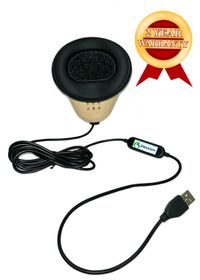
Stenomask Accuracy: How to Measure Speech Recognition Results
Learn how to separate microphone capture, speech-recognition errors, and correction work. Includes an original evaluation process, practice text, and worksheets for comparing complete stenomask setups.
To evaluate stenomask accuracy, keep the mask audio, the software’s first text output, and a checked reference transcript from the same attempt. Count recognition errors consistently, record the complete equipment arrangement, and measure the work needed to correct the text. A microphone name or a short successful demonstration cannot supply those answers by itself.
A stenomask supplies audio to another device. Recognition software interprets that audio, and the voice writer prepares the finished work. When someone asks which stenomask is most accurate, several questions are often being combined: whether the microphone captures usable speech, whether the software recognizes that speech, whether the writer repeats the source faithfully, and whether the final document is correct. This guide gives each question a separate place in an evaluation.
This is an original evaluation guide, not a report of a Martel laboratory trial. It contains no measured accuracy rankings for Martel or competing products. The worksheets and practice material below are tools you can use to collect your own evidence. Technical definitions are linked to their sources, and the equipment examples use the connections shown in Martel’s current product listings.
If you have not selected a connection yet, begin with the stenomask buyer’s guide. If your equipment is already connected and you want to understand its results, start here. You do not need to buy a different mask before you can establish a useful baseline.
Separate the four results in a voice-writing system
1. What the original speaker said
In a voice-writing exercise, the original speaker’s words are one source of evidence. Save the approved practice passage or source recording so that you can inspect it later. A script is useful, but a reader can depart from it. If the exercise is intended to evaluate a real spoken performance, check the recording rather than assuming the printed passage describes every word that was actually spoken.
This first record lets you investigate omissions, substitutions, or speaker-label mistakes made while repeating the material. It also prevents a software assessment from silently becoming an assessment of the writer’s memory. A speech recognizer cannot reproduce a word that never reached its input merely because that word existed in the source passage.
2. What the voice writer said into the mask
The mask recording documents the speech supplied by the writer. For a microphone-and-recognition comparison, this is the recording that needs a checked reference transcript. Listen for the words actually present, including a restart or repeated phrase. If the writer says a different word from the source, the software’s faithful recognition of that different word is not itself a recognition failure.
You can therefore keep two separate comparisons: source speech against the writer’s speech, and the writer’s speech against the software’s output. Each reveals a different problem. Combining them into one unexplained accuracy number makes it harder to decide whether the next improvement belongs in equipment, dictation practice, vocabulary, or editing.
3. What the software produced before correction
Save an untouched copy of the first output before correcting names or filling gaps. Record whether it came from live dictation, processing a saved audio file, or an integration with reporting software. Those are different operating arrangements. A result from one arrangement should not be described as evidence for another unless the second arrangement was actually evaluated.
Keep the output associated with its audio file and settings record. A paragraph copied from a later edited document is not a substitute for the original recognition output. If the application changes text as speech continues, define when you capture the version you intend to score. Use that same point throughout the comparison.
4. What the finished document contains
The final document answers a broader quality question. It includes the effect of human review, correction, formatting, speaker identification, and the requirements of the assignment. A correct final paragraph can require substantial work, while a fluent-looking first draft can conceal an important mistake. Keep the quality of the finished work and the effort required to produce it as separate observations.
This distinction is useful when shopping. A setup may be attractive because its connection is simpler, because it supports another recording destination, or because it makes a repeatable working position easier. Those practical advantages matter, but they should be described as the advantages you observed. They are not interchangeable with a measured recognition percentage.
Write one evaluation question before changing anything
Choose a question that your available equipment and time can answer. “Does this complete USB arrangement produce a result I can work with?” is a practical question. “Is this microphone universally more accurate than every alternative?” requires much broader evidence. The narrower question is usually the better starting point for a purchase or a setup change.
Write the question at the top of the worksheet. Then identify the condition you will change and the conditions you intend to hold steady. If you replace a mask, adapter, laptop, recognition profile, and software version at the same time, the outcome belongs to the new combined system. It does not isolate the effect of the mask.
A comparison of two complete systems is still useful if that is what you are buying. Label it honestly. For example, compare a direct USB arrangement with an analog mask and its confirmed compatible USB interface. Name both paths in the notes. Avoid giving one path an unexplained advantage through a different vocabulary, a specially prepared passage, or more correction before scoring.
Before recording, decide what would justify the next action. You might need all files to save correctly, a manageable correction workload, and reliable recognition of a specific set of practice terms. These are proposed requirements for your own evaluation. They are not professional certification thresholds, and this article does not establish a universal passing score for court reporting.
Keep the decision reversible during practice. A failed recording should lead to inspection of the affected path, not an immediate assumption that the product is unsuitable. A promising first result should lead to a repeat with unfamiliar material, not an immediate claim that the system will perform identically in every setting.
Build a reference transcript that you can defend
A reference transcript is the text against which you compare the recognizer. For the recognition portion of a mask test, prepare it from the actual mask audio. Start with the planned passage if that helps, then correct it against playback. Mark an unclear region for review rather than guessing a convenient word that makes the system look better or worse.
Use an independent review when the result will influence a significant purchase or be shared publicly. The second reader can check the reference without seeing which product produced the file. This is an original suggestion for reducing avoidable review bias; it is not a claim that the procedure makes a home comparison into an accredited laboratory test.
Record the reference version. If you discover a transcription mistake after scoring, correct the reference and rescore every affected result. Do not repair it only for the preferred system. Save the original and the corrected versions with a short explanation so that another person can understand why the reported numbers changed.
Do not use the recognition output as the sole basis for the reference. That makes the software partly responsible for writing its own answer key. The audio is the evidence for the words spoken into the microphone. If the recording is too unclear to support a checked reference, report that limitation rather than giving the uncertainty a precise-looking score.
What word error rate measures
Word error rate, or WER, compares recognized words with reference words using substitutions, deletions, and insertions. A substitution replaces a reference word; a deletion leaves one out; an insertion adds a word that does not belong. The percentage is calculated as (substitutions + deletions + insertions) ÷ reference word count × 100. Microsoft’s speech evaluation documentation explains this calculation and the three error categories.
The reference word count is the denominator. Do not divide by the number of words in the software’s output simply because that file is easier to count. Extra inserted words can make WER exceed 100 percent, so casually relabeling 100 minus WER as an overall professional “accuracy score” can be misleading. Keep the metric’s name and calculation attached to the result.
NIST’s speech-to-text evaluation plan treats text normalization, alignment, and metric calculation as separate steps. That distinction matters when two outputs display the same spoken information differently. See section 6 of NIST’s OpenKWS13 evaluation plan for the scoring framework. That document describes its own research evaluation, not a certification standard for stenomasks.
Set the scoring rules before reading the results
Write a short policy for capitalization, punctuation, numerals, abbreviations, and spoken commands. A number written as digits can carry the same intended information as the number written in words while producing a different word sequence for a literal comparison. Decide whether you are assessing lexical recognition, display formatting, or both, and keep those results distinguishable.
For a lexical pass, make equivalent representations consistent in both the reference and the recognized text before aligning them. Preserve a copy of the untouched files. For a formatting pass, review the original display output against your required form. Do not quietly remove a meaningful difference, such as a missing negative or a changed numerical value, under the label of normalization.
Spoken punctuation and reporting commands need their own rule. If the exercise includes a command intended to create punctuation or change a speaker label, write down the expected action. Score that action in a command or formatting checklist. Do not assume that every spoken instruction belongs in the final transcript as ordinary words.
Use the same rules for every candidate. A forgiving policy for one output and a literal policy for another can manufacture a difference. If a dispute about a token cannot be resolved, retain the example and explain the decision. The purpose of scoring is to make comparison more consistent, not to hide judgment behind a decimal.
For longer samples, use an established alignment tool and save its settings and version. A missing phrase can shift later words, so counting every subsequent word as wrong is not a sound substitute for alignment. For a short manual exercise, compare small meaningful spans and recheck the point where the text diverges before assigning error categories.
Prepare fresh practice material for more than one task
Use material that represents the distinctions you need to evaluate. A paragraph of familiar general prose can establish a baseline, but it may say little about names, dates, numbers, or the specialized terms that matter in your work. Create separate samples for those tasks so that a good general result does not conceal a repeated weakness in a smaller category.
The following passage is original fictional practice text. It does not describe a real proceeding or a completed equipment test. Read it in your normal trained speaking manner, record what you actually say, and build the reference from that recording. If you change any wording, keep the changed version with the session notes.
Before the meeting began, the coordinator placed the revised schedule beside the earlier draft. The first delivery was expected on Tuesday, but the replacement notice listed Thursday. Morgan asked whether the change applied to every box or only to the equipment reserved for the afternoon demonstration.
The assistant checked the inventory and found two entries with similar descriptions. One referred to the microphone cable already connected to the computer. The other referred to a spare cable packed with the recorder. Neither entry established that a recording had been made.
After the break, the group reviewed the sequence again. They identified which device received each source, opened the saved files, and compared the spoken instructions with the notes. When a word remained unclear, they marked it for another review rather than filling the space from memory.
The final worksheet recorded the equipment names, the date of the check, and the question still waiting for an answer. It did not describe a successful outcome until the relevant file had been opened and examined. The coordinator kept the first draft as well as the corrected version so that the change could be traced later.
Keep some material unfamiliar to the person doing the setup. Repeatedly dictating and correcting the same paragraph can make it a useful practice exercise, but it changes what a later score demonstrates. A fresh passage helps answer whether an apparent improvement extends beyond the words that have already received attention.
Record the whole audio path, including the software
Give each arrangement a short identifier and a complete description. Include the mask model, its output, any adapter or audio interface, the receiving computer, the operating system, the recognition application and version, and the reporting application if one is involved. Record the selected input name as the software displays it. Two files labeled “USB microphone” may have come from different devices.
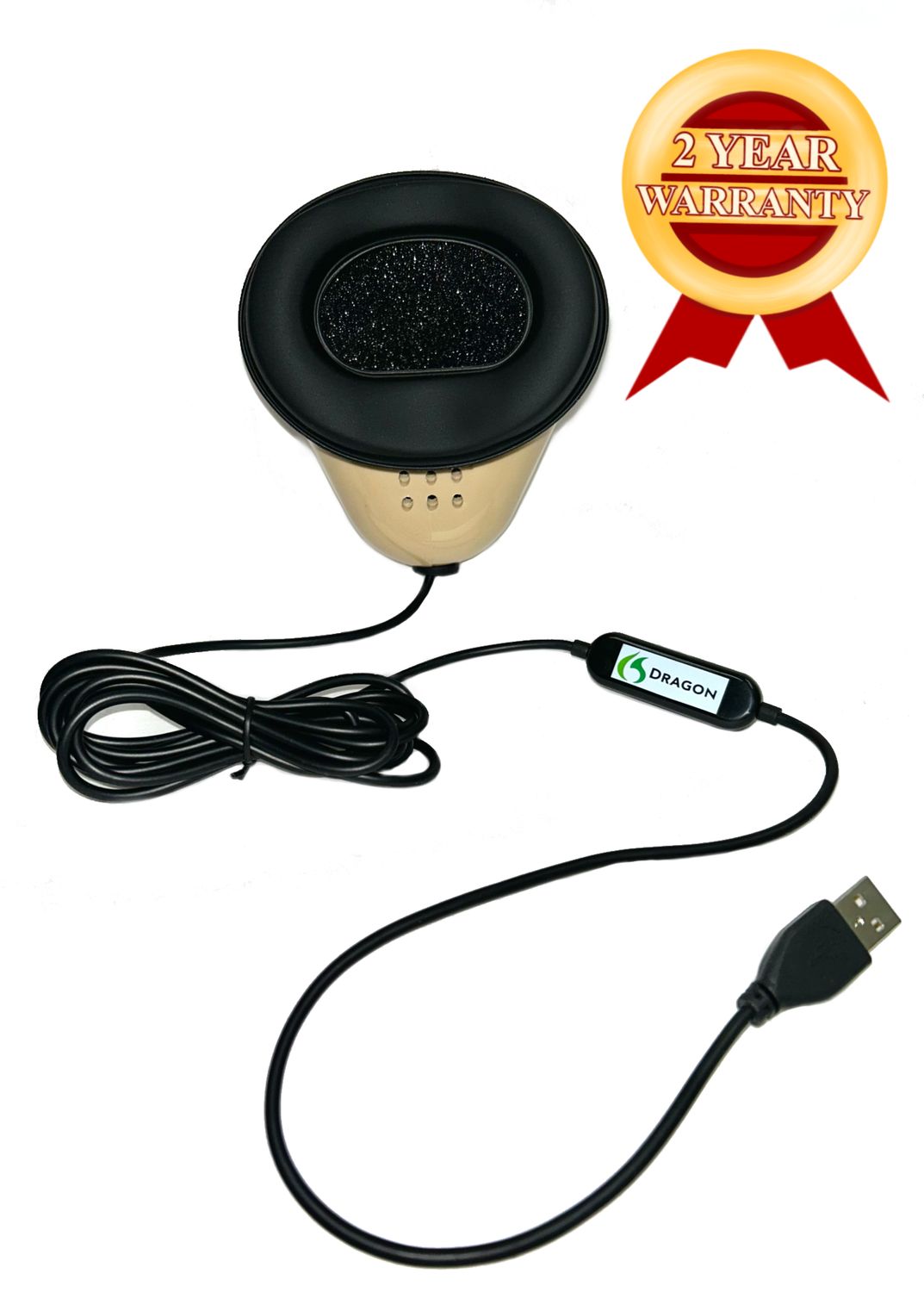
The physical connector is only one part of the record. A Dragon Stenomask provides a direct USB microphone path. The MM-18 provides one 3.5mm analog microphone output and may require a compatible interface for a particular computer. Record the interface as part of that analog arrangement instead of attributing the combined result to the mask alone.
Identify the recognition profile and any preparation already performed. Nuance describes Accuracy Tuning as adaptation involving saved dictation, corrections, and language patterns. That means profile preparation belongs in the comparison record. The Dragon 16 Accuracy Tuning documentation explains the feature; its availability and controls depend on the edition and configuration. You do not need to run it merely to complete the worksheet.
Also record the mouthpiece, the working position, and whether the mask is handheld or supported. If you deliberately change one of those conditions, label the next attempt as a new condition. This allows you to distinguish a connection change from a physical positioning change without pretending that either one has a universal effect.
Run a comparison that another person could repeat
Establish a working baseline first
Confirm that the intended mask input is active and that the application can save a usable sample. Microsoft documents input selection and microphone testing in Windows sound settings. That system check is useful preparation; the actual evaluation still needs to use the application and recording arrangement you intend to assess.
If the baseline contains silence, missing sections, or the wrong source, resolve that condition before treating the text as a measure of recognition. Record the failed attempt in the session log. A failure can be informative, but it should not be mixed into a word-error calculation as though a complete comparable sample had been captured.
Choose the order before the session
When comparing two arrangements, avoid always giving one the easiest point in the session. One practical plan is to alternate which arrangement goes first across sessions. Another is to record the order in advance and keep it independent of which result you expect. These are proposed ways to make the comparison easier to interpret, not guarantees that fatigue or familiarity disappears.
Allow ordinary breaks and note them. Keep the passage, planned speaking task, and scoring policy consistent within each matched comparison. If the writer becomes unusually tired, changes technique, or has an interruption, record the event. Do not keep only the smooth attempt while silently discarding the awkward one.
Define a repeat before you know its score
Decide how you will handle an interrupted recording, a wrong input, or a visibly failed save. A sensible rule might allow a replacement attempt for a documented capture failure while retaining the original in the log. The rule should apply equally to every arrangement. Repeating only an unfavorable score until it looks better undermines the comparison.
Save the audio and raw output immediately after each completed attempt. Give them matching identifiers. Make correction copies later. This simple separation prevents the most useful evidence from being overwritten during the ordinary work of improving the text.
Collect more than the most flattering sample
A single attempt is a sample of one person, passage, configuration, and moment. Repeating the task with fresh material shows whether the first observation is stable enough to guide your next decision. Do not attach a statistical confidence claim to a few informal attempts. Report the number of attempts and their conditions so that the reader can judge the scope.
Keep each attempt visible in the result table. If you also report an overall WER, calculate it from the total error count divided by the total reference word count. An unweighted average of percentages from very different passage lengths answers a different question. State the method so that a short difficult passage cannot quietly dominate or disappear from the summary.
Use an error ledger to turn a score into an action
A total alone does not explain what to improve. Keep an error ledger with a location in the audio, the relevant reference words, the raw output, the assigned error category, and a separate note about its practical significance. The note should describe what you observed rather than immediately diagnosing the hardware.
For example, a consistently misrecognized proper name suggests a different investigation from a segment where the saved recording stops. Neither observation proves a cause by itself. Review the audio, the vocabulary preparation, and the application state relevant to that particular event. Follow a narrow question through the evidence before replacing equipment.
| Observation to record | Next question | Evidence to retain |
|---|---|---|
| A repeated name differs from the reference | Was the spoken name clear, and was the intended vocabulary preparation applied? | Audio location, spelling, profile note and raw output |
| A phrase is absent from the output | Is it present in the mask recording, and did the application remain active? | The audio span and the matching output gap |
| Words are correct but the number format is wrong | Is this a lexical error, a formatting requirement, or both under the written rules? | Untouched text and normalization policy |
| A speaker label changes unexpectedly | Was a command intended, and where did the workflow diverge? | Command checklist and application context |
Review several related examples before treating a pattern as established. If the proposed fix is vocabulary preparation, evaluate that change with fresh relevant material. If the concern is capture, follow the stenomask troubleshooting guide. Keep the detailed error assessment here and use the troubleshooting article for the physical and software checks it already covers.
Measure the correction work as its own result
Two outputs can have a similar word-error count yet require different effort to finish. An error concentrated in one familiar term may be easier to review than an omission whose location is uncertain. Keep the word score, but add a correction-work record that describes the practical task you are trying to improve.
Define the start and end of the editing interval before timing it. You might start when the untouched output and its audio are opened and stop after a complete review against the reference. State whether the interval includes formatting, speaker labels, or a second review. A time labeled only “editing” is difficult to compare if the underlying work changes between sessions.
Use the same reviewer and review method for a personal equipment comparison when practical. Record their familiarity with the passage. A reviewer who already knows the intended wording has an advantage over one encountering it for the first time. If different people perform the reviews, keep that difference visible rather than treating their times as a direct hardware comparison.
Write a short note on difficult corrections. Was the original audio clear enough to resolve the word? Did a missing section require another source? Did a command place text in an unexpected location? These notes can be more actionable than reducing every problem to a single time total.
Review meaning, numbers, and formatting separately
WER counts word edits; its formula does not assign greater weight to an error because the meaning is especially important. A missing negative, a changed amount, and an ordinary article can each contribute an edit while having very different implications for the finished document. Add a separate review of the information your task requires.
For your practice material, identify the items that need individual checking: names, numerical values, dates, qualifications, negatives, and speaker attribution. Mark whether each item is correct, incorrect, or unresolved. Do not call this checklist a validated alternative accuracy metric. It is a practical companion to the word-level comparison.
Keep formatting questions separate enough to investigate. A correctly recognized number displayed in an unacceptable form may need a different remedy from a different number being recognized. A paragraph in the wrong document is a workflow failure even if every word is correct. A speaker heading can require attention even when the accompanying sentence scores well.
The same distinction helps with purchasing conversations. Describe the problem as specifically as the evidence allows: repeated word substitutions, an input interruption, an incorrect command action, or excessive review effort. “The mask is inaccurate” can conceal all of these. A precise account gives the equipment supplier or software support person a better starting point.
Do not combine live dictation and file transcription silently
Testing a saved audio file can help compare software behavior while holding the audio constant, provided the software supports that task. It does not reproduce the entire live process of speaking, monitoring an application, using commands, and handling interruptions. Label a file-transcription result as a file-transcription result.
For live work, record additional observations without inventing a benchmark. Note whether text arrives in the intended application, whether long pauses or interruptions occur, and whether the workflow remains operable during the exercise. If you measure a delay, define the exact starting and ending events and the method used to observe them. An impression that one system “feels faster” is a useful personal note, but it is not a measured latency result.
A practical evaluation can contain both kinds of task. Keep separate rows and separate conclusions. File processing may reveal a vocabulary or recognition issue; a live exercise may reveal an integration or operation issue. The difference is informative because it points toward what you need to investigate next.
If a second recording destination is part of the intended setup, check that destination independently. The Double Dragon 2 has USB and a separate 3.5mm microphone output. Those connections support two planned paths, but the presence of two outputs does not establish that either receiving device saved a usable file. Record the file check alongside, rather than inside, the recognition score.

Compare product features without inventing a performance ranking
Choose candidate hardware from your required connection first. Compare a USB model when the intended system calls for USB. Include an analog model when you have confirmed the appropriate receiving input or interface. This keeps the evaluation focused on arrangements you could actually use.
The MM-ST1 offers two independent 3.5mm microphone outputs. That is a connection feature you can verify in the listing. It does not by itself establish a lower WER than a single-output mask. Likewise, the MM-18’s single output does not establish a worse recognition result. Evaluate the complete arrangements required for your work.
When comparing a direct USB mask against an analog mask plus an adapter, keep the equipment lists explicit. Do not describe a difference between the complete systems as proof about an isolated microphone component. If your buying decision is between those complete systems, the combined result may be exactly what you need; its label should say so.
Use current product pages for package contents, prices, and availability. This guide deliberately does not turn a temporary offer into a permanent cost or performance claim. The stenomask category provides the available model links, and the setup-cost guide helps organize required equipment and optional accessories.
Turn the observations into a purchase decision
Use a decision sheet with separate entries for connection suitability, successful saved recordings, recognition errors, important-content review, correction work, and comfortable operation. Do not force these different observations into one weighted score unless you have a clear reason for the weights. A short written judgment can be more honest and more useful.
Give every unresolved question an owner. Ask the equipment supplier about the named hardware arrangement, the software provider about the relevant application behavior, and the instructor about the required school configuration. Include the session evidence that relates to the question. This is more effective than asking each person to infer the whole setup from a general complaint.
A reasonable decision may be to keep the existing mask and address a software setting. It may be to replace a worn component, simplify the connection, or select a model with another output. The evaluation should support the action that fits the evidence. It should not be designed to make a purchase appear necessary before the actual problem is understood.
A reusable stenomask accuracy worksheet
Copy the following field list into a document before the session. Complete the equipment and scoring fields first; leave the result fields empty until you have inspected the files. An empty result is more informative than a guessed number because it shows which part of the evaluation remains unfinished.
| Record | What to enter |
|---|---|
| Evaluation question | The specific equipment or workflow decision this session should inform |
| Session and attempt identifiers | Date, session name, attempt label and order within the session |
| Hardware path | Mask, output, adapter or interface, computer or recorder, and selected input |
| Software state | Application versions, recognition profile, relevant preparation and integration |
| Material | Passage version, familiarity, task type and actual recording length |
| Physical conditions | Working position, mouthpiece, support, room and any interruption |
| Evidence files | Original audio, raw recognition output, reference and corrected-copy names |
| Scoring policy | Normalization, command handling, alignment method and reviewer |
| Word result | Reference words, substitutions, deletions, insertions and calculated WER |
| Other results | Important-content checks, formatting issues, correction interval and file-save checks |
| Conclusion | What this attempt supports, what remains uncertain and the next action |
Give the files names that connect them without opening them. A session name followed by an arrangement label and attempt label is sufficient. Keep the original audio and raw output together. Store the reference and the corrected working copy as different documents so that one cannot be mistaken for the other during a later review.
Record interruptions at the time they happen. If a notification, application switch, cable movement, or conversation affects an attempt, note the location and what you observed. Later memory is a poor substitute for a short contemporaneous note, especially when you are trying to explain a brief gap in a long recording.
For the conclusion, use three sentences. First, state the observation. Second, identify the conditions under which it occurred. Third, state the next decision or check. This format helps keep the conclusion proportional to the evidence. It also makes the note useful to someone who was not present during the session.
How to describe your results without overstating them
Name the person or group represented, the material used, and the equipment arrangements. If you evaluated only your own voice, say so. If the exercise used familiar prepared prose, say so. A careful description of scope makes the findings more credible because readers can decide whether the conditions resemble their own.
Show the individual attempts before emphasizing a summary. Explain omitted or replacement attempts and preserve their records. Include the scoring policy and the length of the reference material. Report unresolved reference words or capture problems so that they do not disappear behind a polished chart.
Separate observed differences from proposed explanations. A lower error count in one attempt is an observation. A claim that a particular component caused the difference requires a comparison that isolates that component convincingly. When several conditions differ, describe the result as belonging to those complete conditions.
Keep source samples available where you have permission to share them. If you cannot share the material, explain what can be reviewed instead, such as the scoring method and anonymized equipment record. Do not describe inaccessible confidential material as independently verified evidence merely because you retain it privately.
A future Martel test report should identify its procedure, equipment, software, sample material, actual measurements, and limits. Until those results exist, an evaluation guide should remain an evaluation guide. Product specifications and original planning aids are useful information in their own right; they do not need an invented winner.
Questions about stenomask recognition accuracy
What is the best stenomask for voice recognition?
Begin with a model whose output fits your confirmed computer and software arrangement. Then assess actual capture, recognition, correction work, and operation in that arrangement. This guide does not establish a universal accuracy winner. Use the Dragon, Double Dragon 2 and MM-ST1 comparison to narrow connection choices before evaluating results.
Can I judge accuracy from a product demonstration?
A demonstration can show how a system operates and may reveal useful features. To interpret a performance claim, ask for the passage, raw output, reference, preparation, number of attempts, and scoring rules. A demonstration without those details does not tell you how the equipment will perform with your voice and material.
Is a low word error rate enough for a finished transcript?
No. It describes a particular word-level comparison under stated rules. The finished work also needs appropriate review of meaning, names, numbers, speaker attribution, formatting, and the requirements of the assignment. Use the word score as one observation, not as permission to skip review.
Should I change the mask if names are consistently wrong?
First inspect the relevant audio and the software preparation for those names. A repeated recognition problem does not identify its cause by itself. Preserve examples and ask a focused question about the observed pattern before deciding that a hardware change is the appropriate remedy.
Can I compare USB and analog masks fairly?
You can compare usable complete arrangements if you describe both paths, keep the task and scoring rules consistent, and retain the results of repeated attempts. An analog arrangement includes its receiving interface. A comparison between complete paths does not isolate the effect of USB as a connector or of the mask alone.
Can I use the same passage every day?
A familiar passage can help you notice a change in an established setup. Keep separate fresh material for evaluating whether an improvement extends beyond practice on that passage. Label the familiar check and the fresh evaluation differently so that their results answer the questions they actually test.
Does a more expensive model guarantee a better result?
Price can reflect features and configurations, including additional microphone outputs. It does not establish a recognition percentage. Compare the features your work requires, review the current listing, and use evidence from your intended arrangement when evaluating performance.
Where should I start if the recording itself is unreliable?
Start with the physical path and selected input, then verify the saved file. For an MM-18, the MM-18 setup guide covers the initial connection checks. Return to scoring after the capture problem has been identified and you have a complete sample suitable for comparison.
Sources and the next equipment step
The word-scoring definitions above draw on Microsoft’s speech evaluation documentation and NIST’s speech-to-text evaluation framework. Windows input testing and Dragon profile adaptation are linked at the relevant passages. These sources support the identified technical facts; they do not endorse a Martel mask, establish a court-reporting passing score, or report a Martel product comparison.
The worksheets, proposed session procedure, fictional practice passage, and purchase-decision structure were written for this Martel guide. Product photographs come from Martel’s catalog. They identify the equipment discussed and are not photographs of a test conducted for this article.
If your concern is what people or microphones outside the mask can hear, use the separate stenomask sound-leakage and fit evaluation guide. A recognition score describes the text comparison; it does not establish how much speech is audible in the room.
Choose a connection you can evaluate in your own setup
Compare current Martel stenomasks, review the MM-18 or Dragon USB model, and contact Martel with your exact computer, software, adapter, and recording requirements. Confirm the equipment arrangement before ordering, then keep your evaluation record with the setup.