How Quiet Is a Stenomask? Sound Leakage and Fit Evaluation
An original guide to checking what listeners and outside microphones hear. Includes room planning, fit observations, measurement limits, and practical worksheets without invented sound-reduction claims.
A stenomask is designed to contain the voice spoken into its enclosed microphone, but “quiet” is not a complete specification. A useful evaluation asks whether a nearby listener can hear speech, whether that listener can understand words, and whether another microphone records the voice. Check those outcomes separately in the positions and room conditions that matter to your work.
People searching for a soundproof steno mask often want a simple promise: the computer should receive the writer’s voice while everyone nearby hears nothing. A product description alone cannot establish that result for every user, fit, speaking level, or room. This guide shows how to ask a better question and collect useful evidence before making a claim about silence or privacy.
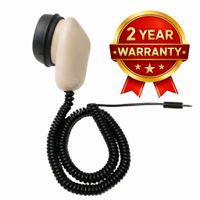
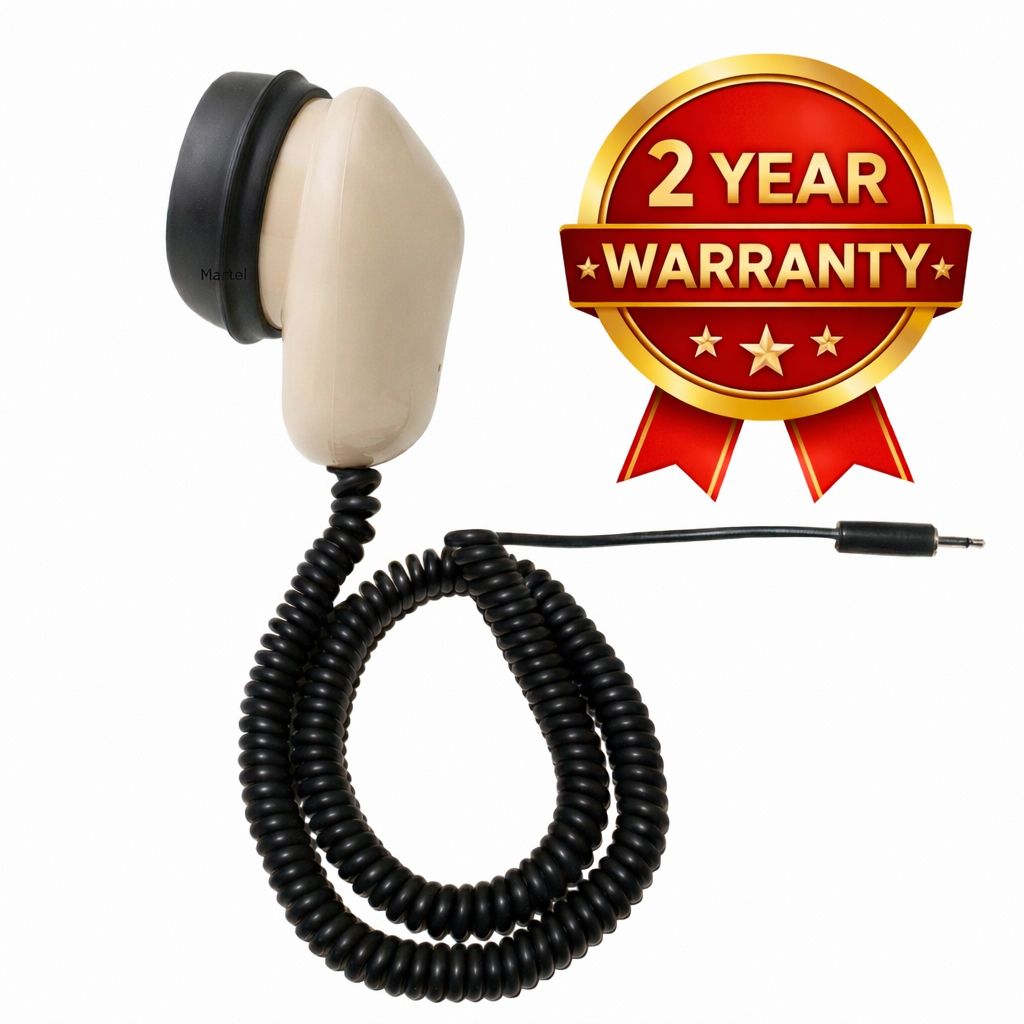
The procedures and worksheets here are original planning tools. This article does not report measured sound-reduction figures, rank masks by tested leakage, or claim that Martel has performed the proposed sessions. Product images identify catalog items; they are not photographs of a laboratory comparison. Where sound measurement concepts are used, the relevant primary technical sources are linked.
For the basic difference between a writer’s microphone and participant audio, use the stenomask versus room microphone guide. This article concentrates on the sound that may be heard or captured outside the mask, how to evaluate it fairly, and how fit and working position enter that evaluation.
Ask three different questions about outside sound
Is speech audible at the listener’s position?
Audibility concerns whether a listener detects the sound. A listener might hear a voice-like murmur without understanding its words. Record that observation plainly. Do not turn “I noticed a sound” into “I understood the sentence,” and do not turn “I could not understand it” into “there was no sound.”
Name the listening position. A person sitting beside the writer is in a different situation from someone across a table or behind a partition. Record the distance, direction, and approximate ear height. The phrase “quiet in the room” leaves out the location that makes the observation useful.
Can the listener identify words or meaning?
Intelligibility concerns what the listener can understand. It deserves its own task because knowing the passage in advance can help a listener fill in incomplete sounds. For an informal check, ask the listener to write the words they believe they heard before showing the passage. Retain uncertain fragments as uncertain fragments instead of completing them from the answer sheet.
A listener who cannot reconstruct a full sentence may still identify a name or a number. Include those observations separately when they matter to your working environment. A broad “could not understand” label can hide the difference between hearing no words and recognizing a few specific words.
Does another microphone capture the writer?
A room microphone, laptop microphone, or conference system is a separate receiver. Its position and processing can produce a recording different from the impression of a nearby listener. Evaluate the actual microphone and application you intend to use rather than assuming that a person’s listening result settles what the recording contains.
Keep that outside recording distinct from the mask’s own output. The mask microphone is supposed to capture the voice spoken into it. Hearing the writer clearly on that channel does not demonstrate leakage. Label the source of every file before comparing playback, especially if the same computer can select either the mask or its built-in microphone.
Define “quiet enough” for the task before testing
Begin with the practical concern. You may want to avoid distracting a nearby colleague, reduce unwanted voice in participant audio, or choose a workable seating arrangement. These are related concerns, but they do not require identical evidence. Write the intended use in one sentence and identify the receiver whose experience matters.
Next describe the ordinary room conditions. An empty office with equipment switched off differs from a room in regular use. The listener’s location, the room’s surfaces, and background activity belong in the record. Do not choose an unusually noisy setting solely because it makes the mask appear quieter.
NTi Audio identifies background noise and room reflections as factors in speech intelligibility. Its explanation of speech intelligibility describes formal room measurements using appropriate instruments and test signals. The listening exercises in this Martel article are informal checks; they do not produce a certified Speech Transmission Index or replace an acoustical assessment.
Set a practical decision rule with the people responsible for the space. For a distraction concern, their observation of ordinary working conditions may be the relevant starting point. For a requirement involving confidentiality or a specified acoustic performance, obtain an appropriately qualified assessment. An informal demonstration does not establish that every future listener or recording device will be unable to recover speech.
Distinguish the enclosure from electronic processing
The physical mask and mouthpiece surround the speaking area. Computer gain, application noise reduction, and other signal processing act on an audio path. Turning down a recorded signal can make its playback quieter without establishing that less sound reached the room. Keep the physical question and the electronic question separate.
This distinction prevents a misleading comparison. If one outside recording has been normalized, compressed, denoised, or played at a different volume, it may no longer support a direct listening comparison with an untouched file. Retain the original recordings and document any processing used for a separate analysis copy.
It also helps you choose the next check. If people nearby report hearing the voice but the mask recording is clear, inspect the fit, speaking task, and listener positions. If only a particular application makes the writer conspicuous in participant audio, inspect that application’s selected input and processing. One observation does not automatically identify the same remedy for both situations.
For parts and model identification, use Martel’s accessories and fit guide. The sections below focus on documenting an evaluation rather than repeating its general accessory descriptions or providing unverified care instructions.
Make a small room map before anyone starts speaking
Sketch the writer’s chair, the table edge, the relevant listeners, and any microphones that will be checked. Mark doors, large windows, and nearby equipment that may change the background sound. A simple drawing is sufficient. Its purpose is to make the arrangement repeatable, not to claim a detailed acoustic model of the room.
Give each listening or microphone position a label. Record the distance from the mask area and the direction relative to the writer. Use the same reference point for later measurements. If you estimate rather than measure a distance, label it as an estimate so that the apparent precision of the worksheet does not exceed the observation.
Include height and orientation. A microphone resting on a table is not in the same position as a listener’s ear. A device aimed toward the writer differs from one aimed elsewhere. Photograph the arrangement if everyone involved permits it and the scene contains no private material. A clear room map may be sufficient when a photograph is not appropriate.
Write down the conditions you expect to change during normal use: a door opening, ventilation cycling, someone moving to another seat, or the writer turning toward a screen. Plan separate checks for the relevant changes. Avoid moving several items between attempts and then trying to explain the result as though the mask were the only difference.
Keep a record of the background
Begin with a brief observation of the room while the writer is not speaking. Note the prominent sounds and whether they are steady or intermittent. If you make an outside audio recording, capture a background-only segment using the same microphone position and settings that will be used for the speaking segment.
Repeat the background observation after the speaking checks when practical. A passing vehicle, a ventilation change, or activity elsewhere in the building may affect what listeners notice. The record lets you distinguish a change in the surroundings from a change in the mask arrangement.
Do not interpret “I heard nothing” as a numerical sound measurement. It is a listener report under particular conditions. Conversely, a meter reading in a quiet room may include the instrument’s own noise or other room sound. If you cannot separate the contribution you want to investigate, describe the limitation instead of assigning all of the reading to the writer.
Choose representative conditions for the decision. A particularly noisy room can hide speech, while an unusually quiet room can expose faint sounds. Either may be a useful condition to document, but neither should be presented as the only setting in which every customer will work.
Run an informal listening session without giving away the words
Prepare the task and the listener’s answer sheet
Select short, original practice material that is not confidential and is unfamiliar to the listener. Give the listener a sheet with space for the position label, whether speech was audible, words identified, uncertainty, and distracting sounds. Do not show the passage or describe its subject before the first attempt.
Explain that a blank answer is acceptable and that uncertainty should remain visible. Ask the listener to write what they believe they heard, not what they think would make sense in a plausible sentence. This keeps the observation closer to the listening task and reduces the temptation to reconstruct a familiar paragraph.
Use the writer’s ordinary trained speaking manner
Record the speaking task and the intended pace. Do not whisper solely to obtain a more favorable outside-sound result if that is not the method used in the actual workflow. Do not exaggerate volume merely to produce a dramatic failure. The first session should represent the way the person is expected to use the equipment.
If speaking level or technique is deliberately varied, make it a separately labeled condition. Ask the instructor or relevant trainer about the technique appropriate to the work. The goal is to evaluate a usable arrangement, not to force a quieter exterior by adopting a speaking method that no longer serves the intended recognition task.
Collect observations before discussing the result
After each attempt, have the listener complete the sheet before seeing the passage or hearing another person’s interpretation. If several people are involved, collect their notes separately first. Discussion is useful afterward, but shared guesses can change what appears to be an independent listening observation.
Record partial words and uncertain fragments as such. A listener may identify a name without understanding the rest of the passage. Another may detect speech but identify no words. Preserve those differences. A single yes-or-no question about whether the mask is “silent” does not capture them.
Repeat the relevant positions and ordinary movements
Move the listener to the next recorded position while keeping the other conditions as consistent as practical. Use fresh material when prior knowledge would affect the task. Keep the order of positions in the notes. If the writer’s position changes, create a new labeled condition rather than quietly continuing the same row.
After the stable checks, observe the ordinary movements required by the task: looking at a screen, reaching for a control, or returning after a break. Do not introduce movements that conflict with the product’s instructions. The question is whether the working arrangement remains consistent during actual use, not how far it can be pushed outside its intended operation.
Use a listening record that preserves uncertainty
| Field | Observation to enter |
|---|---|
| Position and condition | The room-map label, distance, direction, and writer’s working position |
| Speech detection | Not noticed, noticed intermittently, or noticed throughout, with a free-text note |
| Words identified | The listener’s written words before seeing the passage |
| Uncertain fragments | Partial words or alternative interpretations kept separate from definite answers |
| Background event | A door, vehicle, conversation, equipment cycle, or other interruption |
| Practical observation | Whether the sound distracted the listener from the agreed task |
These labels are proposed note-taking categories, not a validated acoustic scale. Use them consistently within your own session and keep the written details. Do not convert them into a sound-reduction percentage or a general privacy rating. Their value is that they show what a particular listener experienced under a documented arrangement.
When reviewing the results, identify the next useful question. If speech was noticed only after a particular movement, repeat that movement in a controlled practice check. If a listener could identify certain words, preserve that observation without assuming every word was recoverable. If the room changed substantially, repeat the relevant condition before attributing the difference to fit.
Make an outside recording that answers the right question
Use an outside microphone when the practical concern is what a recording system captures. Place it at the position you have documented and identify the selected input in the recording application. Make a short source-identification check before the session so that the file cannot be confused with the mask’s own output.
Record the microphone model, its orientation, the receiving device, the application, and the level settings. Note any automatic level control, noise reduction, echo processing, or other audio enhancement that is active. If the intended production application processes audio automatically, its actual behavior may be relevant to your question; record that condition rather than describing the file as an unprocessed acoustic measurement.
Keep the settings stable for recordings you intend to compare directly. If you must change the input gain to avoid overload, document the change and reconsider what the comparison can support. A quieter waveform after lowering the gain is not evidence that the mask released less sound into the room.
Save a background segment and a speaking segment from each condition. Preserve the original file before trimming or enhancing it. Recordings edited for convenient listening can be useful additional copies, but the untouched file provides the better record of what the equipment captured during the session.
Do not confuse playback volume with room sound level
A computer recording meter shows the level in an audio path. It is not automatically a calibrated measurement of sound pressure at a listener’s ear. The microphone, its sensitivity, the interface, gain, and software all affect the recorded level. A numerical value on a recording meter needs that context.
The Audacity meter documentation, for example, describes recording and playback meters and a digital scale whose maximum before clipping is zero decibels. It also distinguishes playback volume from the amplitude in the audio. That is different from using an appropriately calibrated sound-level instrument to measure the room.
For an informal playback comparison, use the same playback equipment and a documented volume setting. Avoid adjusting the volume until each clip seems equally easy to hear and then drawing a conclusion about which original condition was quieter. If you intentionally compare intelligibility after level adjustment, label that as a different question from the original recorded-level comparison.
Headphones can help a reviewer hear details in a recording, but that listening condition is not identical to sitting at the microphone’s position in the room. A file that reveals a word through careful headphone review does not establish that a nearby listener noticed it at the time. Both observations may matter; preserve their different meanings.
When a sound-level meter can help
A sound-level instrument can add a numerical observation when the instrument, microphone, measurement range, calibration, and procedure are appropriate to the question. Before relying on a reading, identify the quantity being reported and the conditions under which the instrument is specified to work. Do not treat every app displaying “dB” as an interchangeable measuring system.
Write down the instrument and microphone model, calibration information, selected weighting, averaging or time setting, measurement duration, and position. Keep those choices consistent across the readings you intend to compare. A peak reading and an average over a passage describe different features of the sound; they should not be placed in the same column without explanation.
NIOSH documents a sound-level application for iOS, including its calibration capability and the conditions associated with using a calibrated external microphone. Its sound-level meter app page is a useful example of why hardware and calibration belong in the record. It is not a validation of a particular stenomask test or of every phone and measurement situation.
Check the documented operating range and noise limits of the equipment you actually use. A reading close to the background or the instrument’s own limits may not support a useful estimate of the mask’s contribution. Seek appropriate measurement expertise when a numerical claim will be used to certify a requirement or compare products publicly.
Report measurements without manufacturing a reduction claim
Keep the background observation beside the speaking observation. If the room contribution changes, explain that change. Do not subtract unrelated readings taken with different positions, settings, or time windows and label the result “mask reduction.” The procedure must support the comparison before the arithmetic can mean what the label suggests.
Decibels are logarithmic quantities. A reading should not be translated into a percentage of sound blocked by treating the numbers as an ordinary linear scale. Likewise, a meter difference does not by itself tell you which words a listener can understand. Describe the measured quantity and retain the listening result as a separate observation.
If an evaluation compares masked and unmasked speaking, the speech task, source level, position, and measurement arrangement need careful control. A person may change the way they speak when the mask is removed. That can confound an informal comparison. This article supplies no attenuation figure from such a test and no standardized method for certifying one.
For many practical decisions, the more useful result is a precise statement about the intended working condition: the documented mask setup, listener location, ordinary speaking task, and observations from several attempts. A clearly bounded observation is more informative than a dramatic percentage unsupported by the measurement method.
A separate review sheet for outside recordings
| Question | Record before drawing a conclusion |
|---|---|
| Which source is in this file? | The outside microphone and selected input, distinct from the mask channel |
| What changed between conditions? | Position, gain, processing, speaking task, fit or room activity |
| How was playback performed? | Playback device, volume setting, and whether the original file was altered |
| What can be heard? | Speech detection, identified words, uncertainty, and other sounds |
| What does the file establish? | An observation about this recording path under these conditions |
Use this sheet beside the listener’s sheet, not as a replacement for it. If their observations differ, inspect the receivers and conditions before assuming one must be wrong. A person engaged in another task and a reviewer concentrating on a recording may notice different details. That difference is a useful finding about the task, provided it is reported accurately.
Evaluate fit as a repeatable working condition
Identify the mask and mouthpiece used in each attempt. Inspect the contact area and visible condition without disassembling parts beyond the product’s instructions. If a component is worn, damaged, loose, or unfamiliar, record the observation and ask Martel about the correct part or adjustment. Do not improvise a repair simply to continue a comparison.
Begin in the working position the user can maintain comfortably. Record how the mask is held or supported and where the cable runs. The aim is a practical arrangement that can be repeated during ordinary work. A position that depends on excessive force or an unusual posture should not become the hidden condition behind a favorable sound observation.
Make the first listening check while the writer holds a stable position. Then observe a small set of ordinary tasks separately: looking between the source and screen, reaching for a normal control, and resuming after a break. Label each condition so that a change in the outside observation can be investigated rather than averaged away.
If glasses or other normally worn items affect the position, include them in the practice arrangement. Do not infer that a fit demonstrated by another person will be identical for the intended user. Record what can actually be maintained with the equipment and working habits involved.
Compare mouthpieces through the same task
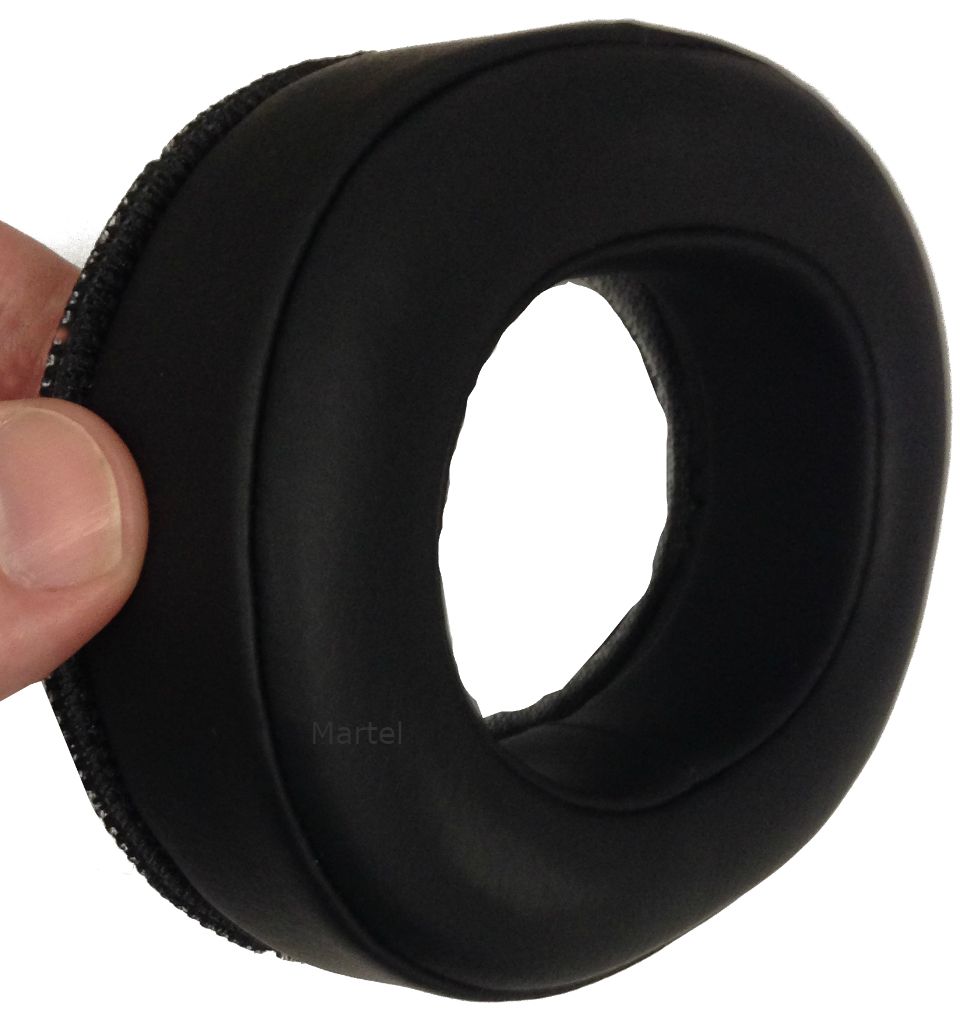
The SS4 Soft Seal mouthpiece is an accessory listed in Martel’s catalog. Confirm that it is the appropriate part for the exact mask before ordering. A different mouthpiece is a candidate to evaluate; this article does not assign it a measured sound-reduction advantage or promise that it solves every fit concern.
If you compare an existing mouthpiece with an appropriate alternative, record the part names and condition of each. Use the same listener positions and speaking task. Note whether the user can return to the working position after setting the mask down. That repeated positioning question can be more useful than a single carefully staged moment.
Keep comfort observations separate from outside-sound observations. Ask the user what changed in the working experience, and ask the listener what changed in the listening task. Neither answer should be assumed from the other. A purchase decision can consider both without claiming that one proves a particular acoustic result.
Do not modify a mouthpiece, add unapproved material, or assume that an improvised covering has the same properties as a listed part. Ask for the instructions relevant to the actual component. This guide intentionally provides no guessed cleaning chemical, soaking method, or replacement interval.
Check the stand, desk, and cable arrangement
A stand changes how the mask is supported. It does not automatically establish a better seal, lower leakage, or a particular recognition result. If you use the Martel Stenomask Flex Stand, verify the mounting arrangement and follow the current instructions for the equipment and work surface.
Record the chair and screen positions before adjusting the stand. Place the normal controls within the working arrangement and observe whether using them changes the mask’s position. A setup that looks stable while the user sits still may behave differently when the person reaches for a keyboard, turns toward a speaker, or returns after a pause.
Check where the cable rests and whether ordinary movement pulls on the mask or its support. Do not change the cable route midway through a supposedly identical comparison without noting it. If the cable touches a surface or another object, describe the arrangement so that an unexpected sound in the recording can be investigated later.
For a dual-output mask, identify both cable destinations. The extra cable is part of the physical working arrangement as well as the recording plan. Give it enough attention in the evaluation that a change in support or movement is not mistakenly described as a difference between microphone technologies.

Document foam and component condition without guessing performance
Martel lists replacement stenomask foam filters. Confirm the intended part and installation instructions for your mask. If the evaluation involves a replacement, record what was changed and the condition that prompted it. A catalog name is not a numerical attenuation rating.
Do not compare an unfamiliar new arrangement against an obviously damaged one and present the result as a fair ranking of product designs. Component condition is part of the test condition. If your actual question is whether a worn component should be replaced, state that question directly and keep the comparison tied to that maintenance decision.
After an approved component change, repeat the relevant listening and capture checks. Keep the earlier record so that you can describe the before-and-after conditions accurately. If the outside observation changes, report the observation without assuming the part is responsible for every difference in the session.
Recognize comparisons that answer a different question
A familiar passage: A listener who knows the wording may identify fragments more readily than an unfamiliar listener. Use fresh material when the question concerns what words can be understood without that advance knowledge. Keep the familiar-passage result only if that familiarity is part of the scenario you intend to examine.
A changed room: Moving from a quiet office to a busier room changes the receiving conditions. Both observations may be useful, but the difference should not be assigned entirely to the mask. Record the room and background in each row.
A changed recording level: Lowering gain, applying noise reduction, or changing playback volume alters the listening evidence. Document processing and keep an untouched copy. Do not use an edited clip as though it were an unaltered measurement of the original sound.
A changed speaker or technique: Different people, speaking tasks, and speaking levels create different conditions. A side-by-side video can demonstrate those particular conditions without establishing a universal product ranking. Ask what was held steady before accepting the implied comparison.
A selected successful moment: A short favorable segment can omit ordinary movements or less favorable attempts. Retain the full session record and explain exclusions. The practical question is how the arrangement behaves in the intended task, including the parts that make the task demanding.
Build a complete sound-leakage session worksheet
Use one cover sheet for the room and equipment, then a separate row for each attempt. Complete the planned conditions before the session. Add observations afterward. Keep an unavailable measurement blank and label it unavailable; do not fill the space with a likely value or a number taken from a different product.
| Session field | Details to record |
|---|---|
| Purpose | Distraction, outside recording, fit comparison, or another clearly stated question |
| Mask and components | Exact model, mouthpiece, foam condition and any approved component change |
| Working arrangement | Handheld or supported position, chair, desk, screen and cable routes |
| Room map | Writer, listener and microphone positions, distances, directions and heights |
| Background | Ordinary room activity, background-only observation and interruptions |
| Speaking task | Passage version, familiarity, intended manner and any deliberate variation |
| Listening evidence | Independent notes, identified words and uncertain fragments |
| Recording evidence | Input, application, gain, processing, file name and playback arrangement |
| Instrument evidence, if used | Instrument, microphone, calibration, range, metric, settings and duration |
| Decision | What the evidence supports, what it does not establish, and the next check |
Keep a simple change history. If a listener moves, a component is replaced, or an application setting changes, give the next attempt a new label. This is particularly helpful when several people are involved because their descriptions of “the same setup” may leave out different details.
Separate the person speaking, the person listening, and the person reviewing a file when practical. Each role has access to different information. A reviewer who has read the passage is doing a different task from an unfamiliar listener. Record those roles so that the conclusion can reflect the way the evidence was collected.
Original material for a first listening exercise
The passage below is fictional practice material written for this guide. Keep it out of the listener’s view until their initial notes are complete. If the listener already knows it, write a fresh passage for the next unfamiliar-word exercise. It is not a standardized intelligibility test.
The technician arrived before the afternoon session and placed a notebook beside the empty chair. A blue folder contained the earlier instructions, while the revised instructions were in a gray folder near the window. The team agreed to check the current version before connecting anything.
During the first pause, the coordinator moved to the far side of the table. The writer stayed in the original position and repeated a new passage. A second person recorded observations without looking at the printed text. When an outside sound interrupted the exercise, they noted where it occurred.
Afterward, each listener handed in the words they believed they had heard. They kept uncertain fragments separate from definite words. Only then did the group compare those notes with the passage and discuss whether another check was needed at a different position.
The worksheet described the arrangement and the remaining question. It did not assign a sound-reduction percentage, and it did not assume that one observation would apply to every room.
Use equivalent tasks when comparing conditions, but do not promise that two self-written passages have identical difficulty. For an informal purchase evaluation, record the material and the limitation. If a standardized measurement is required, use the appropriate qualified method rather than relabeling these practice passages as a formal test.
Use the findings to choose the next equipment step
Start with the specific observation that remains unresolved. If the position is hard to maintain, investigate the support arrangement and appropriate mouthpiece. If a particular outside microphone captures unwanted speech, inspect its placement and operating configuration. If the entire room arrangement is unsuitable for the requirement, a different mask alone may not answer the question.
When requesting help, send the exact mask model, relevant part names, a simple room map, and a concise description of the observation. Identify whether it came from a listener, an outside recording, or a measuring instrument. Those details are more useful than a general request for a “completely silent” model.
Match any new mask to the required connection as well as the physical working arrangement. The MM-18 has one 3.5mm analog microphone output, while the Dragon Stenomask has a direct USB path. Those are verified connection distinctions, not tested sound-leakage rankings. Use the buyer’s guide for the full model comparison.
Questions about how quiet a stenomask is
Is a stenomask completely soundproof?
This guide provides no evidence for a universal complete-silence claim. Evaluate the actual mask, fit, speaking task, listener positions, and room conditions. Distinguish hearing a murmur from identifying words, and distinguish both from what another microphone records.
Can people hear someone using a stenomask?
That question needs a named position and working condition. Ask an unfamiliar listener to document what they detect and which words they can identify before seeing the passage. Keep the observation tied to that session rather than turning it into a promise for every listener or room.
Does a quieter recording prove less sound escaped?
Not by itself. Microphone placement, gain, processing, and playback volume can change what a recording sounds like. Preserve the original files and settings, and use an appropriate measurement procedure if you need a numerical acoustic comparison.
Can a phone app certify that the mask will not be heard?
An app reading alone cannot establish that conclusion. The hardware, calibration, measurement conditions, and question being asked all matter. A sound-level measurement also does not directly identify which words a listener can understand. Use appropriate professional assessment for a specified acoustic or confidentiality requirement.
Will a different mouthpiece solve leakage?
A compatible mouthpiece is a component to evaluate, not a guaranteed result. Confirm the correct part and compare the actual working conditions. Record both the user’s comfort and the outside listening observation without assuming that one predicts the other.
Does a hands-free stand make the mask quieter?
A stand changes support and positioning. Assess whether the intended user can maintain the working position during ordinary tasks, then repeat the relevant outside-sound check. This article reports no measured reduction attributable to a stand.
Should I deliberately speak more softly?
Begin with the trained speaking method required for your workflow. A change in speaking manner can affect both the outside observation and the input supplied to recognition software. Treat a deliberate variation as a separate condition and discuss technique with the appropriate instructor.
How should I evaluate recognition at the same time?
Keep the mask’s audio and the software’s raw text separate from the outside listening evidence. Our stenomask recognition-accuracy evaluation guide explains reference transcripts, error scoring, and correction work. A strong mask recording and a quiet outside observation answer different questions; both can be checked.
Sources, scope, and ordering help
The acoustical distinctions in this guide are supported by the linked NTi Audio explanation, Audacity meter documentation, and NIOSH instrument information. Those sources do not test or endorse a Martel product. The listening procedure, room-map approach, worksheets, and fictional passage are original planning tools, with no invented outcome presented as measured evidence.
Product details and photographs come from Martel’s current Ecwid catalog. Check the live listing for the appropriate part, included items, current offer, and availability. No outside-sound ranking or replacement schedule is inferred from a photograph or a product name.
Build the right working arrangement
Shop Martel stenomask microphones, review the SS4 mouthpiece and Flex Stand, or ask Martel for help with your exact setup. Explain the connection you need and the fit or outside-sound observation you want to address before selecting additional equipment.