Why Does a Witness Sound Hollow When Two Deposition Microphones Are On?
Does opening a second deposition microphone make the witness sound hollow? Compare each table mic and the mix, then choose the right Martel court recording setup.
Two table microphones are open. The witness has not moved, yet a perfectly recognizable voice begins to sound as if it is coming through a cardboard tube. Close the second input during a practice recording and the voice regains its body. A likely explanation is that both microphones picked up the same person at different distances. The two versions arrived slightly apart in time and then combined in the mixer. Some parts of the voice reinforced each other while others became weaker. The resulting change in tone is called comb filtering.
A reporter can investigate that possibility with three files. Keep the witness in one chair, capture the same words on microphone A alone, on microphone B alone and on both together. Check the saved files. If the hollow sound appears chiefly in the combination, give each mic a clearer job and record the exchange again. If you already hear the hollow quality on a single mic, explore its position, the room and any speaker playing the same voice nearby.
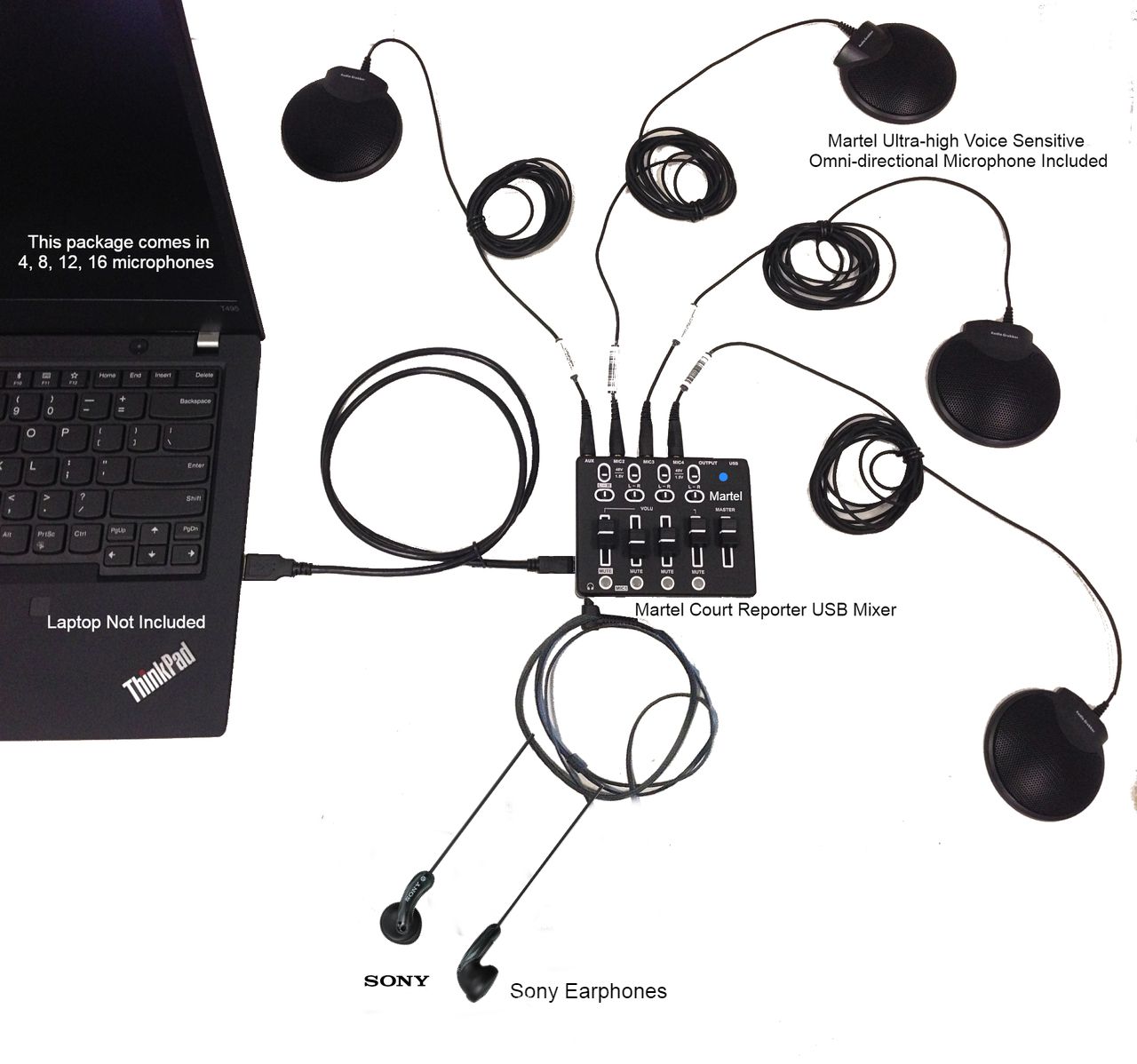
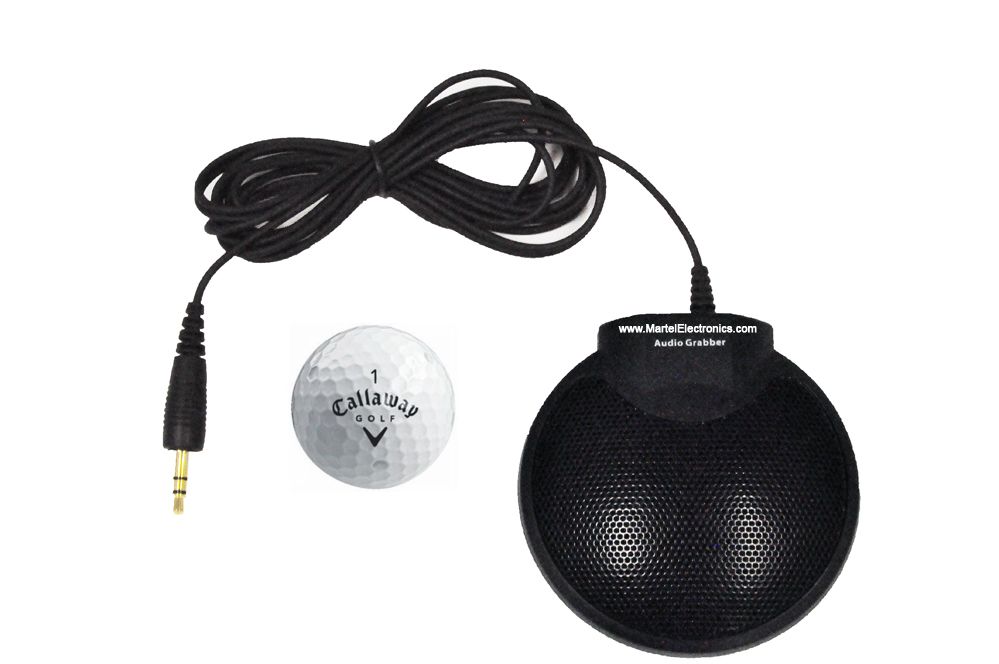
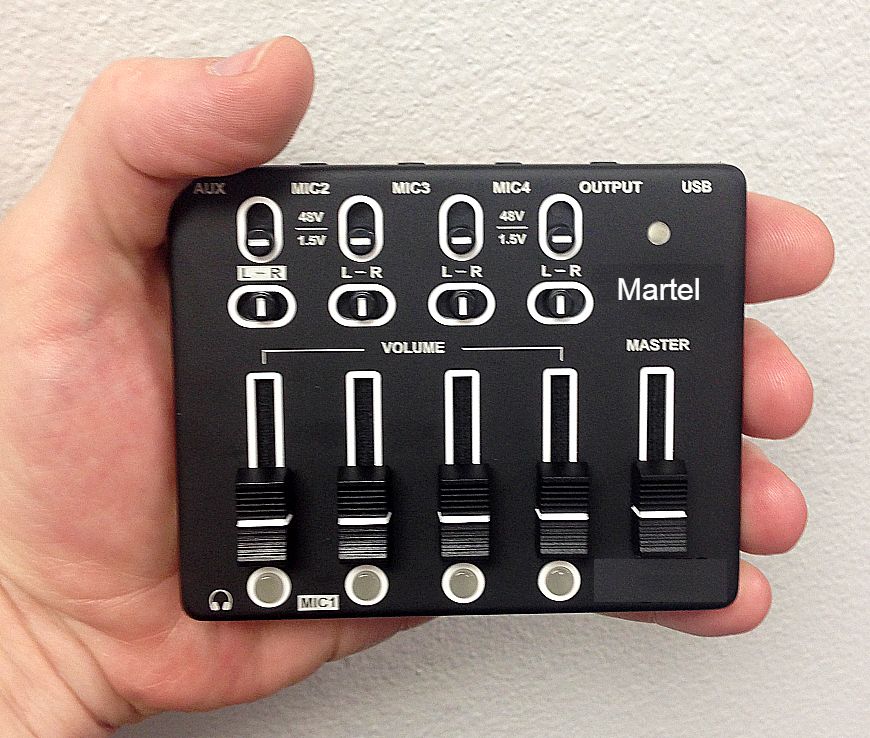
The Martel Ultimate Court Reporter Microphone Mixer, SKU 1179, is a four-input option for compatible court reporting microphones. The purpose of this guide is to help you use a mixed court recording system to recover the words from each seat. The listening passages are fictional, and the results you hear will depend on your room, microphones, destination and placement.
View the Ultimate Court Reporter Microphone Mixer.
Find the change that occurs when the second microphone enters
Start with one small piece of witness testimony. A sustained vowel can make a change in tone obvious, while a surname or short correction tells you whether the change affects your work. Listen for one word that gets thinner or sounds as though it has moved farther away when the other mic joins. The overall sound can grow louder at exactly the point where that word gets harder to understand. A higher meter reading and a more useful deposition recording are separate observations.
A second microphone can help you catch a second person. It can also hear the first person. Imagine the witness at the corner of a conference table, with one microphone directly in front and another toward examining counsel’s elbow. The first mic receives a strong direct voice. The second receives a quieter version that traveled a different path. When those contributions are combined, the tone depends on their relative level and timing. Switching on the second microphone added another route for the same voice as well as coverage for counsel’s seat.
Try saying a familiar place name while a colleague monitors a practice take. Say the name from the marked witness chair, then ask the colleague to play back the files in an order you do not know. Write down the version that sounds most natural and the version from which you can most confidently spell or identify the name. Sometimes those choices will differ. A voice can sound different yet remain understandable. A color change alone does not justify sacrificing a distant attorney’s question to make the witness sound pleasant.
Give the problem a narrower name in your notes. “Witness sounds thin in the two-input file, clear in A alone” points toward combining or placement. “Witness sounds distant at both inputs individually” shifts attention toward room acoustics or source distance. “Second microphone adds a clearly repeated word” suggests a delayed copy that may be reaching a loudspeaker or another electronic path. The strongest clue is the change associated with one deliberate action, especially when it repeats the next time you try it.
Understand how two clear microphone signals can make one hollow voice
Sound takes time to travel from a mouth to a microphone. Even a small difference in arrival time matters when two signals are added. Speech contains many pitches and changes from instant to instant. Where the two versions line up at one particular frequency, that part of the sound can grow stronger. Where the delayed version pulls in the opposite direction at another frequency, it can weaken. You hear a change in the mixture of frequencies that gives a vowel its character. One particular voice may make that change easier to hear than another.
For an illustrative calculation, imagine two equally loud copies of a pure 500-hertz tone and a delay of one thousandth of a second. One cycle of that tone takes two thousandths of a second. The delay puts the copies half a cycle apart, so they could largely cancel when added. At 1,000 hertz, the same delay spans a whole cycle and the two copies can reinforce. This arithmetic explains the alternating losses and gains behind the term comb filtering. A real witness speaks a complex sound, the two microphones rarely receive equal levels and there is usually more than one reflected path.
The strength of the second copy matters. If the witness’s microphone carries a strong, clean voice and the other input carries only a weak trace, interference from the second copy is generally less pronounced. When the two contributing voices are close in level, some changes can be more audible. You can explore this on a practice setup by keeping the first microphone fixed and reducing the second microphone’s contribution using a control actually available on your system or by repositioning it. Listen to the witness and to counsel before adopting the change.
The term phase describes a timing relationship at a frequency. Polarity describes which sign a signal takes for a given direction of movement. Reversing polarity changes the sign across the signal, but it does not remove a travel-time difference for every frequency in speech. There is no reason to reach for an unverified polarity adapter simply because a witness sounds hollow. First establish that A alone and B alone each save a usable voice and that a change in placement alters the quality of the combination.
Save three files that answer a single question
Mark the inputs with removable labels at your end of the table. A might be the microphone near the witness’s exhibit stand, and B the microphone near counsel’s notes. Record the mic model, the receiving device and where each cable ends. Do this before you add or remove microphones. If two mics are daisy-chained into one input, the mixer may not let you operate them separately at that input. Plan a safe, compatible way to test each connection on its own during setup, with recording stopped while you change the connections.
Use this fictional witness passage for all three recordings. “The red folder was under the ledger. A paper band held six receipts. The note on the band said Reed, spelled R-E-E-D.” The longer vowels in “folder” and “Reed” make tone differences easy to hear, and the six receipts give your listener a factual detail to retrieve. Keep the paper out of the reader’s face and have them look toward the same point for each take. Reading naturally is enough. Identical microphone conditions are more useful here than a dramatic performance.
Make file A with only the witness-side microphone contributing. Make file B with only the counsel-side microphone contributing. For file AB, enable both at the working settings you propose to use. Write the input state in the filename or say it at the beginning when you are making disposable practice files. Each file should include the entire statement. When you repeat a performance, a person always varies a little. If the result seems close, alternate the order and run a second set before giving one mic credit for a particularly well-spoken take.
Play all three through the same listening device at a comfortable volume. A quieter single-input take may need a second listen at a comparable apparent loudness so loudness alone does not decide which sounds fuller. Keep the original files intact and write down when you changed listening volume. Note whether “Reed” loses its vowel, whether you still identify the document correctly, and whether a different seat now sounds clearer. The table gives the next comparison for several listening results.
| File or listening result | Next comparison |
|---|---|
| A and B each sound natural, the combination sounds hollow | Reduce the contribution from the more distant mic and repeat the witness line. |
| The witness sounds hollow on A alone | Change A’s position relative to hard surfaces and replay the same phrase. |
| B alone carries a second intelligible voice with a delay | Trace loudspeaker or remote return audio reaching B. |
| The witness sounds good on all three files but counsel disappears | Assign B to counsel and run the separate question-and-answer passage. |
Give each table microphone a speaker it serves
Place the first mic where the witness naturally answers. That can be different from the spot where they sat to introduce themselves. Someone demonstrating a line in a binder may turn to the left to address counsel, then look down at the page to say a date. Ask the practice reader to make those movements while the mic is active. Mark a location that covers both positions without putting the capsule under the edge of the binder. A drawing with the chair and exhibit orientation communicates this choice better than a distance written without context.
Place the second mic to serve a person the first mic captures poorly. At a compact deposition table, that might be the attorney at the end rather than the attorney directly beside the witness. A microphone that spends the whole session collecting a second strong copy of the witness and only a weak copy of its intended counsel is poorly assigned. Move it toward that attorney’s speaking position or, where supported, lower its contribution enough that it supplements the witness mic without dominating the same seat.
Microphone texts discuss a three-to-one spacing guideline. As a starting geometry, try microphone separation of roughly three times the distance from a speaker to their intended microphone. For instance, if a reader’s mouth is about one foot from their mic, three feet between the two mics is a possible layout to try. Measure source-to-microphone distance in the actual speaking position, including height. Measuring from the chair leg or the edge of the table does not capture that relationship. There is no need to fit a crowded hearing room to a numerical rule if the participants cannot work in that layout.
Listen after placing both mics, first to the witness alone and then to short question-and-answer turns. Real spaces include hard surfaces, different speaking directions and people who lean across exhibits. A layout that obeys a spacing guideline may still collect a strong reflection or leave the quiet attorney out of the record. When one change improves the witness but costs you the final consonants of counsel’s request, mark the lost seat on the sketch. That is the practical reason for trying another position instead of declaring the microphone arrangement finished.