What Does the HGM-2 Battery Tester Tell You Before the First Witness?
Use the Martel HGM-2 battery tester before a job, then check which microphone the writer or recorder saved. Includes a two-voice practice exercise.
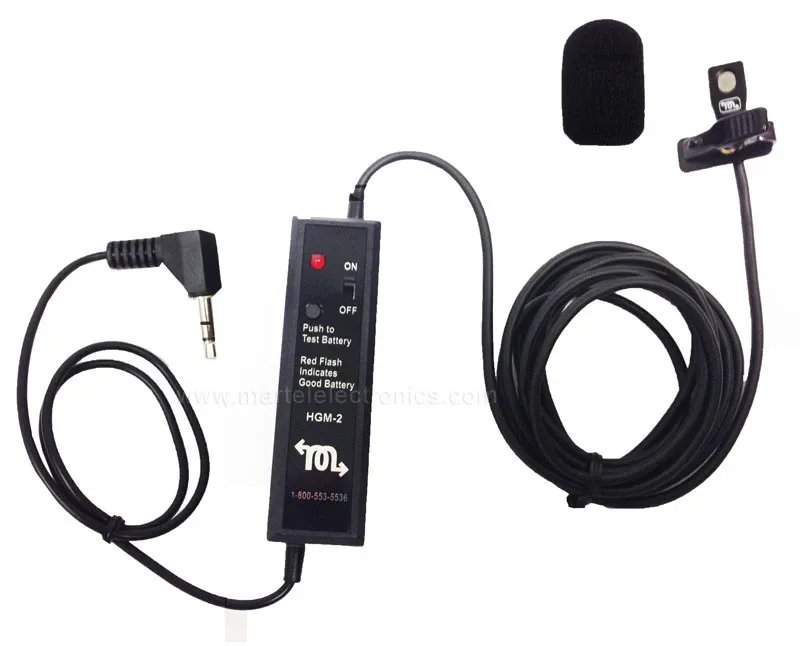
The battery tester on the 3.5 mm Martel HGM-2 gives the reporter a battery check at the microphone. To find out whether the first witness will be audible in the saved job, speak into the assembled system and play back a recording. The two checks take place at different ends of the cable. A battery can pass its check on the desk while the writer records through an internal microphone beside the reporter’s hands. This guide follows SKU 1773 from the equipment bag to a saved, two-voice practice exchange. All names, exhibits and exchanges in the exercises are invented for rehearsal.
Identify the battery-powered microphone before the job starts
Set the microphone on a clear surface and find the model on the packaging, order record or instructions. Martel lists the 3.5 mm HGM-2 with a built-in battery tester as SKU 1773. That identification matters if someone else packed the kit. A small plug-in writer microphone can also fit in the pouch, and the HGM-2 name appears on a separate XLR product. For this check, match the actual item, its battery module and the cable going to the receiving device. If the parts belong to different kits, sort them out before interpreting a light or moving a switch.
Use the directions supplied for the unit in your hand to operate its tester and interpret the indication. The seller’s listing establishes that SKU 1773 has a battery tester. It gives you no reason to adopt the light colors, switch positions, battery sizes or run times from an unrelated microphone. If the instructions in the bag are incomplete, use the model and a photograph of the labeled battery module when asking Martel for the correct directions. You can still identify the receiving port and prepare a practice job while that question is being resolved.
A shared kit benefits from a short note kept with the microphone. Record the item number, the machine on which you have actually used it and where the instructions are kept. Include the position of the mic in the bag if several similar black cables share the same compartment. On a hurried morning, it takes less time to match a known microphone to its written description than to investigate an apparent battery failure on a different piece of equipment.
Read the result as a battery observation
A useful note reads, “HGM-2 battery indication checked before the first setup.” Add what the indication meant according to the unit’s instructions. The note does not establish that the recorder was running or that either counsel table could be heard. Those events had not happened when you operated the tester. This distinction is practical when a helper performs the first part of the check while the reporter configures the writer. The reporter needs to know exactly which action is complete before deciding which one to do next.
If the display or other indication meets the manufacturer’s replacement instruction, address the battery first, using the specified replacement and orientation. Repeat the local check. Avoid assigning the failed indication to the writer, which was outside the test. If a replacement of the correct type gives the same uncertain result, identify the battery source and the model for support. Repeatedly exchanging unmarked spare batteries makes the observation less useful because you may no longer know which cell produced which result.
A satisfactory check is a present observation. The practical question about duration is how the microphone will be managed over this particular assignment. Consider when it will be powered, where a spare is kept, when a break allows another check and what separate audio path is available. Someone moving between short assignments might turn the microphone off while repacking it. Someone staying in one room might leave it in its working arrangement through a recess. Use your equipment instructions to make that choice and verify the working state when the microphone returns to use.
Give the receiving device a distinct job to save
Follow the microphone cable to the device where you want the first witness’s words to be available afterward. At a steno writer, find the external microphone input in the writer manual. Look for its external microphone selection, job audio option and recording format. At a portable recorder, identify its microphone input, appropriate source setting and start and stop controls. If more than one device is on the table, point to the one that will answer the playback question. A live signal at one desk device can coexist with no recording on another.
Choose a practice job name whose purpose will be clear later. “Juniper microphone setup” is easier to distinguish from the day’s earlier demos than several files all called “test.” Note the name, time and machine in a way you can retrieve without searching through the client job. Start the practice recording only under the conditions allowed for that setting. A fictional question read by a consenting helper makes it possible to test before testimony without copying confidential material into an equipment log.
Make the first sentence identify the recording as well as the speaker. For example, “Practice only, near position, Juniper folder.” The sentence lets you recognize both the file you opened and the location you meant to test. The first witness’s normal seat supplies the second phrase. If there is no helper, record one position at a time and say which position you are occupying. Do the latter as a quiet rehearsal, with the host device left where it will actually be used.
Use a near question and a witness answer that changes the number
In a mock proceeding, put a small card by the questioning seat that says, “Did the parcel arrive at gate sixteen?” At the witness seat put a second card reading, “It arrived at gate sixty, beside the green shelter.” Ask the two participants to use a conversational level. Have the witness direct the answer toward the person who asked it. Write the question and the answer as you normally would. If this is a recorder-only check, make a note of which participant speaks first. Record the whole pause between the two lines.
Close the take through the normal controls. Play it to someone who has not read the two cards, or put the cards face down before listening yourself. Write the numbers as heard and identify which seat supplied the color. “Both people were audible” gives less information than “the question sounded like sixteen and the correction sounded like sixty.” A listener can hear a voice as a continuous sound and still lose the part distinguishing those numbers. The exercise puts that difference in a form you can use to compare arrangements.
Suppose the question comes through clearly but the answer loses its second syllable. The successful battery check remains part of the record. It gives you a reason to examine where the microphone sits before assuming every symptom requires a fresh battery. Keep the receiver and its recording settings stable while you try a position nearer the ordinary witness answer. Ask for the same words, save a new take with a different name, and compare the two corrections at a comfortable, similar playback volume.
Find out whether the external microphone supplied the words
A writer with an internal microphone can sometimes save understandable speech when the intended external setup is wrong. Merely hearing the near question therefore gives a misleadingly easy pass. During practice, separate the writer from the external microphone within the practical length of the cable. Read one short phrase from beside the external unit while the writer stays in its normal position, then another beside the writer. Do not move both together. Note which position sounds close and which sounds distant in the finished job.
A clearer comparison changes the intended input according to the host’s instructions in a separate practice take. Start a new job if the writer applies audio settings when a job opens. Reproduce the positions and words. You are listening for a change that follows the source selection, not looking for complete silence from the farther speaker. Sound travels through the room to both positions. A closer recording of the second phrase when the internal microphone is deliberately selected can help you understand the difference in your own desk arrangement.
Avoid striking the microphone or knocking the writer for an identification test. A mechanical thump can travel through the table or cable and reach a different pickup point. A spoken comparison is easier to interpret and closer to the purpose of the equipment. When you are done, return the writer to the intended job setting and repeat the witness answer once. The last saved take should represent the arrangement you plan to bring into the proceeding, including the microphone’s actual position and power state.
Distinguish a missing recording from a difficult one
If no practice file exists, go to the device that was supposed to save it. Check the job or file list, the recording option and whether recording actually started. If a file exists and has duration but you cannot hear it, play a different known audible practice file through the same listening setup. This tests whether the current playback device can produce sound. A good battery indication on the tabletop microphone has little bearing on a pair of headphones connected to the wrong output during review.
A file containing room speech but favoring the writer’s seat calls for a different question. Ask which microphone supplied it and where it was positioned relative to the witness. A file that changes abruptly halfway through a sentence calls for a time-based comparison. Note what changed at that point, such as moving a binder, shifting the battery module or starting a new take. Changing several connectors and batteries before writing down the symptom can remove the chance to reproduce it under combined conditions.
During a simulation you can assign the review to a second person. Give them the practice file name without explaining what you expect to hear. Ask for the first complete witness phrase and the last one. Their answer can separate a playback problem at one station from a gap in the saved take. Keep the exercise within the approved handling arrangements for that equipment. The benefit comes from another pair of ears hearing an invented sample, which is easy to revisit without involving an actual proceeding.
Place the battery module where you can manage it
A table layout must accommodate the microphone, its battery module, the cable and whatever the reporter uses to write. Place the module where you can identify its working controls without disturbing the microphone’s chosen position. Keep the connection out of the area where exhibit binders open or water is set down. During rehearsal, open the largest folder you expect to handle and turn two pages while a helper reads. This tests the physical arrangement as well as the ability to distinguish speech during ordinary desk activity.
At a shared counsel table there may be no convenient open surface exactly halfway between every speaker. Choose a placement for the speech most at risk of being lost, then verify nearby participants as well. A battery tester is valuable precisely because you can check power at the module before moving through these room decisions. Raising playback volume afterward can make a distant voice louder along with paper noise or room chatter. It cannot move the original microphone closer to the witness.
When the table must be cleared at lunch, decide what stays together. A pouch containing the working microphone and its module plus a short note about the tested receiving port helps preserve the morning’s arrangement. Keep a replacement battery identifiable within its own appropriate packaging. When you set back up, compare the actual microphone position to a simple room sketch and save a fresh practice sentence under the allowed conditions. The table may look unchanged even though the receiving cable returned to a different jack.