What Does the 3.5 mm HGM-2’s 131-Foot Rating Mean From the Reporter’s Seat?
Put the Martel HGM-2’s listed pickup distance in context. Use witness, counsel and back-row speech trials to find the positions that work in your courtroom.
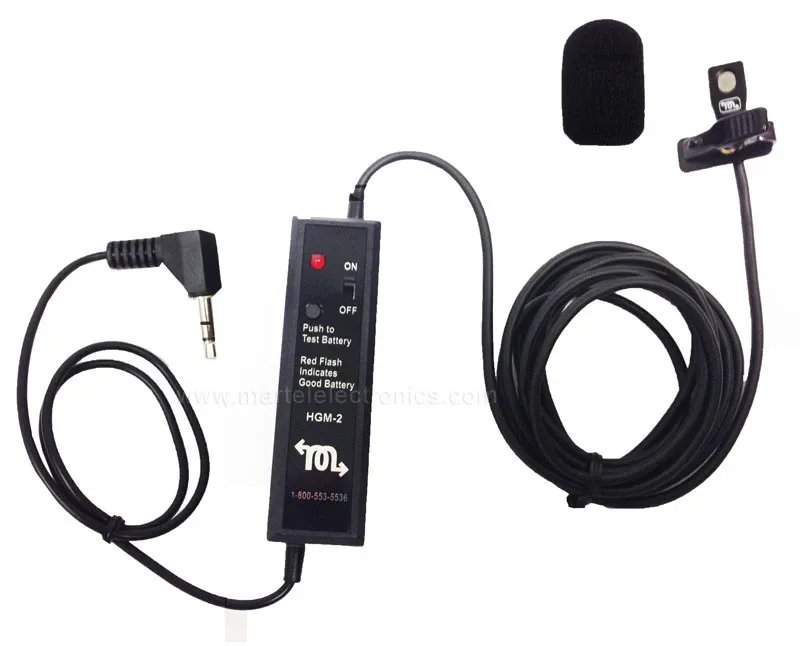
The 131-foot figure belongs to Martel’s 3.5 mm HGM-2 court reporter microphone, SKU 1773. It is the pickup range listed for that model. To decide whether it will serve a particular courtroom, measure the actual path from the least audible required speaker to the place where you are permitted to put the microphone. Then make a harmless practice recording from that position and ask a listener to recover an unfamiliar name, number and correction. That result tells you something the range figure alone cannot. This guide explains how to connect the specification to the work of a reporter seated at a fixed desk, including what to do when the bench sounds strong but a witness or back-row participant sounds distant.
Read the number beside the correct microphone
The standard HGM-2 has a 3.5 mm microphone connection, its own battery and an integral battery tester. Martel lists all-direction pickup and a 131-foot microphone range. It also lists a cable of five and a half feet. The range describes the model’s stated pickup reach. The physical lead helps determine where the microphone can sit relative to the recorder or writer. Match the connector, product name and SKU before using any figure in a purchase comparison.
Martel also lists an XLR HGM-2 and USB court reporter microphones. Similar model lettering can tempt a buyer to move a favorite specification from one page to another. Keep the standard model’s rating attached to its own entry in your notes. If you use an interface, record its name and the input you will use. If you use a writer or portable recorder, confirm a documented compatible microphone input. A large pickup figure is of little practical use when the microphone cannot supply the input your recording equipment expects.
Ask which courtroom voice the rating needs to help you hear
A remark from the bench, an answer from a witness and a response from the gallery present different problems even when the room is small. The judge may face forward and speak through an installed system. A witness may turn toward the examiner and read dates from a paper. A person farther back may speak while still seated and with several people between their mouth and the microphone. Decide which of those positions the assignment calls for and which can be tested through the court’s normal arrangements. A reporter does not gain permission to place a mic by finding an acoustically attractive spot.
Write one task for each required position. For the bench, it might be hearing the difference between two exhibit numbers. For the witness, it might be distinguishing a street name after the speaker lowers their head. For counsel, try a short objection spoken from a desk at an angle to the reporter. In a back-row test, use a spontaneous answer supplied at ordinary conversational level. If someone merely projects a loud count toward the mic, the test answers a much easier question than the one that brought you here.
Distance changes the direct sound before you touch a control
Sound traveling directly from a talker spreads as it moves away. A standard acoustics example uses a small source in a free field, where reflections contribute negligibly. Under those assumptions a doubling of distance gives about a six-decibel reduction in direct sound pressure level. A move from twelve to twenty-four feet represents one doubling, and twelve to forty-eight represents two. These numbers describe an idealized relationship. They are not measured HGM-2 results, and a courtroom with walls and a speaking person does not supply those ideal conditions.
What the example gives the reporter is a reason to test closer placement. Moving a microphone a modest distance toward the witness can change how much direct speech arrives compared with ventilation, a nearby clerk’s keyboard or reflections. Raising recording gain changes the signal coming from the microphone, including much of the sound you would rather leave behind. Try a change in permitted position while holding the recorder gain constant. Then evaluate whether a small gain adjustment helps at that new position. The order matters if your aim is to trace what improved the words.
Identify reflections and competing sounds by what they do to words
A courtroom can sound impressively full when someone says a long vowel. The same room may make the last sound of a surname difficult to identify. Reflections arrive after the direct voice and can overlap following syllables. Steady air noise can cover soft detail, and a brief interruption such as a folder closing can hide one essential word. The American Speech-Language-Hearing Association describes the relationship between direct sound, reflected sound and background noise in its acoustics guidance. Listen for these effects in the courtroom and note where particular syllables become hard to recover.
Make a file containing silence, speech and an ordinary short interruption. During playback, first note whether a steady sound is present before the speaker begins. During speech, listen for blurred endings or an audible tail after a phrase stops. At the interruption, mark whether the listener can still recover the target word. You may discover that moving the microphone away from a fan helps more than moving it several feet along the original line to the bench. You may also find that a reverberant far voice remains unclear even when you can hear it loudly. The improvement you want is recognition of the missing word.
Sketch paths instead of drawing a circle around the reporter
Start your sketch with the fixed reporter position, then add the microphones’ permitted locations. Mark the actual seated or standing places used for testimony. A floor plan can tempt you to draw a circle of 131 feet and declare everything inside covered. Instead draw a separate line from each relevant speaking position toward each candidate mic location. Put a mark where the path encounters the back of a monitor, a raised rail, a document cabinet or rows of occupied seats. Looking along the path at mouth height often reveals something the overhead sketch misses.
Use approximate distances if formal measurements are unavailable. “Witness about two table lengths from mic A, one table length from mic B” can be enough to design the next comparison. If you do measure, distinguish a mouth-to-microphone measurement at the actual elevations from a rough horizontal distance across the floor. Do not confuse the reporter’s chair with the microphone head. A recorder on the reporter’s desk and an HGM-2 positioned several feet away have different relationships to the witness. The microphone position belongs on the sketch as its own mark.
Run a first pass that a listener can score
Use a practice session with permission and invented material. One helper can move between the marked positions while a second person operates the writer or recorder. Give the helper a card with three brief statements, such as “The crate was sent to Harlen Lane.” “Its label ends in sixty-four.” “Please change the blue seal to green.” These are sample prompts. A colleague unfamiliar with them can record the street, the number and the corrected color from playback. Keep the key out of the listener’s sight until they respond.
Begin where the microphone is expected to perform comfortably, then repeat from the more demanding position with a fresh card. Maintain an ordinary speaking effort. Let the speaker face the direction a participant would face when answering counsel. A near-seat pass and a distant-seat miss are both useful. They establish conditions for the next trial. Save the file identifiers and the positions from which each card was spoken. If the distant listener writes “sixty” without the last syllable, note the exact miss. A general impression that the room sounds “a little hollow” rarely tells you which improvement a purchase needs to deliver.
Challenge the witness position without making a witness perform differently
For a witness who reads from an exhibit, test two orientations from the same chair. In one, the helper looks at the person asking a question. In the other, the helper looks down at a page and gives a short answer. Use comparable phrases with new words. Do not ask the helper to compensate for the microphone by projecting louder during the difficult position. A reporter needs to know what the microphone can capture when the witness behaves naturally, especially on short replies that leave few other words as context.
If the candidate head position can move toward the witness within the supported cable route and the room’s placement rules, make another recording with the head moved and the same recorder gain. Ask the listener to recover a new name and number. Now test a nearby stronger voice as well. A microphone placed very favorably for a quiet answer must also cope with an emphatic question from someone closer to it. The layout earns its place when the recorded exchange remains useful through both parts, including the transition back to the witness after counsel finishes.
Make the back row its own experiment
Use an actual back-row seat only when the room and intended work allow it. Seat the helper facing the customary direction, with any permitted intervening seating occupied as it normally would be in a rehearsal. A person standing in an empty aisle and addressing the reporter directly presents a much clearer path than someone seated behind other people. Include both a short acknowledgment and a longer factual answer. The first tests whether one or two quiet words survive. The second tests whether listeners can follow a sentence without supplying what they expect from context.
If there is a building loudspeaker system, identify whether the test uses it and where its sound comes from. A microphone near the reporter might receive much of its signal from a nearby loudspeaker instead of directly from the back row. That can be useful for a voice actually routed through that system. It says little about a different unamplified voice at the next seat. Record these as different conditions. If a potential back-row speaker has no access to the public system, ask the responsible personnel about approved alternatives before relying on a clear rehearsal with an amplified speaker.
Use a small observation sheet with a definite decision
A useful worksheet has one line per speaking task. Include the candidate mic position, the voice location and orientation, the condition of the room, the unfamiliar detail the listener was meant to recover, and what the listener actually wrote. Indicate whether the position is suitable for this task, needs another trial with one change, or calls for a different pickup position. Keep the original first answer. If you tell the reviewer the word and then hear “yes, I can hear it now,” you have learned about recognition after prompting, a different test from recovering an unknown detail.
Consider an invented comparison. On the first candidate, the listener recovers a bench exhibit number and counsel’s correction. The witness’s street name is uncertain and the back-row response is inaudible. On a closer permitted candidate, the street name is understood while the bench and counsel remain clear, yet the back-row answer is still uncertain. The second location has demonstrated a specific improvement in this imagined example. It has not resolved the back row. The next action is to evaluate that position separately or discuss another pickup point. Averaging all four into a single attractive percentage could conceal the only seat the job most needs.