TIME IS RUNNING OUT FOR 2026 TAX WRITE-OFFS

Which Microphones Should a Deposition Agency Keep for Reporters Who Bring Different Writers?

Choose Martel microphones for a deposition agency by writer input, laptop recording route and room demand. Includes booking questions and a repeatable kit test.
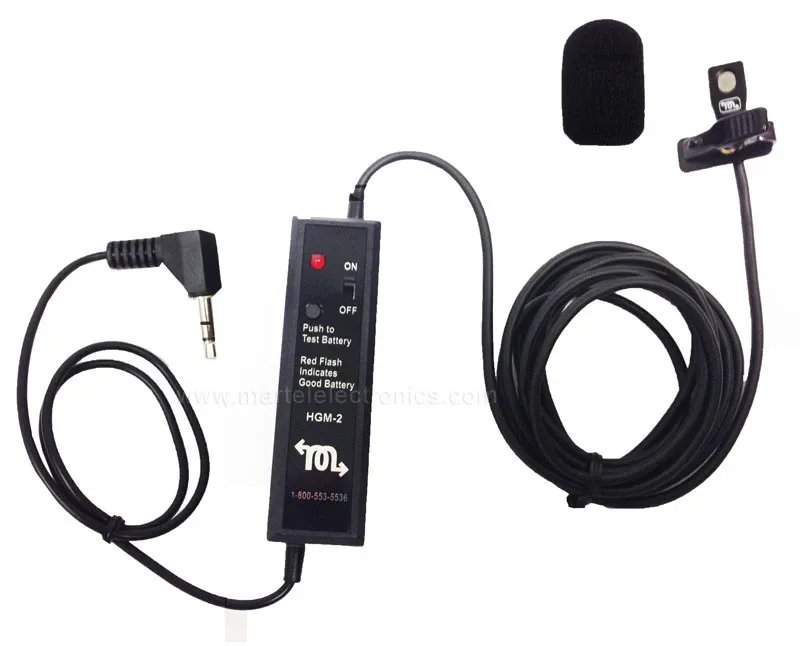
3.5 mm HGM-2 microphone, battery module, plug and windscreen
HGM-2 Court Reporter Microphone with Built-in Battery Tester. View Martel’s product details for SKU 1773.

Stock the microphone for the device that will record, then count how many reporters need that kind of connection at the same time. Two visiting reporters can carry similar-looking steno writers and handle audio differently. One records through a compatible microphone input on the writer. The other writes on the machine but saves synchronized audio in CAT software on a Windows 11 laptop. A third may run a separate recorder beside their own equipment. Asking for the writer's name is a good start. Asking “Which device do you want our room microphone to feed?” is what lets the agency reserve the right kit.

For many agencies the first comparison is the Martel HGM-2 with a 3.5 mm connection and its own battery, the HGM-USB for a laptop recording path, and the battery-free Audio Grabber for supported equipment. The best purchasing list depends on actual bookings, simultaneous room use, and an acceptance test the visiting reporter can perform. The following examples use invented rooms, schedules, and practice passages so you can adapt the decisions to your own office.

Give scheduling one question it can act on

A scheduler does not need to become a sound engineer to handle a reservation. Begin with a choice in the reporter's own terms. “Will your laptop, your steno writer, or a separate recorder save the audio from our microphone?” If the answer is “the writer and the laptop,” ask whether the reporter expects two independent recordings, audio saved on one device for use with the other, or a particular connection they have already tested. Put the answer in the booking notes in the reporter's words.

Next request the exact model of each device that will receive the agency microphone. Record a writer's full name where similar generations exist. For a laptop, ask about the physical port or supported adapter the reporter plans to use and the recording application they intend to test. For a separate recorder, obtain the exact input type and any relevant microphone power requirements from its instructions. “Standard mic jack” is a reason to check details. It is too ambiguous to release a kit against.

Finish the reservation by identifying what the agency will supply and what the reporter brings. If the visiting reporter has their own verified writer mic and wants a room pickup only for a laptop, reserve the laptop kit and write that down. If they bring the main mic and want an agency spare, identify which destination the spare must fit. A spare in the wrong bag is an accounting success and a failed booking. The scheduler's note should tell the room coordinator which case to set out.

Look at the actual workload before buying in quantities

Take a representative series of recent bookings from your own agency and categorize the requests you can verify. Use the kinds of audio destinations, the room, and occupied times. Equipment planning rarely needs client identities or substantive deposition details. A room used by eight different visiting reporters over a week might require only one room microphone at any one time. Three reporters in adjoining rooms at nine in the morning can create a bigger stock requirement than a full but staggered day.

Keep an “unknown” column while working through the records. A note that says “stenographer confirmed” does not establish that the writer saved audio. If you count all those visits as writer-mic demand, you may overbuy analog equipment and still lack a USB mic on a busy morning. Ask the booking team to capture the missing detail going forward. Use the verified subset to justify an initial purchase and reassess after a sample of new bookings.

Also distinguish routine requests from rare arrangements that need individual preparation. A regular lunchtime reporter with a known laptop may justify a ready-to-use desk kit. An occasional visiting digital reporter requiring independent microphone tracks deserves an exact consultation about the recorder and deliverable. A pattern of these bookings could justify a dedicated system. One entry in a spreadsheet with the words “four speakers” cannot show that independent tracks were requested or that a particular package will produce them.

Build a routing table with an honest unknown column

A useful agency table begins with the recording destination and ends with evidence someone can see or hear. A staff member should be able to look up “reporter takes audio into laptop” and find a candidate microphone, the connection to check, and the normal test. Put version, model, and any required accessory alongside the result. If a combination has only been established on one writer model, retain that scope. New arrivals benefit more from a narrowly accurate table than a universal claim quickly disproved at the desk.

Avoid implying that two people with the same machine necessarily want the same kit. One reporting professional may route microphone audio into their computer at every deposition. Another with the same writer may prefer its supported recording input. The path belongs to the booking as well as the hardware. Add the reporter's own preferred and proven arrangement where they choose to share it, and give them an opportunity to update their request when equipment changes.

What the reporter saysCandidate to evaluateWhat the office still needs to verify
My writer saves its own audioHGM-2 for a compatible mic input, or a supported writer-powered optionExact writer model, port, power and a reopened practice job
My CAT software records on the laptopHGM-USB for a compatible USB laptop inputUsable port, selected input and the saved software job
My separate recorder needs a room micHGM-2 for a compatible analog inputExact recorder specification, connection and selected source
I want two pickup points on my writerAudio Grabber on supported Luminex or NexGen setupsCompatibility, routed cables and both speaking positions in the test
I need separately selectable channelsReview a suitable multichannel system against the briefCapability of the whole path and actual playback of each required position

Give the battery-powered HGM-2 a clear job in the room

The standard HGM-2, SKU 1773, has a 3.5 mm microphone connection, runs from its own battery, and includes a battery tester. Martel describes it for compatible steno writer and digital recorder workflows. The separate XLR HGM-2 is another product. Put the connector type on the storage label so a scheduler who hears only the family name can distinguish the stock. Examine the destination's documented input before including the standard model in the reservation.

Decide which staff member checks the microphone's condition and who verifies the recording arrangement. A battery indication before dispatch can reveal an issue with the microphone's power. It does not verify the complete signal at a particular steno writer. Let the visiting reporter complete a practice job using their customary method and hear material from the actual room position. Record the distinction between the room technician's power check and the reporter's confirmation that the file contains the exercise.

If the office uses the same HGM-2 for both writers and portable recorders, keep separate connection notes for each known model. A mic jack and a line input can expect different signals. A headphone output may look like a small round socket too. A tray label reading “3.5 mm” alone invites guesswork under time pressure. Make the destination label precise enough that a new employee can put the right kit on the desk without experimenting with personal equipment.

Give the HGM-USB its own laptop workflow

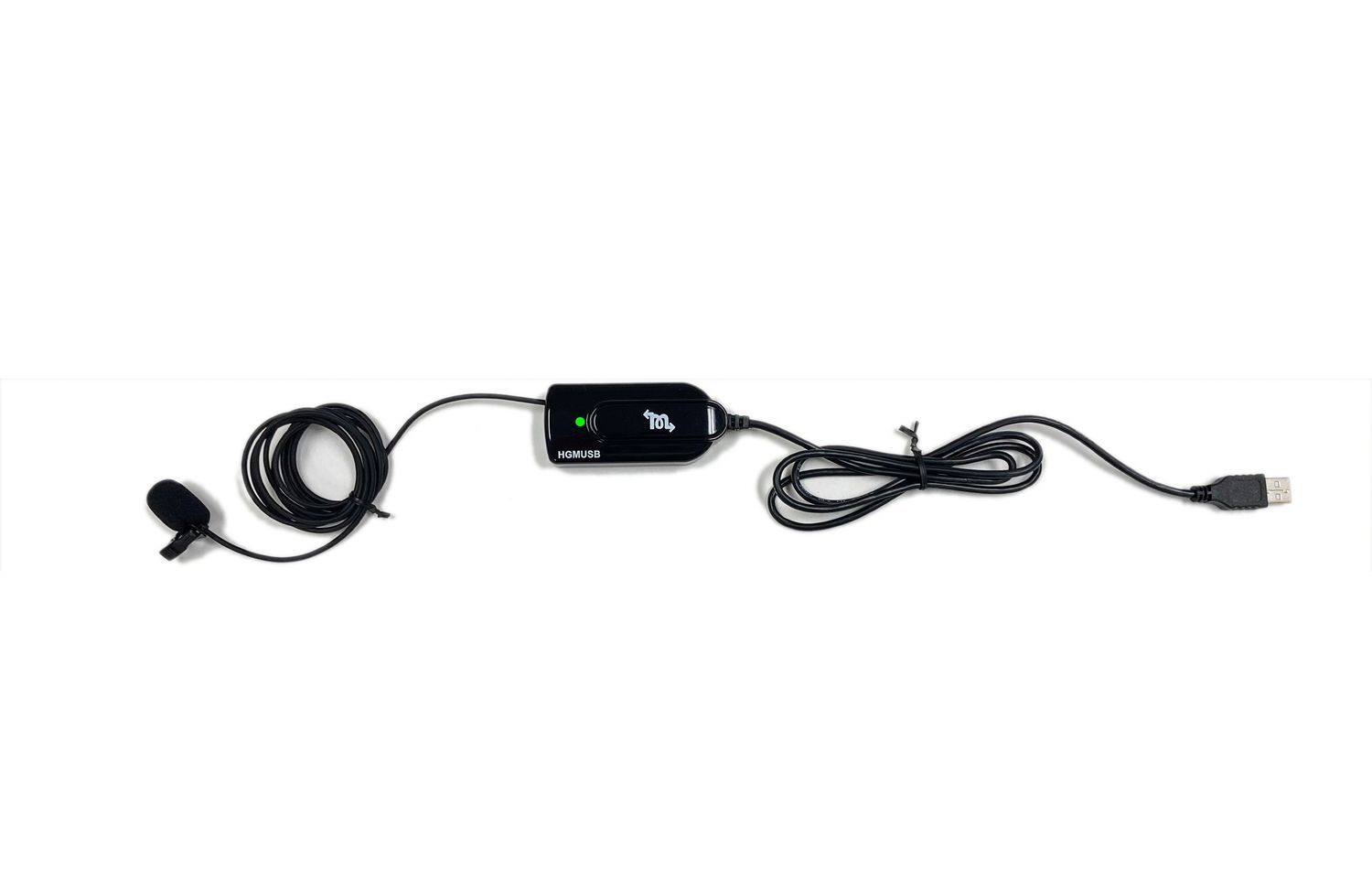
Martel's Elite HGM-USB, SKU 1277, is intended for USB recording on a compatible computer. For visiting reporters, the relevant test is the application that will actually save the work. Identify the microphone in Windows 11, then have the reporter select and test it in their recording workflow. Watching a system meter is a useful intermediate check. Opening the practice job and hearing the attorney and witness cues gives the reporter evidence about the complete route they will depend on.

Examine the physical workstation as well. An available laptop port can become difficult to reach once the writer, display adapter, power supply, and other accessories are connected. Bring the supported equipment list to the room while the desk is being arranged. If the reporter needs an adapter or hub, identify the exact one and verify the full arrangement before treating it as standard agency stock. A new collection of untested adapters can create more uncertainty than it resolves.

Plan where the USB microphone head will sit with respect to counsel and the witness. The reporter may need their laptop close to the writer while the useful pickup point is farther along the table. Rehearse the cable path without asking participants to reach over the laptop or move a mic every time a document changes hands. If the setup will be returned and reassembled between appointments, document the chosen path in a plain room drawing that the next porter or coordinator can reproduce.

Reserve the Audio Grabber for verified supported equipment

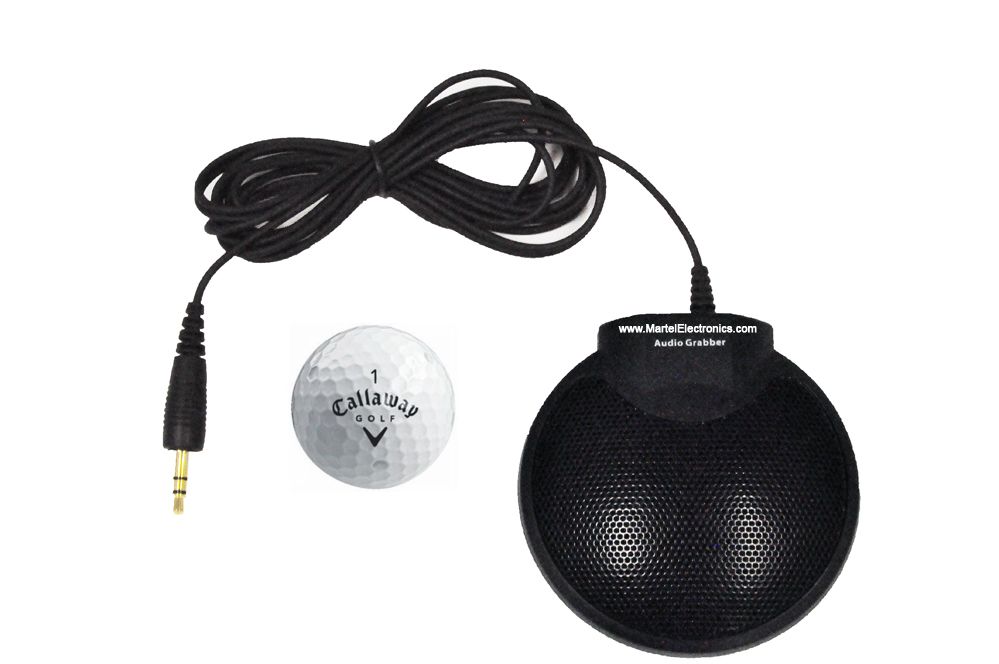
Martel lists the battery-free Audio Grabber court reporter microphone, SKU 310, for compatible Luminex and NexGen writers and describes supported microphones connecting in a chain. The receiving setup must provide the appropriate power. Read the product information for the actual writer or receiver before reserving it. A notebook computer with a similarly sized socket is not automatically a substitute for the supported input. The office can keep a clearly marked writer-specific accessory kit rather than asking each visitor to sort loose parts.

When a visiting reporter wants an additional speaking position, ask which mic serves which seat. Place the candidate second pickup where the reporter actually needs help, then ask for one harmless cue near the first mic and a different cue near the second. A single clear voice at the center of the room may reach the first pickup even if a later connection in the chain is loose. Distinct positions make the test meaningful to the person who will rely on it.

Record the verified configuration as a group. Include the writer model, number of mics in this room, connecting arrangement, and audio review used. A product's published capacity and the number the agency has actually rehearsed describe different things. If the next booking calls for a longer chain or different destination, leave time to verify the new configuration. Count how many complete sets can be prepared on a busy day rather than simply counting the number of microphone heads in the cabinet.
Use a booking overlap example to size the cabinet

Imagine an agency with three rooms called Oak, Elm, and Bay. On a practice Monday, Oak has a writer-input booking from nine until twelve. Elm has a second writer-input job from ten until one. Bay has a USB laptop booking from nine-thirty until eleven-thirty. From ten until eleven-thirty, two writer-input kits and one USB kit are committed simultaneously. A total of three microphones may satisfy the head count and still fail if two of them are USB models.

Now add a fourth booking in Oak at twelve-fifteen requiring a laptop mic. Bay's USB kit is nominally free at eleven-thirty. The schedule gives forty-five minutes for return, inspection, transport, reconnection, and a reporter's practice recording. Whether that is enough depends on how your agency actually turns a room and whether the first deposition runs over. Mark that as a possible equipment conflict for dispatch. A spreadsheet gap is potential availability until staff have the complete kit back and ready.

Make a separate decision about spares. If a second battery-powered mic is reserved as a backup for the first writer, it cannot simultaneously fill Elm's primary reservation. A spare stored centrally may serve several rooms when the agency has a documented release process and the destinations are compatible. Determine the consequence of one failure before reserving a spare across multiple rooms. The answer can vary with the distance between offices and with how rapidly another supported mic can reach the affected reporter.

Organize the case around a job someone can complete

For each kit, include the approved microphone, required supplied connections, a short identification card, and a place to report missing parts. Keep accessories grouped by the path they have actually been tested with. Color labels can help staff sort cases at a glance, but include written names and model identifiers as well. A reporter who has never seen the agency's color scheme should still be able to tell which end of the kit goes where.

Write only the facts that help at the desk. An example label could read, “Room USB microphone. Use with the reporter's approved laptop recording route. Reporter selects the intended input and reviews a practice file.” A writer kit label should identify the particular compatible models or state that the receiving model must be checked. For a battery-powered unit, identify who checks the battery and where an appropriate replacement is stored. Refer staff to the current model instructions for the actual check.

A compartment that holds an unapproved “just in case” splitter can lead someone to improvise a two-destination path that has never been tested. If the service includes simultaneous recording paths, document the exact supported combination in its own kit. If the agency supplies a single microphone for one destination, keep the contents aligned with that promise. Track accessories closely because a missing connection can take an otherwise functioning mic out of service for the next booking.

Run an acceptance exercise the reporter can repeat

Give the visiting reporter time to place the writer, laptop, and ordinary deposition materials before the sound check. A bare table at setup rarely looks like the occupied table when counsel arrives. Use invented speech with one cue near the witness position and a different one at the attorney's seat. For example, the witness reads “the parcel has three green squares,” and the attorney asks “which square carries the letter J?” Have the reporter identify both details in the reopened practice job.

Repeat a few words from the far position with the reporter's own voice at a normal level near the desk. The relative results may help reveal an unintended built-in microphone. Verify the selected input using the reporter's device instructions, especially when the desk voice is strong but the far one has disappeared. A difficult far seat can also reflect placement or background noise. Use more than one observation before deciding that a particular microphone is defective.

Record the result in terms the agency can act on. “HGM-USB, Oak, visitor's Windows 11 laptop, USB input selected; both cues present in practice job” identifies a working arrangement. A note that the visiting reporter used their own equipment can also be useful when planning demand. Store such details through the office's approved process without preserving hearing content or personal device credentials. The agency needs compatibility evidence and equipment availability to prepare the next room.

Handle the booking where nobody can name the writer

Treat an unknown input as an open planning item rather than a request to connect anything that fits. Ask the reporter to read the model identification, describe where their audio normally saves, or provide a clear model or port picture if they choose and office policy allows. A model name is usually more informative than the color or shape of a hole. Verify with the model instructions or the equipment supplier before choosing a microphone.

If the reporter cannot provide details until arrival, reserve a sufficient setup window and agree what the agency can offer. It might have one verified laptop route available if the reporter brings a compatible computer and chooses that workflow. The reporter might instead bring their usual known writer mic. If there is no verified compatible route, the scheduler should surface the uncertainty before the visit. That gives the agency and reporter time to decide how to fulfill the assignment rather than discovering the limitation when testimony begins.

Do not turn an office practice computer into an assumed substitute for a visitor's reporting system. They may rely on a particular licensed application, job configuration, or approved handling practice. A room kit can demonstrate its USB input using the office workstation and still require the reporter's own acceptance test. Document which computer was used. The term “agency tested” should have a clear meaning anyone at dispatch can explain.

Return equipment in a state the next room can trust

At collection, ask the reporter whether all expected positions could be heard and whether any connection or control required attention. A good return note identifies the point in the path and the symptom. “Far-side second Audio Grabber intermittent during the practice check” is more actionable than “bad mic.” Put equipment with an unresolved repeatable symptom aside from the ready shelf until the agency can test the relevant combination using nonconfidential practice material.

Inspect the pieces the next room depends on. Compare the contents with the kit card, examine the connectors and cables for visible damage, and follow the maker's instructions for care and storage. Use designated staff and the approved procedure when a recorder or other storage device is involved. A microphone-only return need not include access to the reporter's computer or audio. Keep the return record focused on what staff can actually verify.

Reassemble a returned kit using its own accessories rather than the convenient cables already on the bench. A microphone might pass with the bench lead while the lead inside its case is the source of the interruption. Mark the date, device combination, and result when you place the kit back in service. A later booking can then inherit a verified set instead of a single individually functional part surrounded by untested accessories.

Build an order a purchasing manager can defend

Start the order with the uncovered booking requirement. For example, “We need two simultaneously available writer-input routes for these verified models and a USB route for the laptop room.” Name the candidate models, connectors, any power requirements, and the proposed acceptance exercise. Link to the current product listing so the buyer can confirm the configuration being ordered. Use current published prices and package contents at purchase time rather than embedding a permanent price in the office's compatibility table.

If the agency is considering matched kits for several branches, test a complete representative set in the type of room where it will be used. A small office with one witness table and a suite built around a long conference table present different pickup questions. Cross-branch standardization is valuable when a case label, setup exercise, and return process travel together. Buying identical microphones without a common way to verify them gives less operational consistency than the invoice suggests.

Set a review point based on actual use. Which combinations were repeatedly requested? Which kit often stayed on the shelf because it required an uncommon input? Which missing accessory caused the greatest delay? A new writer model, a changed laptop port arrangement, or more simultaneous hybrid bookings may justify an additional route. Use the answers to update the cabinet one proven configuration at a time while keeping customer-facing recommendations accurate.

Give a hybrid booking two distinct assignments

When the office supplies the computer running the meeting and the visiting reporter supplies the writer or recording laptop, put two lines on the booking. One names the equipment through which off-site counsel hears people seated in the room. The other names the source the reporter will use for authorized reference audio. A microphone plugged into the room computer is already assigned a job. Connecting the same item to the visitor's laptop may remove it from that first job unless the complete supported system provides another route.

Ask for a short mock exchange in both directions. A person across the table says an invented street name; the remote participant reads back the name and supplies a different number. Confirm what the remote participant heard, what the people in the suite heard, and what the reporter can recover in the saved practice job. Write the three observations on separate lines. A favorable result on one line can coexist with a missing voice on another.

The reservation might call for an approved meeting system and a separate room mic for the reporter, an approved combined feed, or the reporter's own established arrangement. Choose among those after identifying the equipment on both desks. If a hybrid kit is repeatedly reserved for this purpose, give it its own diagram showing the computer hosting the call, the device receiving the reporter's audio, and who confirms the remote path. This prevents a coordinator from dismantling a successful meeting setup when trying to help the next visiting writer.

31 questions and answers

1. What is the single most useful question to put on a deposition booking form?

Ask which device will save the audio supplied by the agency's microphone. Allow the reporter to identify a steno writer, a laptop application, a separate recorder, or a more specific arrangement. Follow that answer with a model request. A booking form that captures only “court reporter attending” cannot distinguish a writer-input job from a laptop-input job, even if both reporters bring equivalent writing machines.

2. Should every agency keep a USB mic in each deposition room?

That depends on concurrent demand and the ability to move and verify a complete kit between rooms. A permanent USB setup can make sense in a room regularly used for compatible laptop recording. If most visitors record into writers, placing USB mics everywhere may leave the frequently requested path uncovered. Look at overlapping reservations and the destinations actually requested before assigning a fixed kit to each room.

3. Why would someone bring a steno machine but request the agency’s USB microphone?

The writer can handle the writing while the laptop's CAT application receives and saves the audio. The reporter may prefer that known arrangement for their work. Verify the laptop port, intended application input, and actual practice job rather than assigning equipment on the visual presence of the writer. The booking is for the reporter's recording route, even when a different device is central to their writing.

4. What facts distinguish Martel’s HGM-2 from its HGM-USB in an agency cabinet?

For the standard HGM-2 considered here, identify SKU 1773, the 3.5 mm microphone connection, and the microphone's battery. For the HGM-USB, identify SKU 1277 and its computer USB recording path. Store those details on the case and order record. Make sure the visiting reporter's intended receiver supports the chosen arrangement. Similar model names can obscure a consequential difference at the input.

5. Is the smallest round socket on a visitor’s laptop automatically a microphone input?

Read the laptop specifications and the labels for the particular machine. Small audio sockets can have different functions and contact arrangements. A connector that seats physically may still be unsuitable for the chosen microphone. An identified USB route can be simpler for a supported laptop workflow, but the reporter still needs to test the recording application. The office should avoid promising analog compatibility from appearance alone.

6. Can the agency use an Audio Grabber with every steno writer?

The Martel product page identifies supported Luminex and NexGen writer arrangements. Learn the exact visitor's model and consult the applicable compatibility information, including power supplied by the receiving equipment. If another model is proposed, verify it individually. A positive result on an office demonstration writer is a useful reference for that combination. It should not be entered as proof for an entire class of older or different machines.

7. Is it better to keep a dedicated spare battery-powered mic or just carry spare batteries?

They address different problems. An appropriate spare battery can restore a compatible unit when its battery needs replacement under the maker's instructions. It cannot replace a damaged connector or a missing mic that has gone to another room. Decide what failure the agency intends to cover, how quickly staff can respond, and whether the potential spare is genuinely compatible with the booked destination.

8. How should dispatch count the time between two reservations?

Include the period when the kit is being returned, checked, transported, and tested by the next reporter. A kit promised to Oak until noon cannot be considered ready for Bay at noon simply because its booking ends then. Include a realistic allowance derived from local experience. Where depositions regularly run over, record which overlapping request would lose its equipment if the turnaround fails.

9. Does an agency need a separate mic for each speaker in a deposition?

Establish what must be recorded and how the speakers sit. One suitable pickup may serve a small group in a favorable room. More than one position can help when an attorney or witness is distant or obstructed. If the requirement is to hear each position independently on review, evaluate the entire multichannel recording and playback path. Buying one additional microphone alone cannot establish that capability.

10. Where should I store notes about a reporter’s preferred setup?

Use the agency's authorized booking or equipment system and retain only the information needed to support the visit. Useful entries include the recording destination, exact model, preferred agency kit, and whether the combination was demonstrated. Ask the reporter to confirm changes at the next booking. Leave client testimony, personal login details, and unnecessary identifying information outside the equipment record.

11. What if the reporter plans to use both their own microphone and ours?

Clarify the role of each. They may want the agency mic for a separate backup destination, an additional pickup supported by a particular system, or a compatible spare. Identify the receiving input for each path and establish whether simultaneous operation is required. Distinct reservation lines let dispatch count the pieces correctly and prevent the second mic from being promised to another reporter that morning.

12. How can a scheduler distinguish a cable issue from a microphone problem?

A scheduler needs to capture the symptom well enough for the designated technician. Record which kit, destination, and position were involved and whether the issue appeared in live monitoring, saved audio, or both. During a later practice test, the technician can compare permitted known-working components one change at a time. An incomplete description should remain a reported symptom until the office has evidence for a diagnosis.

13. Is an existing room speakerphone a reasonable substitute for a confirmed kit?

Determine what audio output or recording path the speakerphone actually supplies and whether the reporter can receive it through a supported connection. A working conference call demonstrates a communication function. It says little about the recorded job unless the reporter tests that specific destination. If a speakerphone is part of a hybrid booking, rehearse both the local witness and remote counsel in the saved practice file.

14. What should the agency photograph for an equipment identification card?

Use an accurate picture of the exact stocked model, its connector, and its usual supplied connections. Frame the electronics clearly and label the product and SKU in text. Keep private case material and personal computer screens out of the picture. A close-up tells someone what the part looks like; the accompanying route and power notes tell them whether it belongs with the booked device.

15. Can we rely on the same USB hub that worked for last week’s visitor?

Record the earlier successful combination, including the particular laptop, port, hub, and other connected equipment. A new computer may have a different port arrangement or audio selection. Try the supported setup intended for today's visit and reopen the practice job. If adding the hub is the only changed variable, a comparison with a direct supported connection can help identify what still needs attention.

16. What if the room is reserved before the reporter has been assigned?

Hold a room and mark the microphone route as pending. If the agency regularly receives predictable requests, it can reserve tentative stock while keeping that status visible. Set a point when the report of the assigned professional updates the reservation. Neither a tentative USB kit nor an unverified analog kit should be listed as a confirmed compatible route before the reporter identifies the destination.

17. Should we buy a specific writer microphone kit when a general kit already works?

Look at frequency, setup time, and the verified features the visiting reporters actually need. A known model-specific kit can simplify a repeated supported configuration. A flexible compatible analog mic might better serve a mixed calendar. Compare each candidate using the same practice scenario and receiving writer. Make a purchase because it improves a documented booking pattern or requirement rather than because another box has a similar name.

18. How can one coordinator verify five rooms without handling the reporters’ private jobs?

Separate the agency check from the reporter's check. The coordinator can inventory each kit, verify its own authorized demonstration arrangement, and mark which cases are ready. The visiting professional can then test a harmless practice job in their own application and confirm the required voices. A concise result reported through the approved process is enough for equipment planning; the agency has no need to collect the reporter's working files.

19. What if staff see activity on the meter before the agency microphone is plugged in?

The application may be listening to another input, such as a built-in microphone or an existing room feed. Identify the selected input through the device and application controls available to the reporter. Connect the intended unit according to its instructions and make two distinct position cues. Review the saved file rather than assuming a moving meter belongs to the item shown on the booking sheet.

20. How should we label an analog microphone that fits a digital recorder and a writer?

Identify the microphone itself with its model and connector, then list each verified destination on a separate reference card. Include any specific connection or setting required for that destination. This avoids presenting the term “analog” as a blanket guarantee. It also helps staff distinguish a recorder's microphone input from another socket that happens to take a plug of the same size.

21. Do we need to buy a long cable if the witness sits at the far end?

Measure a permitted cable route rather than a straight line across the middle of the table. Check the microphone maker's guidance for supported extensions and evaluate the complete arrangement with practice speech. A longer cable may allow better placement, but it does not improve a poorly selected input or create an additional pickup point by itself. Keep the entire tested connection with the case used in that room.

22. How should an agency manage a kit that travels between branches?

Record the exact pieces dispatched, the receiving branch, expected return, and who will verify the kit at each end. A microphone committed to another address is unavailable to the local stockroom even if it appears in the agency's total inventory. Give the receiving office the setup card and a way to report an unresolved fault. A return shipment should contain the same tested accessories unless a substitution is documented.

23. What if a visiting reporter cannot perform a sound check before the start?

Identify what staff could verify in advance and what remains unconfirmed on the reporter's own device. Communicate the limit promptly through the booking process and follow the directions for the assignment. Do not mark the reporter's recording path as tested solely because an employee tested the mic on an office computer. For future reservations, build the required check into the scheduled room preparation window.

24. Can one three-microphone package supply three independent rooms?

Count complete recording paths and the product's intended arrangement. Several heads supplied for one package may depend on the same interface or receiver. A kit designed to distribute pickups within one reporting setup cannot automatically be divided into three separate kits for three writers or laptops. Inspect the inventory and test one complete working route per simultaneous room before making those reservations.

25. Is it worth tracking which agent issued a room kit?

Designate a person or desk role responsible for release so the next coordinator has a reliable place to ask about missing parts or an unexpected conflict. Keep the record proportional to its purpose. The most important entries are which kit went out, its expected destination, when it is due back, and whether it passed return inspection. Avoid turning the equipment log into a record of hearing content.

26. How should the office store an unresolved compatibility question?

Record the exact microphone and receiving model, what the reporter wanted to do, the part still unknown, and the source you need to consult. Distinguish insufficient information from a demonstrated incompatibility. On the next comparable request, staff can follow up using the earlier question instead of making a new guess. Update the record only when a documented specification or actual controlled check answers it.

27. What is an appropriate response when the reporter wants a guaranteed pickup distance?

Give the exact model and the manufacturer's stated specification where relevant, then describe how the agency verifies the seating arrangement in its own room. Distance alone does not establish whether the quietest words remain understandable on the destination recording. Offer to rehearse from the actual difficult seat using permitted practice material. The resulting observation helps the reporter choose a placement before the deposition begins.

28. Can we decide between two models by comparing one employee speaking right beside each mic?

That exercise confirms only a very limited listening position. The harder buying decision usually concerns the witness across the table, counsel facing an exhibit, or a reporter whose device has a particular input. Put the candidate mics into their supported routes and test the difficult positions at realistic speech levels. Have a listener recover specific words from each saved file before favoring one arrangement.

29. What if two different writers share the same model name but have different configurations?

Obtain sufficient model and setup details to identify the relevant recording capability. The reporter's chosen application, accessories, and audio preferences can change which microphone route matters. Limit an earlier compatibility entry to the configuration actually demonstrated. If the difference affects the receiving input or power, review the proper documentation and repeat the practice check instead of treating the two bookings as interchangeable.

30. What should a purchasing manager expect from a successful pilot kit?

Ask for a concrete outcome from a representative booking. The intended visitor can connect through a verified path, save a harmless sample with both speaker positions, identify the recording source, and return a complete kit staff can prepare again. The room team should also know which other destinations remain unverified. That small pilot gives purchasing a more defensible basis for adding another kit or expanding to another room.

31. How often should an agency revise its microphone list?

Review it when an actual change affects bookings, such as a newly common writer, a laptop moving to different ports, a growing need for a second room at peak times, or a discontinued accessory. Periodic inventory review can catch gradual changes as well. Tie each proposed addition or retirement to a real demand, a verified compatibility finding, or a service problem that purchasing can address.

Martel equipment and related guides

HGM-2 Court Reporter Microphone with Built-in Battery Tester · SKU 1773

HGM-USB microphone with its USB interface and connecting cables
Elite Court Reporter HGM-USB Microphone. View Martel’s product details for SKU 1277.

Elite Court Reporter HGM-USB Microphone · SKU 1277

Audio Grabber microphone and 3.5 mm plug beside a golf ball for scale
Audio Grabber Court Reporter Microphone. View Martel’s product details for SKU 310.

Audio Grabber Court Reporter Microphone · SKU 310

This article is for educational purposes only.