Can a Court Reporting Student Practice Readback With a Foot Pedal and an Answer Key?
Practice locating and reading a marked passage from a mock hearing. Use a foot pedal, the student’s steno notes, and an answer key that tests start and stop boundaries.

A court reporting student can use a foot pedal to check a readback exercise, provided the student has a distinct job for the notes and a distinct job for the recording. Write a short fictional hearing first. Have someone request a precise passage. Locate it in your own steno notes and read it aloud. After that attempt, use the pedal to replay the authorized practice audio and compare what you read with an answer key made from the actual recording. Score the location, the start, the words and the stopping point separately. That gives you more to practice than a general impression that you found the right part.
Start with the question the instructor is actually asking
A request to read the question just before the recess is different from a request to repeat a witness's corrected answer. An instructor might also want the entire question and answer, the last complete question following an objection, or one particular earlier reference to an exhibit. Write down the intended boundary in ordinary language. When the request in a mock exercise is genuinely ambiguous, ask for clarification under the instructor's directions. Guessing the intended range teaches a different skill from retrieving a clearly identified passage.
For this activity the student first reads from their own notes. The audio and foot pedal have a later role, helping the student and instructor determine what was spoken and where the first attempt differed. The National Court Reporters Association's education standards discuss readback and analysis of steno outlines. A classroom exercise can support that work without purporting to be an examination or a court procedure. A school, instructor, employer or presiding authority sets the requirements for its own setting. Keep real proceedings and live examinations outside this fictional equipment rehearsal.
Give each participant a one-sentence role. The volunteer acting as counsel asks the prepared questions. A witness supplies the answers and one correction. The student writes the speakers. A scorer keeps the record of what happened in the mock hearing. A student practicing alone can use a permitted pre-recorded exercise and a separate key, ideally one prepared by somebody else. The essential distinction is between finding the requested passage independently and later checking it with the source.
Build a mock hearing that includes tempting wrong answers
Use an imaginary meeting about the labels on four drawers in a map cabinet. The first witness says the upper drawer held a brass ruler. Counsel asks whether the ruler came from drawer four. The witness replies that it came from drawer two, then corrects the color of the felt beneath it from green to gray. A later question mentions the same brass ruler but asks who moved it. The answer is a different person acting after lunch. The repeated object makes a search for ruler useful but insufficient.
Give one volunteer a card identifying the first question after a brief recess. It asks what shape was stamped on the outside of drawer two. The witness answers that it was a narrow crescent. Later counsel repeats the word crescent while asking whether the ruler itself bore a mark. That is a deliberate trap for a listener who latches onto the last familiar word. Keep the tone conversational and the volume suitable for the practice space. The difficulty should come from identifying the passage and its boundaries.
Record one clean version with the consent of the volunteers. Give the fictional file a name distinct from coursework awaiting a grade. Use the spoken version when scoring. If a volunteer inadvertently says silver ruler instead of brass ruler, an answer key copied blindly from the script will penalize accurate reporting. The scorer should verify the final script against playback and keep any actual changes visible on their private key.
Give the answer key enough detail to diagnose an error
Create a row for each request. Put the request itself in the first column. Record the speaker and target turn next. Then add the first words that belong, one decisive detail within the excerpt and the last words that belong. Give the scorer a separate note about anything immediately outside the boundary. For example, an objection after the question might be important for identifying the passage while remaining outside a request limited to the question itself.
The scorer may also record an approximate elapsed position in the practice audio, with the file identifier. The student should not see that position during the first notes-based attempt if locating the passage is part of what you want to measure. A time handed to the student in advance can make a navigation exercise deceptively easy. The private reference helps the scorer find the source quickly when checking the answer afterward.
Define what counts as a pass for a particular exercise. A student who finds the right witness answer but starts with the final words of counsel's question needs boundary practice. A student who finds the right words in the wrong witness's testimony needs identification practice. A student who recovers the words correctly but speaks so softly that the listener cannot follow needs delivery feedback. Keep these outcomes in different columns. An overall check mark removes most of the information an instructor could use for the next lesson.
Make a first pass without the player directing the answer
Arrange the writer and any approved reporting equipment the way the student would normally write a lesson. Confirm the student knows how to return to their own notes using the instructor's permitted method. Read the mock hearing in real time. Keep the foot pedal clear during the writing pass if the purpose of that pass is independent capture. Do not prompt the student each time a passage will later appear on the answer key. In everyday material, the important reference is often apparent only when someone asks for it afterward.
Have the requesting volunteer choose a prepared request without showing the student the written key. Give the student time to identify which part was requested and locate their own outline. Note the point at which the student says they have located the target. Have them read aloud once. The scorer can write just the opening, distinguishing detail and final words heard, plus any obvious speaker substitution. Avoid interrupting midway through the attempt simply to correct a word. You want to learn which boundary the student independently selected.
If the student cannot locate the passage, record that outcome honestly. Move to the next exercise stage and use the permitted practice recording to find where the search went off course. A missing first attempt is a useful observation. It may signal an ambiguous request, poor navigation through the notes, a missing speaker designation or incomplete writing. Repeating the audio until the student remembers the answer can conceal all four possibilities.
Set up the foot pedal for the checking pass
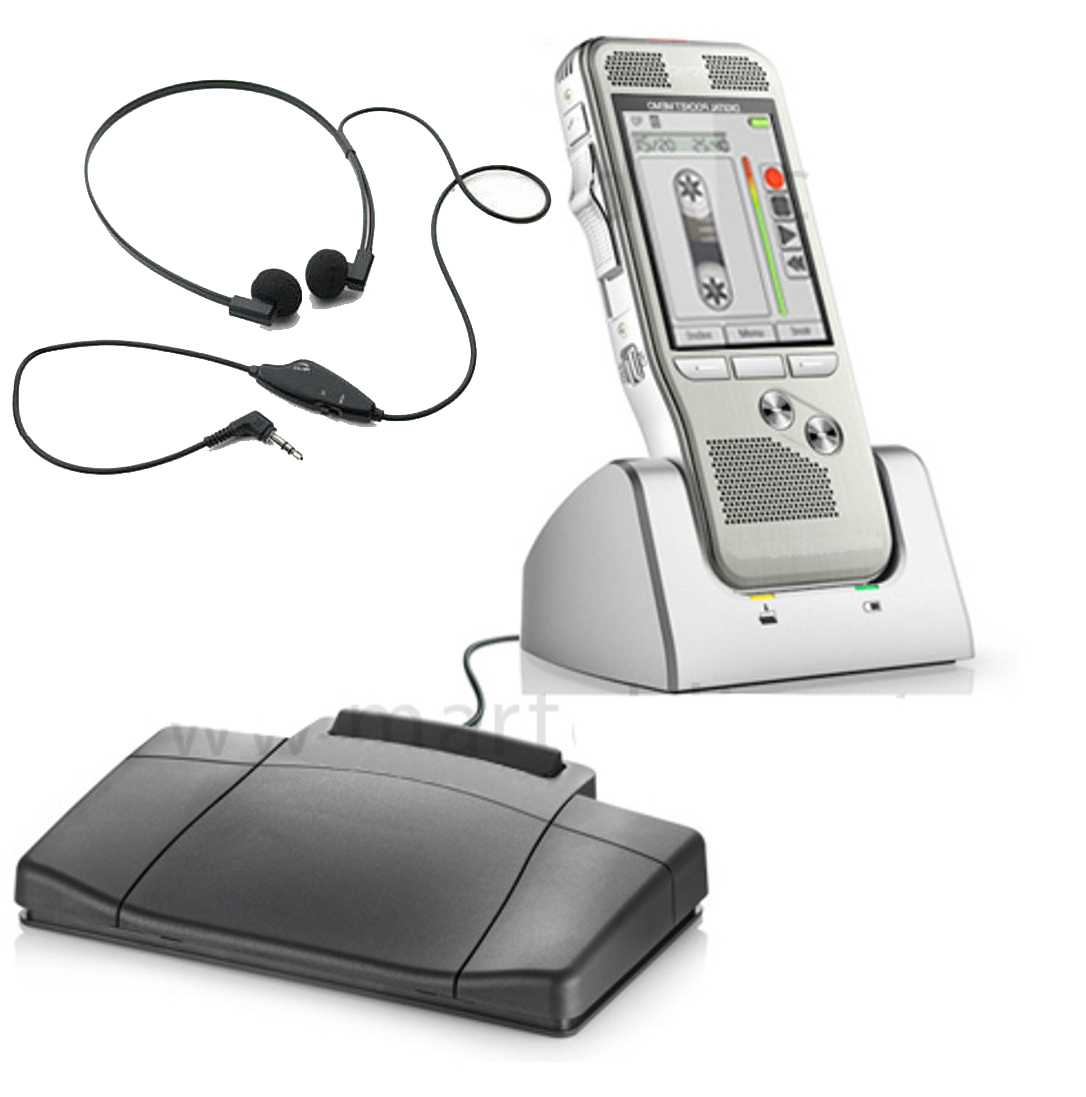
For a supported standalone audio file, the Martel All N One Digital Transcriber, SKU 1040, combines playback software, a USB foot pedal and a headset for a compatible Windows workstation. Check the current requirements and support for the file you plan to use. On the practice Windows 11 computer, open the correct audio and test play, pause and backward movement using the controls actually assigned. Write down their functions. Working backward through an answer is frustrating if a student mistakes a forward movement for a replay.
Test the controls while the same note-taking or scoring document you plan to use has focus. The student can enter a neutral phrase in that document, then use the pedal to hear the previous sentence. Verify that the intended window kept the student's typed observations. If switching focus is necessary in your arrangement, let the student practice that switch before judging readback. A control error during the checking pass is an equipment observation and should not retroactively change the score for the first attempt from notes.
An office using the Court Reporter 5000 recorder and transcriber, SKU 1491, may have a different practice route. Martel identifies the recorder, cradle and pedal playback arrangement on the relevant package page. Establish which components and supported file path you actually have. A pedal used with a recorder cradle and one assigned to computer playback are distinct setups. Identify the intended destination before buying a spare pedal or assuming the student's Windows application will respond to a particular unit.
Use four requests with four different boundaries
For the first request, ask for the question that introduced the brass ruler. Score the requested speaker and the first and last words of that question. For the second, ask for the witness's entire answer correcting the drawer and the felt color. Here the student's stopping point must include the correction. If they stop after drawer two, the answer sounds plausible yet omits exactly the detail the requester asked to hear.
For the third request, ask for the first complete question after the mock recess. The visible location of a new paragraph or pause may help the student find the region, but it does not establish which words belong to the first full question. Compare it with the later, similarly worded crescent question. For the fourth request, ask for counsel's question and only the witness's immediate answer about who moved the ruler. The student should stop before the follow-up about the condition of the cabinet.
Now have the scorer reorder the requests. The same hearing becomes a stronger exercise when the student cannot simply move forward through the file. Use an unfamiliar second practice hearing to assess independent progress rather than crediting a later pass on the memorized drawer sequence. Reusing the first recording is still valuable for equipment familiarization and demonstrating a corrected search method. Identify which purpose each round serves on the score sheet.
Distinguish finding the passage from delivering it
Mark the time or attempt at which the student recognizes the correct section in their notes. Then score the words they actually read aloud. A person can identify the exact place and accidentally begin one speaker turn too early. Another can scroll past the right outline, return to it, and then read the whole answer accurately. The first student needs a steadier beginning boundary. The second may benefit from navigation landmarks. Counting both simply as slow readback misses the distinction.
Ask the scorer to note the first audible word, a correction, a number and the final audible word for each relevant request. Also note whether the listener understood which speaker was being read in the exercise. A student's private knowledge that they are reading the witness does not automatically communicate that distinction to someone else. The instructor can direct how delivery should be handled in the specific course. Keep the observation about what the listener heard separate from assumptions about a particular courtroom's preferred wording.
If a phrase in the student's notes is unresolved, record where uncertainty began. Do not press the student to manufacture a precise reading from an unclear outline. The checking pass can reveal whether the student captured the correct outline but hesitated to identify it, wrote an incomplete word, or selected the wrong adjacent line. The appropriate response depends on which of those happened. A foot pedal can help replay the source for analysis after the fact, but it cannot diagnose an outline by itself.