A nod, a pointed finger and a spoken answer are different things. Capture the words the participants actually say, identify the speaker who describes a gesture and follow the governing transcript instructions for nonverbal events. If a motion is important but its meaning or target is unclear, use the venue's authorized procedure for getting the matter clarified on the record. A reporter who sees a witness move their head should not assign the witness a spoken “yes” that the witness never said.
The federal Guide to Judiciary Policy gives specific direction for significant nonverbal behavior and for parenthetical treatment when counsel or the court refers to an affirmative or negative gesture. Other proceedings have their own instructions. A stenomask receives the reporter's speech; it cannot see a finger on a diagram or establish what a motion meant. The reporter's practical task is to keep the question, the motion, any authorized description and the actual spoken clarification in their proper relationship.
Martel equipment in this guide
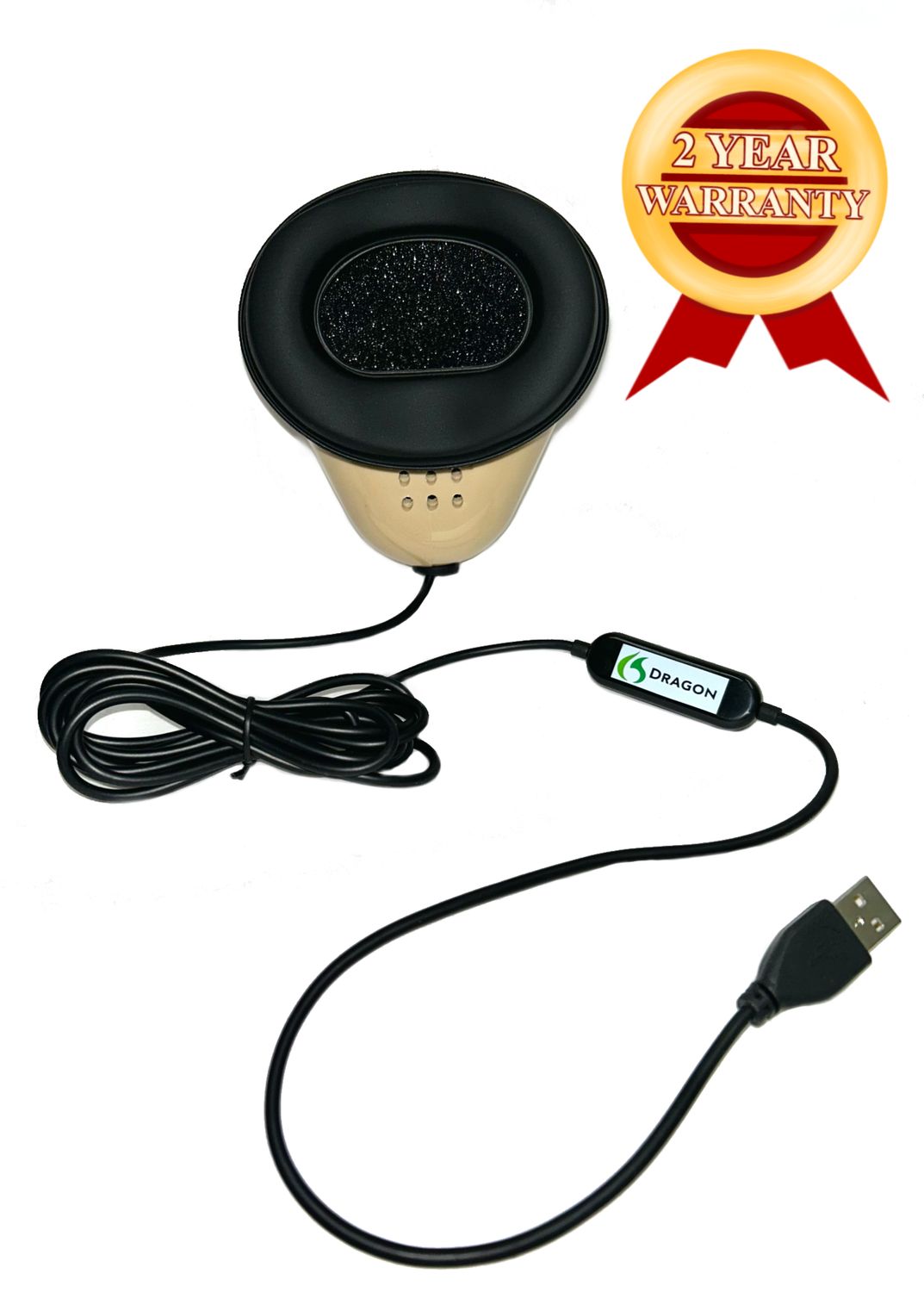
Separate what moved from what the participants say it meant
A head moving up and down can have an obvious social meaning across a table. The professional question is narrower. What speech was actually supplied, what nonverbal behavior was noted for the record, and whose statement supplies any interpretation? A transcript line saying a witness answered “Yes” makes a claim about a spoken answer. The same witness may instead have nodded while looking at the next exhibit, acknowledged hearing the question or indicated that someone could continue. From the reporter's seat, the meaning can be less certain than it looked to counsel.
In a fictional classroom exercise, counsel asks, “Were you able to see the rear label?” The witness moves their head up and down but says nothing. Counsel then says, “Was that a yes?” The witness answers, “It was a yes to seeing the box. I couldn't read the rear label.” Assigning “yes” to the first question before the clarification would give the wrong impression about what the witness saw. The later answer distinguishes seeing an object from reading a part of it.
Reverse the last line in a second version: “Yes, I could read the whole label.” The motion may look identical in both versions. The words supplied afterward produce different testimony. That is why the exercise must be scored from what participants actually put on the record and the format required for the setting, not from the student's success in guessing which answer the movement predicted.
The same distinction applies to gestures showing size or direction. A witness holding two fingers apart may intend to show a small distance. A reporter cannot necessarily tell whether the witness means the gap between the fingers, the length of one finger or the width of an object just lifted. Counsel or the court may establish the measurement in words. Preserve those actual words and their source. The reporter should not silently convert an observed motion into inches, centimeters or a particular direction.
Understand who puts a nonverbal event on the record
For federal transcripts, the Guide to Judiciary Policy assigns responsibility for noting significant nonverbal behavior to attorneys and, in some instances, the judge. It addresses parenthetical phrases when counsel or the court refers to a witness's affirmative or negative gesture. This is a specific federal framework. It is not a general license for a reporter in any setting to write a narrative of every movement observed or to decide what a juror, attorney or witness meant by it.
Obtain the transcript instructions relevant to your proceeding. Ask the responsible office or reporting authority about nonverbal answers, exhibit identification, reporter requests for clarification and permitted parenthetical format. These questions can be answered before work begins. The aim is to have a lawful, professionally established response ready when someone gestures, rather than discovering during testimony that a personal practice convention differs from the venue's requirement.
A written parenthetical, where authorized, and a witness quotation perform different jobs. A parenthetical may identify a nonverbal event under the applicable rules. Quotation or an answer line purports to represent speech. If counsel says, “The witness is pointing to the top row,” those are counsel's words, even though the witness's movement prompted them. If the witness later says “Correct, the upper row nearest the hinge,” that is the witness's spoken clarification. A sound transcript keeps both speakers and both events distinguishable.
A reporter is sometimes the only person who notices that a spoken answer is missing. Follow the applicable method for offering that observation without supplying a substantive answer. California's Court Reporters Board has guidance on interruptions when a reporter needs clarity, including situations in which words are not understood. Use local direction for the timing and route of such a request. The equipment guide can help you prepare precise observations; the authority and procedure for a particular intervention belong to the proceeding.
Pointing is especially sensitive to viewpoint
A floor plan turned toward the witness can have a different left and right from the plan visible to the reporter. The examiner may see the page upside down. A remote attorney might see a cropped view. Even an observer who clearly saw the extended finger may not have seen the point of contact. A phrase like “over there” cannot identify a printed location for a later reader unless enough authorized detail is supplied elsewhere in the record.
Imagine a fictional schematic with three small rectangles beside a loading platform. The rectangles represent a drain, a service hatch and a tool chest. From the reporter's chair all three lie close together behind counsel's sleeve. The witness touches the paper and says, “Right there.” The words “right there” were actually spoken. The identity of the selected rectangle has not yet been established in a form that a reader across the country can reconstruct. The examiner can ask the witness to identify the feature by its printed label or another accurate reference, as permitted.
When counsel offers a description, capture its authorship. “For the record, you are pointing to the drain” is a statement by counsel. “No, the hatch next to the drain” is a correction by the witness. The first description cannot be retroactively treated as an accurate observation simply because it sounded confident. The witness's correction supplies the intended target if that is what the witness actually says. The sequence of description and correction is part of what a later reader needs.
For a practice run, place an original hand-drawn diagram first on the witness's side of the table and then on a stand visible to all. Keep the testimony and descriptions the same. Ask each listener independently to identify the target using only the resulting transcript. The exercise evaluates whether the spoken references work without the original sight line. A failure in the first arrangement is a prompt for clearer authorized identification, not permission for the reporter to insert the missing label.
Capture exhibit identifiers as precisely as the words allow
An exhibit name, page number, panel letter or printed feature label can turn a gesture into an identifiable reference. Capture the actual identifier and the speaker who provides it. An examiner might say “page three of the diagram” while the witness refers to “panel B on the next sheet.” Those are not automatically references to the same view. Retain the full exchange and use the authorized exhibit identification in your working record.
A witness can point to a position between labels. “Between B and C, closer to C” has more detail than “C.” A reporter who selects C from the diagram because it is nearest the fingertip turns an approximate location into a definite one. Deliberately design an exercise with a border between boxes. Have one witness version identify a point inside the box and another identify the border. Those small differences can be decisive for a later discussion about a property line, a stain, a crack or a part marking.
Two copies of an exhibit may use different page numbering, for instance a printed internal number and a viewer's counted page. Reporting that the witness pointed to “page five” without identifying which numbering system was actually spoken might leave a later reader uncertain. Do not add an electronic page label from your display on your own initiative. Capture the number and any clarifying words supplied, and follow the venue's exhibit procedure if the reference needs to be established more precisely.
In a fictional practice job, give the examiner a copy marked Exhibit C and the witness a copy showing a prominent diagram labeled Figure C. A reporter hearing only “C” must attend to whether the speaker says “exhibit,” “figure,” “panel” or another word. This is a useful stenomask drill because the missing term may be relatively quiet while the letter itself is loud and clear. The transcript has to preserve the word that gives the letter its meaning.
A fictional storefront sign exercise
Create an original drawing of a storefront sign with three visible defects: a split at the upper bracket, a bend near the middle screw and a faded patch beside the lower edge. Put simple labels A, B and C on the drawing. No real address or client material is needed. Give the witness the drawing at a slight angle so the reporter cannot reliably see every point. The trainer will score only what the participants establish under the selected practice rules.
The examiner asks, “Where did you first notice damage?” The witness says “Here” and touches the drawing. The examiner says, “Let the record reflect the witness is pointing to the middle fastening.” The witness answers, “Not the fastening itself. The metal just above it, at B.” Now the answer contains a spoken location, a physical gesture, an attorney's description and the witness's correction. The reporter should be able to find four distinct events when reviewing the fictional transcript. The location “at B” belongs to the witness and separates a metal defect from damage to the fastener itself.
For the second branch, keep the question and gesture but change the clarification. The examiner asks, “Can you identify the printed letter?” The witness says, “I can't tell which letter that is on this copy.” The examiner says, “We can enlarge it.” There is no identified printed letter yet. If a student writes “B” from memory of the first branch, the resulting record will contain a fact the second witness did not give. Resetting a training exercise partly means resisting the memory of its previous outcome.
For the third branch, the witness starts to point, then withdraws their hand and says, “I'm looking at the wrong picture. Could I see the rear of the sign?” The reporter might clearly have seen the finger near label C. The witness has now explained that the current picture is the wrong view. It would be especially misleading to equate the abandoned gesture with a confident witness identification of C. Capture the actual words and whatever authorized treatment the proceeding calls for, including the move to a new exhibit view when established.