The quickest way to tell is to compare two recordings of a short practice exchange. Listen to the witness on the source recording and write down a complete turn. Then play your own stenomask dictation for that turn. Underline any wording you supplied in place of the witness’s words, including changes that sound sensible. A witness who says “I kind of eased it over” made a different choice of words from a reporter who repeats “I moved it slowly.” A clean transcript of the second version can hide that change.
Voice writers often notice a dropped word before they notice an elegant substitution. The substituted version may be grammatical, easy to recognize and a fair description of the event. It still leaves someone reading the record with speech the witness never used. This guide gives you original practice testimony, listening assignments and a way to locate substitutions before they become habits. Every exchange in it is fictional. Use the exercises with your own stenomask and follow the transcript conventions for your actual course or assignment.
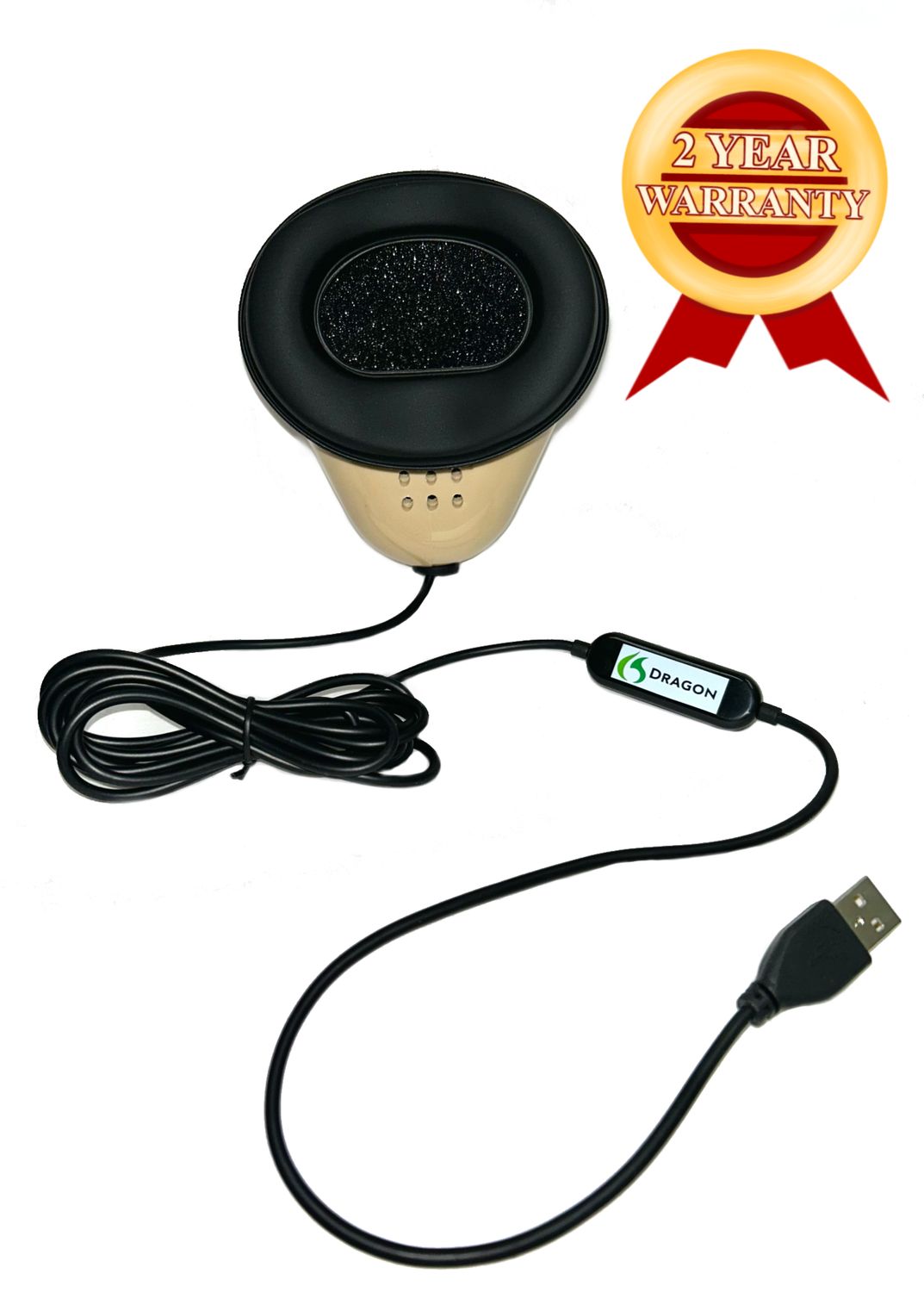
Martel equipment in this guide
Preserve the difference between remembering an event and remembering an utterance
Read these two accounts of a fictional delivery. “The box came in crooked, and I got my shoulder against it.” “When the box tipped, I held it up.” A reader of either account can picture a person stopping a parcel from falling. The accounts differ on how far it moved, what the person did and whether it was about to fall. We readily turn the details into a mental scene. The scene helps us follow testimony, yet it gives us more than one way to describe it. A voice writer must stay with the description actually heard.
Try this without a recording first. Read the first sentence once, turn the page, and tell the event to someone else. Now read your own rendition beside the printed sentence. If you substituted “leaned into it” for “got my shoulder against it,” you learned something about how you naturally retell a scene. That is a useful storytelling skill. For practice in verbatim reporting, underline “got my shoulder against it” and retain that phrase intact in the next run. A concrete phrase gives you something audible to work on.
Be careful about carrying a writer’s polished wording backward into a witness’s mouth. Consider “I was back by the lift, somewhere by the back of the lift.” An editor might prefer “I was behind the lift.” The original speaker used two approximations and never settled the location as neatly as the edited version suggests. In a rehearsal, record both phrases the witness used and leave the written treatment of repetitions or punctuation to the applicable instructions. Your mask audio can document what you captured even when a school has specific rules for its finished exercises.
When you grade the result, judge words and attribution before judging how pleasant the sentence sounds. Ask three questions. Who chose the expression? How much commitment did it convey? What part of the event did it actually describe? A substitution can shift any of the three. A written line that seems more professional or more efficient can still fail the exercise. The target is the speaker’s account in their words.
Listen for the vocabulary that makes this witness recognizable
In fictional practice, give a witness several ordinary expressions that are easy to replace. A loading supervisor might say “it caught,” a driver might say “it hung up,” and a clerk might say “it wouldn’t travel any farther.” All three could refer to the same door. If your mask recording says “it jammed” every time, you are supplying one word for three different descriptions. You can hear the pattern most clearly when the objects stay the same and the speakers change.
Make a small list from a first hearing. Include one action verb, one hedge, one everyday comparison and one unusual turn of phrase. Do this after the scored attempt, so your list does not become a preview. On a replay, listen for the beginning and end of each expression. “I was pretty much done with the count” is different from “I had finished counting.” Keep the ordinary modifier and the witness’s way of naming the activity. Identify exactly where your version becomes tidier.
Respect a witness’s vocabulary even when you would use a technically precise term for the same object. A speaker who calls a platform “that little landing” has supplied an identification of their own. If counsel follows with “the exterior platform?” the two descriptions now have different owners. Capture both. Repeating the formal term in the earlier answer makes it appear that the witness used counsel’s vocabulary before counsel introduced it. Practice this kind of exchange with an ordinary object such as a door handle or a folded map. It exposes substitutions made purely because you know what the witnesses mean.
Do not manufacture a spelling or pronunciation on the basis of a witness’s background or manner of speaking. Your practice goal is the sequence of actual words. If you encounter a distinctive name, word or spelling that you cannot establish, handle the uncertainty using the procedures for the assignment. Impersonating the speaker’s accent or adding an imagined dialect spelling introduces editorial judgments. A simple audio comparison of the actual named object and verb will do more for this exercise.
Make an original three-column listening sheet
Divide a page into columns headed “Witness,” “My mask audio” and “First text.” Leave a small space beside each row for an observation. Enter the full target group in the witness column. In the middle, write the words you can actually hear yourself repeating. In the last column, copy the first available text before manually correcting it. Use quotation marks only to fence off words in the exercise, not to imply that the sample transcript has an approved legal format.
Picture one row in the listening sheet. The fictional witness recording contains “I’d already sort of put it back.” My mask audio contains “I had already put it back.” The first text says the same thing as my mask. Mark the loss of “sort of” and the different form of “I’d.” Then look at the entire turn to determine what “sort of” qualified. Your conclusion can say, in plain terms, that the reporter supplied a more definite answer and the written text followed the reporter’s speech. No microphone adjustment can put the missing qualification into speech that was already recorded without it.
On a different row, the witness and the mask may both say “I sort of pushed it against there,” while the first text reads “I sort of pushed it again there.” Here the witness’s viewpoint survived in your masked repetition. You have a separate text entry discrepancy involving the word “against.” Follow the reporting application’s supported method to review or correct the first text. Keep this row out of your count of reporter paraphrases. Treating every bad-looking sentence as paraphrase offers a poor remedy when the spoken capture is intact.
For an unclear sample, write what you know and leave what you cannot establish open. Suppose the witness recording begins after the first phrase, the mask says “around nine,” and the first text also says “around nine.” You can establish agreement between your dictation and the first text. You have no basis for saying whether the witness actually chose “around,” “about” or “just before.” Exclude that line from a measure of verbatim capture. For the next trial, record a clean fictional source with a definite start.
Work the original loading ramp exchange in two passes
Have a partner record the following fictional conversation exactly as written. An individual student may create a source recording on one day and return to it later, noting the advantage of familiarity. Keep the text out of sight for the first dictation pass. The purpose of the two passes is to explore how easily a story can replace a speaker’s wording. Use the first score to assess what you captured without rehearsal.
Counsel: Where was the load when you first noticed a problem?
Witness: Back a ways. The front of the cart was up on the ramp, but the load was back a ways.
Counsel: What made you stop?
Witness: I got a sort of sideways feeling from it. I can't tell you I saw it slide.
Counsel: Did you take it off the ramp?
Witness: I eased it toward the rail. Then I took the top box off. I didn't take the cart off the ramp.
Counsel: Which box are you referring to?
Witness: That little long one. Not that long little one they showed me before. The low one with the green ends.
Counsel: Did somebody tell you to move it?
Witness: Nobody told me right then. In the morning the lead had said to give it room, something like give it room.
Start the review by looking for attractive substitutes. “Some distance away” may appear for “back a ways.” “I felt it slipping” may appear for the “sideways feeling,” although the witness expressly distinguished what they felt from what they saw. “I unloaded the cart” may replace two separate actions involving the rail and the top box. “The long green box” may swallow a correction and the particular detail that only the ends were green. Circle the first place in each turn at which your audio moves away from the source.
Now listen for the repeated groups. The witness twice says “back a ways,” compares “little long” and “long little,” and qualifies their memory of a supervisor’s words. A student working from the story alone may regard these as dispensable. Ask a reader to infer, from the mask audio alone, how certain the witness was about the supervisor’s language. If the reader hears a precise quotation where the source contained an approximation, you have evidence of a meaningful change and can find its location.
For the second pass, choose just one feature, such as repeated expressions. Play the exchange again while deliberately finishing each expression before adopting the next one. You may discover a new error elsewhere because your attention shifted. Score the whole exchange again and mark that it was rehearsed. A higher score deserves a follow-up with new words. Have someone compose a similar exchange about moving a stack of trays. Retain an uncertain memory, a difference between feeling and seeing, and a repeated description, while changing every sentence.
Stop turning fragments into complete explanations
A witness may begin, “The ladder, the set of steps, I mean the metal ones by the rail.” A listener can mentally supply “I used the metal steps by the rail.” The account on the recording did not supply “used.” It contained two attempted names and a clarification. In a fictional exercise, shadow those groups in order and preserve the explicit correction. If the course uses punctuation for abandoned phrases, apply that style after you have the words. A dash or comma has very limited value if the text around it contains an action the speaker never supplied.