Save one untouched recording of the exercise, one recording of your mask dictation if your setup allows it, and the first text your reporting software produced. Find the short piece of testimony whose meaning changed. Listen to the speaker, then to yourself, before making a correction. If the speaker said “did not sign” and your mask captured “did sign,” practice carrying the entire verb phrase at that speed. If both recordings contain the negative and the first text omits it, investigate recognition and text entry with a short fresh sample.
A missing negative can hide inside an otherwise convincing sentence. “The gate was locked” and “The gate was not locked” both read comfortably on a screen. Counting the other accurate words will tell you little about that particular error. This guide gives voice writers a way to identify the exact wording, find the first place it changed, and choose a practice exercise that addresses what happened. All testimony, names, scores and case situations used as examples below are fictional.
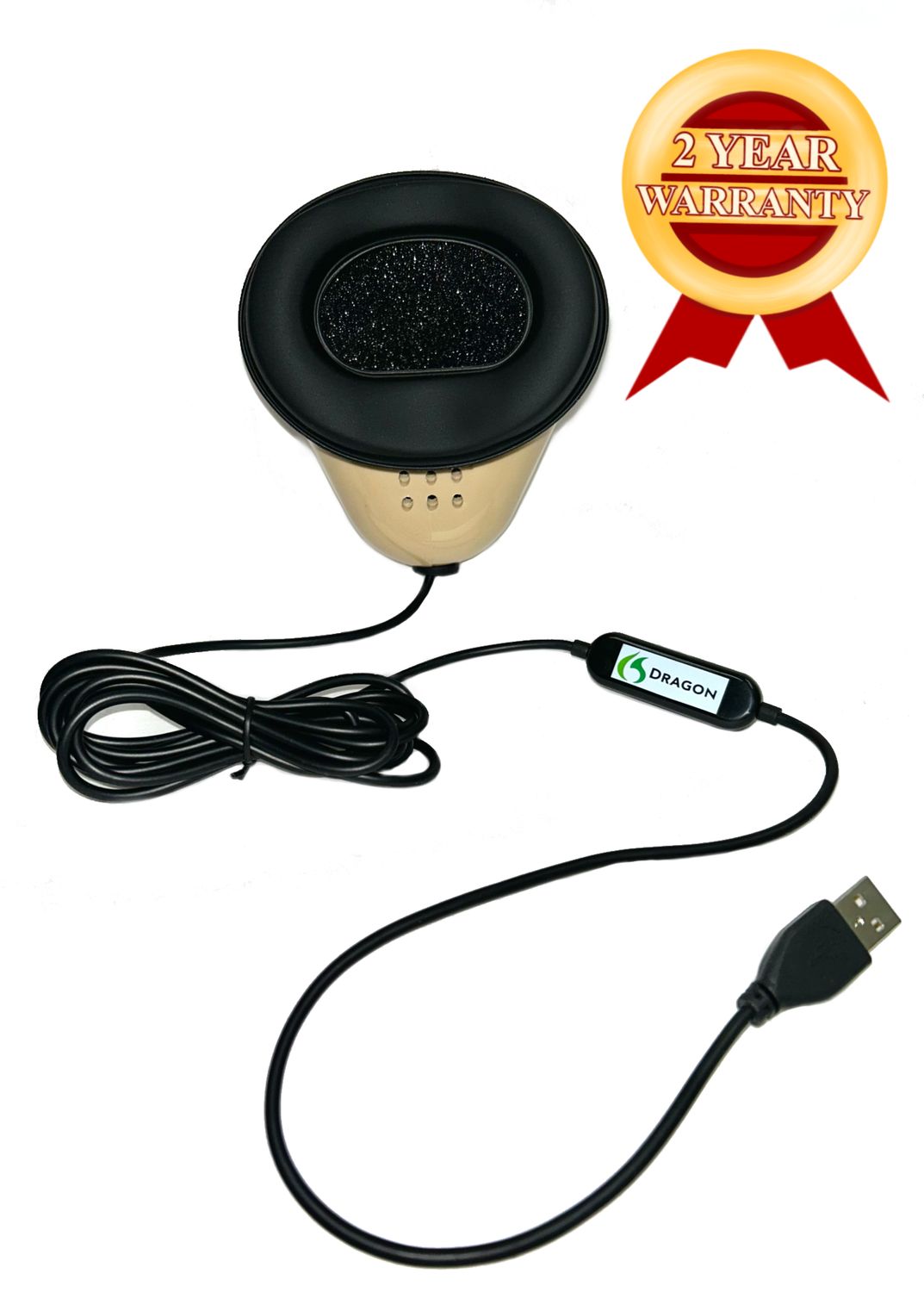
Martel equipment in this guide
Find the smallest passage that settles what was said
Suppose a reader dictates, “I told the driver I did not move the barrier after the second truck arrived.” Your first text reads, “I told the driver I did move the barrier after the second truck arrived.” The difference is small enough to fit between two words. The change in the speaker’s account is substantial. Start your review at “I told the driver,” keep listening through “arrived,” then identify the exact group “did not move.” That group gives you the helper verb, the negative, and the action it modifies. They make a useful unit for the next dictation attempt.
A student sometimes searches the text for every appearance of “not.” That finds the words that survived. It misses the empty space in a line that has become affirmative. Use a checked source passage, or listen from the beginning of a short section and mark each statement that actually denies, excludes or qualifies something. Leave time markers next to those statements. Now compare each marked statement with the mask recording. If the lesson comes from an instructor and you can obtain the spoken passage and its intended key, check whether the reader followed the key. A changed word on the source recording affects how you score your attempt.
Keep enough speech on either side of a suspected omission to identify the speaker and the action. Listening to a clipped “didn’t” on its own may hide which of two adjacent verbs it belongs with. Reading only the edited final transcript can make a correct repair look like an accurate original capture. Give yourself a fair comparison by using the first output from the same attempt. The key, source audio, mask audio and unedited text serve different purposes. Label them in a way that will still make sense when you review the work later in the week.
Hear the claim, the person who made it and its limits
When a witness says, “I did not see the mechanic remove the tag,” they describe what they saw. “The mechanic did not remove the tag” describes the mechanic’s conduct. The same words can point to entirely different matters depending on their place in a sentence. Build a practice key with three entries in ordinary language. Write down who spoke, the exact group containing the negative, and the words identifying what that group applied to. A key for the first sentence might read “witness | did not see | mechanic remove the tag.” That short entry directs your ear to the witness’s observation.
Try a second sentence. “I remember saying that the burner wasn’t on when I entered.” The negative sits inside an account of an earlier remark. If you drop “saying that,” the line may look like the witness’s direct present recollection of the burner. Practice keeping the introduction and the quoted or reported thought attached. Score the negative separately from the introduction. That lets you see whether you carried “wasn’t on” accurately while another part still needs work.
Some passages use two limits in quick succession. “I never asked for a refund, and I didn’t object to the credit” contains two independent statements. Recording just one of the negatives can leave you with a line that sounds internally consistent and is still wrong. Divide your score sheet at the conjunction. Listen through the end of the first thought and the start of the second. If the error moves from one half to the other as you repeat the drill, your difficulty may lie at the change of clause. A slower two-clause exercise will give you better evidence than an isolated list of negative words.
Include qualified language in the exercises you choose. “I don’t think I called her Tuesday” expresses a different degree of certainty from “I didn’t call her Tuesday.” A denial, a limit on memory and a prediction about the future each deserve their original wording. Resist the urge to grade a line simply as positive or negative before you know what the speaker was actually describing. Use the written key as a listening aid. The exercise succeeds when a later reader can tell whose knowledge, action or opinion the original words concerned.
Give the positive lines the same attention
A drill that puts “not” into every answer teaches you to anticipate it. You may develop an impressive score while quietly adding a negative whenever a reader delivers a familiar lead-in. Include affirmative testimony with the same nouns and verbs. Ask a practice reader to choose the order out of your sight. If working alone, record a mixed set on one day and use a selection later, recognizing that you may still recall some lines. The recording gives you a stable target, and the fresh order reduces the value of guessing.
Here is an original set about a fictional loading dock. Read each line exactly as printed when making the source recording. Keep the first take that accurately follows the text. A reader can choose any eight lines and add two of the remaining lines at the end. The student should hear the selected order once before writing a key.
- I closed the gate before the second delivery came in.
- I did not close the gate before the second delivery came in.
- I said the gate was closed before the second delivery came in.
- I never said the gate was closed before the second delivery came in.
- The first driver did see the yellow tag on the latch.
- The first driver didn’t see the yellow tag on the latch.
- I couldn’t tell whether the tag was yellow from where I stood.
- I could tell the tag was yellow from where I stood.
- I took the receipt, but I didn’t take the packet underneath it.
- I took the packet, but I didn’t take the receipt underneath it.
- The gate was open when I looked. I didn’t say who opened it.
- The gate wasn’t open when I looked. I said who opened it.
For the last two lines, put two marks on the key. First mark the state of the gate. Then mark what the speaker said about the person who opened it. You can get the first proposition right and still reverse the second. For the receipt and packet lines, identify the object after the affirmative verb and the object after the negative verb. That exposes an error a simple check for the presence of “didn’t” would miss.
Mix contractions with fully spoken forms without turning the drill into an exercise in changing the witness’s vocabulary. If the source says “didn’t,” let the mask capture “didn’t.” If your school expects a particular written treatment of contractions, keep that instruction with the scoring key and distinguish spoken accuracy from required text formatting. A report that says “right meaning, required text rule applied” answers a different question from a report that says “didn’t became did.” Only the second entry records a reversal.
Listen through questions that contain a negative
A negative question can tempt you to supply the conclusion behind the attorney’s words. In this fictional exchange the witness gives a short answer and then qualifies it. Have two readers make the source track if possible. A single reader may use a small pause at each change of speaker. The lesson concerns ownership of the words, so give every turn its own line on the key.
Counsel: You didn’t hear the latch click?
Witness: No. I heard the hinge. I did not hear the latch.
Counsel: You never went back to look?
Witness: I didn’t say never. I went back after lunch.
Counsel: You couldn’t open it from the inside?
Witness: I could open it. I could not hold it open with one hand.
The three answers call for three different listening decisions. In the first, “No” belongs to the witness and the longer explanation follows. In the second, the witness rejects the attorney’s word “never.” In the third, ability to open the gate and ability to hold it open are different things. A student who writes a smooth summary, such as “The witness could not open the gate,” has created a statement that never occurred. Keep both speaker turns even when hearing the exchange as a story makes one conclusion seem obvious.
For review, play the entire exchange once and place a pencil mark at each speaker change. Then replay only the first spoken words of each answer with enough surrounding audio to hear the turn. Look at the mask recording to see whether you began with the witness’s actual response or began at the explanation. If you miss the initial “No” on each pass, practice the transition into the answer. If you lose “did not hear” after getting “No,” practice carrying the full explanation. A general instruction to pay more attention gives little direction until you can name the part that went missing.
A question may itself contain a proposition the witness refuses to adopt. Carry the negative in the attorney’s question and the witness’s words independently. Do not try to make them agree in rehearsal. Disagreement, uncertainty and partial answers make excellent practice because a student can remember the subject accurately while still assigning the attorney’s wording to the witness. Grading the turn by speaker reveals that mistake immediately.
Separate rushed endings from guesses about what follows
Consider “We could move the cabinet, though we couldn’t move the crate.” The verbs sound similar, and the objects both begin with a hard consonant. A student may be looking ahead to “crate” while the current phrase is still incomplete. Replay your own mask audio at an intelligible volume and in its original order. Listen for the end of “couldn’t” and the beginning of “move.” If the source clearly contains the contraction and you clearly say “could,” the evidence points to a change while repeating. You do not need to decide which millisecond caused it to start an exercise.
Build a short run of sentences that changes the word after the contraction. A fictional witness can say “I couldn’t lift the cover,” “I couldn’t see the stamp,” and “I couldn’t explain the stain.” Add affirmative mates to the run and vary their order. Your job is to hear and repeat each whole group before moving to its object. Avoid adding an exaggerated sound to the contraction. You are trying to preserve the speaker’s natural words in your own working dictation voice. An artificial pronunciation that appears only in the special drill can disguise what happens at ordinary pace.