TIME IS RUNNING OUT FOR 2026 TAX WRITE-OFFS

Choose a listening position that lets you finish the speaker’s actual words and arrive at the next turn with room to capture its beginning. There is no single count of words or seconds that this guide can prescribe. Use a short fictional passage to try two deliberate positions, compare omitted endings and missed starts, and repeat that comparison on different material. The working position that gives you dependable first-pass wording is the useful one to develop with your instructor.

In this guide, listening delay means the distance between a word arriving from the source speaker and your own repetition of that word into the stenomask. A delay in hearing the meeting, a delay in headphone monitoring and a delay before recognized text appears on screen are separate events. This distinction matters for a voice writer who feels behind. Before trying to speak faster, find out whether the delay you are seeing belongs to your dictation at all.

Martel equipment in this guide
Measure your place in the sentence before measuring seconds

Imagine a witness says, “I went to the office by the bridge after I heard the second bell.” When the witness reaches “bridge,” you may be saying “office.” You know something practical about your listening position already. You are completing a known group while the next group is coming in. If you are still working on “I went” as the witness starts a different topic, ask what happened to the intervening words. The exact elapsed seconds can wait until you can identify the word anchors on both sides.

Think about what you are holding, not just how much. “As I went back to the” is a string of words awaiting its object. “Near the iron gate” supplies an identifiable location. Four words that contain a complete idea may be easier for a particular writer to repeat than four words that introduce a correction. The purpose of a personal practice comparison is to see how you handle these constructions. A fixed rule such as always trailing a certain number of words would hide the difference.

On a copy of a fictional passage, choose four anchors with distinct sounds and definite positions. A surname, a place, a color and an action verb can be good choices. Avoid “the” or “did” when either occurs in several adjacent clauses. Listen to the source and the mask on identifiable recordings of the same attempt. Mark where the speaker had reached when you reproduced each anchor. You might see that you begin a turn close to the witness and drift farther away in the middle, then catch up at a pause. That pattern is more informative than a single average.

A common variation occurs during Q&A. Counsel may deliver a long, careful introduction. The witness answers with two rapid words. A reporter who comfortably follows the long introduction can still miss the small reply if counsel’s last clause remains unfinished in the mask. Include the tail of the question and the start of the answer in your first review. If you consistently lose the first word of the answer, look at the unfinished work carried out of the question before attributing the error to the witness’s pace.

Identify which delay you are actually observing

For an in-person exercise, a reader speaks and the reporter hears the source at the reporting seat. The reporter repeats the words into the personal mask. A selected input delivers speech to the recording or reporting application, and the application may present text on screen. Each event has its own location. Seeing a word arrive late in the text tells you the word was displayed late relative to something you observed. It does not by itself reveal when you said it.

Take the screen out of the first exercise. Arrange one reliable source and one saved mask sample. Choose an identifiable word in a fictional sentence and determine whether your speech trailed that word by a manageable phrase or whether you actually lost it. Put the screen back into a second exercise. If your source-to-mask relationship appears similar on both and the words in your mask remain complete, but you feel hurried only when watching text appear, the follow-up concerns how you use display feedback. Evaluating that possibility does not require changing microphone hardware or promising a particular recognition latency.

In remote exercises the sound reaching the reporter may itself be delayed or discontinuous. The relevant starting point for measuring your personal repetition is the speech as it was available to you. A recording made in another room or by a remote source may show a person starting earlier than you heard them. Without a reliable alignment or a recording of what actually reached your location, that difference cannot be assigned to the voice writer. Use an arrangement that records a known practice source locally when you want to study your following distance.

Also distinguish hearing your own delayed voice in headphones from repeating the witness late. In a mock setup, speak an identifiable marker into your selected mask and compare what you said, what returned through the headphones and what the saved file contains. If a delayed return distracts your listening, document which monitoring route was active. Test a different supported route in an exercise before applying anything to a proceeding. The listening-position drill is most useful when an unexpected return is not competing with the incoming witness.

Set a baseline using one ordinary fictional witness

The following short practice testimony is deliberately ordinary. A colleague may read it at a comfortable conversational pace, or you can create a source recording for later use. Preserve one accurate reading and listen to exactly that same file in the first two practice conditions. Keep the text out of sight during dictation. The repeated content lets you compare the two attempts, although familiarity with the second pass is a factor to acknowledge.

“I reached the footbridge when the little gate beside it was open. A courier had left a brown parcel on the bench near the water. I saw the parcel before I saw the courier. He was standing under the dark awning, looking at a folded route sheet. When he came over, I pointed to the bench. I thought he wanted the brown parcel. He wanted the flat envelope that was partly underneath it. We left the parcel on the bench and carried the envelope to the office by the footbridge.”

Mark “courier,” “awning,” “route,” and “envelope” on the organizer’s copy. There are two occurrences of “envelope.” Specify the first, following “flat,” for this exercise. Ask the reader to maintain ordinary phrasing while making the source. A reader who artificially breaks after every marked word turns the anchors into signals for the reporter. That may have value in a separate coached exercise. It would make this first comparison easier than the continuous speech you are trying to measure.

Take an uncoached first pass in your usual masked dictation voice. Immediately after it, jot down where you felt short of time. Leave the recordings unchanged for review. Locate the four anchors in the source and the mask. Write down whether you preserved the distinction between seeing the parcel and seeing the courier, and whether you carried the correction from brown parcel to flat envelope. These are wording outcomes the timing observation must explain. A very small delay accompanied by a wrong object deserves attention even if it looks impressive on a time display.

If your first attempt misses a known word, leave a gap for that anchor on the timing sheet. You can describe a personal delay for a word you can actually identify in your mask recording. Assigning a made-up time to a missing word would make the average look complete while erasing the very problem you wanted to study. In the notes, identify the last reliable anchor, the first reliable anchor afterward and the words missing between them.

Try an early start and a phrase-based start

In the first deliberate position, start repeating once the first words are identifiable, and let yourself follow closely. Avoid predicting the noun or ending the sentence in advance. In the second position, allow a short, meaningful group to form before beginning your rendition. This might mean hearing “I reached the footbridge” as a group rather than launching immediately on “I reached.” Both conditions still require you to listen to the next words while finishing the present ones. Neither describes a target you must keep throughout every turn.

Use the same source file and the same setup for this initial comparison. In your trial notes record which condition you tried first, because a second hearing can make the passage feel easier even if the timing choice did very little. After reviewing both, have a partner create a fresh passage about an office gate and two different items, use the opposite condition first, and look for the same error pattern. Watching an effect survive a change in order gives you more reason to investigate it.

Listen to the whole source-to-mask comparison. If following closely produces “under the dark umbrella” when the witness actually said “under the dark awning,” the early start may be encouraging guesses about completions in this passage. If a longer start preserves “awning” but loses “folded route sheet” in the next group, you have discovered a different cost. The notes might point toward waiting for a noun when it is genuinely uncertain, while beginning other groups sooner. A writer’s judgment can change with the material.

Give each condition an outcome column. Count intact phrases, incomplete endings, lost first words after a speaker change and substitutions that add a plausible detail. Include incorrect speaker ownership if the source has more than one voice. This balanced review prevents a condition that solves one conspicuous problem from looking better when it has moved the errors elsewhere. For a beginner, complete and correctly owned short turns may be a stronger achievement than an impressive but unstable word distance.

Time an anchor only when the recordings permit a fair comparison

If you want a numerical delay for your personal drill, use identifiable positions on a common timeline. One classroom arrangement records the known source and the reporter’s mask on distinguishable channels during the same fictional exercise. Verify the roles with spoken identifiers first. Mark a consistent point, such as the start of a particular word in the source and the start of that word in the mask. Subtract the first position from the second. Keep the precision realistic for what you can distinguish by ear or on the available display.

For an arithmetic example only, if a unique word begins at 18.2 seconds on the source channel and at 19.1 seconds on the mask channel recorded on the same timeline, the observed difference is 0.9 seconds. That number describes one identified word, in one fictional example. If the reporter’s source was arriving over a delayed remote connection, an independent recording taken at the far end could change the calculation even though the reporter repeated the same way. Identify where the source channel was recorded before interpreting an apparent lag.

Martel Electronics | 12 hours ago

How far behind the speaker should you practice dictating into a stenomask?

Compare how far you stay behind a practice speaker while preserving the start and end of each thought. Use your own recording and reference text.

Two devices started by hand rarely give you identical starting positions automatically. A known synchronization event audible in both files can help align them for a classroom investigation when the exercise has permission to record both. Check the alignment at more than one point in a long run before assuming it remains stable. If separate recordings contain no dependable common event, use a qualitative comparison and mark timing unavailable. A method that can identify a lost transition without a stopwatch is still valuable.

Choose anchors away from repeated phrases when possible. “Back by the bridge” may occur five times in a narrative. A careless match between the second source occurrence and the third masked occurrence gives a meaningless interval. Look for a nearby word that identifies the right instance, or use a short count spoken by the fictional reader at the beginning of each distinct test. Leave the clock observation out when the match remains ambiguous.

Apply the same test when the answer reverses direction

Create a second fictional recording with deliberate changes of direction. It should sound like an ordinary person finding their words. One example is, “I walked back to the iron steps because the parcel, well, because the envelope was still there. The parcel had gone on ahead. I did see the pickup at the corner. I didn’t see the pickup turn.” The first correction changes the item and the last sentence limits the witness’s observation.

Use “iron,” “envelope,” “ahead” and the second “pickup” as anchors. Check all the small surrounding words. Following too early may tempt you to repeat “the parcel was still there” before hearing the self-correction. Following at too great a distance may leave you saying “corner” when the witness reaches “didn’t,” losing the distinction between seeing the vehicle and seeing it turn. Either outcome is visible only when the source and the masked wording are compared as complete groups.

Have the reader vary one sentence while holding the rest of the exercise design steady. They might say “It wasn’t gone. It had gone on ahead of us” or “I didn’t see it turn until I reached the corner.” The reporter now has to follow real incoming distinctions. If a newly changed ending is consistently replaced with the earlier practiced one, the problem extends beyond timing to anticipation from memory. Label that observation separately. The remedy may include new material, a smaller held group or a different listening position at self-corrections.

There is a useful practice moment immediately before a correction. A writer may feel pressure to complete the apparently obvious thought, even when the incoming speaker has started to revise it. Rehearse leaving the phrase open in your mind until its real continuation arrives. Then repeat both the abandoned thought and the correction as required by the exercise. The goal is faithful movement through the broken sentence, not freedom from every moment of uncertainty.

Test the last word of the question against the first word of the answer

Use this fictional Q&A as a separate source with two voices. One reader can take the two parts if the turn boundaries are clearly identified. Make the first question fairly long and the first answer brief. The timing issue concerns the collision between the tail of counsel’s question and the start of the witness’s response.

Counsel: Did you move the office cart before the last parcel came back from the far end of the footbridge?

Witness: No, afterward.

Counsel: Which part of the cart faced the road when you came up to it?

Witness: The handle. I mean the handle end faced the road.

Counsel: You saw the courier pass the gate with the flat envelope?

Witness: I saw an envelope. I couldn’t tell it was flat.

Listen for “footbridge,” “No,” the first “handle” and “couldn’t.” Put the question ending and the answer beginning on adjacent lines of the review sheet. If your masked “footbridge” arrives intact but “No” is absent, you may need to address the handoff into the next speaker. If both survive but the text labels the answer as counsel, examine your speaker-entry operation independently. A labeled turn and the correct time relationship are both necessary for a useful exercise, yet the evidence for each is different.

Try a variation in which counsel stops halfway through a question and the witness begins speaking. The reporter should follow who actually spoke and the words delivered in the fictional exchange. A long-held group may contain words from two people by the time you begin to dictate it. Concentrate on clearing the first speaker’s known words without anticipating the interruption. Then locate the first word you can demonstrate from the second speaker. An honest gap in the score sheet is a better starting point than a guessed speaker change.

Read the pattern across several kinds of testimony

A slow, descriptive witness may use sentences with long noun groups that remain stable once you hear their endings. A rapid two-voice exchange can consist of tiny turns and frequent reversals. A person spelling a name letter by letter presents yet another demand because a plausible word is not an adequate substitute for the exact sequence of letters. Use all three kinds of fictional speech before trying to generalize about your preferred listening distance.

For a spelling exercise, have a reader give a made-up surname and spell it in groups, then change one letter in a new surname. Check the captured order of the letters. Timing an anchor in a string of identical-sounding initials can be very difficult. Score the sequence instead and keep your observation local to the spelling task. If a little more waiting lets you retain a complete group but leads you to transpose the next group, your working distance needs a different adjustment from the one that helped narrative speech.

For a descriptive list, choose an original series with a late exception, such as three objects put in a crate and a fourth left outside. Identify the connector introducing the exception and the last object. Time may be less important than whether the exception remains attached to the right item. A reporter close to the witness might rush to close the list. A reporter further back might retain all four names and forget which was left out. Compare your actual results with both possibilities and use an unseen list to test the better working position.

Build a short weekly record of conditions that change your result. Record the reader, general pace, turn length, visible text feedback, the intended starting position and the evidence from the mask. You do not need a large spreadsheet. A clear note that says “shorter start helped several two-word answers, while a phrase-based start helped a witness who revised descriptions” gives an instructor material for a productive session.

Choose the equipment around the exercise you can verify

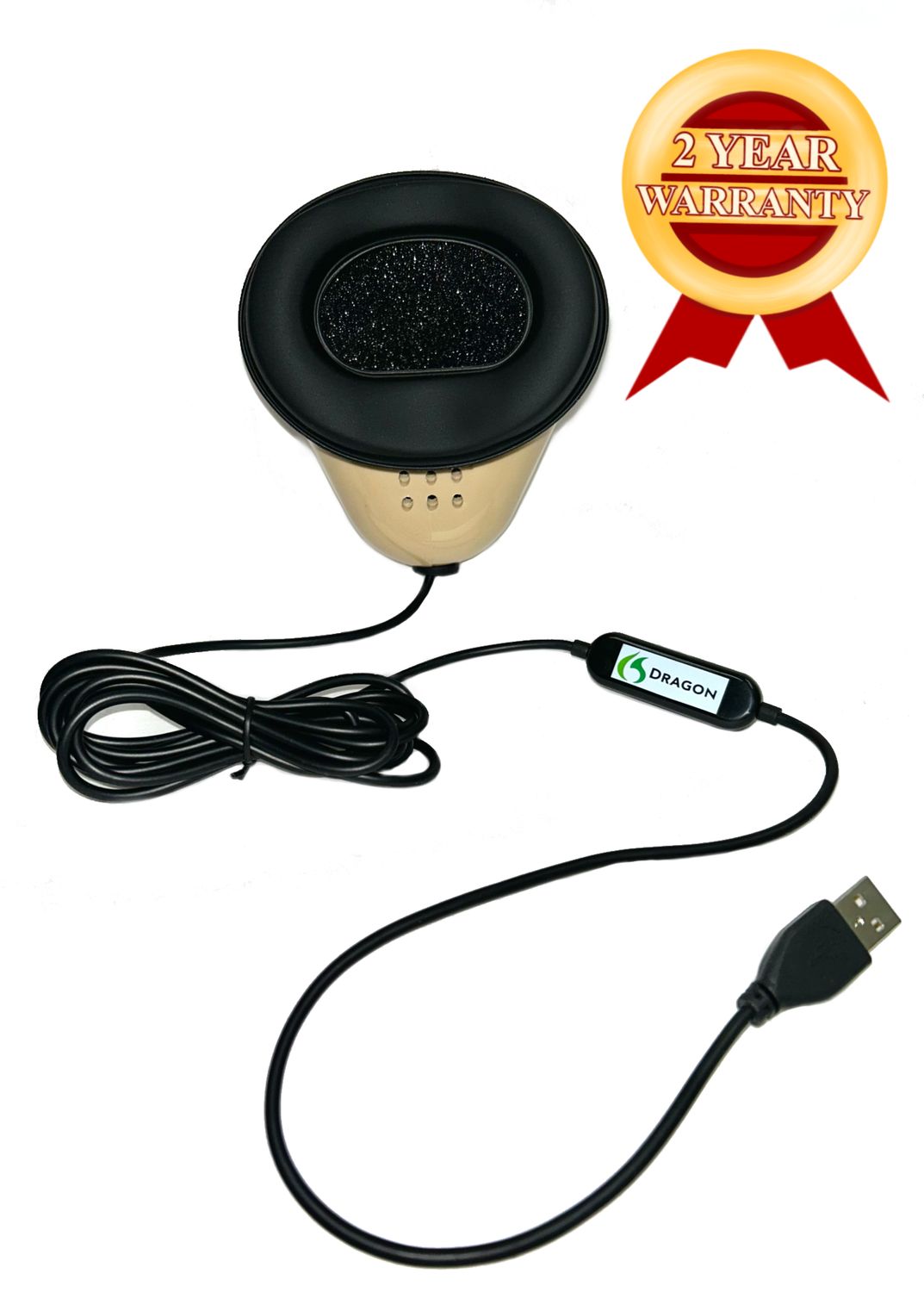
The Martel USB stenomask, SKU 1941, is one option for a voice writer who needs a microphone connected directly to a compatible computer. Confirm the physical port and the application’s selected input. Dictate a short opening identifier in your own mask, save the sample and play it back before starting an exercise whose usefulness depends on the saved speech. When comparing timing configurations, keep this verified connection stable unless the equipment itself is the question you are studying.

The mask carries the words you actually say into the selected path. It has no independent knowledge of where the witness was in their sentence. If you intend to measure the distance to the source, arrange a separately identifiable, permitted recording of the source available at your position. For most practice decisions, a known fictional passage, two clearly matched captures and an honest count of completed phrases are sufficient. Choose more elaborate equipment only if you can identify a question the extra input will answer.

Questions and answers

How many words behind should a new voice writer start?

Begin with a manageable phrase and compare it with your normal unprompted following position. A universal number would assume that a rapid question, a spelling sequence and a slowly corrected narrative place the same demands on you. Use a short passage whose words you can verify. Your instructor can use the evidence about which endings and new starts survived to help you choose the next adjustment.

What does it mean to hold a phrase while listening to the next one?

You are finishing an already heard group into the mask while the witness continues. The important question is whether you retain the exact group and still take in the next words. Try an original sentence with two different objects and listen to your saved rendition. If you reverse the objects or omit the connector between them, the amount or content held deserves examination.

Can I use the delay before text appears as my measure?

Only if the question concerns display timing. A local text display combines whatever processing and presentation happen after your spoken input. To study your own repetition, compare the source as it reached you with the actual saved mask speech. If the mask contains the word at the expected point and the display arrives much later, the observations should have separate names on your worksheet.

What is a good first timing anchor?

Choose a clearly pronounced word that appears once at a known place in the source. “Awning” in the original bridge exercise is easier to locate than “the.” Listen to the words around it to verify the match. A good anchor remains identifiable when you look at both the source and the mask, and is specific enough that another reviewer could find the same occurrence.

What if I miss the anchor entirely?

Leave the timing value empty and mark the word missing from your confirmed mask sample. Record the closest reliable anchor on either side. A missing word has no valid personal repetition time for that attempt. You can still determine whether the loss happened near a speaker change, a self-correction or an especially long phrase, and that information guides the next exercise.

Should I start sooner every time I hear a pause?

A pause can provide room to finish known words, but it does not reveal what the next speaker will say. In rehearsal, try using the pause to clear a complete phrase and then listen for the next actual start. Check whether you inserted a conclusion or speaker label in advance. A good result preserves both the ending before the pause and the first words that follow it.

Why might staying very close lead me to name the wrong object?

If the object comes late, you may have started a sentence and anticipated a familiar ending before hearing the actual noun. A source about a flat envelope beneath a brown parcel is useful precisely because either object seems plausible. Look at the saved mask to see whether you said the wrong noun early. A small wait for the identifying word can be tested on fresh material.

Can falling too far behind produce paraphrase?

It can be an explanation worth testing when you retain the event but replace the speaker’s actual wording. Compare a short held group with a slightly longer one on comparable fictional passages. Look for places where your rendition becomes a summary, especially after an abandoned phrase or unusual verb. A pattern across fresh samples is more useful than an immediate assumption about why one word changed.

How do I measure delay if my recordings start at different times?

Use a common event captured in both exercise files when you have a valid arrangement to align them, and verify the alignment where you plan to measure. Without reliable alignment, use verbal position, such as where the reader had reached when you finished a phrase, if you can observe it directly. Otherwise limit your result to wording and avoid reporting a numerical interval.

What if a remote reader hears me later than I heard myself?

The path back to the remote reader may contribute additional transmission and playback delay. That listener’s observation is useful for the remote experience and may not measure your personal following distance. For an individual speed drill, record the fictional source that reached your reporting seat and your selected mask input, or choose a local source arrangement with a common timeline.

Does words per minute tell me how long to wait?

It describes a rate over a measured interval. A passage at a given average rate can include a quick list, a long pause and a very short answer. It cannot tell you an ideal wait for each turn. Use the stated pace as one condition in your practice notes. Measure your actual following position at several words and inspect which wording survived there.

Is slowing the recording a fair way to select a working position?

It is a fair learning trial when you label it as a slower condition. Give yourself time to hear a difficult group and repeat it faithfully, then check a comparable new passage delivered at your ordinary pace. Do not treat a score on slowed playback as your first-pass result at the original pace. The two trials answer different questions about listening and execution.

Why run the two conditions in a different order later?

The second attempt benefits from familiarity with the subject and sometimes from remembering the actual words. Reversing the order with a fresh source helps you see whether the favored result follows the deliberate listening position or simply follows the second hearing. Include the order in your notes and compare exact errors rather than relying on which attempt felt easier.

What if I do better on the second attempt every time?

You may be learning the material rapidly. Preserve that observation and protect the role of first-hearing exercises in your routine. Use two newly recorded passages with comparable features, change the deliberate starting position between them and arrange fresh examples on another day. A consistent first-pass improvement gives you better evidence of a transferable listening choice.

How do I keep a short answer from disappearing behind a long question?

Practice the last phrase of a question and the first two words of the following answer as a pair of boundaries. Save the mask audio and confirm both. A brief answer such as “No, afterward” changes the meaning quickly and may end while you are still finishing counsel’s words. Identify whether a shorter held ending or a cleaner speaker entry helps preserve that turn.

Can a speaker label be correct even when the first answer word is lost?

Yes. Your reporting control can place the text under the correct speaker while the private spoken rendition begins too late or the text application misses an initial word. Compare the first sound in the witness’s source with the first sound in your mask, then inspect the first text. This sequence allows separate observations about speaker ownership, spoken capture and written capture.

Why should I examine the words before and after an anchor?

They establish that the matched occurrences belong to the same place and show what the measured delay actually cost. A student can repeat the distinctive anchor reliably while losing the adjective before it or the new turn after it. A timing chart with four attractive numbers and several missing qualifying words would lead to an incomplete judgment about the choice of listening position.

Should I watch a waveform as I dictate?

For an initial listening exercise, direct your attention to testimony and make measurements afterward. A display may be useful during review if you understand which channel it represents and can match an identifiable word. Watching moving levels while dictating can become a separate task affecting your result. If you want to study that effect, introduce it as a clearly identified practice condition.

What if my instructor’s suggested distance differs from the one that feels comfortable?

Bring a short, identifiable exercise and the results for both positions to the lesson. Explain where the question ending, witness start or qualification went missing. Your instructor may be developing a specific skill that feels unfamiliar before it becomes reliable. A comparison grounded in actual wording gives both of you more useful information than a disagreement about an exact number of seconds.

How does spelling affect the amount I should hold?

A string of letters can lose its identity when ordinary word prediction takes over. Practice one group at a time using original surnames with closely related letter sequences. Score the supplied order and any reversals, and identify where one group ends and the next starts. Your useful distance for a spelled name can differ from your distance for a sentence whose structure gives additional context.

How should I handle a witness who restarts mid-sentence?

Carry the heard start and the correction in order, following the instructions for the exercise. Look for a point where you anticipated the abandoned ending or carried the earlier object into the corrected phrase. Rehearse with a fresh sentence that changes an object or time halfway through. A successful timing choice gives you room to hear the correction and finish the original spoken material accurately.

Can practicing close shadowing help if I normally wait too long?

It can function as a deliberate contrast exercise. Choose simple fictional turns and begin after a clearly identifiable first group. Check whether this preserves the next speaker’s first word and whether it introduces guessed endings. If the benefit survives fresh material, discuss how to use a smaller held group in similar conditions. Close shadowing alone does not make a difficult passage substantively accurate.

What if my own voice in the headphones distracts me from measuring?

First identify whether the sound is local monitoring, a meeting return or another playback path using a simple fictional voice marker. Document the configuration and compare a supported listening arrangement that reduces the distraction. Then repeat the personal following exercise. A reaction to a delayed return may change how you perform, but it deserves its own observation and remedy.

Can I use a Martel USB stenomask for a stand-alone audio exercise?

The Martel USB stenomask, SKU 1941, can provide an input on a compatible computer. Select it in an application that can save an audio sample, then verify the saved result. The source reader’s audio needs a separate identifiable origin for comparison. Even with no transcript output, a direct comparison of the source and your masked speech can show which groups you finish reliably.

How do I keep the source audio out of the wrong comparison?

Know which file represents the incoming reader and which represents your selected mask. Use different spoken identifiers and listen to them before scoring. If the intended mask file contains only the original reader, it gives no evidence about your rendition. If the files contain a mixture, verify which parts you can reliably distinguish, and arrange a clearer practice capture for the next trial.

Is it worth recording an exercise where I fell completely behind?

Yes, if you can identify where the loss began. Find the final complete clause before the gap and the first accurate clause after it. Examine the number of people speaking, the sentence structure and the input quality at that point. You may be able to build a shorter drill around that transition while leaving the full difficult passage for a later stage.

How do I recover in a practice passage without inventing missing words?

Use the instructions given for the exercise. Mark the uncertain portion on your review notes and resume with the next definite source group you can establish. In professional work, follow the venue’s clarification procedures whenever accurate capture is jeopardized. For a private speed drill, a visible, honestly recorded gap supplies better evidence than a plausible sentence reconstructed from the story.

What is a useful way to report improvement to my instructor?

Describe a matched outcome, such as retaining both a long question ending and the witness’s next two words on fresh exercises. Include the deliberate listening position, the source type and any meaningful change in equipment or display use. An average anchor delay may add detail when measured validly, but the preserved words and speaker ownership explain why the change mattered.

When should I vary the kind of reader?

Once the basic exercise is clear, include a reader who speaks in short groups and another who carries a thought across longer clauses. Have both work from original material of comparable difficulty and note where each pauses. If your preferred listening position only helps with one delivery, that is still valuable information. Avoid using the result as a universal rule for every witness.

How can I make tomorrow’s exercise respond to what I learned today?

Pick one observable weakness, such as arriving late at short answers or guessing a noun before it is spoken. Ask a partner for a fresh passage containing that feature at several points, plus ordinary control lines. Keep the selected mask input and the scoring method consistent. At review, place the new evidence beside the old and decide whether the adjusted listening position solved the identified problem.

Sources

This article is for educational purposes only.