TIME IS RUNNING OUT FOR 2026 TAX WRITE-OFFS

Keep the witness's last established words, identify the attorney who interrupts and capture the objection in that attorney's own turn. Listen for what comes next. The witness may finish the thought, start a different answer, wait for the court or say nothing further. Repeat through your stenomask what was actually said, including any interruption or resumption required by the applicable record. An expectation of how the witness would have completed a sentence is not testimony.

When overlapping voices obscure words, the reporter needs an accurate account of which portions were audible and which remain uncertain. Apply the authorized procedure for clarification or a repeat. A Martel USB stenomask receives the reporter's dictation. It gives the reporter a way to capture an identified turn in the connected computer, but it cannot sort speakers whom the reporter could not distinguish in the room. This guide uses fictional objections to practice those listening and reporting decisions.

Martel equipment in this guide
Find the break in the original answer

The last complete sentence and the last audible words are not necessarily the same. Consider a fictional witness who says, “The canvas bag was behind the counter, right beside the blue—” before counsel objects. The reporter knows that a canvas bag, a counter and a blue object or description were mentioned. The reporter does not know how the speaker intended to complete the phrase. The missing noun might be a binder, a stool, a display or something else altogether. Preserve the audible boundary.

Suppose the witness later says, “It was by the door,” after the court directs the witness to answer a rephrased question. “Door” is now a word in a later answer. It does not establish that “door” would have completed the earlier reference to something blue. Reading the two fragments as one uninterrupted sentence would create a description the witness did not actually supply in that sequence. Keep enough of the new question to determine which response belongs to it.

In practice, write a fictional question on a card and leave the witness's answer unfinished. The reporting student hears only the spoken portion; the person acting as the witness privately knows the intended ending. After capture, have the witness reveal the intended ending, then compare it with the transcript. A successful reporter has not put that private ending into the answer. The exercise makes a useful professional difference visible. Knowing what someone meant to say later does not turn it into something the reporter heard earlier.

An objection can also land after an answer has ended naturally. A witness says “It was locked.” Counsel objects at once. The short gap does not by itself turn a completed sentence into an interrupted one. Listen for the speech. Was a word cut off? Was the voice continuing into another phrase? Did the objection overlap an audible qualifier? In a training passage, alternate a finished two-word answer with a longer one beginning in the same way. The timing of the attorney's interruption becomes meaningful only in relation to the witness's actual words.

Establish the objecting speaker before the words run together

An objection is attributed to its speaker. At a deposition with two attorneys, the examiner may be visible directly across from the witness while defending counsel sits at the reporter's side. The direction of an unexpected voice can help the reporter orient, but it is not a substitute for a reliable identification. In a panel setting, two voices may come from the same side of a table. Before the proceeding, confirm names, roles and the way each appearing participant should be identified. During the objection, preserve the evidence that supports the speaker assignment.

A quick speaking cue through the stenomask can change the transcript from witness to attorney if the reporting system supports that operation. Choose a cue you have tested and can distinguish from ordinary testimony. A perfectly captured objection placed under the witness's label is still a substantive error. The witness did not object to their own testimony simply because the active label failed to change.

For a fictional drill, seat two attorneys at different ends of a table and give them different objections on cards. In one pass, counsel at the far end objects. In the next, the nearer attorney does. Keep the witness's answer identical. Ask the reporter to explain the observation identifying each speaker. Was it the voice, a confirmed seat, a stated name or a clear introduction? “That is who usually objects” is a prediction. The drill is designed to reward observation of the particular exchange.

Speaker labels can be corrected through authorized review when supporting evidence is available. It is much harder to reconstruct where a change occurred if a single long paragraph combines witness, attorney and judge. Mark the boundaries as they happen, even when a particular word still needs attention. A well-located uncertainty is easier to review than a clean-looking paragraph with the identities blended throughout.

Take down the objection at its actual scope

“Objection” alone is different from “Objection to the form of the question,” and a reason or explanation can continue beyond the opening word. At the same time, not every objection supplies a reason. The reporter should not append a familiar ground to a one-word objection merely because the surrounding question would make that ground plausible. Capture the actual language and keep the words that follow under the right speaker.

In an illustrative exchange, counsel asks what a delivery driver said about a damaged parcel. The witness begins, “He told me the paper band—” and another attorney says, “Objection. Which conversation are we talking about?” The second sentence is a question from the objecting attorney. It is not a continuation of the witness's account. If the reporter captures only the conventional opening, the question identifying the conversation disappears. If the reporter assigns the follow-up to the examiner, a different person appears to have changed the course of the questioning.

A longer objection can contain a reference to the part of the question under dispute. Listen for small limiting phrases such as “as to the date,” “in that form” or “to the last part.” They indicate the scope of a speaker's statement even when the reporter is not determining the legal significance. An exercise can produce two objections that use the same opening and end with different limitations. The answer key should check the ending, not merely that the word “objection” appears somewhere in the right paragraph.

When counsel tells the witness to wait or the court directs a response, capture the actual direction and identify the speaker. Do not invent an instruction to stop answering every time an attorney objects. Different proceedings and circumstances have different practices, and the reporter's task is to take down what occurred. In practice, prepare one version in which the witness pauses and one in which the witness continues. A student who generates the same transcript in both versions is probably filling in a routine they expected to hear.

Decide what to do with words spoken at the same time

Two people can talk over one another for half a beat or for a sustained exchange. It may be possible to identify both speakers and hear both sets of words. It may be possible to hear only one voice clearly. In some circumstances even the point where the second speaker began is uncertain. Distinguish those observations. A neat alternating script can hide the fact that the reporter actually heard simultaneous speech.

Use the applicable format for interruptions and simultaneous discussion. For federal transcript work, section 520.36.40 of the Guide to Judiciary Policy addresses the marks at interruption and resumption and discusses treatment of simultaneous discussion. The exact treatment in another venue should be verified through its own instructions. A punctuation mark is a means of representing a recorded event. It cannot establish a word or a sequence the reporter never heard.

Under the procedure for the particular proceeding, a reporter may need to request that a speaker repeat words or that participants speak one at a time. The California Court Reporters Board's guidance on interrupting proceedings gives examples of situations in which reporters need clarification. These examples are useful training material for recognizing a problem. They do not authorize a reporter in every jurisdiction to interrupt in exactly the same manner. Address the appropriate person under the arrangement in use.

Make the request specific enough to be useful when permitted. A reporter may have clearly heard the objection and the witness's words through “the paper band.” Asking for the witness's words immediately after that phrase narrows the problem. Asking all three people to repeat everything can create an entirely new version while leaving unclear which portion was doubtful. The goal is to give the speaker an intelligible opportunity to supply what was not understood, without suggesting the answer.

A fictional loading-bay exercise with three endings

Assign the roles of reporter, examiner, witness and objecting attorney. A fifth participant can act as the presiding officer for the courtroom versions. The facts are invented. The examiner asks, “Describe what you saw on the cabinet when you entered the loading bay.” The witness begins, “I saw two jars on the top shelf, and under them there was a strip of—” The attorney interrupts, “Objection. The witness hasn't told us which cabinet.” Give each participant only their own card so the reporter cannot rely on the printed script.

In ending one, the presiding officer says, “Establish which cabinet first.” The examiner asks, “Which cabinet were you looking at?” The witness says, “The narrow one beside the freight entrance.” There is no completion of “a strip of” in this ending. Score the original interrupted phrase, the identity of the objecting attorney, the direction and the new question and answer. A student who writes “a strip of tape” has supplied a common ending without evidence.

In ending two, the presiding officer tells the witness to finish. The witness says, “yellow paper, about a foot long.” The reporter now has an identifiable resumption after intervening voices. Compare the transcript to the venue's format for interrupted and resumed speech. The key is to keep the attorney's and officer's turns visible while connecting the resumed words to the correct witness and earlier fragment. A reader should not think the officer described yellow paper.

In ending three, the witness continues over the objection. The trainer can assign the words “silver foil” to the witness while the objecting attorney says “which cabinet.” Ask the reporter which words were intelligible on the first hearing. Then rehearse an appropriate clarification. The person acting as the witness may supply the two words only when asked. The exercise should not reward an unsupported guess even if the guess happens to match the trainer's hidden card.

Run the endings in an unpredictable order. Use a neutral observer to record what the reporter actually repeated into the mask, if the training arrangement permits a mask recording, and what the typed text shows. A student may accurately hear “silver foil” but delay the label change until after the objection. Another may put the speakers in the right places and substitute “silver coil.” These errors have different causes and require different practice. A single percentage for overall accuracy can conceal that difference.

Work with the time the objection takes

A voice writer may be several words behind a speaker when an interruption arrives. Those unvoiced words must be handled while attention shifts to the objecting voice. In practice, the size and content of that pending fragment matter more than a fixed delay in seconds. A pending “and then” costs less information than a pending unit price, a surname or a conditional phrase. Train with both kinds of endings.

For a fictional equipment dispute, put “only after the alarm had stopped” at the end of the outgoing witness turn. Have counsel interrupt just as the witness reaches “stopped.” Repeat the drill with the outgoing words “at that point.” Notice whether the reporter loses the condition while capturing the objection perfectly. A conditional phrase can be the most consequential part of the answer. It deserves its own mark on the score sheet so the student does not learn to sacrifice every difficult ending in favor of a clean speaker label.

An effective response is not to sprint through the pending fragment at any cost. Faster mask dictation can reduce intelligibility or cause the start of the objection to be missed. Practice repeating the established fragment clearly, making the speaker transition and attending to the first distinctive words of the new turn. If the exercise consistently exceeds what the reporter can take down reliably, modify the training tempo and use an authorized clarification when an actual proceeding demands it. A drill is an opportunity to locate limits, not to conceal them.

A second difficulty arises when the witness trails off as the objection begins. The reporter may hear the start of a word but not its ending. Write only what can properly be represented using the applicable format. Do not let a recognition program's suggested completion decide it. A partial sound at the end of the reference passage is acceptable training data. A confident invented noun in the resulting transcript is not evidence of improved capture.

Separate participant speech from the reporter's own request

If the reporter seeks clarification, the words addressed to the room are a different event from private mask repetition. In a practice file, stop and identify the final word you established before speaking. Then ask the authorized person for the portion you need and resume at the actual next turn. A record that assigns the reporter's clarification request to the witness introduces an error even if the missing word is later obtained.

Listen closely to the repeat. A speaker asked to repeat a phrase might instead paraphrase or provide more context. An original fragment of “it was on the east—” followed by a repeat of “the shelf by the east window” contains two different spoken events. Do not treat the second as proof that the first completed exactly the same way unless the original words can be established. Follow the applicable procedure for recording the repeat and making any authorized correction.

The timing of a request may be directed by the court or officer. Some exchanges move directly to a ruling before the reporter can address the missing phrase. Keep the point of uncertainty identifiable as you continue. Note the speaker, nearby words and the location, using only the reporting workflow permitted for that matter. A vague note that “there was overlap sometime during the cabinet discussion” may be difficult to resolve among several similar objections.

Equip the reporter for clear private repetition

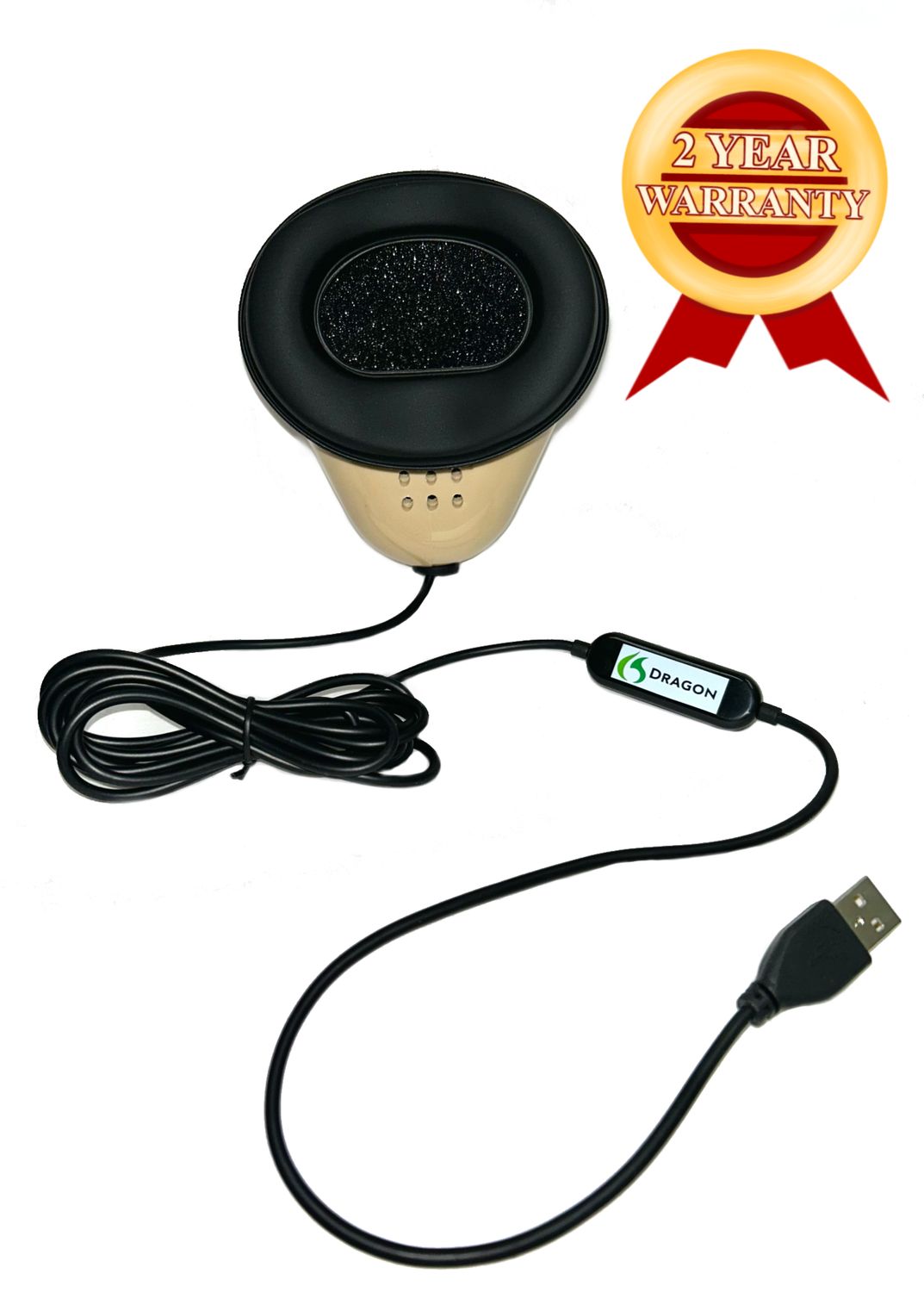
Martel's direct USB stenomask, SKU 1941, is a computer-connected microphone for the reporter's voice. Evaluate it for the job of receiving the reporter's private repetition of testimony, speaker changes and an objection. Confirm the computer has the needed connection and that the reporting application is receiving the intended microphone. A clear recording of the reporter saying “counsel objected as to timing” would show what the reporter actually dictated. It would not independently establish that counsel used those particular words.

Where the proceeding authorizes a room recording, it serves a different evidentiary purpose from a mask recording. The room microphone receives the participants in whatever acoustic conditions apply. The mask path contains the reporter's repetition. If an objection is clear on the room source and blurred on the mask sample, inspect how the reporter handled the transition. If both electronic sources are unclear, the participant's live clarification may be essential under the applicable procedure. Hearing a second indistinct copy does not make the missing word certain.

Test the equipment using an original passage that puts two confusable words on opposite sides of an interruption. Try “seal” in the witness's phrase and “sale” near the beginning of the attorney's. Read through a normal speaker change and inspect the saved result. If the audio is clear but both phrases are assigned to the witness, change your focus to the identification workflow. If the labels are accurate while the two vowels are hard to distinguish on the mask sample, work on the reporter's delivery and input test.

Review a difficult objection in context

Begin with a short section before the objection. Identify what the question asked, who was answering and how far the answer had progressed. Continue just beyond the point where the original speaker resumes or the examiner moves on. This deliberately wider review area helps avoid repairing an individual word while leaving the wrong speaker attached to the next sentence. It also prevents an apparent missing ending from being falsely supplied from a later, different question.

Use a two-row exercise key. The first row lists established words and their speaker, including interrupted fragments and resumptions. The second lists uncertainty and the authorized response. Score a reporter positively for correctly identifying a gap that required a repeat. A training system that penalizes every request for clarification equally can teach students to turn guesses into fluent-looking testimony. The desired skill is accurate capture under real conditions, including the judgment to recognize when an obstacle requires action.

Now review defensible punctuation. If the applicable format uses interruption marks, ensure they represent the event that occurred. Determine whether a witness actually resumed, whether the new words answer a rephrased question or whether two speakers talked simultaneously. Punctuation should support a reader's understanding of that sequence. Applying the same marks mechanically to every objection can turn a complete answer into a false interruption or make a later answer appear to complete a previous one.

Questions and answers

Does every objection interrupt the witness?

An objection may occur before a witness starts, in the middle of a word, immediately after a completed answer or between questions. Listen to the timing and actual speech. A witness who answered “Yes” and stopped has already completed that spoken answer even if counsel objects a fraction of a second later. An unfinished qualifying phrase presents a different event.

Should I complete an unfinished word if the ending seems obvious?

Represent the audible material under the applicable instructions and seek clarification when required. Several words can share a beginning and context can strongly suggest the wrong one. A fictional witness beginning “under the trans—” might be referring to a transfer stamp, a transportation label or a transparent cover. A later statement can help review established evidence but cannot make a guessed completion reliable.

What if an examining attorney interrupts their own question?

The interruption belongs to the examining speaker's turn and the following events as actually spoken. Record the start, the interruption or self-correction and the revised question under the relevant conventions. The witness has not supplied an answer simply because a question had begun. Practice versions in which the attorney restarts immediately and versions in which another participant intervenes first.

How do I tell a witness's pause from an interruption?

Attend to the words, the onset of the other voice and what follows. A pause does not automatically mean a sentence ended, and the presence of another speaker does not prove that the witness intended to continue. Use the format appropriate to the evidence. In a mock exercise, have the witness resume an incomplete phrase in one pass and start a new thought in another.

The reporter needs to hear and preserve what counsel actually says, including any ground expressly stated. The reporter does not supply an unstated argument or determine whether the objection will be sustained. If a technical term is unclear, use the appropriate clarification or authorized reference. A correct speaker label coupled with an invented legal phrase still misrepresents the exchange.

What if counsel says only “objection” and the court immediately rules?

Capture the one-word objection as spoken and identify the court's response separately. Resist filling in a reason from a nearby question. In a training exercise, alternate a bare objection with one that names a particular clause. Give full credit for the short version when it truly had one word. Accuracy is measured against the specific utterance, not the most detailed possible objection.

How should I capture the grounds when counsel gives two?

Listen for connecting words and scope. Counsel might say “as to the date and only as to the second conversation,” which contains limitations that matter to a reader. Preserve their order and assign the complete statement to the objecting speaker. A practice score should separately check both grounds, the connecting language and the end of the objection before the next speaker starts.

Do all transcripts use the same marks for interrupted speech?

The applicable venue or reporting authority determines transcript format. Federal guidance sets out its treatment of an interrupted speaker and a resumption and addresses simultaneous discussion. Follow that guidance for work to which it applies and check the independent standard for other work. A classroom example can teach recognition of the event without pretending there is one universal punctuation style.

When should I ask speakers to repeat themselves?

Use the authorized procedure when material words or identity cannot be reliably established. Identify the portion you did hear and the particular speaker or location of the gap if possible. An observer can rehearse this with a witness whose final two words are obscured while the objection remains clear. The reporter can then practice seeking precisely the missing part without supplying it.

Does an objection tell me the witness must stay silent?

The reporter records the actual behavior and directions in the proceeding. An objection, a subsequent instruction and the witness's response are distinct turns. Whether and how a witness proceeds depends on the setting and authority involved. In training, prepare an example in which the witness immediately pauses and one in which the witness continues over the objecting voice.

Can I group several objections from different attorneys on one line?

Treat each speaker and each utterance according to the applicable transcript format. Two attorneys may use the same one-word objection, or one may join an objection after the first attorney's statement ends. Accurate identification preserves that distinction. When simultaneous words cannot be attributed confidently, follow the authorized clarification process rather than assigning both to the most familiar speaker.

What if the objection includes the witness's name?

The name inside the objection belongs to the content of counsel's statement. It is separate from the label identifying counsel as its speaker. “Ms. Ives hasn't answered the earlier question” is not a witness turn merely because Ms. Ives is named. Create a practice example in which the speaker refers to the examiner and another in which counsel quotes the witness.

What if the witness continues with different words after a repeat request?

Preserve the sequence that can be established, including the response to the request as the instructions require. A repeat can contain a paraphrase, additional detail or changed wording. Comparing the repeat with authorized evidence of the first utterance can help identify the difference. Do not silently treat a clearer later sentence as the exact original speech simply because it is easier to understand.

How can I keep an objection from inheriting the witness label?

Practice the speaker-change operation in your reporting setup with a short, known script. Check which word was the last under the witness label and which word first appears under counsel. A delayed change can leave the opening of the objection attached to the witness while the balance is assigned correctly. Inspect the boundary itself rather than relying on a count of speaker labels.

Can I find the problem by searching the transcript for “objection”?

Searching is useful for locating many exchanges, but the disputed word may have been misspelled, missed or assigned to the wrong person. Combine the search with the surrounding question, a distinctive exhibit reference or an authorized timing marker. A student should also practice finding a passage where the interruption was expressed as “May I be heard?” without the conventional opening word.

What if the presiding officer speaks before the attorney finishes the objection?

The attorney's objection now contains its own interruption. Preserve the last established attorney words, identify the new authority and follow any direction to resume. A witness's original unfinished answer may remain pending as well. Separate the two pending turns in your notes or exercise key. The presiding officer may return the floor to either speaker or move on entirely.

Who speaks next after a ruling?

Capture the first speaker who actually resumes. It could be the witness, examiner, objecting attorney or another authorized participant. A quick return to a default witness label can misattribute a new question. In training, use three endings after the same ruling and hide which one will occur. Accurate reporting follows the audible event rather than a rehearsed prediction.

How does mask audio help after a fast interruption?

Martel Electronics | yesterday

Taking down an objection that interrupts a witness mid-sentence with a stenomask

Practice a witness answer interrupted by counsel. Follow the order of words, objection and ruling in an original mock exchange for voice writers.

A saved mask sample, when the configuration provides one, allows you to hear how you repeated the exchange. It can show that a speaker cue was late or that you shortened the last witness phrase. It cannot establish the original words of a participant if you never repeated them. Identify room and mask sources clearly before using either for review.

Would a second copy of my mask dictation separate overlapping courtroom voices?

A second path carrying the same mask dictation contains another capture of the reporter's repetition. It does not independently separate the attorney and witness who spoke in the room. A separately authorized room audio source can provide another perspective depending on its routing and pickup. Confirm actual sources and listen to a fictional test instead of judging by the number of files alone.

What should I look for when choosing a mask for this exercise?

For a reporting computer with a compatible USB connection, Martel's direct USB stenomask, SKU 1941, supplies a mask microphone input. Verify that the computer and reporting application select it and save the practice response as intended. Then examine the clarity of a speaker cue followed by a soft word. Resolving overlapping original courtroom speech requires listening and procedure beyond the mask connection.

What if I recognize the attorney's voice but cannot see who spoke?

Use reliable available identification and the applicable procedure for uncertainty. A familiar voice may be useful; an assumed seat or expected type of objection may be insufficient. In a remote or crowded setting two attorneys can sound similar through the room system. An explicit introduction or confirmation can establish identity more securely than a guess made after several similar turns.

Should the reporter reproduce counsel's emotional emphasis?

Capture counsel's actual words under the applicable record instructions. Emotion perceived by the reporter should not lead to an invented accusation, descriptor or interpretation. The aim of a practice readback is to make the interrupted sequence intelligible. Distinguish which speaker said which phrase without performing the speakers as characters or changing the wording to express an inferred mood.

How should a coach score a student who asked for clarification?

Check whether a genuine uncertainty existed, whether the student identified its location and whether the follow-up captured what was actually repeated. A focused, authorized clarification can demonstrate professional judgment. A question that supplies a guessed missing noun, by contrast, can influence the practice response. Score the accuracy of the resulting record and the quality of the student's observation separately.

What if the recording suggests that two words overlapped in the opposite order?

Review the authorized source and the precise event in context. Similar voices or a delayed electronic path can complicate the impression of order. Avoid moving a word between speakers on the strength of a vague sense that one voice was louder. If reliable evidence establishes a change, follow the correction procedure; if order remains genuinely uncertain, handle it under the venue's directions.

Why test an objection with a quiet qualifier at the end?

A student often remembers the loud opening and loses the limiting words as the presiding officer begins. “As to the name only” changes the scope expressed by counsel. Put an ordinary opening and a quiet limitation into an original exercise, then ask the student to identify the last words of counsel's turn. The result reveals a problem that a simple search for “objection” misses.

What if the attorney says “same objection” two questions later?

Take down the phrase as spoken, identifying its actual speaker and place. Do not replace it with your own reconstruction of the earlier ground. A reader can examine the earlier exchange in the record. A practice passage with two prior objections can demonstrate why silently choosing the one the reporter thinks counsel meant would add an interpretation to the later statement.

Can a reporter lose words even when each individual speaker is easy to understand?

Yes. The difficulty can arise at the switch between turns, especially if the reporter is finishing a pending detail when another speaker starts. In a paired exercise, have each participant read clearly at a moderate pace but arrange an unexpected change immediately after a number. Score the number, the new speaker's first words and their labels. Both voices can be clear while the transition still fails.

What if I mark an interruption but the witness never resumes?

Leave the record faithful to the unfinished speech and what actually occurred next. A formatting convention for a resumed sentence is relevant only if there was a resumption. A new question may shift to another subject. In review, look beyond the ruling for the speaker and content of the next turn before connecting it to the earlier unfinished answer.

How can I distinguish an interruption from quoted dialogue?

A witness might say, “She cut me off and said, ‘Don't finish that sentence.’” That is a witness recounting an earlier interruption, not necessarily someone interrupting the live witness. Attend to the present speakers and the words introducing a quotation. A practice script can include a quoted objection followed by a real objection. The two occurrences require different speaker treatment.

How can I document improvement over several practice sessions?

Keep the original scripts and note the type and location of each problem: final witness words, identity, opening of the objection, limiting phrase, ruling or later resumption. Choose one of these for the next session and change the fictional surrounding facts. Improvement is demonstrated when the same difficult feature is captured accurately in new material, without relying on a memorized answer or assumed speaker order.

Sources

This article is for educational purposes only.