When an attorney asks for the last answer, the voice writer has two jobs in succession. Finish taking down the exchange and establish which words the request covers. Then, as the proceeding permits, address the people who need to hear the readback. Speaking the answer again into the stenomask alone may give the reporter's computer an excellent sample of the reporter's voice while the attorney at the table hears very little. Move from the private dictation position to a speaking position the listeners can hear. The exact microphone and recording arrangements depend on the room.
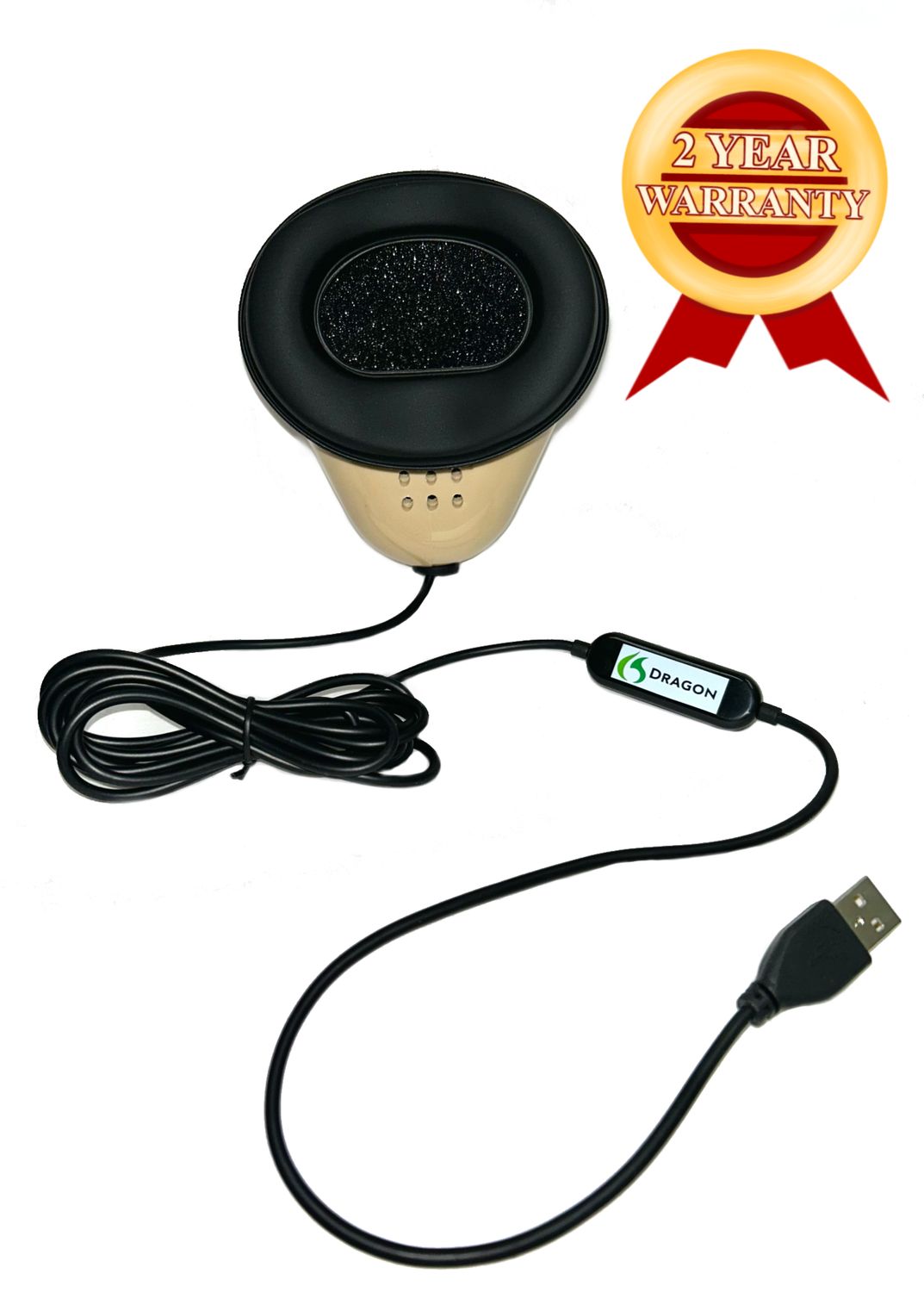
The response is a reading of an earlier answer, not another answer by the witness. That distinction matters before, during and after the reading. It determines which words to locate, how to identify the event in the record and where to resume taking live testimony. With a personal Martel USB stenomask, SKU 1941, the reporter can practice the transition on a computer with a fictional exchange, an authorized practice recording and someone seated where counsel would sit.
Martel equipment in this guide
What does “the last answer” refer to?
A short request sometimes points to a long stretch of speech. A witness may have answered a question, paused while an exhibit was displayed, then added a qualification. Counsel might say “Would you read the last answer?” while looking at the qualification. Looking in the same direction helps a reporter notice the request. It does not establish that the speaker wants only the qualification. Start at the most recent answer and find its opening and closing words. If more than one passage fits, use the appropriate procedure to establish the scope.
In a fictional practice exchange, counsel asks when a parcel reached the warehouse. The witness answers, “Just after noon. I was at the side entrance when the driver called, and I didn't see him sign in.” The request could call for three sentences or only the statement about the signature. The difference matters. Somebody who hears just the final sentence learns what the witness didn't see. Somebody who hears the entire answer also learns the witness's location and the reported time. There is no need to select the more interesting sentence for the listener. The specified range supplies the answer.
A question may also be necessary. “I believe so, but only the east loading door” is intelligible as language while still leaving an audience unsure what the witness believes. If counsel or the court requests the question and answer, read the two in their original order and keep the identities audible. If someone requests just the answer, having the question available is useful even if it remains outside the reading. It gives the reporter a way to confirm that the selected answer belongs to the right question.
Two consecutive answers can begin with the same words. At a mock deposition, put “About six inches” in the answer about clearance above a shelf and again in an answer about a mark beside a hinge. A search for that phrase returns both. The nearby noun, the question, the speaker and the order of turns identify the right occurrence. Make this a deliberate part of practice. A search result is a place to look. The surrounding exchange is the evidence that you found what people asked to hear.
Keep the request with the proceeding
The request itself can contain information people need later. A judge might narrow a request to the answer after a particular objection. An attorney might withdraw it before the reporter begins. Another participant might ask whether the question can be included. Take down what is said according to the instruction governing the proceeding. Looking for the earlier passage is easier when the reporter has retained the words that identify it.
A practical sequence starts with finishing the current spoken turn. Mark or remember where live testimony stopped using the available reporting tools. Locate the requested passage and keep the return point in view. A second display area or a temporary place marker can be useful if the reporting application supports it. Practice with whatever operation is available to you. The goal is to avoid using the cursor position inside the old answer as the place where new testimony will start.
Consider what a person seated beside the reporter sees. A glance down may mean the reporter is retrieving words. It may also look like a signal that everyone can begin talking again. When local practice permits, a short audible acknowledgment helps the participants understand that a readback is in progress. There is no universal phrase required for that transition. The useful information is whether the reporter has the requested passage, whether clarification is needed and when the reporter is ready to resume. Keep any statement concise enough that people can hear it without losing track of whose words are being read.
Identify the words before changing how you speak
During mask dictation the reporter repeats the participants' words and may use cues for speaker changes or formatting. A recognition program's first rendering can leave a word incomplete, put punctuation in an odd place or substitute a plausible word with a different meaning. The computer's display is a working aid. Reading it aloud deserves the same attention that a reporter gives an uncertain spoken word during initial capture.
Give the reader of a practice transcript two nearly identical answers. One says “I could see the lower latch.” The other says “I couldn't see the lower latch.” The beginning, subject and object match. The contraction changes the whole observation. Train your eye to find that contraction before concentrating on a natural reading voice. If the text is doubtful, examine the source available and authorized for that proceeding. A reporter should be able to explain which word remains uncertain; choosing the more plausible answer from the case narrative cannot establish it.
Pay the same attention to a speaker's correction. “I reached the site on Thursday, sorry, Tuesday” contains both days. The second day gives the correction. Reading only “Tuesday” might satisfy a listener seeking a date but would compress the witness's own sequence. A verbatim readback preserves self-correction within the requested range. Likewise, “I think she went upstairs” assigns a different degree of certainty than “She went upstairs.” Words that make an answer less decisive often sound easy to rush past.
Look at the end as closely as the beginning. “He told me the account was closed” and “He told me the account was closed when he came in” have different endpoints. If the request interrupts the second version, be clear about what words had already been said. Where procedure calls for a repeat or a clarification, the reporter can make the gap visible without inventing a completed sentence. A nice grammatical ending is no substitute for a word the reporter actually heard.
Move from mask dictation to speaking to the room
In a quiet room the mask's job is to receive the reporter's dictation. The lawyer's job during readback is to hear the reporter's public speaking voice. Imagine the attorney seated on the short side of the conference table, the witness two seats away and the judge or presiding officer beyond a monitor. They may all be within speaking distance while having different sight lines. Position yourself so you can look at the selected text and still speak toward them. A chair turned a few degrees can make this easier than bending toward the computer.
Rehearse the simplest transition that suits your arrangement. Hold or position your personal stenomask in its working place. Silently find the first word to be read. Move the mask far enough from the speaking position that the room can hear the words you intend to address to it. Keep the reading at a conversational pace appropriate to the listener and the room. At the end, return to the working position and ensure the reporter's reporting input is ready for the next speaker. That is a physical sequence to practice alongside the reporting procedure. It is not a requirement to disconnect the mask.
In some rooms the reporter addresses a designated room microphone. In others people seated nearby hear the reporter directly. In a proceeding with a remote participant there can be a third audience listening through the meeting system. A successful informal test at the table establishes only what happened at that table. Before a mixed-location proceeding, confirm the authorized arrangement for the reporter's spoken address. A person who is clear in the physical room can be silent at the remote end if the selected outgoing microphone is pointed somewhere else or remains muted.
Be careful about which control you operate. A control that stops a recording, a control that mutes the outward-facing meeting microphone and a control that changes the computer's dictation input can look similar. Their consequences are distinct. A reporter who wants to speak audibly does not automatically need to stop a proceeding's recording. Test individual functions in a mock job; follow the established recording and readback procedure at work. Make the user-visible labels and the purpose of each control part of your rehearsal.
Read with a neutral voice and a clear boundary
A reader may unconsciously give one part of an answer special weight. “She left before the light went out” can sound like an accusation if the reader strongly emphasizes “before.” A neutral presentation allows the words to carry their own meaning. Aim for intelligibility, including the small connections between phrases, without acting out the witness. Where separating a question from its answer is necessary, make that distinction clear using the venue's regular presentation.
A readback can include an exhibit identifier, an address, a date or a string of digits. Say these clearly enough that a listener can recognize the same sequence recorded. If you have “three one six,” saying “three hundred sixteen” might seem more efficient. The two forms can function differently in a part number, an address and a quantity. For readback, use the original words or the authorized rendering from the record. Invented units, added decimal points and filled-in street names change what the listener hears.
The ending deserves a small, clear pause. On a practice recording, compare reading through the end of the answer directly into the next live question with ending the reading and allowing the question its own start. A listener should be able to tell whether a phrase belongs to the earlier answer or to counsel's follow-up. The reporter's return to the mask provides a physical cue, but people who cannot see it still need a clear audible sequence.
The federal Guide to Judiciary Policy discusses how a readback or playback appears in a federal transcript. Its instructions address the relationship between the original passage and the request, including the location of the earlier material. That is a reason to keep track of exactly which passage was read. An independent deposition or a state proceeding may use different transcript instructions. Confirm the applicable format with the responsible authority. The reporter's in-room delivery and the eventual transcript notation answer different questions.