TIME IS RUNNING OUT FOR 2026 TAX WRITE-OFFS

You may be able to repeat a witness word for word until you also have to choose a punctuation mark, say its configured cue and catch the first words of the next thought. Find out which part is costing you words. Make one recording in which you repeat an original practice passage using ordinary speech alone. Make a second recording of the same passage with the spoken punctuation your own reporting setup supports. Compare witness words, punctuation decisions, recognition of cues and the next few words after each boundary separately.

If your masked repetition remains accurate on both recordings and only the first written output changes, your next task is to check how the application interpreted the cues. If the witness’s words disappear from your masked speech as soon as you add a cue, you have found a listening and production task to rehearse. A direct computer-connected stenomask provides the speech input. Your instructions, chosen software configuration and performance determine what that input becomes on the page. The dialogue and worksheets below are fictional practice material.

Martel equipment in this guide
Separate the word you repeat from the instruction you add

A source speaker says, “I carried the paper bag into the front office.” They need not say a word meaning “end this sentence” for the finished statement to have punctuation. A voice writer may supply a supported cue to produce the required mark. The source speech contains the witness’s words. Your masked dictation can contain both those words and a reporting instruction. A first text may contain a printed mark, a literal word, a misplaced mark or a combination of errors. These are three different observations.

Make their roles visible before running a speed passage. Write the short sentence in a left column titled “spoken by witness.” Put a plain indication such as “[end mark here]” in a second column titled “intended result.” In a third column put the documented utterance or supported action you actually use. Keep that third column private to your configuration. The bracketed words in this guide describe a function in an exercise and are never a universal dictation command.

Test a single end-of-sentence cue on an invented practice line. Open a new practice job at a clearly identified insertion point, speak your fictional sentence and use the configured cue. Examine the complete first output after the application has finished that line. Was the statement present? Did the mark appear at the intended spot? Did any literal instruction word remain? Repeat with a fresh sentence. A cue that does not work reliably in a single calm line gives you an identifiable configuration question before speed is added.

Now look at the next word. A punctuation cue can work perfectly while you lose the beginning of the following sentence. This is the most informative place to score when a reporter says, “I can repeat the passage until I punctuate it.” A page containing beautiful punctuation and missing content is giving you partial evidence. During review, draw a small box around the first two or three witness words after each intended mark. Check those words in the source, in your mask audio and in the first available text.

Build a practice key for the writing task you were actually assigned

Use a teacher-approved written model when the exercise has a prescribed punctuation style. In self-directed practice, choose a modest key in advance and label it as the chosen model for that exercise. There can be defensible differences in how an utterance is punctuated. A scored rehearsal should not treat every alternative as a proven listening error. Separate agreed requirements, acceptable alternatives and actual word loss on your sheet.

Suppose a reader says, “I checked the inside first the tag was on the outside.” In an exercise where the written model uses two sentences, the chosen boundary falls after “first.” Another editor might introduce a different mark between the two independent thoughts. The listener must still capture “the tag was on the outside.” When the mark differs but the words remain intact, note a punctuation decision. When the words “the tag” disappear after the cue, note a content omission. These two notes lead to different next exercises.

Keep the key uncluttered enough to see the speech underneath the symbols. Use one row per boundary, with the last two words before it, the intended printed mark and the first two or three words after it. Add a small space for cue heard in mask, mark produced in text and witness words preserved. If you do not have a separate recording at one stage, leave the observation unavailable. You can still score what you heard from the source and what the visible job retained.

Start with only those marks for which the exercise gives a clear decision. A clean question-and-answer turn with one direct question and one simple declarative answer is easier to assess than a stream of nested quotations and abandoned clauses. After a basic comparison works, add a more difficult choice such as a witness correcting an earlier phrase. The progression lets you distinguish difficulty selecting the intended mark from difficulty saying a cue you have already selected.

Run the two passes on one original paragraph

Have another reader record this fictional description of an office inspection. Read naturally and leave the words unchanged. The written punctuation below is an exercise key. The reader speaks the words, including the question as an actual question, without saying the punctuation labels. If you record a practice source yourself, keep the script out of sight on the later dictation attempt and acknowledge what you might remember.

“I set the tin on the counter. The label faced the wall. Was there a date on it? I remember a date on the loose card, and I remember a blue line on the lid. The clerk lifted the card. Under it were two folded slips. I took the narrow slip first. The wide one stayed under the tin.”

For the first pass, repeat the paragraph into your stenomask without deliberately adding spoken punctuation cues. Save the mask sample before editing. This is a private comparison exercise, not a model for producing a completed professional transcript. Some applications may put their own punctuation into the text depending on configuration. Your first-pass question is about the words you supplied. Use the source and saved masked speech to determine whether “loose card,” “under it” and “wide one” arrived intact.

For the second pass, use the same source and your configured cues for the chosen written key. Select three target boundaries before scoring. One comes after “wall,” just before the question begins. One comes after “card,” where the statement continues with “and I remember.” One comes after “card” in “The clerk lifted the card,” where a new sentence begins with “Under it.” The same noun appears at two different kinds of boundary, so you must listen to its function in the actual thought.

Write the before-and-after phrases from the first and second mask recordings. Suppose the first pass retains “Under it were two,” while the second contains the cue for an end mark and then begins at “two folded slips.” The mark may be correct even though you lost an introductory phrase as you produced it. If both mask recordings contain “Under it were two” and the second text begins at “two,” investigate the first text, active field and cue interpretation. The source, mask and text tell you much more when matched by the particular occurrence of “card.”

Because the second hearing is familiar, a better or worse score on this paragraph cannot settle every question about what causes difficulty. Have the reader create a fresh paragraph with a declarative opening, a brief direct question and a sentence beginning with a location phrase. Use the punctuation condition first on that new passage, then do an audio-only comparison. Keep the evidence for each passage labeled. If loss after an end cue reappears with different nouns and a different order, it deserves a focused exercise.

Discover whether the trouble is deciding, speaking or interpreting

A punctuation decision can take time before any cue leaves your mouth. You may be considering whether a witness has completed a thought when the next thought has already begun. During a practice replay, ask yourself which boundary you intended and when you recognized it. Use a short source where the decision is agreed in advance, then another with a genuinely ambiguous clause. If witness words disappear only in the ambiguous example, work on recognizing the syntactic break with your instructor.

A different problem occurs when the decision is obvious but producing the cue interrupts the flow of your masked speech. Listen for extra hesitation, a restart of the previous phrase or a gap before the next source word. Select two short, neutral sentences with clear endings and immediate fresh starts. Use the same documented cue at both ends. Rehearse delivering the end of the first thought, the cue and the first words of the second as three distinct pieces, without squeezing the witness’s words into a different order.

The text system may interpret a cue differently from what you expected. It might display a literal word, enter a mark at a different location, or apply a different supported punctuation behavior in the current mode. First verify your actual configuration from its documentation or provider. Systems and vocabularies vary. Record what is present in the saved mask audio, what you expected from that cue and what the application first produced in a fresh practice job. Do not invent a new spoken command on the strength of a printed example in a general guide.

Finally, an editing action can change a correct first output. A reporter may add a mark manually at review, paste text beside an existing mark or place the insertion point on the wrong side of a quotation. Save an unedited copy when the application supports it. If the first copy contains the expected words and mark but the edited copy moves or duplicates it, the weakness is in review or editing. A more disciplined edit on the saved practice job is a better next step than modifying a working dictation profile.

Give the beginning of the next thought a dedicated drill

The most productive exercise for one writer may be only eight or ten seconds of ordinary speech. Use two fictional statements in which the second begins with a vulnerable short group. “I left the tray beside the sink. In it were the receipts.” “There were two coats on the rack. One of them was mine.” “I stood in the doorway. Up by the window somebody was waving.” Each second opening contributes information that cannot safely be reconstructed from the end of the sentence.

Record the source reader doing all three pairs with natural boundaries. Privately choose one cue condition, use it on the first passage and score only the last words before the boundary and the first complete group after it. Then review the rest of the words, so an apparent gain at the chosen boundary does not conceal a new loss later. If the guided rehearsal produces “receipts” with no “In it were,” the trouble is now easy to demonstrate.

Add a speaker change to a later round. Counsel asks, “Did you set the second tray beside the window?” The witness responds, “Not that one. I set the first one there.” The cue at the question end and the operation for a witness answer may arrive in close succession. If your configured workflow uses both, inspect the case where each works alone before combining them. When combining, score the attorney’s last noun, the punctuation, the speaker ownership, and the witness’s opening qualification as separate items.

The last example shows why a reporter should not measure progress solely by punctuation density or output speed. “I set the first one there” forms a neat answer and may look good on screen. It omits the witness’s rejection of the second tray. Listen for the two words “Not that” and the object “one” before praising the visual result. A strong boundary exercise accounts for the people’s actual words on both sides of the mark.

Handle a spoken punctuation word as testimony

A witness in a fictional office case says, “The label had the word comma on it.” The witness supplied a literal ordinary word naming a mark. The reporter may intend to produce that word in the transcript, together with the end mark required by the sentence. A general guide cannot prescribe the syntax that distinguishes literal dictation from a command in your software. Consult the documentation or support instructions for your configuration and test the distinction in a new practice document.

Try a short fictional exchange. Counsel asks, “What did she call the mark after the first number?” The witness replies, “She called it a comma. I thought it was just a scratch.” In the practice source the witness says “comma” as a name. On the chosen written key, the reporter also needs a boundary after “comma.” Rehearse two observations, one for the literal word and one for the mark or formatting decision. If the text displays only a punctuation symbol where the word belongs, the literal result was not achieved even though the software acted consistently with its current settings.

Other words can be ambiguous in a particular configured vocabulary. The relevant question is whether the actual speaker uttered that word or whether the reporter supplied it for an entry action. Write those two roles down before altering vocabulary entries. Test an original sentence in which the word clearly belongs to the witness, and a separate sentence in which the same or similar utterance is part of the reporter’s supported command process. Save the first results and state exactly which behavior changed.

Practice restarts and quotation boundaries with a controlled key

An abandoned thought can tempt you to choose its final punctuation before the speaker reveals the revision. In a fictional practice line, “I took the tan folder, I mean the plain folder underneath the tan one,” the written model may use a particular convention to represent the self-correction. Identify the words naming both folders first. Then apply the format assigned by your course. You benefit from a correct decision about the mark only when the original and corrected objects both remain in the captured wording.

For a quotation exercise, choose a clear fictional source. “She said the inside tag read hold for pickup. I didn’t see those words myself.” Give the reporter a key that identifies what the witness explicitly attributed to the tag and the separate statement about what the witness saw. The exercise organizer can prescribe how to display the reported wording. Score the opening and closing boundaries, then the first words of the witness’s qualification. If inserting a closing mark consumes “I didn’t,” you have discovered a difficulty with meaning as well as visual style.

A key with too many specialized marks can bury the feature being studied. Begin with one quotation requiring agreed treatment, one restart, or one ordinary clause boundary. Put a short unrelated sentence after each to test recovery. Increase complexity only when you can say whether the previous error came from the punctuation decision, spoken production, command handling or manual editing. A small accurate inquiry is especially useful when a student is considering changing reliable equipment to fix a word-processing issue.

Make the equipment test match the question about punctuation

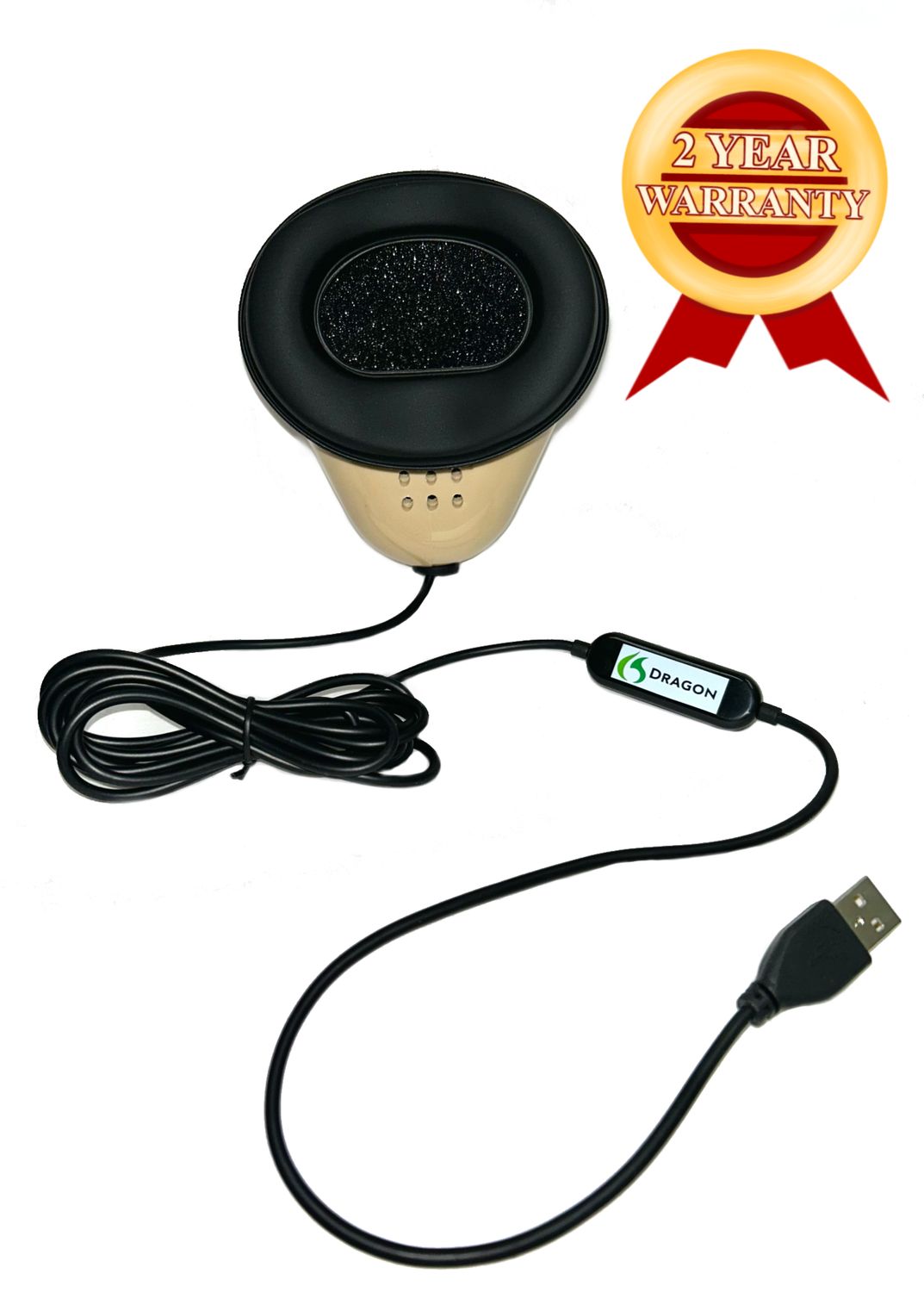
The Martel USB stenomask, SKU 1941, offers a direct USB microphone connection for a compatible reporting computer. Verify the physical connection and select that input in the application that saves the practice audio. Speak a unique identifier and an original test sentence, then play back the saved sample. This check lets you hear whether the cue and the surrounding spoken testimony reached the intended microphone path.

If the same audible cue is present in the saved masked speech but has inconsistent written results, confirm that the reporting application also selected the intended input. Note whether the application was entering text, editing an existing line or handling an instruction in its current mode. Those details can change what the application does with a spoken utterance. A product photograph and connection description help identify the microphone. They cannot specify the cue vocabulary installed in another program.

A student shopping for a first mask can check the Martel product and category pages against the school’s current equipment requirements. For this exercise, the product’s practical value is the ability to provide a clearly identified input carrying the writer’s speech. If the audio recording itself contains the complete cue and the next witness phrase, purchasing a second device will not establish why a particular written application moved a mark. Focus the purchase or support question on the path for which you have actual evidence.

Read the results as a practice decision

Keep three totals for the short passage. Count the witness words that changed, the intended punctuation decisions you made correctly under the chosen key, and the cues the application executed as expected. These totals cover different opportunities. A passage with eight chosen boundaries and sixty spoken words cannot use one denominator for both. Note any location where the original words survived and a reasonable alternate mark was chosen. Review it with the instructor whose style conventions govern the exercise.

For a fictional numerical example, imagine six deliberately scored boundaries. The writer chose five of the six marks according to the exercise key, spoke all five chosen cues intelligibly, and saw four of those five appear as expected. Two witness words after separate boundaries also disappeared from the masked repetition. Record those as three different results. That summary leads to a punctuation-choice lesson, a specific entry question and a listening drill after the cue, rather than a blanket verdict that the mask or writer “failed punctuation.”

End with a new pair of sentences containing the same difficult boundary and different subject matter. Decide what evidence would count as improvement before the run. You may need the witness’s opening words to survive, a literal punctuation word to remain a word, or the mark to appear in the expected position. A clear outcome makes even a short practice session productive.

Questions and answers

Why can I keep up until the first spoken punctuation cue?

A cue adds a production task at the moment you also need to hear the next words. You may spend time deciding on a mark, speaking the cue, checking the screen or returning to the witness. Record an original two-sentence pair and inspect those moments separately. The first difference between the speech-only pass and the punctuated pass gives you a specific part of the task to rehearse.

Are the bracketed labels in a practice key commands I can dictate?

They indicate the intended written function for the exercise. Use the exact supported utterance or action your application, vocabulary and course specify for that function. Different configurations can interpret the same spoken expression differently. Test a single invented line in a fresh practice document and observe the result before introducing the cue into a speed exercise with several other demands.

What counts as a lost word in this drill?

Compare what the source speaker actually said with what you supplied in your mask. If the witness says “under it were two slips” and your mask begins at “two slips,” the first three source words are missing from your spoken capture. If your mask includes all the words and the written output omits them, record a separate text-entry difference. The location of the loss changes the follow-up.

Can punctuation be wrong even if every witness word survived?

Yes. You can accurately repeat the words and choose a boundary that differs from the agreed written key. You can also choose the correct mark and see the application place it somewhere unexpected. Preserve the words as a successful part of the trial and name the mark issue precisely. That lets you practice punctuation decisions without unnecessarily rebuilding a working method for hearing testimony.

What should I do when two punctuation choices are defensible?

Record the required model for the course or job and note the alternative you considered. In a private exercise, avoid scoring a defensible variation as a proven failure to hear the witness. If the ambiguity makes the task impossible to grade fairly, use a new source with a clearer boundary. The goal of a controlled test is to evaluate a known feature, not to settle every editorial preference.

Why listen to the first few words after each mark?

They are where an extra spoken task can collide with incoming testimony. A mark may appear perfectly in the first text while the beginning of the next idea vanishes. Identify the actual group, such as “In it were” or “I didn’t see,” before scoring. These words often establish location, ownership or uncertainty, and a polished sentence can hide their loss.

What if my software inserts punctuation on its own?

Document the active configuration for your exercise and examine what occurs in a fresh fictional sentence. The software’s automatically supplied mark and the reporter’s deliberately supplied cue can both affect the visible result. Use the saved mask recording to identify which cue you actually spoke. Consult supported settings before changing anything, and compare fresh first outputs under clearly labeled conditions.

Is an audio-only first pass worthwhile without a transcript?

It is useful for establishing whether you can repeat the source’s words before the punctuation task is added. You can compare the source and your saved mask speech directly. It tells you little about how a particular written application will interpret cues. Mark it as a spoken-content baseline and introduce the active reporting configuration in a separate, identified run.

What if the words “new sentence” appear in my practice text?

Determine who spoke those words and what behavior was intended under your configuration. The witness might have used them literally, or the reporter may have attempted an instruction. Check the saved audio, the current application mode and its documented vocabulary. Test a fresh simple example before adjusting a profile. A general description of a desired function in a guide is insufficient evidence of a supported command.

How can I keep a direct question and its short answer separate?

Use a two-voice fictional exchange with a clear question boundary and a one- or two-word opening answer. Mark the question ending, the punctuation, the speaker change and the witness’s first words independently. If you handle the end mark but miss the response, rehearse the handoff. If the words survive under the wrong label, verify the supported speaker-entry procedure in your configured reporting workflow.

Should I repeat a sentence from memory after a punctuation error?

A remembered correction can teach the chosen formatting pattern, but preserve the initial result and label the retry. To learn what happens on first hearing, use a different sentence with the same kind of boundary. Changing the subject matter helps reveal whether you can coordinate listening and cueing again without recalling exactly which words followed the prior mark.

How should I test punctuation during a witness’s self-correction?

Start with a fresh fictional line in which the witness clearly names one object and then corrects it to another. Identify both sets of words before applying the required transcript convention. Play the masked speech back and check whether your spoken cue displaced the second object or the correction phrase. Only then compare the printed mark with the key assigned by the instructor.

What if the cue is audible but the program enters a different mark?

Collect the exact spoken cue, intended mark and first displayed result from the same new practice job. Verify the documented behavior in the application’s current mode and word list. Some apparent mark errors arise after an edit moves the insertion point. If the result remains inconsistent on simple fictional sentences, the software provider can investigate the specific, reproducible example.

Can one word function as testimony and as a command?

That depends on the vocabulary and software configuration. The source speaker can certainly name a punctuation mark, and the reporter may also use spoken instructions for formatting. To test literal dictation, write one fictional sentence where the word belongs on the page as a word. Test the configured punctuation function separately. Inspect both first outputs before combining the roles in a longer exercise.

Why would a comma be harder than a final punctuation mark?

Some clause boundaries demand a choice while the speaker is continuing the same thought. An end mark after a clear short answer may have a more obvious location. Use a written model appropriate to the exercise, and compare a known internal boundary with a known final boundary in similar material. Your own results can show whether the decision, the cue or the following words are creating the difficulty.

Is a pause always evidence that a sentence has ended?

A pause can reflect thought, interruption or delivery style. A speaker may pause halfway through a phrase or continue into another sentence with little audible break. Listen to the complete construction and apply the applicable transcript instructions. For beginning practice, use clearly shaped fictional questions and statements. Later, compare two different readers delivering the same words with different pauses.

What if a cue stops me from hearing the witness’s next noun?

Create a short drill with three different nouns immediately after comparable punctuation boundaries. Save the masked rendition and inspect the noun itself and the words leading into it. Give yourself an easier first run and then introduce a fresh continuous source. A consistent loss at the same boundary gives you evidence of a production or listening collision rather than a general vocabulary problem.

Martel Electronics | yesterday

Why stenomask dictation gets harder when you add spoken punctuation

Compare two passes of an original dictation passage. Identify where speaking a punctuation instruction costs a word or changes the sentence.

Should I monitor the live text while learning spoken punctuation?

An occasional check can show whether a function is active, but looking at every mark may create another competing task. Run a short fictional passage with your attention on the source and review the saved output afterward. Compare it with a separate pass in which you watched the text. If the next witness words suffer only in the screen-watching condition, your review habit deserves attention.

How can an instructor demonstrate this without prescribing one program?

Provide a common source recording, an agreed written model and a worksheet with the functional purpose of each mark. Have each student use the approved commands for their own configuration. Compare word retention and mark placement using the common key. Program-specific support questions can then be addressed individually, while the class learns the same distinction among source words, reporter cues and printed results.

How much punctuation should I put in a first speed drill?

Use enough to expose the precise feature you are studying. Two or three unambiguous end marks and one internal boundary can produce several informative comparisons. A dense passage with complicated quotations may overwhelm the evidence from the first attempt. Increase difficulty using a new source once you can explain why a particular witness phrase or mark disappeared.

What if my voice sounds different when I say a cue?

Listen to the cue and the surrounding witness words on the saved mask recording. A deliberate distinction might be part of your documented workflow or individual technique. The practical question is whether the cue remains recognizable and the following testimony stays intact in your usual working voice. Avoid exaggerating the entire phrase solely to make a single practice cue work.

Do I need a new microphone for punctuation problems?

First establish whether the selected mask path captures both the intended cue and the surrounding speech. If it does, investigate interpretation, application mode, listening coordination or editing as indicated by the evidence. If the saved sample itself loses sound, verify the chosen input and connection. Consider equipment options after identifying the actual problem your purchase needs to address.

Which Martel stenomask fits a direct computer-input exercise?

The Martel USB stenomask, SKU 1941, provides a direct USB microphone connection for a compatible computer. Verify the actual receiving port and the reporting application’s input support before ordering. For this punctuation exercise, the critical practical check is an identifiable saved sample of your own voice, so you can compare the spoken cue with the printed result.

How do I test a closing quotation without memorizing the sentence?

Ask a reader to write and record a fictional answer quoting a short label and then giving a separate personal qualification. Obtain a key for the intended quotation boundaries. On the first pass, follow the spoken source. During review, check the quoted wording and the first words outside the quotation. A fresh source gives you more evidence than repeating the same familiar tag over and over.

What if the mark appears twice after I edit?

Check the saved first output if available. An automatic action, a spoken instruction or a later manual edit may each have added a mark. In a fresh practice job, test the spoken production and the manual editing action separately. Match each resulting mark to the stage at which it first appears. That tells you whether to rehearse dictation, review the configuration or adjust an editing habit.

How does a punctuation error differ from a speaker-ownership error?

A misplaced question mark changes how a line reads. Wrong speaker ownership attributes words to the wrong person, even if the mark is correct. Your practice worksheet should contain a slot for both at turns between counsel and the witness. A clear target such as “Counsel’s last noun, the question mark, witness label, first answer word” helps you spot the actual failure without treating all turn errors alike.

What should I do with a passage where the source reader changed a word?

Check the recording against the prepared key. If the reader departed from the script, use what was actually delivered for spoken-word comparison and note any resulting ambiguity in the intended punctuation. You can rerecord the passage for future use. Scoring the writer against an unchanged printed script when the audible source differed could wrongly assign the reader’s change to the reporter.

Is a single percentage enough to summarize this drill?

Give each measured element its own count. You might report correctly chosen marks out of scored boundaries, executed cues out of valid cues actually spoken, and missing witness words out of the source words reviewed. A single combined percentage hides whether a student needs a punctuation lesson, a command check or practice hearing the next phrase while speaking a cue.

What should I include in a support request about a cue?

Use a newly written fictional sentence and provide the exact documented function you were trying to invoke, the visible mode, the selected input, the first text and whether the cue appears in a corresponding saved mask sample. Include the relevant application version and what happened on a second new example. Those details let the appropriate provider investigate the reported behavior without needing material from a proceeding.

What indicates that I can move on to a harder punctuation passage?

Look for reliable first-pass retention of the witness’s words surrounding the mark and consistent execution of supported cues on fresh examples. Ask your instructor whether your punctuation decisions meet the applicable style requirements. Then add one new demand at a time, such as a speaker change or an attributed quotation, and keep the same clear distinction between the words, the cue and the result.

Sources

This article is for educational purposes only.