TIME IS RUNNING OUT FOR 2026 TAX WRITE-OFFS

You can begin practicing with your own compatible stenomask and a recording arrangement that saves your dictated voice. You need original practice speech to listen to, a receiver that accepts the mask input, a way to replay the saved sample, and a written answer key. You can then check whether you heard the speaker, repeated the actual words, preserved speaker changes and captured intelligible dictation. Computer-aided transcription software, often called CAT software, becomes necessary when the exercise calls for the particular text, formatting or reporting-job functions it provides.

Ask your school which assignments it accepts as audio-only. A practice recording can demonstrate the words you actually dictated. It does not demonstrate that recognition rendered those words correctly, that a transcript meets the school’s format, or that you have met a professional credential’s requirements. Make the first exercise something you can score honestly with the equipment already available to you.

Martel equipment in this guide
Decide what you want to learn before opening your recorder

For a first assignment, choose one question about your own performance. Did you repeat the answer without substituting a different noun? Did you carry the speaker change when a second person interrupted? Did you preserve a correction instead of reporting only the final version? These are natural questions for a voice writer because they concern what the reporter said into the mask. A saved voice sample and an original reference can answer them directly.

Choose a different question when you eventually use recognition or CAT software. Did the recognized text preserve the words that are clear on the saved mask audio? Did a spoken reporting convention produce the expected formatting? Can you locate the correct section in a reopened practice job? These observations require the corresponding software stage. Keeping them off the audio-only score sheet avoids penalizing a student for an exercise their setup cannot perform.

A written goal should be smaller than “become accurate.” Try, “repeat the witness’s original description and the correction in the same order,” or, “capture the difference between a question about two tickets and an answer about two ticket stubs.” When the goal describes a specific feature of the language, the reference passage can include it deliberately. The student can identify exactly what improved or failed after listening to the saved sample.

Set a stopping point before the exercise begins. One short passage, one first listen to the saved voice, and one comparison with the written key are enough to produce a usable observation. Repeating a passage ten times may make the final attempt sound polished, but it can hide what the student heard on the first attempt. A later run with unfamiliar words is a better test of whether the lesson transferred.

Build an audio-only station with equipment you can identify

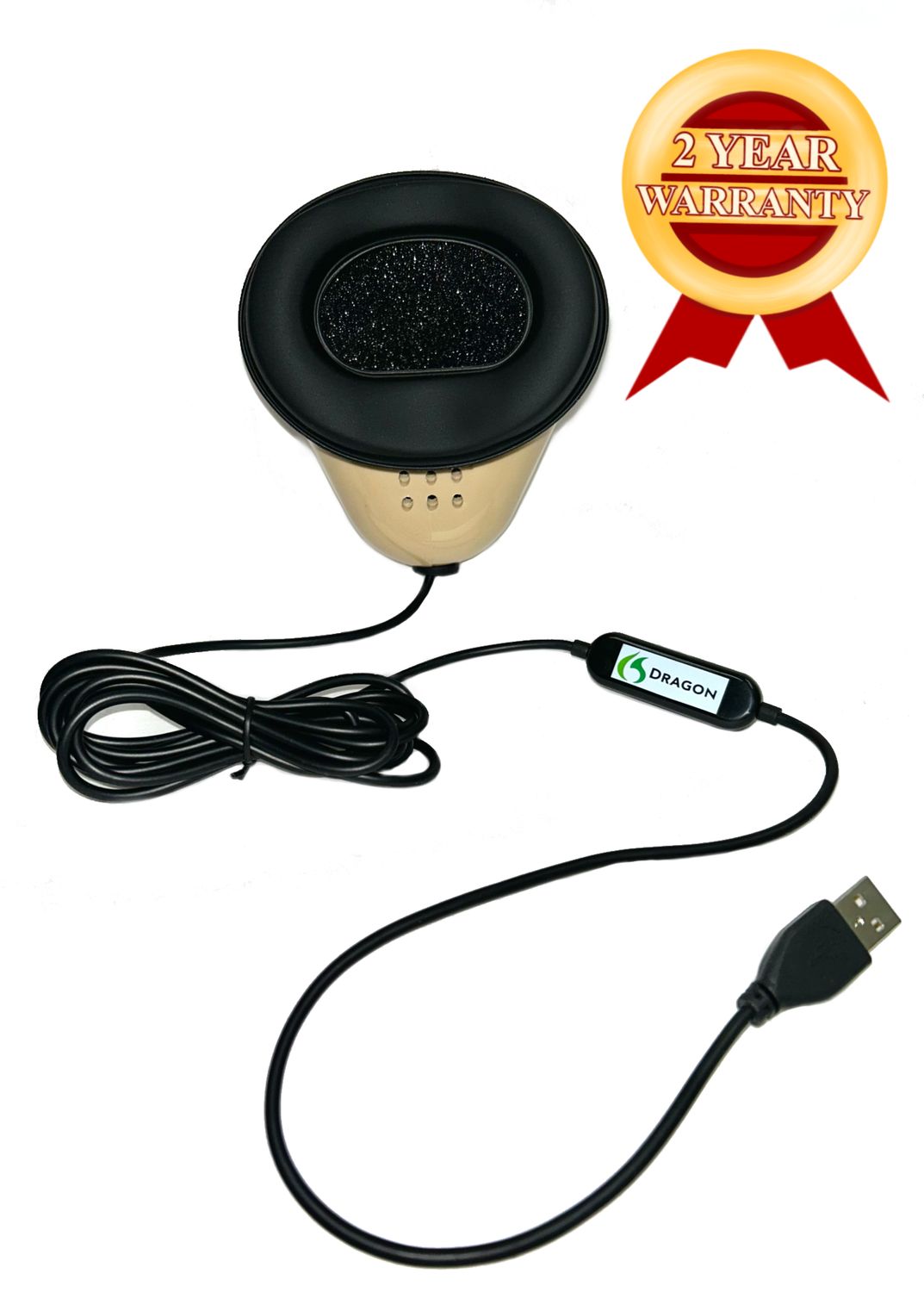
An audio-only station can use a Martel USB stenomask, SKU 1941, with a compatible computer and simple supported audio recording application. The microphone supplies its signal over a digital USB connection. Choose the mask as the input and save a sample in a form you can reopen. If your computer has a different physical USB port from the mask cable, confirm a suitable data adapter for the exact arrangement.

An alternative station can use a Martel analog mask and a compatible recorder. The Martel MM-18, SKU 370, supplies a single 3.5 mm microphone output. Consult the recorder’s documentation for its supported microphone input and the way to select it. A headphone socket is a listening output. A computer receiving an analog mask may need a suitable microphone interface. Select the station around equipment you actually own and a course requirement you can verify.

Identify separately the device delivering practice speech to your ears and the input recording your mask. A second person reading aloud from an original script is one simple source. An original practice recording played at a comfortable level is another. The file you want to score is your own fresh mask dictation. If your recording application directly captures the playback source instead, you may hear a perfect version of the reference without having recorded yourself.

Make an identification test first. The person reading says, “Reference reader, marker amber.” You say into your mask, “Student microphone, marker silver.” Stop and reopen the practice file. You should be able to identify which voice and words it contains. If the file contains mainly the reader with none of the student marker, investigate your chosen input. A file containing both may indicate room pickup or some other routing arrangement that needs attention before scoring.

What to write on a simple practice sheet

Use five fields. Name the passage, identify the equipment, write what you actually heard in your saved dictation, quote the reference wording for the spot being checked, and describe the difference in plain language. These fields are intentionally short. An entry such as “I said north door; the reference said north drawer; word substitution” carries more instructional value than a general comment that the exercise felt difficult.

Record whether you knew the passage beforehand. A first reading of unfamiliar words tests listening and repetition under a different condition from a rehearsed reading. If a friend or instructor supplies an original passage, ask them to keep the key out of view until you have saved the sample. If you wrote the script yourself, use it for technique and equipment practice and mark the material as familiar.

For a scoring method, start with a small number of named features. Mark each as present, changed or uncertain. “Uncertain” means that the available recording or your listening decision does not support a confident mark. It is better to retain that uncertainty than to turn a doubtful syllable into an asserted word. Make a separate note if the problem appears to be capturing your voice rather than repeating the reference accurately.

Keep your practice marks distinct from an official exam score. One home exercise may give a point for a correct speaker turn, another for keeping a negative, and another for an exact item description. A school or certifying authority can apply different rules, time limits and requirements. Your sheet exists to diagnose a skill in your current practice environment. You can design it honestly without claiming that it predicts an official result.

Exercise one: notice the word that changes the object

Use the following original fictional statement. Have someone read it naturally, once, while you repeat it into your stenomask. “The red strip was attached to the tag. The red strap was attached to the bag. I saw the strip first because the tag was lying face up.” Stop the recording when you finish repeating the statement. Listen to your own saved words before looking at the key below.

The answer key has four items. First, the strip belongs with the tag. Second, the strap belongs with the bag. Third, the witness saw the strip first. Fourth, the tag was face up. Mark the items individually. A student who preserved three relationships but exchanged “strip” and “strap” on the second sentence has learned something different from a student who lost the final reason entirely.

Now listen to the actual vowels and consonants on your saved voice. Can you distinguish your own pronunciation of “strip” and “strap”? If the repetition on the saved track was the wrong word, note a substitution. If your voice is too indistinct for you to decide which word you said, mark the result uncertain and run a separate clarity exercise. Treating an ambiguous recording as definitively correct teaches the wrong evaluation habit.

For a fresh follow-up, use “The thin sheet was on the seat. The thick sheet was on the shelf.” Preserve the original pairs and check the position of the two descriptive words. This is a new test of the same listening feature. You have changed the actual nouns, preventing familiarity with the original four words from standing in for improved attention to word identity.

Exercise two: keep the witness’s correction

Use this fictional exchange. Reader one asks, “When did you find the aisle closed?” Reader two answers, “Just after lunch, no, just before lunch. I had the empty tray with me.” Reader one asks, “Was the notice already on the gate?” Reader two answers, “The notice was there. The string holding it was loose.” Repeat the words into the mask using any speaker conventions your school has already taught.

Listen for the correction itself. The answer key requires the initial “after lunch,” the correction to “before lunch,” and the witness’s description of an empty tray. The second answer concerns a notice already present and a loose string holding it. Mark each point from the audio. A student who reports only “before lunch” has conveyed the final time but omitted the witness’s audible self-correction.

Listen again for the end of each answer. The “empty tray” clause comes after the correction and can be lost when a student is mentally deciding whether to fix the earlier wording. A cue to yourself such as remembering that the speaker is still answering can be helpful in a later attempt. During evaluation, write what you actually said and where the omission occurred. Avoid supplying forgotten words from memory while listening back.

For a second attempt, use a deliberately different correction. “I moved the left panel, no, the lower panel. The screw on the left stayed in place.” The key is the initial left panel, correction to lower panel, and the separate left-side screw. A student who automatically substitutes the last version for the first can hear exactly where that editing tendency enters their masked repetition.

Exercise three: preserve who said the short answer

Use this original three-voice scene. Counsel asks, “Was the top drawer open?” The witness answers, “Yes.” Another speaker asks, “Open all the way?” The witness answers, “Just wide enough for the ruler.” Counsel then asks, “And the lower drawer?” The witness answers, “I did not look.” A single word such as “yes” can be captured correctly while still being attached to the wrong questioner in the student’s reconstruction.

The key has six turns in order. The first question comes from counsel. The witness gives the one-word reply. The second question comes from the other speaker. The witness describes the ruler. Counsel asks about the lower drawer. The witness says they did not look. You may represent the speakers with simple labels in this home exercise unless your course requires specific conventions. Score speaker assignment separately from the facts inside the answers.

If only one practice reader is available, have the reader announce a fictional speaker label before each turn. In your score sheet, mark whether those explicit cues were supplied. A later exercise with two or three distinct readers changes the workload because identity may be conveyed by voices and position. Neither version is inherently superior for every beginner. Choose the format that isolates the skill currently being studied.

A useful follow-up changes the order of the two questioners while retaining the same short answer. The witness answers “yes” to the second speaker’s question about the ruler, while counsel’s first question receives a full sentence. This forces the student to hear the new exchange rather than attach “yes” to counsel by habit. Compare the speaker-turn score and the word-content score separately.

Exercise four: carry a condition to the end of the sentence

Here is a fictional witness statement for the reader. “I could see the number on the crate whenever the side light was on. When the side light was off, I could see the outline of the crate but could not read the number.” One sentence establishes a condition for reading the number. The other preserves a more limited observation under different light. The difference is part of the witness’s actual meaning.

The key is precise. With the light on, the witness could see the number. With the light off, the witness could see the crate’s outline. With the light off, the witness could not read the number. Mark each proposition. If the dictated voice says “could read” in the final clause, mark a reversal even if nearly all surrounding words were repeated correctly. A high proportion of words captured can conceal a changed condition.

For an audio-only session, check whether the final negative was present in your own saved voice. If the negative is clearly present and a future recognition draft drops it, the later text problem has a different origin. This is one reason to retain a properly identified fictional reference and sample when comparing audio-only practice with later software work. The baseline reveals what the reporter actually delivered to the microphone.

Try a fresh conditional passage with the sequence reversed. “Unless the inner latch was lifted, the outer handle would turn without opening the door. Once the inner latch was lifted, the handle opened it.” The key is the relationship between latch position and the effect of turning the handle. A student can evaluate whether they carried that relationship correctly before ever using text recognition.

Use manual playback to locate a loss

A reader can spot a trouble point by returning to a short section of the saved file. Put the approximate playback position beside your observation if your device shows it. Listen first for the reference word, then for the spoken words immediately before and after the disputed point. Surrounding context can help locate the passage but should not become a reason to hear a syllable that the file does not clearly contain.

Do a second listening pass with the reference hidden. Write exactly what your own recording sounds like. Then uncover the original key and compare the two. This guards against hearing the expected answer simply because its spelling is already in front of you. If the first and second listening decisions differ, mark the sample with a note rather than choosing whichever decision produces the higher score.

A sparse error log can reveal a pattern. Three omissions immediately after a question ends suggest a different area for practice from three substitutions between similar nouns in the middle of an answer. A misplaced negative near the end of a long sentence deserves different attention from a mislabeled speaker. Use accumulated observations to choose the next fictional drill. The log has served its purpose when it points to one specific thing to try.

Avoid scoring equipment uncertainty as a reporting skill error. If half of the saved file is absent, the recording application may have started late or stopped early. If the microphone source cannot be identified, you cannot be sure the voice belongs to the student. Run the identification test again. An honest unscored attempt is more valuable than a numerical mark on a recording whose source cannot be verified.

Recognize when the next exercise needs CAT or recognition software

Move beyond audio-only work when the task requires an application to interpret speech as text, turn conventions into a formatted reporting job, link audio to a specific text position, or produce an authorized deliverable in a particular format. The teacher’s assignment should identify the expected result. If the instruction says “submit your scored transcript,” an audio file may illustrate your source but still leave the required document incomplete.

When recognition first becomes available, begin with a passage already understood as an audio exercise. Perform a fresh recording and recognition trial in a supported arrangement. Compare the reference words with the actual captured voice and with the produced text. If the voice already differs from the reference, address the speech or listening stage. If the voice matches the reference but the draft differs, investigate recognition and subsequent text handling.

When CAT software becomes available, add a practice task that only the reporting environment can demonstrate. Can you reopen the intended exercise as a job? Do the speaker labels distinguish the people correctly under the school’s conventions? Can you place a correction in the appropriate passage? A fictional job is enough to begin. There is little value in trying to use actual testimony for a basic equipment or software acceptance test.

Before you buy, verify what access a school already provides, what it requires students to obtain, and which devices a license can be used on under its terms. A complete Martel stenomask is hardware. A recorder or recording application can capture its voice input. Recognition and reporting applications are separate purchases or access arrangements unless a specific written offer states otherwise. Understanding that separation lets a beginner start legitimate practice without purchasing the wrong item.

Questions and answers

What is the smallest meaningful exercise I can do with just a stenomask and recorder?

Have someone read one original fictional sentence containing a meaningful distinction. Repeat it into your own compatible mask while the recorder uses the intended microphone input. Save the file and compare your audible words with the reference. For example, a sentence distinguishing “left drawer” from “lower drawer” lets you evaluate both the noun and its modifier. The exercise is meaningful because you can identify the source, expected words and actual result.

What if I have a USB stenomask and a laptop but no separate standalone recorder?

A compatible computer with a suitable supported audio recording application can serve as the receiving device for an audio-only exercise. Select the external USB mask input, save a fictional voice sample and reopen it for review. Check what the course accepts as a submission. A standalone recorder is relevant if the course requires independent hardware capture or if your chosen analog mask and receiver make that arrangement appropriate.

Does a recording application type what I say into a transcript?

A simple audio recorder captures sound at its selected input. Turning speech into text and producing a formatted reporting job require the appropriate recognition and reporting stages. Some environments combine these functions, but you should identify the precise function of the application you currently have. If your immediate exercise is to hear whether you repeated the word “before,” an ordinary saved voice sample can answer that question without generating any text.

Which result proves I recorded my mask rather than the practice playback?

Use different words on the reference source and the mask for the identification check. The reader announces one marker and the student dictates another. Reopen the student recording and identify what it actually contains. If the reader’s source was captured directly, the mask marker may be absent. If both are audible, investigate the acoustic or application arrangement before using the file to score the student’s own repetition.

What if I only have an analog stenomask and my computer has USB ports?

Identify the mask model and its analog microphone output. A compatible external microphone interface may provide the supported computer path for some analog models. Confirm the exact pairing before ordering an adapter. Another option is a compatible standalone recorder with the proper microphone input. The right first exercise is one with a verifiable receiving path, so establish the hardware connection before assigning a practice score.

Do I need a second person physically present to practice hearing a witness?

An original recorded passage you are authorized to use can provide the listening source. You can also arrange for an instructor or other reader to deliver a fictional passage. The important distinction is between what you hear from that source and what you freshly dictate into the mask. If you wrote the passage yourself, mark it as familiar and reserve unfamiliar material for later first-attempt assessment.

How can someone else help without turning the exercise into a conversation?

Give the reader a prepared fictional passage and ask them to read it naturally. Ask them to withhold comments until you save your masked repetition. Afterward, have them state exactly which words appeared in the reference and which speaker said them. This keeps the sample tied to a known source. A spontaneous discussion may be valuable training later, but a fixed first reference gives a beginner a clearer basis for learning.

Should I read the answer key while repeating the original passage?

Hide it when the goal is to test listening and immediate repetition. Reading along introduces visual information that may supply a missed word. If the goal is to learn a speech or equipment technique with known material, using the text can be appropriate. Mark which arrangement you used. Comparing a blind repeat with a guided reading without noting the difference can make a change in practice conditions look like a change in reporting skill.

How should a learner score a corrected answer such as “Tuesday, no, Thursday”?

Check separately for the original day, the spoken correction and the corrected day. A student who reports only “Thursday” retains the intended final day but omits part of the spoken evidence. A student who says “Tuesday, Thursday” may preserve both words while missing the relation between them. A short answer key can document each feature without requiring a finished transcript or a rule about professional formatting.

What makes a useful first passage for learning speaker changes?

Start with two people taking distinct turns and include one short reply that could be misplaced without attention. For example, counsel asks whether the curtain was open, the witness answers no, and counsel then asks which blind was raised. The key should name the speaker and content of each turn. Later add a third speaker. Increasing the number of voices before the student can score two reliably makes the first diagnosis harder.

Is a word with the wrong ending a complete mistake on my practice sheet?

Define what the exercise is measuring. If the reference says “boxes” and the student says “box,” the number of objects has changed. Mark the actual substitution and why it matters in the fictional sentence. A different exercise might study clarity of the ending sound rather than the object count. Preserve the observed fact in ordinary language even if the home scoring method assigns only a single mark.

Can I evaluate spelling from a voice recording?

You can evaluate whether the student clearly repeated letters the speaker actually supplied or whether an audible word was present. A recording of a spoken surname can leave more than one spelling possible when the speaker did not spell it. Written spelling in a transcript is a later textual verification question. In audio-only practice, choose references that explicitly spell the name when spelling is the skill you want to examine.

What if my saved voice and the answer key disagree but the same overall meaning remains?

Record the difference at the word level. “I saw the blue box beside the gate” and “There was a blue box by the gate” may express a similar scene, while only one version matches the reference. Voice-writing practice can target precise repetition independent of summary meaning. Mark whether you substituted a word, changed the order or removed the speaker’s wording, then try a new original passage designed to test that tendency.

Is it fair to score a passage interrupted by an unclear playback source?

Document the interruption and determine whether you actually heard the disputed portion. If the reference source cut out, you cannot assess your ability to repeat words you never received. If the listening source remained clear while your mask recording dropped a section, investigate capture. Keeping those two possibilities separate makes the next attempt useful and prevents an equipment observation from being incorrectly labeled a reporting-skill failure.

How can I practice a negative without learning the sentence by heart?

Have a reader alternate two original sentences with similar surroundings and opposite meaning. One might say, “The side gate was locked,” and another, “The side gate was not locked when I arrived.” Keep the chosen sentence hidden until after the recording. The key identifies whether the negative belonged in that particular attempt. Compare the saved student voice with the actual choice rather than with the expected pattern.

What is a useful home score for a four-point exercise?

Name four specific features before starting and mark each separately as preserved, changed or uncertain. For instance, the required features may be the original object, its location, a corrected time and the speaker who made the correction. Report the actual marks, such as three preserved and one changed, along with the words involved. That communicates more about the skill than presenting the result as a general court reporting accuracy percentage.

Do I need a timed speed target to get value from the first sessions?

A deadline can help practice pacing once you can identify the underlying task. First sessions can focus on preserving a condition, marking a speaker turn or repeating an unfamiliar phrase accurately at a manageable delivery rate. Record the presentation conditions so later comparisons are meaningful. If you pursue a formal examination, use its official current materials for the required speed, time and scoring criteria. A home drill can target narrower skills.

How do I know whether the practice recording sounds quiet because of playback settings?

Martel Electronics | 11 hours ago

How to practice stenomask dictation before buying court reporting software

Use an audio-only voice-writing assignment, an original passage and a reference text to evaluate stenomask practice before choosing a CAT application.

Try a known sound through the same listening device and selected output. Then reopen the fresh mask sample and compare what you hear. A muted or unexpectedly routed playback path can make a usable recording seem silent. If playback works elsewhere but the mask phrase is absent, investigate the selected microphone input and capture path. Keep the listening result and the recording-source result on separate lines in your notes.

Can I score clarity and exact repetition at the same time?

Yes, if the two observations remain distinct. A clearly articulated wrong noun is a content error with intelligible audio. An indistinct syllable can leave the content uncertain even if the student believes they pronounced the intended word. Record one mark for what can be understood and another for agreement with the reference. This avoids treating a clear voice as automatic proof of verbatim repetition.

Will a more expensive stenomask automatically improve my home exercise scores?

Select a Martel model that supplies the microphone path your equipment and course require. A student can lose a speaker change or paraphrase a correction even with a perfectly working microphone. Use a saved sample to identify where the difference arose. If speech reached the receiver clearly but the student repeated a different word, the exercise points toward listening and repetition. A different connector or higher price does not address that particular finding.

How do I use an audible pause in the reference passage?

State in the key whether the material after the pause belongs to the same speaker completing a thought or a different speaker taking the floor. Listen to your saved response for the transition and the first word after the pause. Do not invent an interruption merely because the reader paused for emphasis. A later exercise can vary the meaning of the pauses so the student learns to listen to the actual speaker relationship.

What if I substitute an easier phrase when the speaker talks quickly?

Choose a short fictional passage featuring one deliberately awkward but meaningful wording. Save the first attempt. Compare the exact words you delivered with the reference, then try a new sentence at a more manageable rate. Practice holding onto the speaker’s own expression. Increasing speed after you can identify the substitution is more instructive than continuing to produce fluent paraphrases that you never examine.

Can I practice without producing a word-for-word written transcript of every attempt?

Yes. A focused audio exercise can use a short answer key naming the exact feature under review. For example, a two-sentence drill may identify which object was open, which one stayed closed and which person corrected the first description. Writing down the discrepancy is useful, but a formally formatted transcript is unnecessary to study that feature. If your school requests a complete transcript, confirm the separate text requirement.

When should I move from a familiar passage to an unfamiliar one?

Use familiar material to establish the equipment input, working position or a new repeatable practice procedure. Once you can save and evaluate the known sample, ask for an original passage you have not seen. Keep its difficulty close enough that you can compare the same skill. A learner who performs well on the familiar example but loses the feature on the new one has identified a useful next training target.

How does later recognition testing build on a saved audio exercise?

With the appropriate authorized recognition environment, compare three things from a supported test: the original words, the reporter’s actual captured repetition and the produced text. A difference between original and repetition concerns the speaking or listening stage. A difference between a clear accurate repetition and the text concerns recognition or later handling. Using fresh fictional material in this comparison avoids mistakenly evaluating an older perfect recording with a new text attempt.

Which part of speaker identification needs reporting software to evaluate properly?

A voice recording can show that the student recognized the change and spoke the taught convention. Whether that convention produced the expected displayed label or transcript format requires the reporting environment in which it is supposed to work. Follow the program’s procedure and check the resulting practice job. Your audio-only notes can establish the student’s intent and spoken input, but they cannot independently establish the software’s formatted output.

What should go in a practice message to an instructor?

State the goal, which equipment supplied the mask audio, what the reference required, what your saved voice actually contained, and the part you want help interpreting. Use an original example such as a changed noun or lost correction. Ask whether the instructor wants the fresh fictional recording and key, and use the submission method the course specifies. This gives the instructor a clearly defined issue rather than a broad request to judge an entire workstation.

Can I tell from audio-only work whether I am eligible to take a professional exam?

Home practice can reveal skills worth developing. Eligibility, examination requirements, testing equipment and acceptable procedures come from the specific certifying body or jurisdiction. Consult the current official source for those decisions. A carefully scored home passage is still worthwhile because it can show an omitted correction, missed negative or uncertain speaker turn. Describe it as practice evidence for that skill, not as a professional qualification.

What can I do if the instructor says my first assignment needs CAT software immediately?

Ask which authorized application arrangement the course accepts, whether the school supplies access, and what the expected submitted job must contain. Get the required access and verify it with a fictional practice job. You can still use an audio-only test to establish microphone operation before setting up recognition or CAT. The independent audio check remains useful, even when it is only one step toward a larger scored assignment.

When is the audio-only phase complete enough to move forward?

A practical milestone is being able to identify your own mask input, capture a fresh fictional passage, locate the saved file, score its named features honestly and explain one discrepancy using the actual words. At that point you have a dependable baseline for further exercises. Add recognition or CAT when your course and learning goals call for text, formatting and reporting-job review, and evaluate those additional stages on their own evidence.

Sources

This article is for educational purposes only.