On Martel’s four-channel stenomask recording system, SKU 2067, plan one channel for the voice writer’s personal mask and three for room microphones. For a typical hearing, a useful starting map is reporter mask on channel one, bench position on channel two, witness position on channel three and counsel position on channel four. These numbers are an illustration. Use the actual approved input assignments, verify each speaker from the real position and keep the numbered map with the practice recording.
The room microphone assigned to counsel is a single room source. It may cover one speaking position or several people using that position, depending on the layout and the result you test. It does not automatically give opposing attorneys independently recorded channels. Likewise, a channel labeled “bench” identifies the intended microphone position. The label does not establish that every speaker heard on it was the judge.
The Martel four-channel stenomask recording system combines a four-channel USB controller, a Martel stenomask, three room microphones and recording and transcription equipment. The controller provides XLR and quarter-inch inputs. Confirm the supplied mask connection, microphone settings, channel assignments and compatible computer configuration for the exact installation. Use the map below to plan and test the work rather than assuming that a connection pattern is preset at the factory.
Martel equipment in this guide
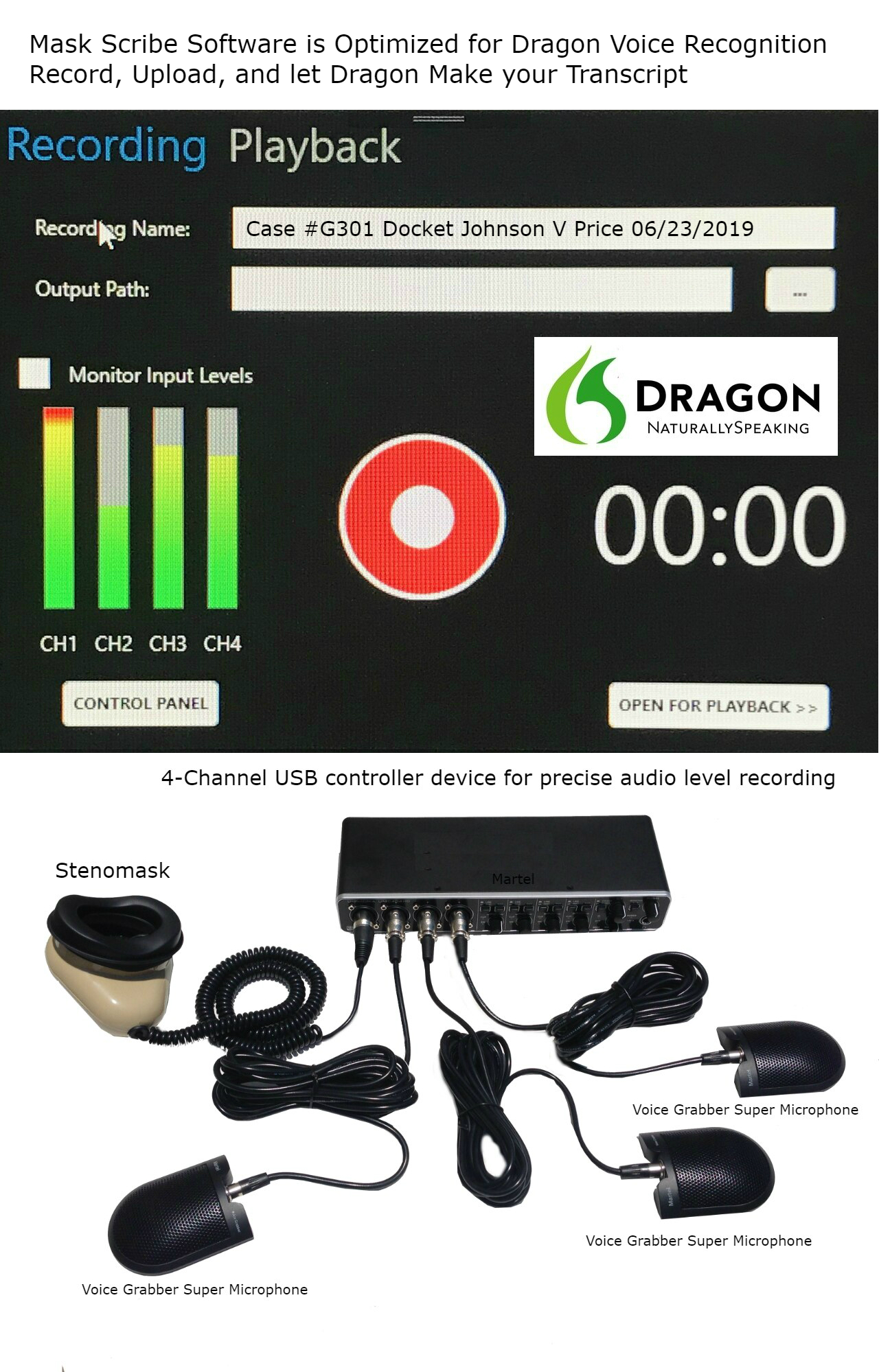
Draw the courtroom before naming its channels
Start with the people whose original speech the authorized recording must capture. Draw the bench, witness seat, counsel positions and reporter. Add the direction each person faces while asking a question, responding or looking at an exhibit. Mark the actual places where room microphones may be positioned. A microphone assigned to an elevated bench can face very different conditions from one placed close to a seated witness at the table.
On the drawing, use two kinds of names. One describes a person in the proceeding, such as “presiding judge.” The other describes a physical source, such as “bench microphone.” Keeping them separate matters. A clerk or another authorized speaker might speak from the bench area. Counsel might approach the witness during a permitted exchange. The recording channel reflects the microphone’s pickup, while speaker identity comes from the proceeding and the reporter’s verified record.
Mark the reporter’s mask with its own symbol or name. It is a distinct source for the reporter’s dictated version of the words. It should not occupy a room microphone position or be counted as a fourth room microphone. If the plan calls for independent mask audio and three room sources, assign the four channels accordingly. This division gives the reporter a way to compare original speech with personal dictation, provided the actual routing preserves separate channels.
Add special conditions after the basic four positions are visible. Will a witness sit facing the bench but turn toward counsel? Do both attorneys speak from the same lectern or stay at distant tables? Is an authorized remote participant joining through another system? A clear map lets you see when the planned three room channels cannot independently cover every desired source. Resolve that need with the appropriate operator before modifying the assignment.
Build the physical-input and recording-channel cross-reference
Write one row for every channel. Give the row a physical source name, microphone or mask model, controller input number, recorded channel name and a proposed fictional test phrase. Add a field for who checked the saved result. A row might read “personal mask, supplied Martel mask, confirmed controller input one, recorded channel one, practice marker from reporter.” Substitute the verified numbers for your actual installation.
Why name both the controller input and the recorded channel? A hardware socket can be correctly connected while the computer session selects a different input or channel order. Depending on the software and setup, a hardware input can have a different displayed name, several inputs can be monitored together, or the recording can be set up to preserve a particular group of sources. The cross-reference gives you somewhere to record what was tested rather than what seemed likely from the front panel.
Assign the mask first. Verify the connection and settings for the exact mask supplied with the package; Martel directs buyers to confirm that combination. Then connect the three approved room sources to the inputs designated for them, following the equipment instructions. Trace each cable from the microphone at its position to the labeled controller connection. If somebody changed the order of two cables while arranging the room, a permanent label on the microphone alone will not show which computer channel receives it today.
Use neutral physical names in the operating map even when the proposed title is “judge, witness and counsel.” A saved label such as “witness position” remains intelligible if a second witness takes the same seat. Keep the speaker log or transcript identification separate from the input table. That division protects the record from a false assumption that channel identity is interchangeable with speaker identity.
Place the reporter’s mask on its own verified channel
The mask channel should carry the reporter’s dictated speech at the reporting position. Use the supplied mask with its confirmed input and microphone settings, and ensure the controller is connected to the supported computer as required. Check the particular channel in the recording application. The connection to the controller and visible computer activity are useful clues, but the decisive evidence is the saved result from the actual recording session.
Speak an original phrase through the mask, such as “Reporter practice, fourth line, north gate.” Keep the other three practice speakers silent during that marker. End the sample, reopen the saved recording and select the intended mask channel. Listen for the marker at its beginning and end. A meter that responded when you spoke might have shown a combined monitor, so verify by selecting the recorded source you intend to preserve.
Now ask a room speaker at the bench position to speak a different marker while the reporter pauses. Compare the bench channel and mask channel on the saved exercise. Some acoustic pickup across microphones can occur, especially in a smaller room; listen for the expected dominant source and the timing of each phrase. If the bench marker is as prominent as the reporter’s own dictated phrase on the channel labeled mask, investigate the actual input, channel mapping and monitor or playback selection.
If a separate recognition or CAT application is required, plan its input and license independently. The Martel system’s product information distinguishes recording, transcription playback and separately licensed recognition. A clearly saved channel proves the recorder captured the mask speech. Verify any live or file-based recognition workflow required for the assignment with the actual supported configuration. Avoid assuming that connecting the mask to the four-channel controller immediately generates a finished transcript or an additional recording on another device.
Give the bench microphone a defined speaking area
Identify where the authorized bench speaker normally sits or stands and where installation rules allow a microphone. Mark the expected speaking area rather than drawing a microphone on the label “judge.” In a fictional room, the presiding speaker might look down at papers to read a question and turn toward the witness for a follow-up. Test both orientations from the actual bench position if permitted.
Have the practice speaker read a short original instruction at an ordinary level. Use a phrase containing a condition or sequence, such as “Read the lower paragraph before you refer to the table.” Introduce a second fictional phrase after the speaker turns toward counsel. An operator who hears only a greeting from directly in front of the microphone learns little about speech directed toward another position. Select the bench channel during review and compare the two passages.
Inspect the saved bench source for room amplification or a second electronic feed if the courtroom uses them. A room microphone and an authorized direct electronic feed are different source choices. Introducing both into a mix can alter how the bench sounds during playback. Ask the facility operator what sources the reporting assignment is permitted to use and verify the resulting recording. A courtroom speaker sounding loud through the public address system does not establish that the bench channel was saved clearly.
Note physical interruptions on the map. A stack of documents, a monitor, a change in seat orientation or a person standing between source and microphone can affect pickup. If the bench position or permitted equipment arrangement changes, repeat the test from that position. Keep the original mapping and the new version identifiable so a later reviewer can tell whether a weak portion followed a change in placement or assignment.
Set the witness source using the direction in which the witness answers
The witness channel must capture the actual witness speech from the approved position. Begin with the witness seated as on the assignment, facing the person who is asking the question. Test a short answer, a quietly delivered answer and an answer given while the witness looks toward a fictional exhibit. The goal is clear ordinary speech across expected orientations, not a loud test performed with the witness leaning unusually close.
Choose original material that lets the listener distinguish a word or detail accurately. For example, ask, “Was the shaded area thirteen feet or thirty feet from the ramp?” Give a scripted practice answer using one of those numbers. Review the witness channel without relying on the reporter’s mask version to supply the missing number. If the room source weakens when the witness looks at the exhibit, adjust the permitted placement or change the exhibit-handling arrangement in consultation with the appropriate operator.
Test counsel’s nearby speech as a separate observation. A microphone at the witness seat may also pick up a close examiner. That does not mean the witness channel has become a reliably isolated recording of the examiner, and it need not mean the witness microphone was incorrectly placed. The useful question is whether the intended witness remains intelligible and distinct on that source while adjacent speech occurs.