Rehearse one complete trip from the first dictated word to a finished submission. Set up your personal stenomask under the rules for your particular exam, take unfamiliar fictional material, verify that your own voice was captured, prepare the required transcript, and open the files you selected for delivery. A fast, accurate take still leaves you with an incomplete rehearsal if you cannot tell which file contains the final transcript or whether its supporting material is present.
For the National Verbatim Reporters Association’s Certified Verbatim Reporter designation, the published skills assessment includes literary dictation at 180 words per minute, jury charge at 200 and two-voice Q&A at 225. Each lasts five minutes and has its own accuracy requirement. The association also identifies a written knowledge examination. Its candidate instructions, registration material and the administrator for your particular event determine the actual procedures. This guide offers a method for rehearsing them with original material.
Martel equipment in this guide
Name the examination and the version of its instructions
Put the full credential name on the first page of your rehearsal notes. Certified Verbatim Reporter, a state licensing examination and a realtime specialty assessment can have different tasks and rules. A classmate saying “our test” is not enough information to choose a capture arrangement, scoring rule or submission method. Record the authority that administers your exam, the event you registered for and the revision of the procedure document you consulted.
For example, the association’s Important Testing Information page identifies the Certified Verbatim Reporter policy manual revised November 19, 2026. Use the current link from that page when preparing. An older handbook saved by a former student can accurately describe an earlier event but include obsolete instructions. If a registration communication appears to conflict with the general page, ask the administrator about the specific point. Preserve the answer with your event details.
Give each instruction a row on your rehearsal sheet. Beside it, record the issuing authority, the action you must perform and the evidence that the action worked. For an identification requirement, the evidence might be the requested documents ready to present. For a file requirement, it might be a practice output opened successfully from its actual destination. For a recording restriction, it might be an inventory showing the permitted source and confirmation that another input is inactive. This arrangement translates words in a manual into things you can verify at your own desk.
Distinguish home diagnostics from examination conduct
A teacher may use a recording of an original practice reader at home to examine what the learner heard. The association’s certification setting has specific recording restrictions. Its November 2026 manual prohibits room recordings and capturing the examination dictation. It allows a specified voice-only backup using a handheld recorder connected to the tester’s mask. Additional recording arrangements are restricted. The manual also prohibits internet access during the examination. Confirm the current instructions before entering the event.
Rehearse with those conditions in mind. Make a note of the active microphone and destination. If your ordinary study setup stores a source-reader recording or depends on an online service, build a separate rehearsal configuration using only what the administrator allows. A quiet computer desktop does not prove an application works without a network connection. A headset plugged into a laptop does not establish that an onboard microphone is inactive. Check each assumption on your own original material before the date that matters.
Never test these questions by recording actual examination content for later review. For a home diagnostic, invent a replacement sentence with similar listening demands. If you want to know whether a long clause survives a temporary input interruption, use a fictional description of a ticket counter or a bus shelter. If you want to rehearse turn-taking, ask two readers to use an original exchange. The exercise can reproduce the equipment or attention problem without holding any confidential test content.
Prove the reporting computer is hearing the intended mask
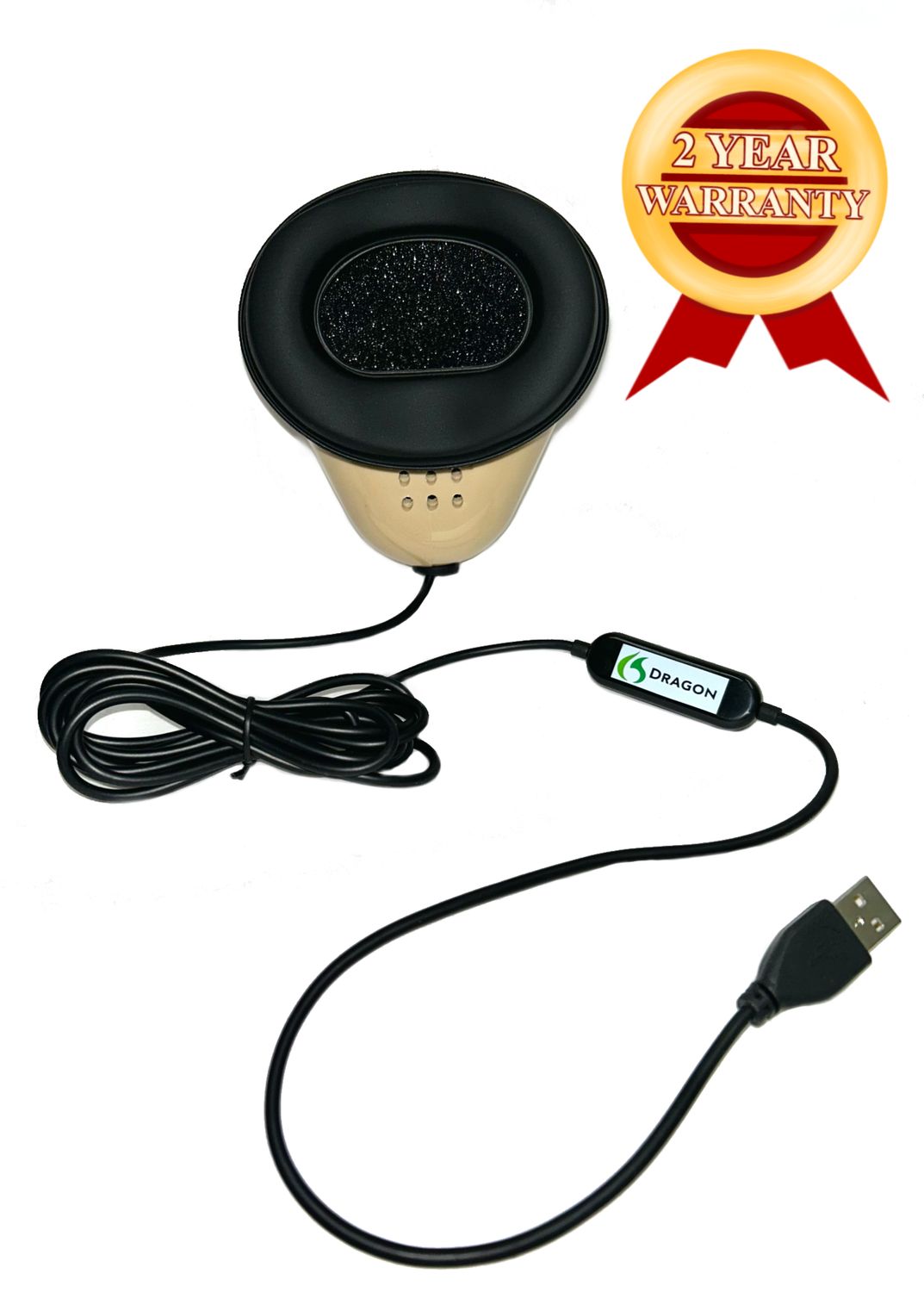
Start from the work area you intend to use. Connect your personal stenomask and any permitted interface the model requires. Martel’s USB stenomask, SKU 1941, connects directly to a computer. Pick the intended input in the reporting environment, open a fictional practice job, and dictate a sentence that only you say. End the capture cleanly using the ordinary commands available to you. Reopen the saved practice item and locate your sentence.
For a useful proof, choose words distinct enough to identify without doubt. “The silver ticket reads Tuesday, seat eleven, east door” contains a day, a number and a location. Ask a listener in a private home rehearsal to use different words for a source-only line, keeping the two activities distinguishable. If a file that is supposed to contain your mask speech instead contains only the source reader, investigate selection and routing. During an actual exam, follow the administrator’s rules about sound verification and permitted recording.
The dual-output personal stenomask from Martel, SKU 1945, can feed a computer over USB. Its separate microphone plug fits a compatible recorder with a 3.5 mm microphone input. There is a difference between physically connecting a suitable device and being permitted to use it in an examination. Check both. If a particular arrangement is permitted and you intend to rely on it, test the actual saved reporter-only recording. Do not assume that a second plug automatically starts the receiving recorder or produces valid supporting material.
Rehearse starting from an ordinary desk
Set the equipment down as it would be placed at the examination site. Connect the power and input you actually intend to use. Open the approved local work environment. Locate the active job, the input selector, the control that begins the capture and the location used when you finish. Work through the sequence once from the beginning, rather than picking up halfway through a practice file already open from yesterday.
Now clear the fictional job from the active view and repeat the setup without looking at a collection of long written directions. Where did you hesitate? Perhaps the laptop changed the selected audio destination after you connected your permitted listening device. Perhaps two similar input names appeared and you had no reliable way to choose. Create one short observation that resolves the actual hesitation. For example, identify the input by what a saved original sentence captures. A screenshot of the selection alone may become outdated as devices are selected differently.
Also test the work area you can realistically expect. An adapter that occupies a neighboring port can make it hard to use the media you need at submission. A power cord on the far side of the table can change where you place the computer. A display with small text can slow your review of page numbers. Use your own equipment and conservative space assumptions for a home simulation, then verify venue-specific arrangements with the administrator. The purpose of a setup rehearsal is to discover a practical conflict while you can still resolve it.
Give a helper a job they can perform without coaching
Ask your helper to supply unheard fictional material, start and stop the agreed practice interval and note any departures from the intended delivery. During a genuine blind run the helper should not gesture at the correct answer or repeat a difficult phrase because you look concerned. Save those explanations for review. If the aim is a technique lesson instead, declare it a coached lesson and let the reader stop when useful. Mixing the two purposes makes the resulting performance difficult to interpret.
Give the helper a source sheet clearly separating spoken words from role labels and directions. Time the source actually delivered. The words “question,” “answer” or a speaker’s name belong in the count only if the reader was supposed to say them. Write down the convention used to count written words. Use the administrator’s instructions for official preparation and assessment. A home recording delivered at the target average does not become official test material because its duration happens to match.
For an observer who is unfamiliar with court reporting, give three objective things to note. Did the candidate begin the active file before the first practice line? Was the later segment saved under its own intended identity? Could the candidate find and open the proposed submission within the rehearsal’s allotted delivery interval? The observer does not need to evaluate your professional judgment to notice a missed start, a confusing filename or a stalled handoff.
Use different tasks for the three source segments
For the literary rehearsal, use an original descriptive passage with a subject interrupted by a qualifying phrase. One suitable fictional sentence is, “The clerk who had checked the tickets before the rain began left a blank space beside the second departure.” Ask your reader to build a fresh account around the ticket clerk. Include time, cause and uncertainty in different places. During later review, locate the first point where those relationships change between the reader’s source and your submitted text.
For jury-charge-style practice, use a fictional set of organizing directions with at least one exception. A reader might describe three display cards, ask for the blue card first, refer to the red card before the green one, and limit one action to a case in which a date appears. This exercise practices sustained formal wording and the scope of a qualification. The reader should invent the whole passage rather than copy official instructions or present practice prose as applicable law.
For two-voice Q&A, choose two distinct readers where possible and include rapid, brief exchanges as well as longer answers. In a fictional scene at a bus depot, counsel might ask, “Which route?” A witness might answer, “The east route.” Counsel might continue, “Every day?” and receive, “Only the days the bridge stayed open.” These short turns make it possible to test whether the qualifier remains with the witness. An instructor can expand this premise with independently written material. Identify the actual length and delivery of the passage you used.