Give your writing hand a clear path to the exhibit and arrange the stenomask so it stays available while that hand works. Some left-handed reporters can hold their personal mask with the right hand and mark with the left. Others prefer to keep the mask in their usual hand during dictation and use a supported position for the brief interval when both hands are needed. A third option is a hands-free arrangement that keeps the mask in its tested working position throughout. Choose by rehearsing the actual exhibit handoff and listening to the resulting practice record.
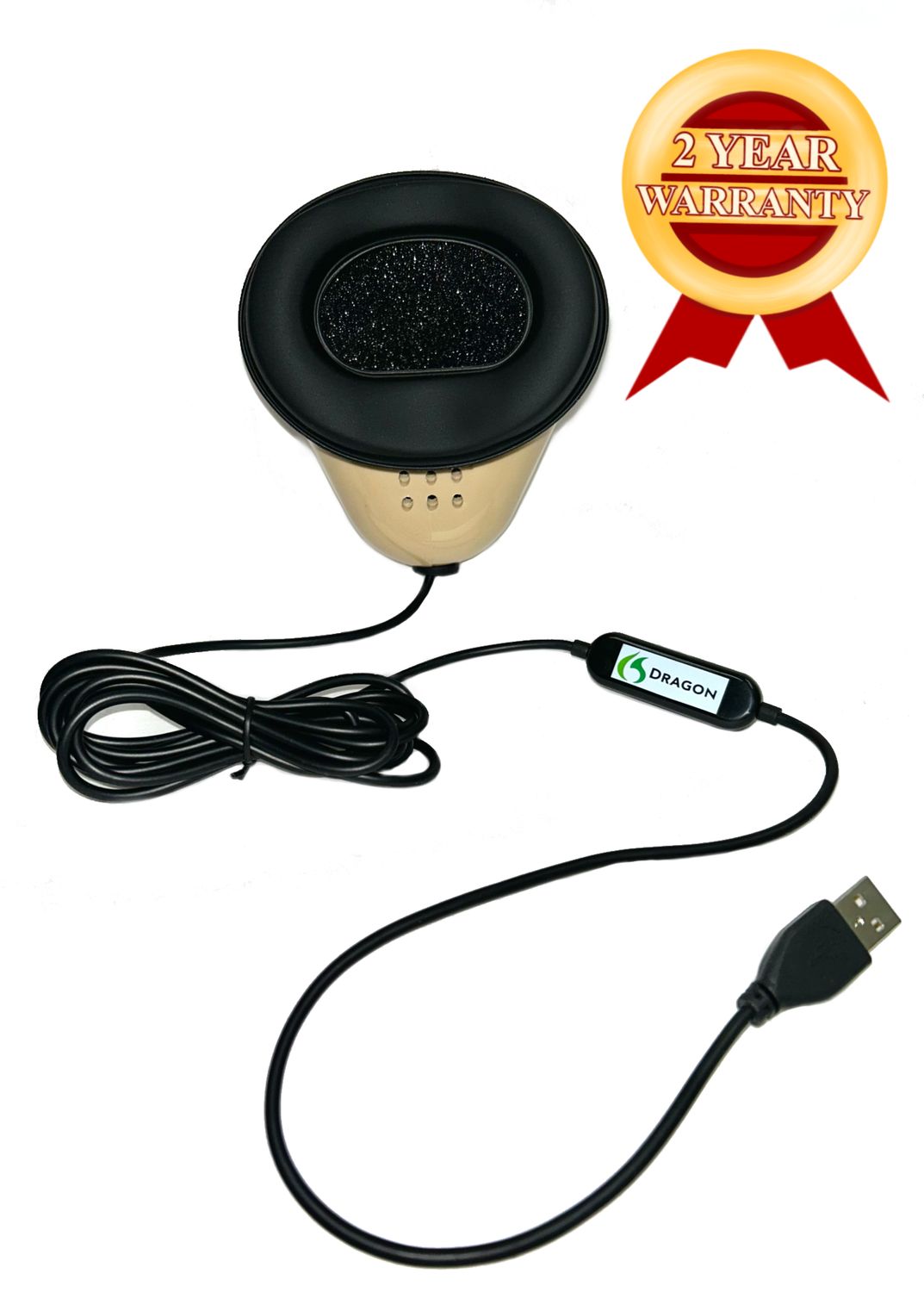
The Martel hands-free stenomask Flex Stand, SKU 191, is an option for that third arrangement. It supports a Martel mask using a flexible arm and spring holder attached to a suitable desk. Decide where the exhibit arrives, where you can mark it, and who needs it next before placing the stand, paperwork and recording controls. “Left-handed” describes the hand that writes; it does not tell anyone which side counsel sits on or what your deposition procedure requires.
Martel equipment in this guide

Map the exhibit handoff from the person who actually passes it
Place a blank sheet where counsel would hold it. Put a second blank sheet at the witness position. Sit at the reporting station with your mask, a pen and the controls in their normal positions. Have a colleague pass the first sheet along the route the document would really travel. Ask yourself where your left hand naturally makes first contact and whether the paper then lands in a spot where you can read it. This simple pass tells you more about a usable workspace than drawing a perfectly mirrored desk in advance.
There are several distinct moments in a physical exhibit handoff. You may have to receive the item, hear the request, confirm which item counsel means, apply the appropriate mark, record the identifier and return or hold the document as the applicable procedure requires. Even when each motion takes only a moment, the people in the room can keep speaking throughout. A good workstation lets you hear the next sentence while finishing the current physical task.
Stand at the opposite side and look at the reporter’s station. Is there an obvious empty place that a person can reach without passing a page over the stenomask, keyboard or microphone cable? If everyone assumes the easiest empty patch is a landing area, that patch needs to be usable. An apparently tidy arrangement can invite counsel to push an exhibit directly into a control button or under a working cable.
Mark a temporary arrival zone on your practice sheet and a separate place where a marked document can wait. These labels are for the rehearsal, not requirements for the deposition table. When the room offers very little space, orient the same working zone so that an incoming page and a completed item are visibly distinguishable. The goal is to know which item your left hand just touched before another document arrives.
Choose how to support the personal stenomask
Begin with your normal dictation grip. While recording a fictional sentence, use the other hand to receive a paper. Now identify exactly what happens when the left hand is needed for writing. If your right hand already supports the mask and the left receives the exhibit, the movement may be straightforward. It becomes more demanding when the sheet must be held steady, a label must be separated from its backing, or a large fold needs two hands to open.
Trying the mask in the opposite hand is a valid rehearsal choice. Compare the saved dictation with your ordinary grip and speaking position. If an unfamiliar grip changes the working angle or makes you miss words while concentrating on the handoff, do not treat it as a free improvement. The reason to explore another arrangement is to make both the physical task and the record more reliable on your own setup.
A desk-supported mask creates a third place for the mask to be while you work. The Martel Flex Stand mounts on a suitable stable desk or table edge, and its adjustable arm and spring holder position the mask. Martel lists a 33-inch arm and a clamp suitable for desks up to 2.75 inches thick. The stand’s job here is to preserve your working position while the hands perform separate tasks. If the only available edge places the stand directly in the exhibit exchange, test another mounting point or another arrangement.
You may prefer to dictate with the mask in hand and put it into the holder during longer document work. Rehearse putting it into the holder, continuing to receive the next spoken phrase and resuming your normal rhythm. Check whether this is realistically possible at the speed of your assignment. If the transition repeatedly costs you the beginning of an answer, a continuously supported position or a different division of hands may fit better. Make the choice from the recorded rehearsal, not a promise that any particular method must suit every left-handed reporter.
Arrange the pen, label and document for the left hand
Use your customary writing angle when placing the practice exhibit. A sheet placed squarely in front of a keyboard may require you to reach across the devices, turn your chair or push the paper beyond the table edge. Try a different sheet angle that lets your left hand write comfortably while your eyes can see the top of the page. Leave enough space around the paper for the movement of your forearm, not just the width of the pen.
Place the pen where the left hand can retrieve it while the right holds a practice document or the personal mask. Prefer a position you can reach without giving up your sightline to the speaker for long. Practice picking it up after a colleague unexpectedly extends a sheet toward you. A pen lying on the empty table may seem convenient until there is a page over it. Your layout should still make sense when the arrival zone is occupied.
If a separate label is used under the procedure for your assignment, prepare a simple exercise with blank practice labels. Where will the backing go? Can the label be oriented legibly without putting your elbow into the arm holding the mask? Where does your left hand go after applying it? Adhesive labels and multi-page documents often need stabilization by a second hand. The purpose of a supported mask in this exercise may be to release the right hand to hold the paper rather than simply to release the hand that writes.
Let the pen, blank practice labels and document have predictable positions, but avoid treating the setup as a universal marking procedure. A court or deposition assignment can specify its own requirements for identification, handling and disposition. California’s Court Reporters Board, for example, publishes a deposition exhibit-handling reference for that setting. Use the instructions applicable to the proceeding you are assigned. This guide concerns arranging your hands and equipment so you can carry out the confirmed process.
Preserve the words surrounding an exhibit request
An exhibit number and a question about the exhibit are different parts of the record. In a fictional exercise, counsel might say, “Please mark the floor plan as Exhibit Four. Which door is closest to the stairs?” If you begin reaching for a label at the word “mark,” keep listening for the exhibit name, the number and the following question. Physical movement has the potential to distract attention at precisely the point when several important words arrive together.
Have a practice partner perform the handoff twice. On the first pass, let the speaker stop after the marking request. On the second, have the speaker continue immediately into the question. Compare the mask recording and written notes for both. If you keep the identifier in the first pass but lose the opening words of the question in the second, the stand or pen position may deserve attention. So may your practice strategy for attending to speech during a physical task.
When the item being handed over is ambiguous, do not let its contents silently substitute for what the speakers actually said. If counsel refers to “the earlier plan” while offering two sheets, the textual description on the sheet may be useful for identification. It does not give the voice writer permission to assign their own intended meaning to an ambiguous spoken reference. Follow the on-record clarification and exhibit procedures that apply to the assignment.
Use an independent room reference only when authorized and required. If one is used, keep it positioned to capture the speaker while you work with the paper. Placing or sliding a folder directly beside the room microphone can introduce noise just when counsel identifies the exhibit. The mask can continue receiving your dictation while the room reference receives paper movement. Listen to both available sources in a fictional rehearsal before deciding that the paperwork location is satisfactory.
Walk through a complete original practice exchange
Use an invented exhibit titled East Landing Diagram. Make two copies, one marked “Revision B” and the other “Revision C” on the fictional drawing. Keep them separate from any real case material. For the first trial, ask the practice examiner to offer Revision B and say, “I’d like to mark the East Landing Diagram, Revision B.” The practice witness can answer a following question with, “The stairs are beside the lower entrance.”
Dictate the exchange using the voice writing method being taught. Accept the offered page with whichever hand the layout provides, place it in the working area and reproduce the agreed fictional marking procedure. Let the examiner continue to the next question at a normal practice cadence. Observe whether you can identify the revision, apply the agreed mark, hear the witness and look at the transcript screen without moving the mask away from its working position unnecessarily.
For the second trial, have the examiner hold both revisions, refer to Revision B and initially extend Revision C. The mismatch is deliberate practice material. The exercise tests whether you can physically look at the offered page, identify the discrepancy as appropriate to the exercise and keep the spoken exchange distinguishable from the printed label. It also shows whether turning the paper in your left hand obscures the revision marking or forces you to cross the mask cable.