Updated · By Martel Staff
By Martel Staff. Originally published March 29, 2023. Updated to correct the original article’s security and model claims.
This article focuses on digital dictation equipment for small medical practices and larger physician groups. Doctors need equipment that fits both their dictation habits and the practice’s handling of patient information.
Dictation equipment and HIPAA compliance
A recorder does not make a practice HIPAA compliant by itself. HHS describes the Security Rule as technology neutral and requires regulated organizations to assess risks and apply appropriate administrative, physical and technical safeguards to electronic protected health information. The original article’s claim that HIPAA universally requires a 256-bit encrypted recorder was incorrect.
Encryption and device access controls can help protect recordings, but they must be configured and used within the practice’s wider security procedures. Encryption does not make interception or tampering impossible. Review the complete recording, transfer, transcription, storage and deletion process with the people responsible for the practice’s security. See the HHS summary of the HIPAA Security Rule for the current framework.
Choosing a recorder that doctors can use comfortably
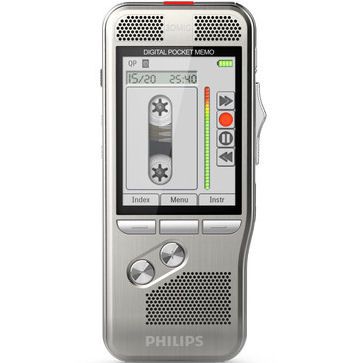
Professional digital dictation recorders can provide familiar slide controls and supported overwrite or insert editing. These features can help a doctor review and correct dictation while recording. The controls, file formats and software differ by model, so a short setup and training session is still worthwhile.
The original article discussed Olympus DS-7000 and DS-9000 models. It incorrectly described the DS-7000 as a Wi-Fi recorder. The DS-9500 is the Wi-Fi model in the later DS-9000/DS-9500 family. Treat these as model-specific examples, and check the current recorder and software package before purchasing.
Moving dictation to the transcriptionist
One useful feature of a configured digital dictation system is transferring files without physically mailing a tape or disc. Compatible software can download recordings through a connected recorder or docking station, use author information to organize them, and route files to a transcriptionist. Supported priority tags can help identify urgent work.
If a cloud provider stores or processes electronic protected health information for the practice, HHS says a business associate agreement is required even when the provider holds only encrypted files and lacks the decryption key. Have the practice’s responsible staff approve that arrangement before uploading patient dictation. HHS cloud computing guidance. The availability of email, network or file-transfer features does not establish that a particular configuration protects patient information appropriately. Confirm access, encryption, retention and the recipient’s workflow before sending real patient recordings.
Martel can help compare equipment and workflow requirements for medical offices. Browse dictation and transcription packages to compare recorder and transcription setups.
Related Martel equipment
Common Questions and Answers
Does a recorder by itself make a medical practice HIPAA compliant?
No. The HIPAA Security Rule addresses administrative, physical and technical safeguards for electronic protected health information. Equipment choices belong within the practice’s risk assessment and approved handling procedures.
Does HIPAA require every dictation recorder to use one specific encryption level?
The Security Rule is technology neutral. Evaluate encryption and other safeguards for the practice’s actual risks and workflow using current HHS guidance; a product specification alone does not establish compliance.
Can a cloud dictation service handle patient information?
Have the practice review the service and its role before use. A cloud provider handling ePHI on a covered entity’s behalf can be a business associate even when it cannot decrypt the data. See HHS cloud guidance for business associate agreement requirements.
What should we test before adopting a medical dictation system?
Use fictional patient details to check capture, approved transfer, recipient access, transcription and storage. Confirm the required software, security configuration and staff procedures before using the workflow for patient information.